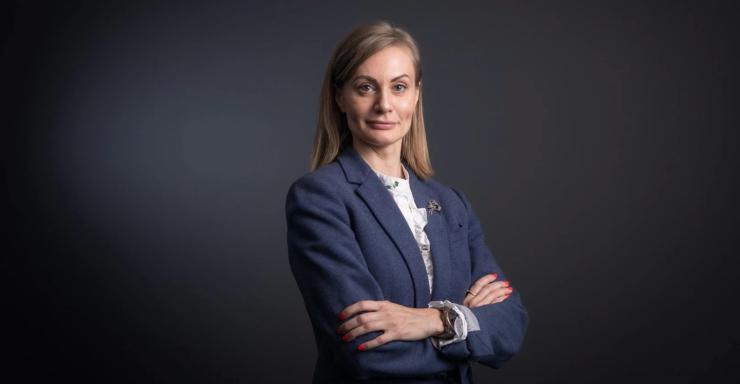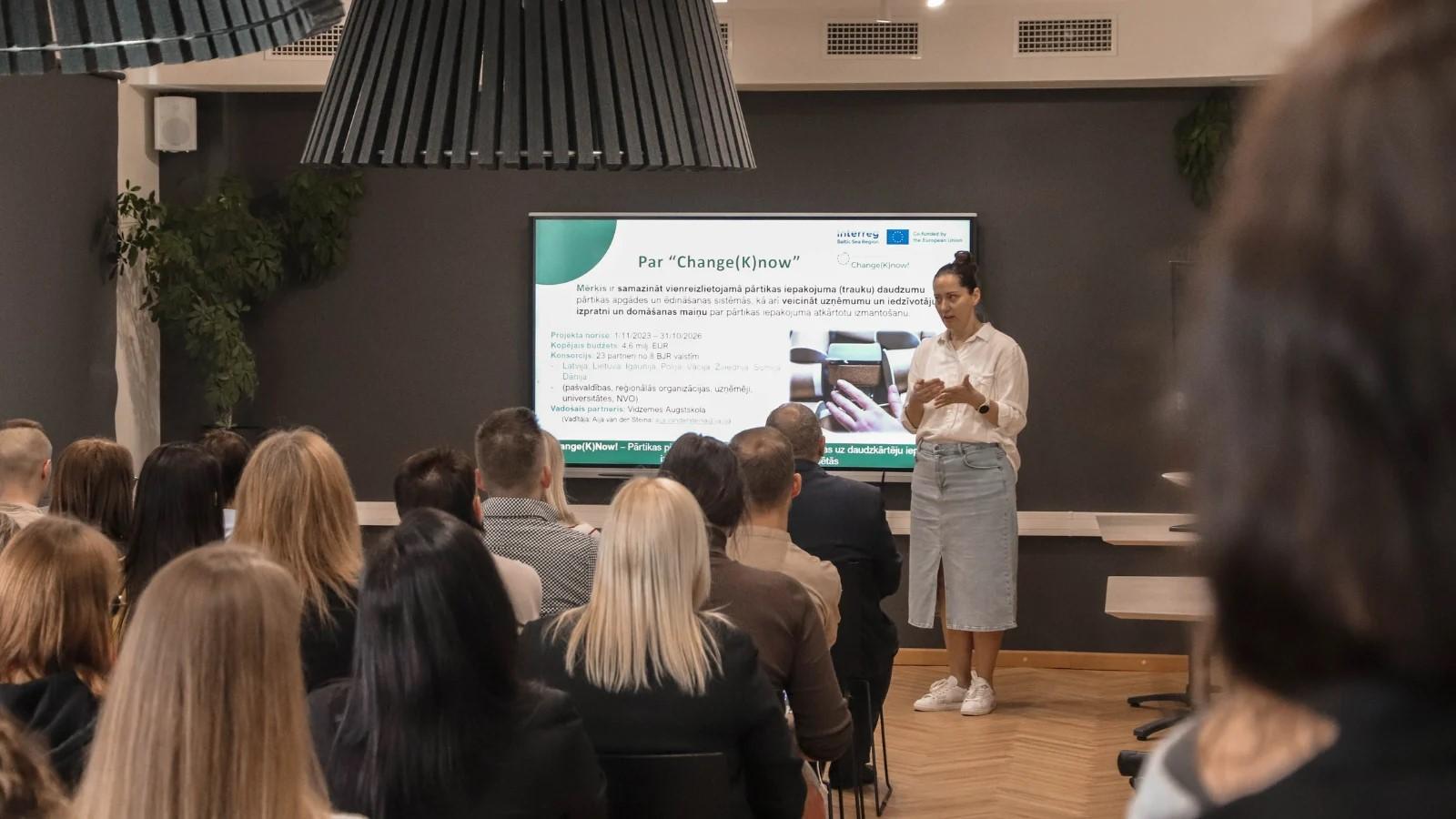
Ph.D. Linda Veliverronena is a leading researcher and lecturer at Vidzeme University of Applied Sciences (ViA) with extensive academic and research experience, particularly in the field of social sciences. Her path at ViA began with studies and administrative work, continued into an academic career as a lecturer, and later as a researcher. She earned her doctoral degree in communication and media studies from the University of Tartu, a professional master’s degree in business administration from ViA, and a master’s degree in arts from the Latvian Academy of Culture.
What was your path to research and working at Vidzeme University of Applied Sciences?
Linda: I belong to those people who don’t really plan their life or career. I also came to Vidzeme University of Applied Sciences quite by chance—at least not with a conscious goal of becoming a researcher or lecturer. At first, I worked as a study methodologist, and at that time I was already a graduate of Vidzeme University of Applied Sciences, so the environment was familiar to me. When a lecturer position was announced for the new tourism study program, I decided to apply.
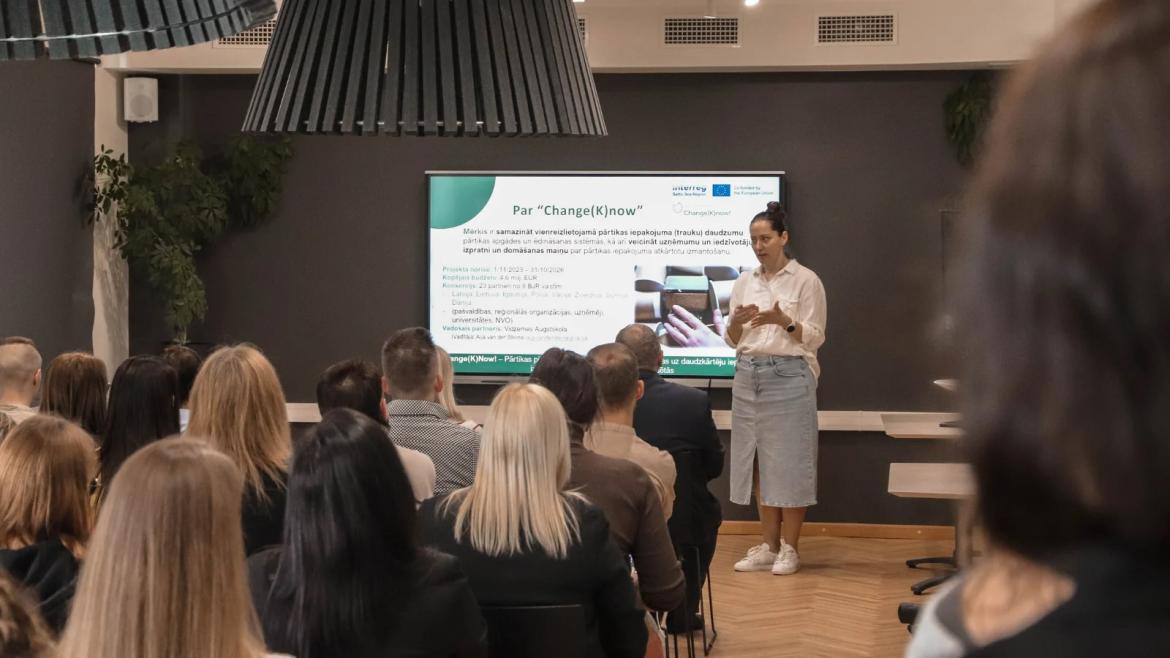
Public speaking is not my strong suit, and honestly, I never would have thought that my work would be connected with teaching. If someone had told me earlier that I would become a lecturer, I probably would have suggested they seek medical help (laughs). But over time I realized that if I wanted to stay at the university and expand my opportunities, I needed to get involved in research. Therefore, after obtaining two master’s degrees, I began doctoral studies at the University of Tartu.
What motivated you to choose research?
Linda: The main motivation was long-term investment. I knew that I didn’t want to stay in one position, and doctoral studies seemed like the logical next step. I don’t consider myself a particularly ambitious person, but at the same time it’s important for me not to stand still. At a university, research in particular offers opportunities to do many different things and broaden one’s horizons in topics of interest. I still teach, but I am gradually reducing my teaching load to focus more on research.
What is your research field?
Linda: That’s a more complicated question, because even in research I tend to flow and adapt, while not crossing certain boundaries or moving into topics that are unfamiliar to me. I realize this is not ideal, but to some extent it reflects the financial reality of modern researchers. Available funding for specific research topics often forces adaptation and stepping away from established themes.
If I had to single out specific areas, there are three. The first is visitor engagement in museums—a topic I studied in depth during my doctoral studies from a communication perspective. My doctoral degree is in media and communication studies, obtained at the University of Tartu. This choice was rational, as there had already been one unsuccessful attempt to start doctoral studies in Latvia. During my studies, I continued working at Vidzeme University of Applied Sciences and commuted daily between Tartu and Valmiera. The doctoral program at the University of Tartu allowed me to combine two areas important to me—tourism and communication—by studying museum work and its interaction with visitors.
The second topic, which I am increasingly focusing on and which will most likely remain in my research field long-term, is circularity and its implementation in areas directly or indirectly related to tourism or leisure. The third area is difficult heritage. We are currently also working on a project studying military heritage, and part of military heritage is also considered difficult heritage. Together with colleagues, we have published several articles on this topic. I’m glad that a research team has formed at Vidzeme University of Applied Sciences for whom this topic is important.
Can you explain more about why it is called “difficult heritage”?
Linda: Society’s attitude toward difficult heritage is not uniform. Part of society would prefer to see this heritage disappear or collapse. At the same time, others consider it significant and worthy of preservation and commemoration. Such heritage can also create tension in society. A good example is the Victory Monument—some perceived its demolition with joy, while others lost a place where they had brought flowers and nostalgically commemorated history.
There are many such examples in Latvia, because during both the First and Second World Wars our country was a site of intense battles, and during the Soviet period heritage was also created, part of which today is uncomfortable for a portion of society. This raises many questions about what can be done with such heritage and how to talk about it, whether to preserve it and how to finance it. Clearly, these are not easy questions with quick answers, but through our research on military heritage we are trying to find answers specifically in the Latvian context.
How do you currently assess your doctoral studies? Was it a necessary step?
Linda: Studying at the University of Tartu was one of the best decisions of my life. I value not only the academic environment of a university with traditions, but also the collaboration with my supervisor—she is an excellent teacher, with a successful research career and at the same time very humane. I wish there were more such people in the research environment from whom one can learn so much.
My supervisor never criticized or reproached me for what wasn’t done, yet she managed to instill a constant inner sense of responsibility to do better. And it wasn’t always easy to find the time to do things well, because alongside my studies I both taught lectures and managed a study program to support myself, while also writing my dissertation, which in my case was a compilation of several studies.
Communication and media were relatively new fields for me, which I hadn’t encountered during previous studies, so I wasn’t always confident in myself. But my supervisor was able to motivate and inspire me, and also gave me the opportunity to gain my first experience working in an international research project. If I were asked whether I would take this path again, I would say without hesitation—yes.
Thanks to my studies, I also met my husband. We both attended a doctoral summer school in Germany—each from our own university. Neither of us really wanted to go, but our supervisors didn’t give us a choice, and that’s where we met. Today, this also means that I can share my work on a daily basis with someone who understands the life of a researcher and its nuances. Since we are both researchers, we can accept each other’s “researcher quirks.”
How do the results of your research affect everyday life in society?
Linda: Thinking about the projects I am currently working on, we can’t yet say precisely what the results and impact will be, but they will certainly provide practical contributions.
For example, research on difficult heritage will help develop recommendations on how to manage such heritage and how to communicate these topics better and more clearly to the public. One of the outcomes we are working on is the development of a socio-technical system modeling tool. It is intended to allow owners and managers of military heritage sites to enter the data they have about an object and receive guidance on its potential and whether it is worth investing in. This will facilitate data-driven decision-making about what to do with such objects.
In another project, solutions are being sought to reduce single-use tableware at events and instead switch to reusable dishes. Here too, there are no simple answers, because circular solutions, including reusable tableware, are often more expensive and someone has to pay for them. These are practical initiatives whose implementation requires planning, cooperation among many stakeholders, and time.
What do you find most engaging about being a researcher, and what creates the greatest difficulties?
Linda: Here I’d like to quote the film Forrest Gump, where the idea was expressed that life is like a box of chocolates—you never know what’s inside. I feel similarly about research interviews. I mainly work with qualitative data, and it is often surprising how unexpected and interesting things emerge in interviews.
Interviews are also an opportunity to meet very different people—they not only share their stories and experiences, but also show the environments they have created and in which they work. I also enjoy the interview analysis process, when I bring together different viewpoints and a broader picture gradually emerges.
I enjoy collaborating in research, and most of my studies are the result of cooperation with colleagues, both at our university and abroad. Different perspectives on the same question emerge, and we can learn from and complement one another. For example, during the COVID-19 lockdown, I was nowhere near as productive as I am now, working in person together with my colleague Ilze Grīnfeldi at Vidzeme University of Applied Sciences. It seems that working together doesn’t double efficiency—it triples it.
Although I don’t attend various professional development courses on a daily basis, it is important for me to see that I have grown and moved forward, even slightly. And through research you constantly learn something new. Another indicator of growth is moving from being a research performer to becoming a research project leader. I am currently learning to develop myself in this role.
Of course, there is no shortage of difficulties. In a researcher’s work, there are periods when research funding is lacking, and also the opposite situation—when there are so many approved projects and offers that overload arises and 24 hours in a day are not enough. Research is also work that is very easy to take home, and the boundary between work time and free time disappears, making it harder to switch off even when you are supposedly not working.
How does the academic and scientific environment at Vidzeme University of Applied Sciences support your professional growth and the development of ideas?
Linda: At Vidzeme University of Applied Sciences, researchers are given a great deal of freedom and the privilege to work in areas that genuinely interest them. I feel that this is not the norm.
What characterizes you as a person outside of research—what helps you restore energy and inspiration?
Linda: Physical activity recharges me—going to the gym, Zumba. I used to run as well—early in the morning, sometimes even around five or six. I haven’t done that for a while, but I’m trying to persuade myself to start again. Walks with my dog are also indispensable—although at the moment our relationship is a bit strained, because in recent days I haven’t taken him out for a walk.