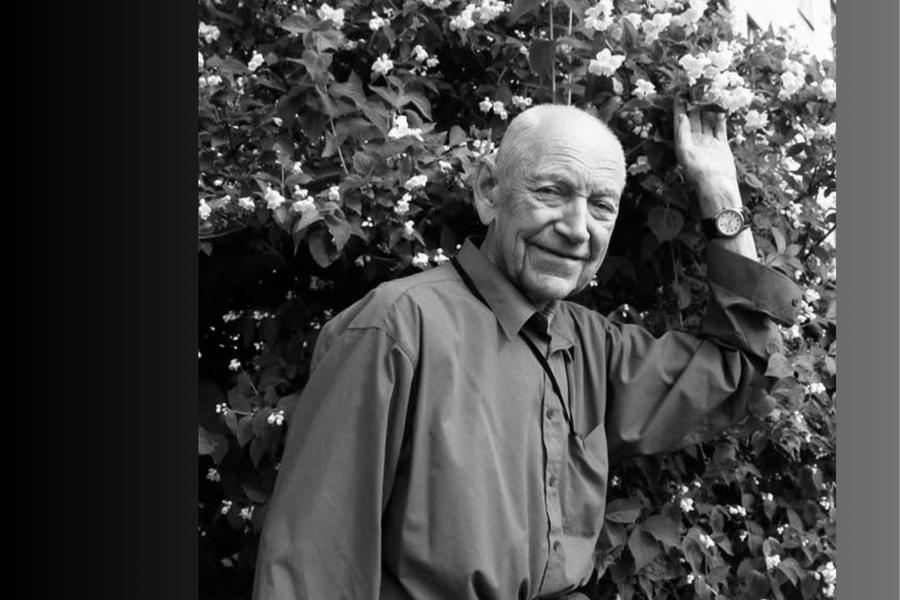
Great tree researcher Guntis Eniņš published the book “Trees Do Not Leave Home” in 2017. However now, in the very fullness of summer, we have received the sad news that we have been “left” by Guntis Eniņš, honorary doctor of the Latvian Academy of Sciences, friend and researcher of natural monuments. Be sure to take a look – the very kindest photograph of Guntis Eniņš is on the cover of this book together with Rieteklis’ juniper.
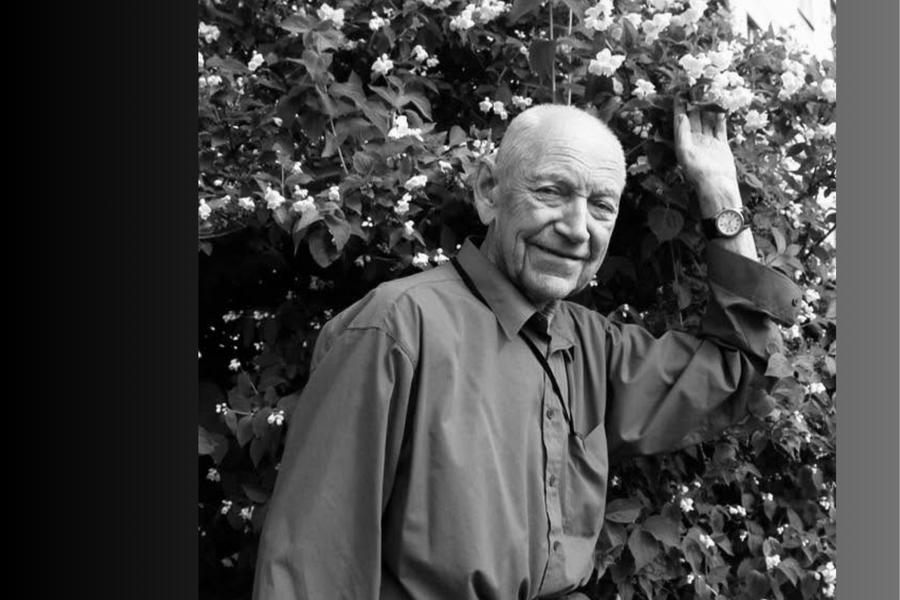
Guntis Eniņš walked a bright and productive path through life, leaving behind many written books, many friends, and many good memories of time spent together. Before and after receiving his mechanical engineer’s diploma from Riga Polytechnic Institute in 1968, Guntis Eniņš worked in various positions at different institutions – the Chemical-Pharmaceutical Factory (1960–1961), the Wine and Champagne Factory (1961–1963), the Institute of Organic Synthesis of the Academy of Sciences of the Latvian SSR (1963–1970), and the Latvian Research Institute of Experimental and Clinical Medicine (1971–1991). From 1991 to 1993, he was a senior adviser at the Latvian Society for Nature and Monument Protection.
All the titles of Guntis Eniņš’s books from the last two decades are very meaningful – “The 100 Greatest and Holiest” (2008); “Unknown Latvia” – waters, cliffs, stones, trees and caves – more than 70 natural wonders (2015); “Trees Do Not Leave Home” (2017); “Latvian Natural Wonders” – unusual waters, stones, caves and trees (2019). Guntis himself called “Unknown Latvia” his best book. He was very proud of his most significant achievements – the methodology for surveying and researching great trees, based on 28 years of experience in searching for, researching and saving great trees. He studied the morphology and dynamics of waterfalls and developed a methodology for surveying waterfalls. By searching for, surveying and studying great stones, as well as cultural-historical stones, he developed a methodology for surveying, measuring and calculating boulders. He developed an extensive classification of cult stones, or venerated stones, found in Latvia.
Guntis Eniņš saved several thousand great trees in Latvia from being blown up, as in 1979 he succeeded in stopping the blasting of great trees in areas of land undergoing amelioration. In the fight against the blasting of trees, he managed to involve Imants Ziedonis, Andris Jakubāns and the more progressive scientists, and to activate a public movement. In Straupe Parish, G. Eniņš discovered Latvia’s underground lakes, which had formed as a result of suffosion processes, as well as a unique underground labyrinth system in Latvia, created by active suffosion processes, where the total length of two cave passages approaches 500 metres.
In total, he discovered more than 100 previously unknown caves, organised and led the cleaning and excavation works of many caves, and, starting in 1971, began the objective and precise surveying of Latvia’s caves. In this work, G. Eniņš trained the younger generation, who defended both bachelor’s and master’s theses. Within the framework of the State Culture Capital Foundation, the programme “Latvian Cross Trees – a Relic of Pagan Belief in Today’s World” was implemented. They were found in Liezere Parish, and the cross marks of an ancient tradition can still be seen on them, where it is still alive today.