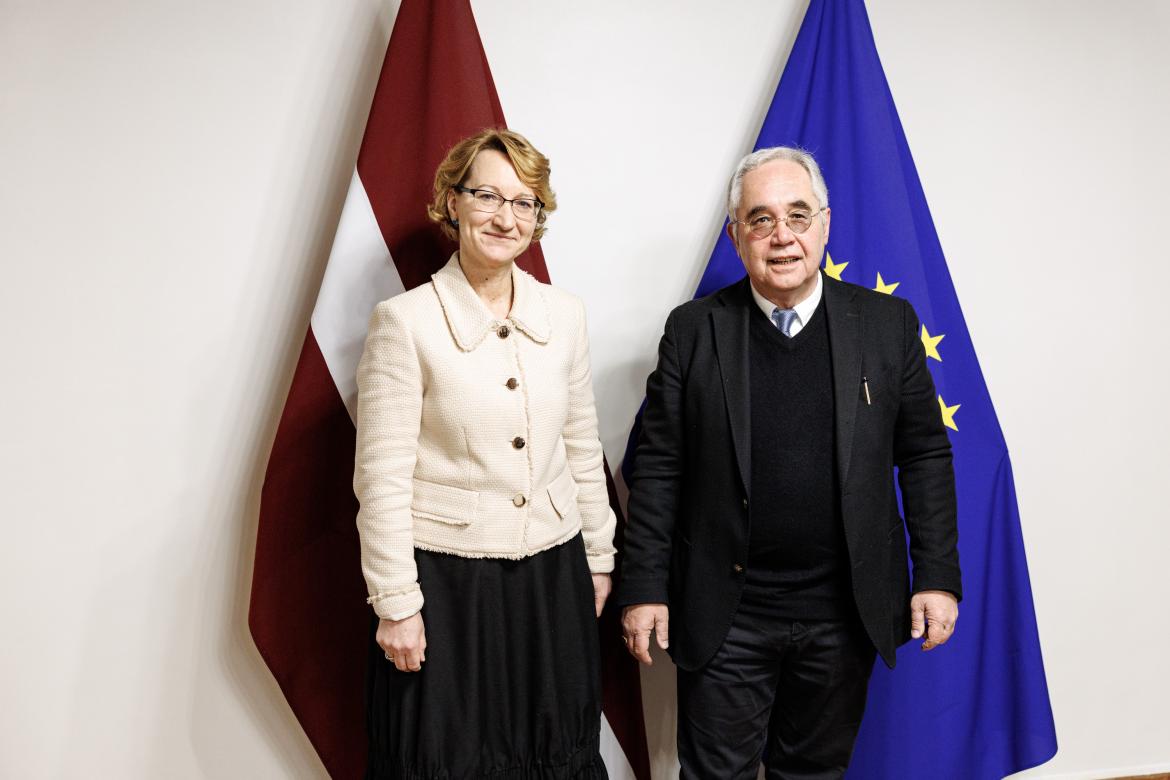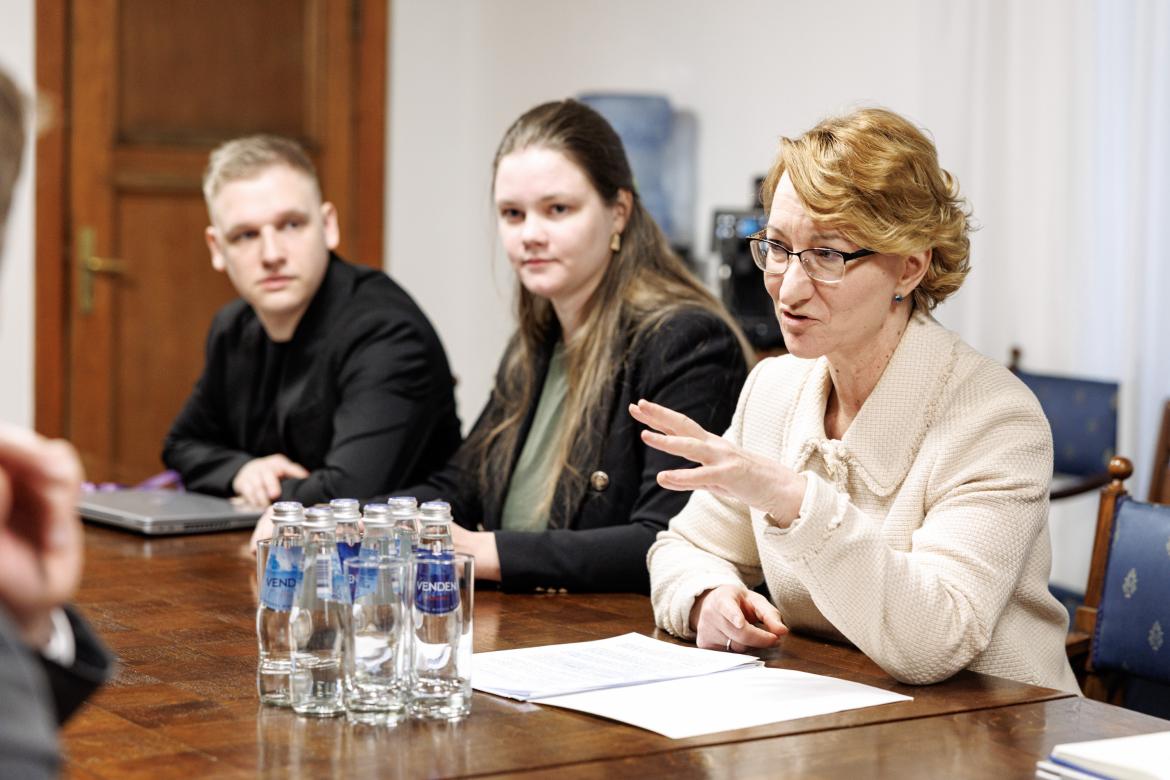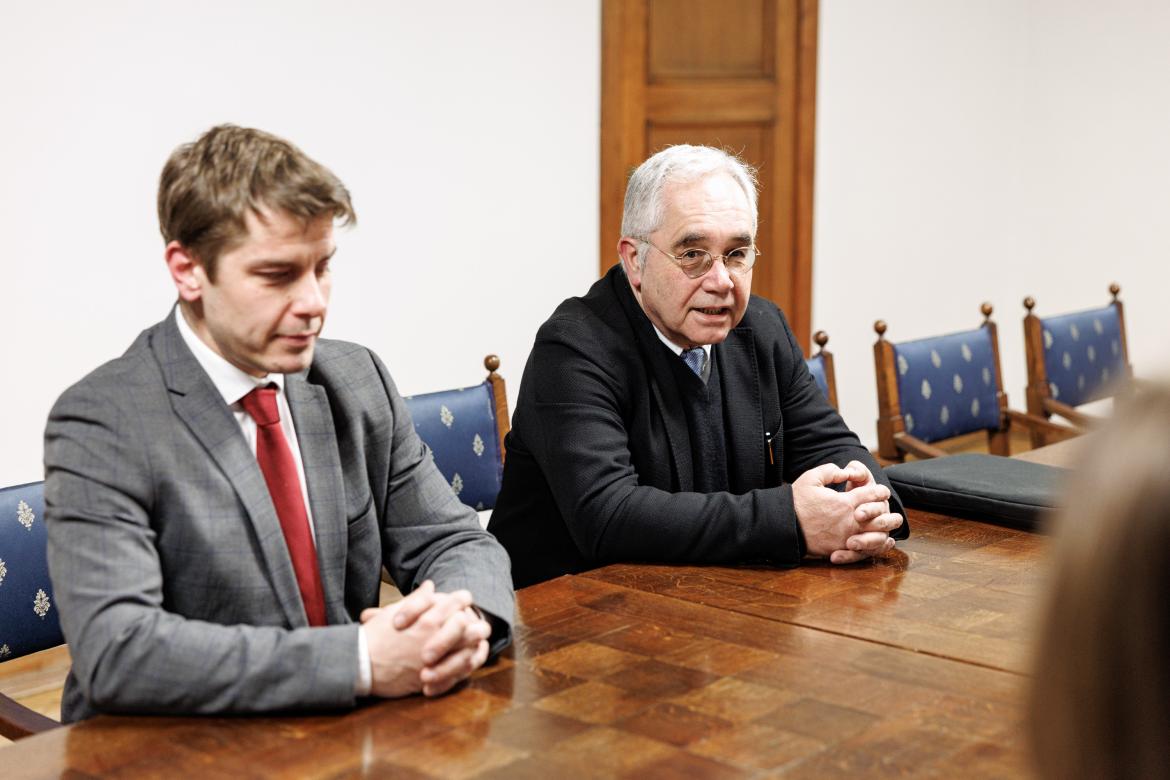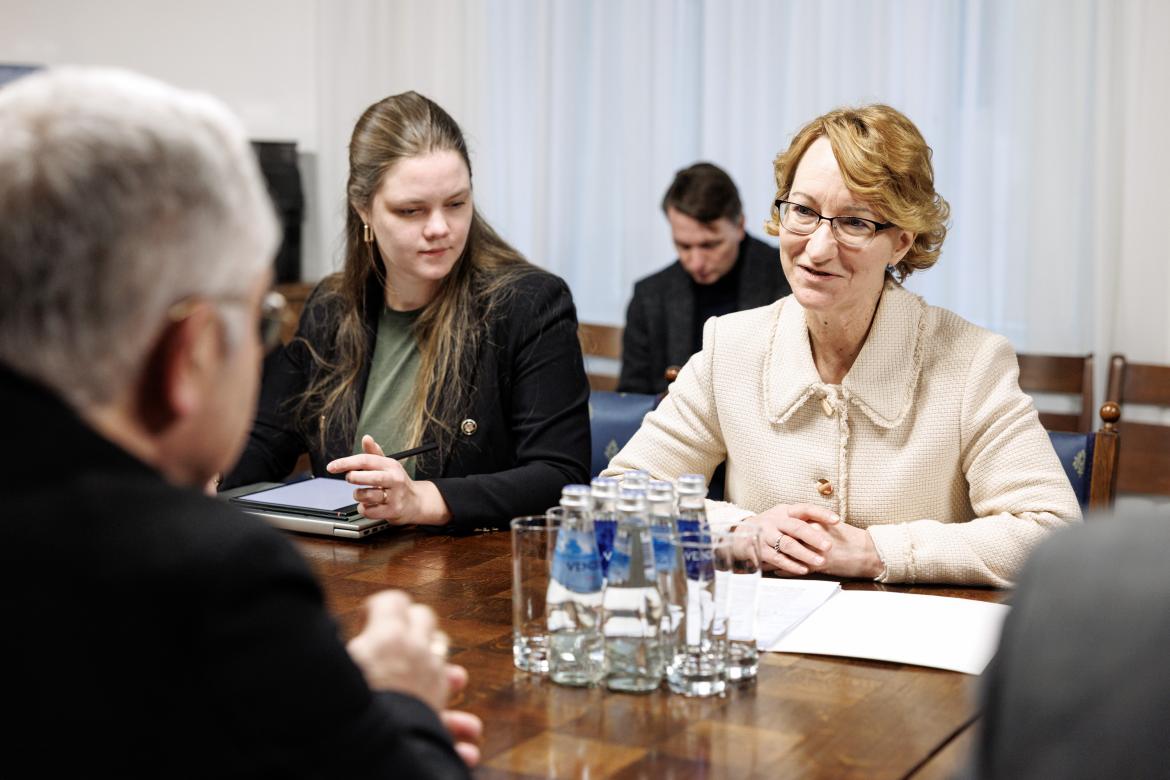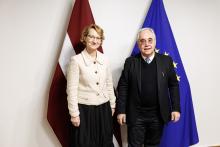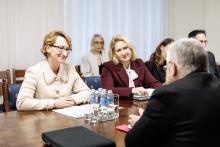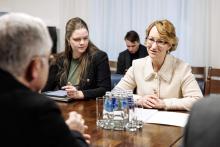
On Thursday, 15 January, Minister of Education and Science Dace Melbārde will meet with the President of the Council of the European Organization for Nuclear Research (CERN), Professor Kostas Fountas, to discuss the long-term strengthening of cooperation between Latvia and CERN.
Kostas Fountas will visit Latvia on 15 and 16 January, and during the visit he will familiarize himself with Latvia’s scientific achievements and the progress made in developing the country’s particle physics community.
The visit will include stops at Riga Technical University (RTU), the University of Latvia (UL), and the Institute of Solid State Physics of the University of Latvia, meetings with the leadership of both universities, as well as a visit to the National Library of Latvia (NLL) and the opening of a CERN exhibition. The exhibition will feature interactive displays and informational materials, and will offer guided tours for school students and other interested groups.
Latvia, which has been an Associate Member State of CERN since 2021, aims to obtain full membership status in 2029. To achieve this, Latvia is purposefully developing its particle physics community and other key exact sciences and engineering disciplines relevant to CERN. The Ministry of Education and Science works in close cooperation with the CERN National Contact Point in Latvia, which has been operating in the country since 2018.
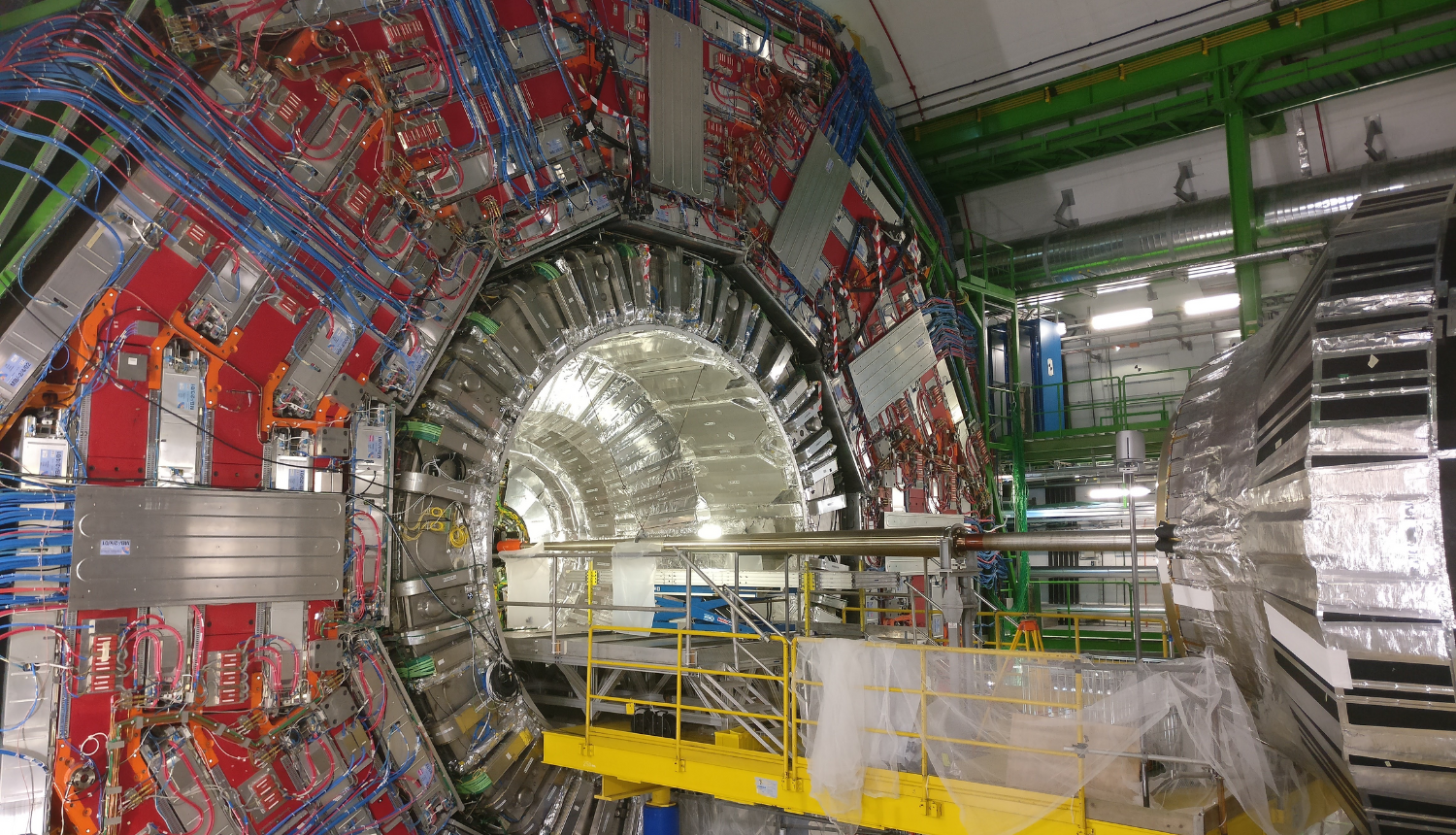
Cooperation with CERN has already contributed to significantly faster development of high-energy physics and accelerator technology in Latvia and has provided opportunities for Latvian scientists and students—particle physicists and engineers—to participate in the work of this major scientific institution. Latvian researchers take part in the CMS (Compact Muon Solenoid) and AEgIS (Antimatter Experiment: Gravity, Interferometry, Spectroscopy) experiments, conducting fundamental research. Latvia is also involved in the MEDICIS (Medical Isotopes Collected from ISOLDE) experiment. Students in the joint RTU–UL doctoral programme Particle Physics and Accelerator Technologies have the opportunity to carry out their doctoral research at CERN.
Latvia’s cooperation with CERN is supported by state funding and strategic development mechanisms, including the successful implementation of the national research programme High-Energy Physics and Accelerator Technologies.
Founded in 1954, CERN is the world’s leading organization in the advancement of physics and scientific discovery. One of its most widely known achievements occurred in 2012, when CERN scientists detected the elementary particle known as the Higgs boson in experiments conducted at the Large Hadron Collider.
In 1989, CERN created the World Wide Web (www), which changed the world. Technologies developed at CERN are also used in everyday life, for example in the treatment and diagnosis of oncological diseases. The main tunnel of the Large Hadron Collider is 26.7 kilometres long and is built at a depth of approximately 100 metres beneath the territory of Switzerland and France.