A pretty picture feeds us waste
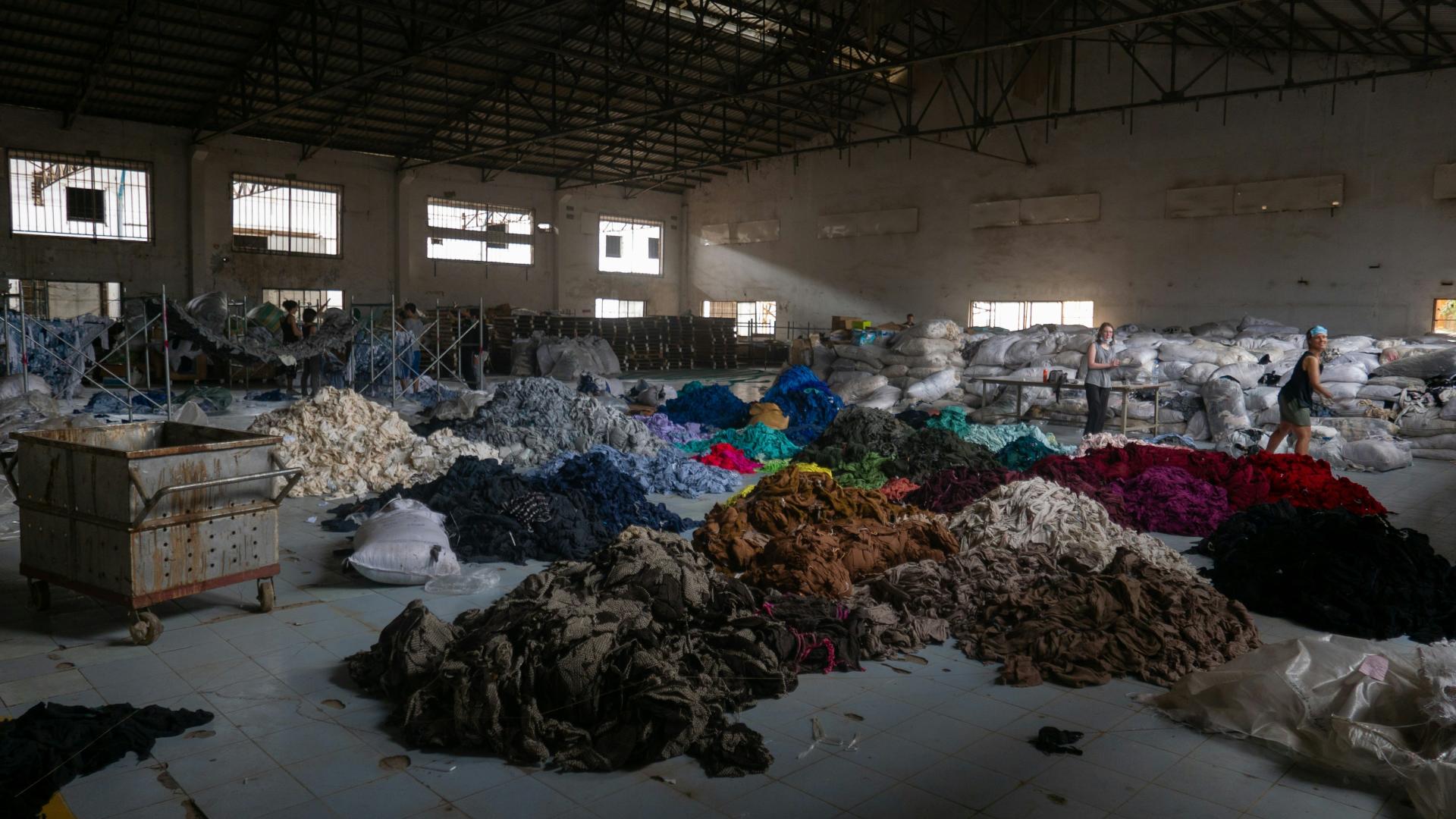
Textile waste is one of the greatest burdens on the environment and accounts for approximately 3–5% of total waste. Moreover, its volume increases every year as fast fashion consumption grows.
Although three percent may not seem like much, unlike biological waste, textiles decompose very slowly in nature and cause long-term environmental pollution. They are also significantly more difficult to recycle.
“The problem is enormous. Very serious. We are unable to recycle. We also do not know how to recycle. We still do not know how to use textiles adequately, as they should be used. When I am asked what exactly should be bought, my first answer is — do not buy. This should be every person’s guiding principle,” Dāboliņa said.
If everyone asked themselves why they had bought a particular item of clothing, very often the answer would not be because I needed it and could not do without it, but because I simply wanted it.
The professor emphasised that buying something just to cheer oneself up, or because something simply caught one’s eye, is an entirely understandable human weakness that cannot be condemned. At the same time, people must be encouraged to think and critically assess what exactly we are buying.
“At present, at least 10% of our waste consists of items that have never been used. Most of them come from “Shein” and similar fast-shopping retailers that produce waste. Their goods are of such poor quality,” Dāboliņa emphasised. People are attracted to these online shops by the beautiful images — they fall for artificially created pictures on the internet and buy these goods. Only after receiving them does a person realise how poor-quality these goods are, which is why they often end up straight in the bin.
Why is it so difficult to recycle?
Moreover, while products made of plastic, paper, cardboard and other materials may at least still perhaps end up being recycled, textiles are mostly not recycled, because it is simply very complicated.
“There are materials, there are complicated materials, there are very complicated materials, there are very, very complicated materials, and then there are textiles. Why? Because we are no longer as honest and simple in textile production as we once were. In the past, a sheep would grow up either on one’s own farm or on a neighbouring farm; we would shear it, wash the wool, spin the yarn and use it. It was exactly the same with linen. What is happening with textiles now? We have synthetic materials, we have blends of materials,” the professor explained.
Recycling is made even more complicated by the fact that, during the production process, textiles are often softened, oiled, waxed, chemically treated and dyed with all kinds of colours. Textile products also go through a complex post-treatment process, during which they are again softened, chemically ironed and filled with additional substances.
“For example, when buying a T-shirt — the cheaper the shirt, the more it is glued together — and washing this T-shirt for the first time, how often is it the same as when we bought it? Rarely, because the first post-treatment substances have been washed out. Anything that touches the skin should not be used unwashed at all, because anyone who knows what has been applied on top of it would not want it next to their skin,” the professor advised.
This entire complex of production, processing and the substances used creates a final product that cannot be recycled so easily. Therefore, we need to think about how to use textiles for as long as possible.
“Once again, we return to old times. What did our grandmothers do with clothing? They had obtained it with such difficulty that they used it until it was worn out, and when it was worn out, it became either a small rug or insulation, or a cloth for wiping something up. This is another thing I would encourage people to do — instead of throwing a worn-out T-shirt in the bin, cut it into cloths and stop using paper towels for a while, because paper towels, unfortunately, are also not as innocent as we would like to think,” Dāboliņa acknowledged.
There Is No Need to Be Afraid of Viscose and Lyocell
Likewise, of course, attention should be paid to which manufacturers we buy clothing from and what the production practices of those specific companies are. Today, there are companies that think about the environment and have found ways to produce clothing in a more nature-friendly and sustainable way.
It is also worth paying attention to the composition of clothing, the professor urged:
“What should not be feared, and what is a very good thing in recycling, is viscose and lyocell. If chemicals are used correctly, these are very green and clean materials, because they can be broken back down into their components. They are made from so-called man-made fibres, artificial fibres, which we are afraid of for some reason, because most of society thinks that they are synthetic, but in fact they are cellulose-based fibres.”
She emphasised that not only cotton and linen, but also viscose and lyocell are very good materials for wearing next to the skin — and in several respects they even outperform cotton, because they are silkier, lighter and more pleasant to the touch, as well as absorbing moisture better and drying faster. Therefore, there is no need to be afraid of them.