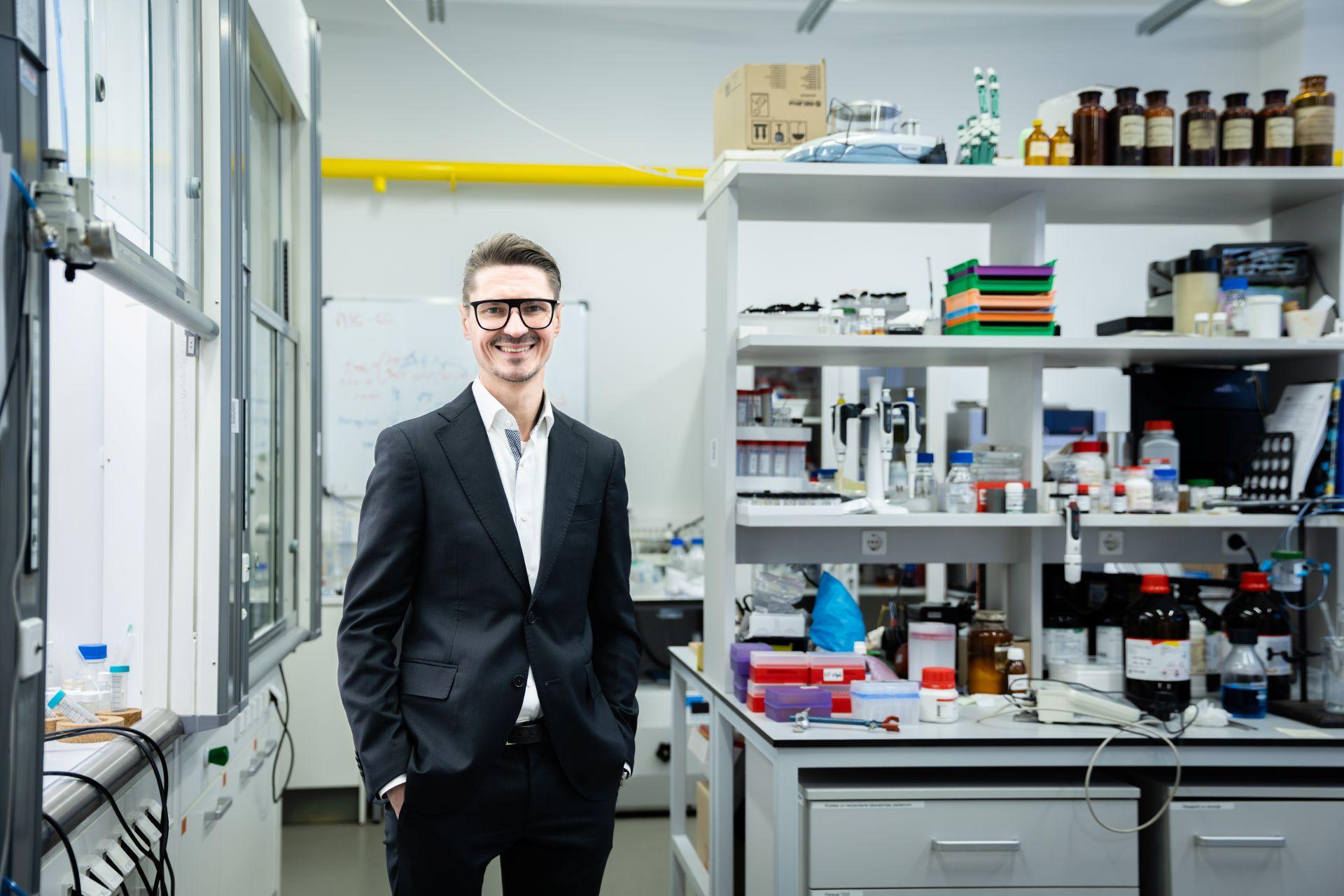
Scientists from Riga Technical University (RTU) and the Royal Melbourne Institute of Technology (RMIT) in Australia have demonstrated that static electricity generated when two materials come into contact can be controlled. This discovery changes the previously prevailing view that electrostatic discharges are an uncontrollable process. The study has been published in the prestigious scientific journal Nature Communications.
Electrostatic discharges are an everyday phenomenon that humanity has known for several millennia – from a spark when touching a door handle to a lightning strike. Both phenomena have the same origin: when two materials come into contact, an exchange of energy takes place. Static electricity has long been regarded as an uncontrollable quantity determined solely by the properties of the materials coming into contact. However, the new study challenges this assumption. The researchers have shown that, by bringing materials close together in the presence of an electric field, the static charge generated on the surface can be directly controlled.
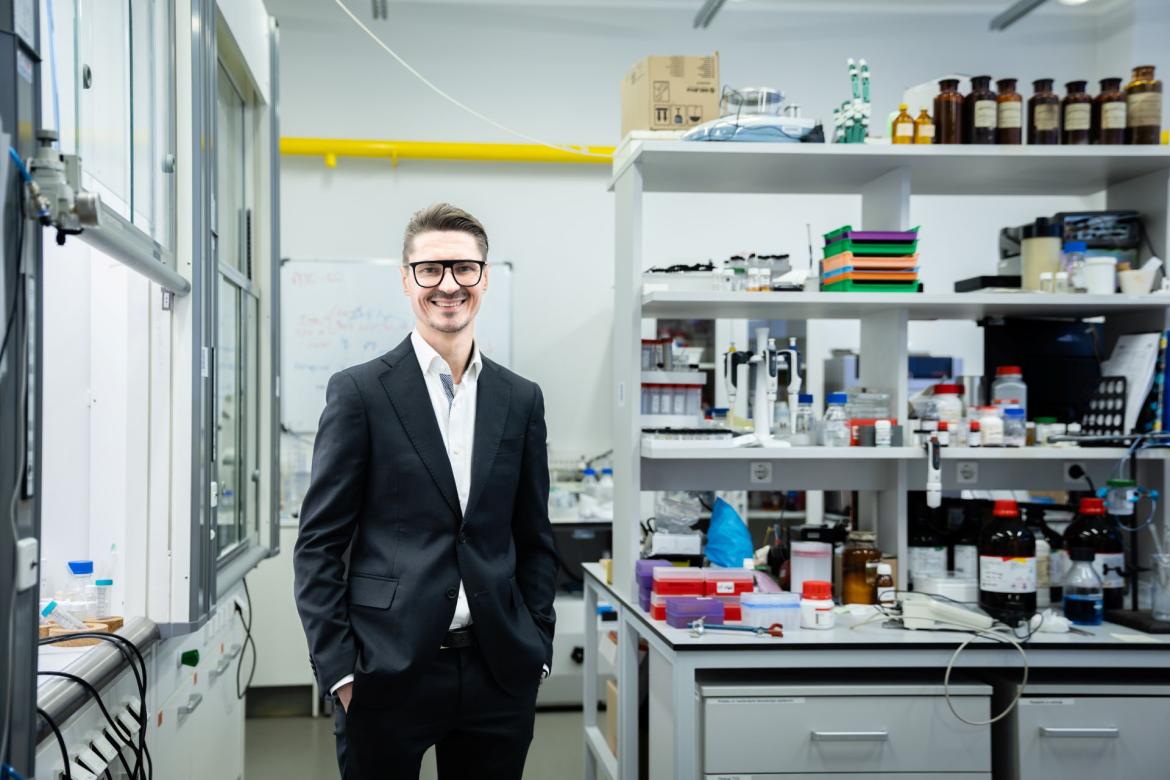
“We can make the same material become positively or negatively charged and precisely control the magnitude of the charge,” says Andris Šutka, Tenure Professor at the Faculty of Natural Sciences and Technology of Riga Technical University. “This discovery is the result of our focused work. Since 2018, we have been conducting fundamental research into the origin and transfer of static charge and have produced around 40 scientific publications. More than five years of collaboration with colleagues from Australia has been crucial,” he explains.
Nature Communications publication: https://www.nature.com/articles/s41467-026-77733-4
The new knowledge about the influence of an electric field on charge polarity helps explain fundamental natural processes and creates opportunities to develop more powerful triboelectric nanogenerators (TENGs) – highly compact smart multisensor systems that would combine energy generation, sensing, memory and data processing. The team of scientists led by A. Šutka, in collaboration with Australian researchers, has launched several promising research directions aimed at developing such self-sufficient systems that would enable the autonomous operation of wearable, environmental and industrial devices.
A. Šutka’s scientific achievements in triboelectrification have already been recognised as outstanding by the European Research Council (ERC). Specifically, the project he leads, “Methods for Controlling the Triboelectric Effect in Polymers and Using It for Mechanical-Electrical-Chemical Conversion” (TriboCharge), received the ERC’s “Seal of Excellence”. In the project, the researchers aim to radically transform the conversion of mechanical energy into electrical energy by offering new, more efficient materials and using previously untapped energy sources to power multisensor systems. In partnership with RMIT and the University of Sydney, RTU is also establishing the Centre of Excellence for Future Advanced Multisensor Systems (CoE-FAT). By combining scientific excellence in materials science, energy harvesting and sensor technologies, the centre is seeking solutions to challenges in healthcare, climate change, environmental and infrastructure monitoring, and the remote supervision of industrial processes.