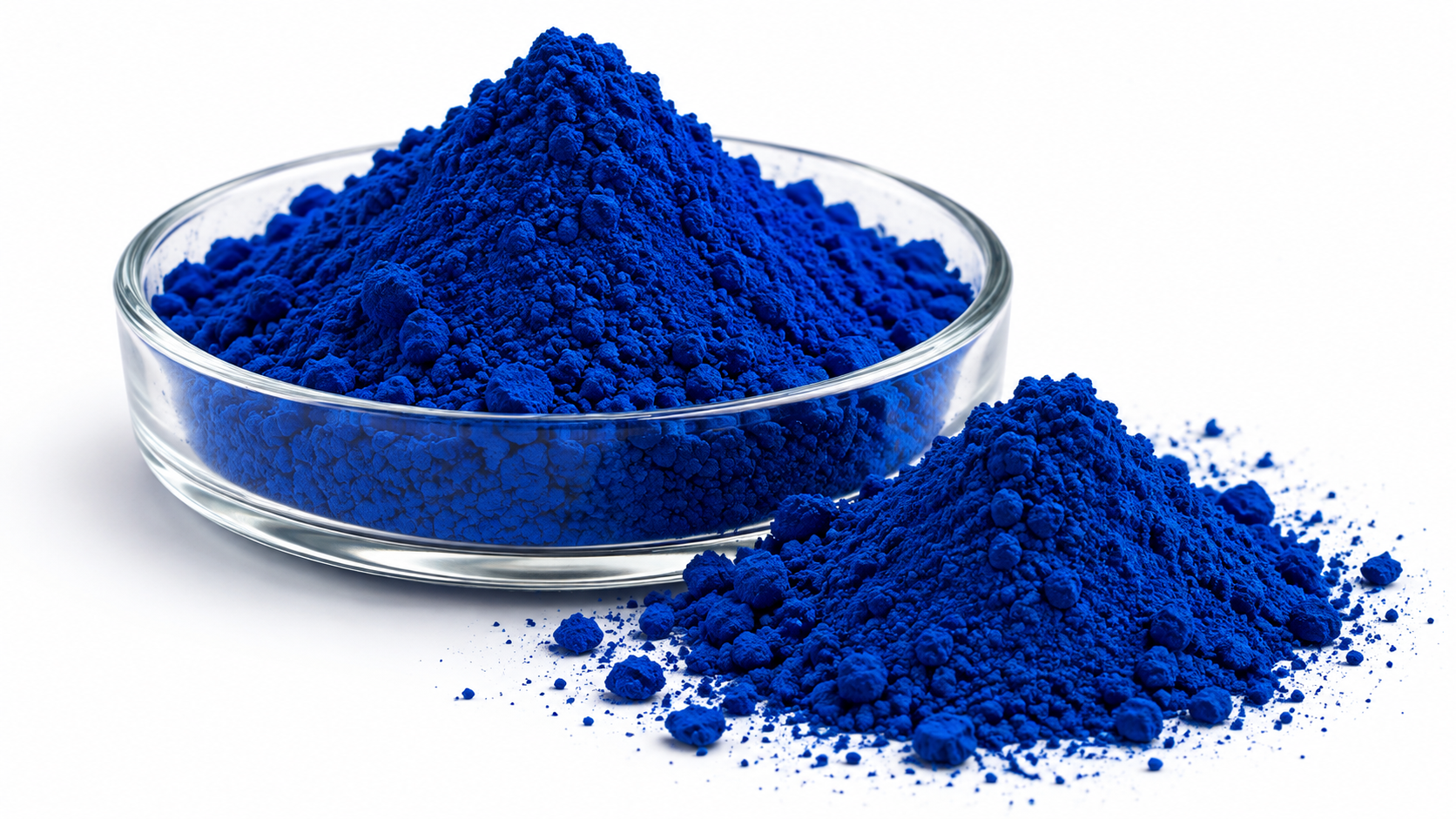
For more than 300 years, Prussian blue has been known as a vivid pigment in art, used by such world-famous painters as Vincent van Gogh, but today this compound has entered an entirely different field of research. University of Latvia (UL) research associate and doctoral student Uģis Eismonts is studying how its ability to bind radioactive caesium can be used in practical solutions for military pharmaceutical and medical applications – from capsules and filters to protective clothing and wound dressings.
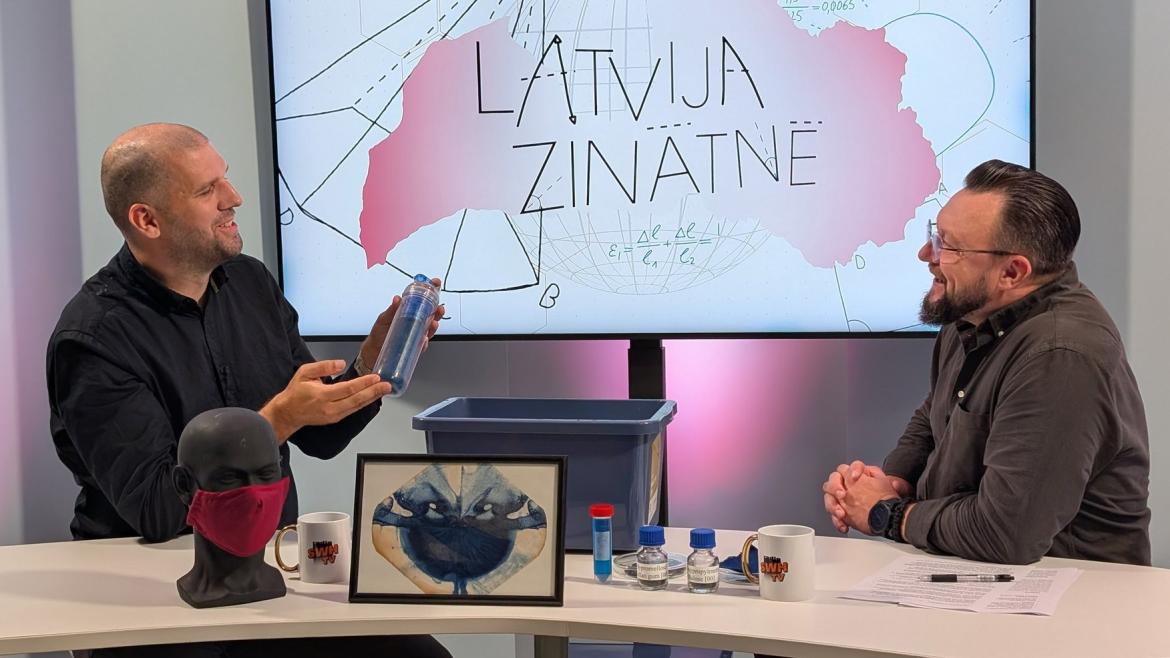
In the Radio SWH TV programme "Latvia in Science", produced in cooperation with "Rietumu Banka" and the University of Latvia Foundation, Eismonts talks about the unusual possibilities of Prussian blue and shows prototypes that have already been developed. "We are currently talking about only a small part of what Prussian blue can do, and we have discovered very little," he says.
From pigment to binding radioactive caesium
Eismonts has been studying Prussian blue since the beginning of his studies, devoting both his bachelor’s and master’s theses to it and continuing his research during his doctoral studies. One of the significant forms of support in advancing the research has been receiving the University of Latvia Foundation’s “Mikrotik” doctoral scholarship in the field of exact and medical sciences.
Prussian blue originated in Berlin at the beginning of the 18th century and for approximately 250 years was mainly known as a pigment, until its potential to promote the elimination of radioactive substances, including caesium, from the body was discovered in the 1960s.
Caesium-137 is one of the products of nuclear fission, and its half-life is approximately 30 years. Studies conducted in the 1960s showed that, when Prussian blue enters the digestive tract, it is able to bind caesium and reduce its reabsorption into the body, thereby accelerating the elimination of radioactive caesium from the body. Pharmacologist Vladimir Nigrovic also made a significant contribution to this field of research, and his experiments helped substantiate and demonstrate the effectiveness of Prussian blue in removing radionuclides from the body. Eismonts also highlights this research in the programme.
After the Chernobyl nuclear disaster, the use of Prussian blue for removing radioactive caesium from the body began to be studied more extensively. Subsequent experience from radiological accidents helped establish its use in human treatment as well, and today Prussian blue is approved for use as an antidote in cases of internal contamination with radioactive caesium and thallium by both the European Medicines Agency (EMA) and the United States Food and Drug Administration (FDA).
The war in Ukraine has given the research new relevance
In recent years, radiological safety issues have once again become particularly relevant in Europe, and along with them, interest in the use of Prussian blue in protective solutions has also grown. "In recent years, especially following Russia’s invasion of Ukraine, research on Prussian blue in this field has expanded," says Eismonts.
His research is also focused on how the properties of Prussian blue can be used in practice. In the studio, Eismonts demonstrates both capsules containing Prussian blue in powder form, as well as filters and impregnated fabrics. Prussian blue is capable of binding radioactive caesium, and the scientist emphasises that it should not be confused with potassium iodide, which is better known to the public and is used for protection against radioactive iodine. "Potassium iodide is for iodine, Prussian blue is for caesium," the scientist explains.
Prussian blue could be used in a wide variety of situations involving radioactive hazards. For example, it can be used to purify contaminated water, or in capsules that can be taken as an antidote in cases of poisoning with radioactive caesium. Military personnel working at sites of radioactive leaks could use specially treated clothing, while medical personnel could use special surgical wipes during operations.
The programme also shows a prototype protective suit and filter material. The purpose of such solutions is not to block ionising radiation itself, but rather to reduce the amount of radioactive contamination reaching the human body or entering the organism, for example through the inhalation of contaminated particles.
"We want to protect people, so first responders, firefighters, police officers and military personnel should have such suits," says Eismonts, emphasising the potential of such materials in radiologically contaminated environments.
Research continues with dressings and gels
One of Eismonts’ research directions is incorporating Prussian blue into medical materials. In the studio, he demonstrates surgical gauze and wipes treated with the compound, which are being studied under laboratory conditions as a possible means of binding radioactive caesium in the case of an open wound. The aim of such an approach is to reduce the further entry of radioactive caesium into the body, thereby reducing the need to subsequently take an oral antidote.
"We are currently working very actively to develop such dressings," says the scientist, adding that the next direction is incorporating Prussian blue into gels. In developing such gels and dressings, researchers are studying both Prussian blue’s ability to bind caesium and the possibility of combining it with other materials, such as clay to promote wound healing and silver for antibacterial effects.
The Radio SWH TV programme "Latvia in Science" introduces Latvian scientists, researchers and innovators whose ideas and achievements are shaping future technologies and solutions, while also revealing science as an exciting and human process. The conversations with scientists are produced in cooperation with "Rietumu Banka" – excellence is never accidental. The scientists are supported by the University of Latvia Foundation. The programme can be watched on Radio SWH TV on Thursdays at 20:00, with a repeat broadcast on Sundays at 15:00.