Kristaps Kļaviņš, Professor at the Faculty of Natural Sciences and Technology of Riga Technical University (RTU), under whose leadership the non-invasive diagnostic platform “SwyCard” is being developed, has gained significant international recognition at the deep-tech summit “Hello Tomorrow Global Summit 2026”. This recognition provides direct access to an exclusive network of global investors and industry experts.
Four other RTU research teams also performed exceptionally well at the summit in Amsterdam, presenting projects with high commercialisation potential and demonstrating the ability of Latvian science to compete in the global market. Summit participants were also introduced to the cell therapy validation platform “DEPCELL”, the biomimetic drone “DURBIS”, the cybersecurity coating system “EMI Shield”, and the biomaterials solution “BIOCORE”.
Overall, an international jury selected the ten strongest BioPhoT platform research and innovation teams from Latvia through a competitive process to participate in the summit.
The latest report by the organisation “Hello Tomorrow”, “Global Deep Tech Pioneers Radar 2026”, ranks Latvia seventh in the world in terms of the number of deep-tech start-ups per capita. In this indicator, Latvia is positioned immediately behind such technology powerhouses as Israel, Singapore and Switzerland, while in the overall ecosystem assessment it ranks 31st among the 100 countries evaluated.
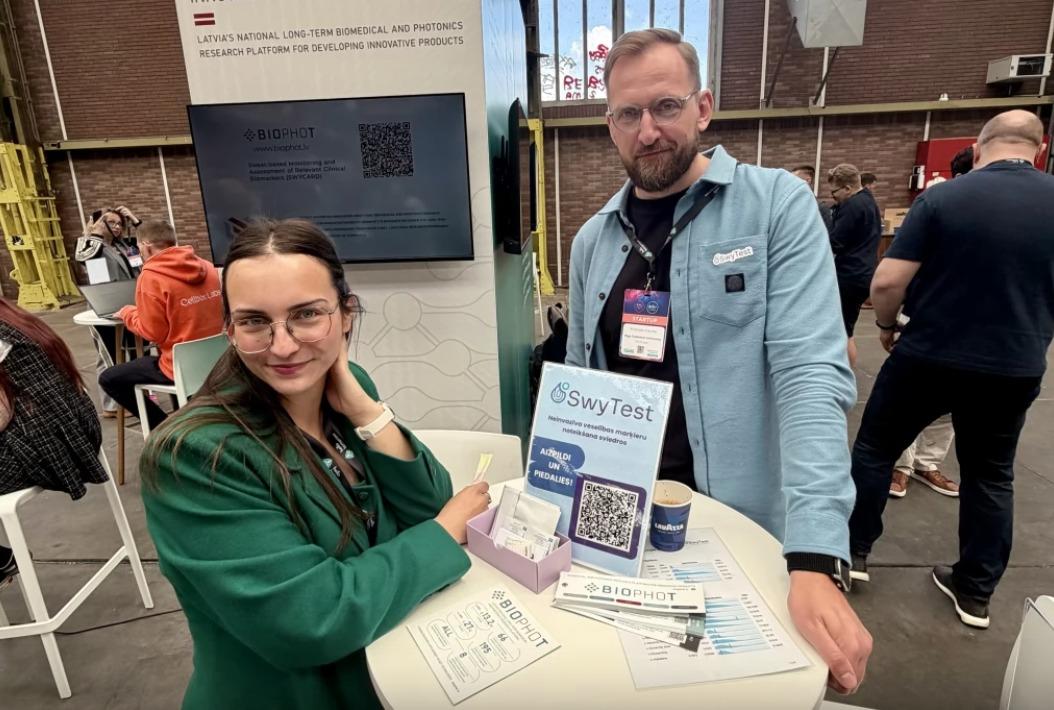
“International arenas such as this once again demonstrate that universities and research institutions are the true cradle of deep-tech innovation,” emphasises Liene Ivanova, Head of the BioPhoT programme at RTU. “This is precisely why the BioPhoT platform, with eight national partners and a portfolio of 66 projects, is a critically important driving force in Latvia’s ecosystem. We are not only creating technologies, but deliberately building a bridge between academic excellence and the global market, enabling researchers’ ideas to become success stories,” she continues. At the summit, the teams gain valuable international contacts and feedback from investors.
The Latvian delegation’s participation in the summit was organised in cooperation with the Investment and Development Agency of Latvia and the Riga Investment and Tourism Agency. The exclusive “Visionary Partner” status obtained provides the delegation with a unique opportunity to participate in Investor Day and private networking sessions with leading global investors. These meetings provided a clear insight: to attract investment successfully, innovative scientific discoveries must be combined with a strong business vision aimed at solving real market problems. Therefore, it is critically important to establish close cooperation between researchers and business professionals already at an early stage of development.
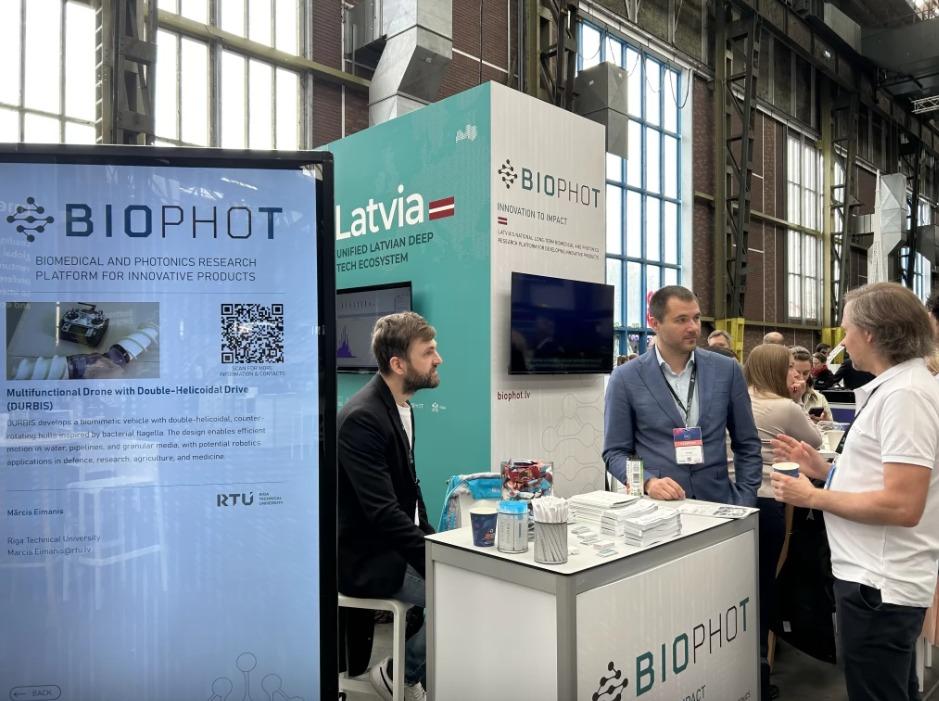
The Biomedical and Photonics Research Platform for the Development of Innovative Products, BioPhoT, brings together Latvia’s leading research institutes and universities. The platform’s main objective is to support researchers in protecting intellectual property and to facilitate the transformation of research ideas into commercially viable technologies. The project (No. IVPP-EM-Inovācija-2024/1-0002) is implemented under the long-term national research programme “Innovation Fund”, funded by the Ministry of Economics.