As Europe transitions towards cleaner mobility, reducing emissions from existing railway fleets remains a major challenge. Replacing diesel trains with new zero-emission alternatives requires significant investment and time, making retrofit solutions an important pathway towards faster decarbonisation. HYBUHTRAIN project contributes to this effort, aiming to validate a hydrogen-battery hybrid solution for Europe’s diesel trains.
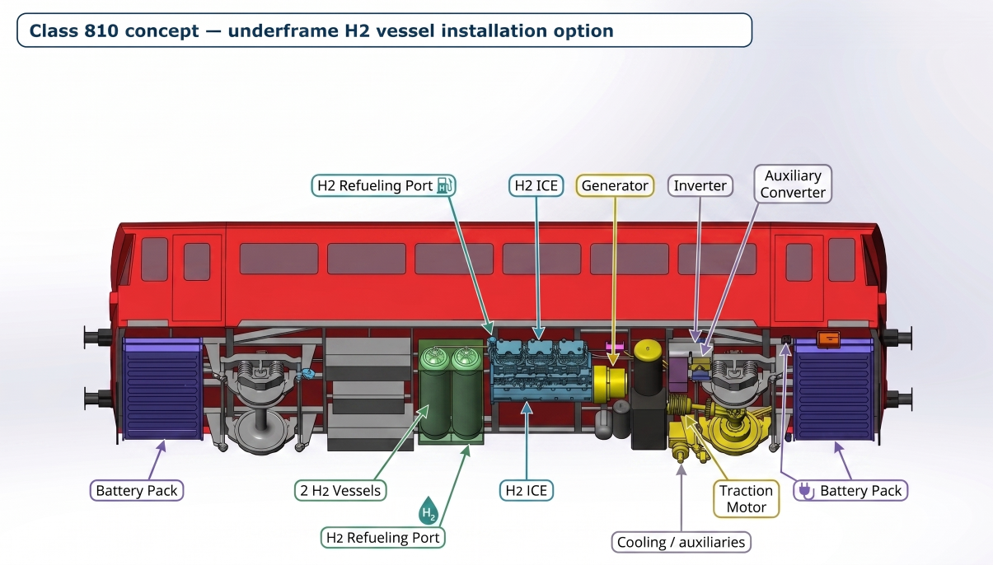
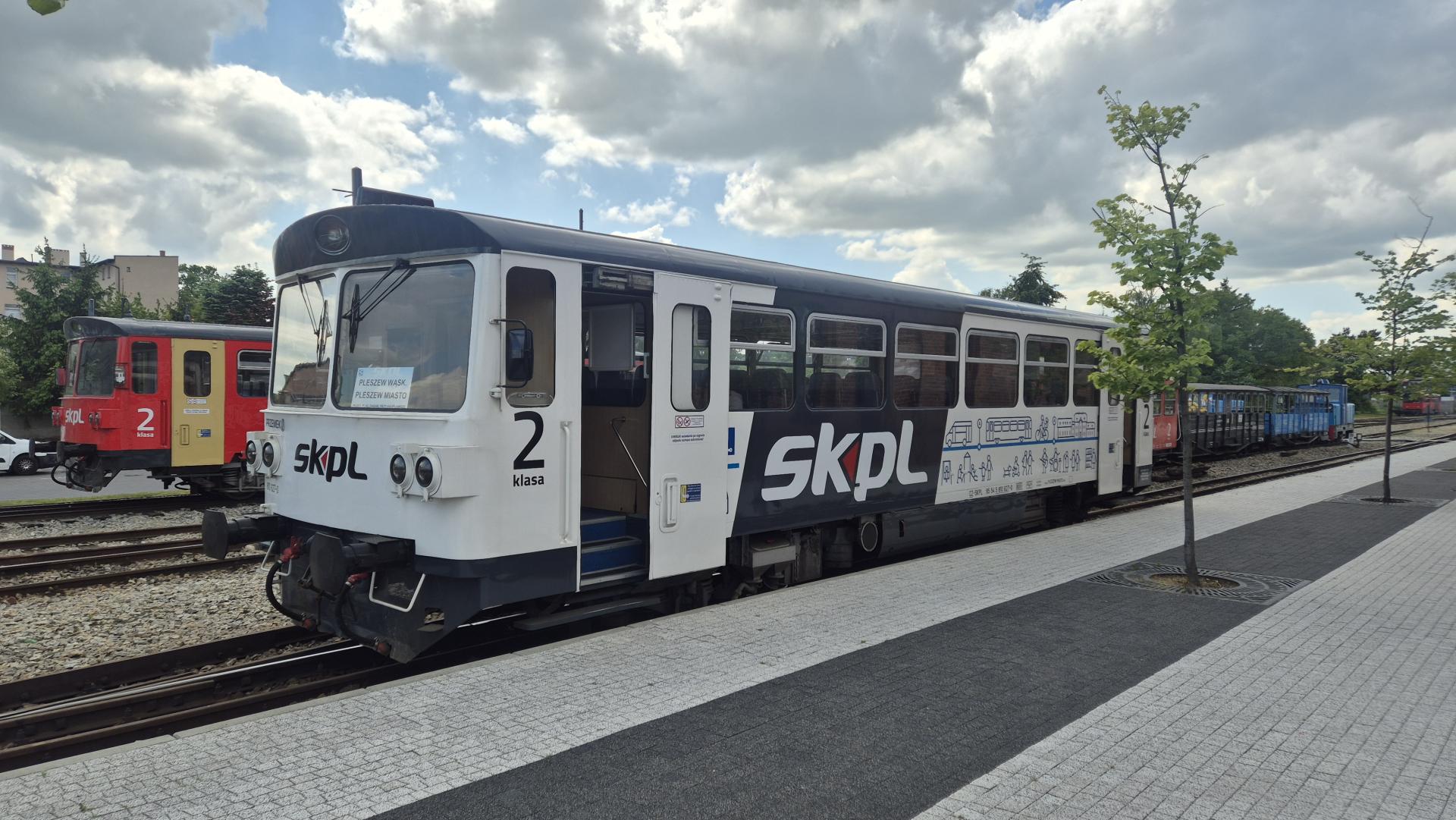
HYBUHTRAIN (HYdrogen engine Battery plUg-in Hybrid TRAIN) is a project accepted by the EIT Urban Mobility Strategic Innovation open call, led by the Latvian company DIGAS – the developer of Europe's first certified gaseous-fuel locomotives. The project builds on the already implemented HYIPTRAIN initiative, under which a hydrogen internal combustion engine (H2-ICE) retrofit kit was developed and certified for a train in Poland (operator SKPL).
Less hydrogen, more power, zero emissions at stations
The project combines an existing hydrogen-powered train with a modular battery system and Energy Management System (EMS). By using braking-energy recovery and overnight charging, the solution aims to reduce hydrogen consumption by 20–35%, improve short-term power performance compared to diesel mode, extend range, and enable zero-emission operation in stations and urban areas.
The retrofit approach offers a faster and more cost-effective alternative to replacing entire train fleets, helping operators accelerate railway decarbonisation.
From prototype to commercialisation in 18 months
Over 18 months, HYBUHTRAIN will advance the technology from Technology Readiness Level (TRL) 6 to TRL 9, moving towards full certification and commercial deployment after a three-month passenger service pilot.
With an estimated retrofit cost of around €0.9 million, the solution is approximately 13 times cheaper than purchasing a new zero-emission train, creating an opportunity to reduce emissions from Europe’s existing diesel fleets sooner.
Strong collaboration driving progress
The project consortium brings together five partners covering the full innovation chain. DIGAS (Latvia) leads technology development and commercialisation, Mikroluch (Ukraine) develops hybrid control systems, SKPL (Poland) provides the train and operational environment, Rzeszów Municipality (Poland) supports public engagement, and Riga Technical University (RTU) (Latvia) provides independent scientific validation.
RTU’s role: emissions testing and impact assessment
RTU contributes scientific expertise by evaluating the environmental and societal impacts of the technology. Researchers will conduct real-world emissions testing, measuring CO₂, NOx, and particulate emissions during operation, while also assessing the scalability, economic potential, and public-health benefits of retrofit solutions.
RTU will additionally support education and skills development in railway decarbonisation technologies.
Expected outcomes
By the end of the project, the consortium aims to reach two of EIT Urban Mobility's core KPIs – EITHE02.4 (marketed innovation) and KONHE31 (tested engineering innovation).
The project aims to demonstrate a certified hydrogen-battery hybrid train operating in passenger service (the SKPL CD 810‑series train in Poland) and create a foundation for wider deployment across Europe.
Expected results include avoiding approximately 200–230 tonnes of CO₂ emissions and more than 95% of NOx and particulate emissions per train annually, while supporting the upgrade of thousands of potential diesel train candidates (built 2000-2021) across six EU countries.
Contribution to the Sustainable Development Goals
HYBUHTRAIN contributes to several Sustainable Development Goals (SDGs). By reducing CO₂ emissions and air pollution from existing diesel trains, it supports SDG 13 (Climate Action) and SDG 3 (Good Health and Well-being). Its depot-based retrofit model strengthens regional innovation and engineering capacity, contributing to SDG 9 (Industry, Innovation and Infrastructure), while cleaner rail transport helps create healthier and more sustainable cities in line with SDG 11 (Sustainable Cities and Communities).
The role of EIT Urban Mobility
EIT Urban Mobility supports HYBUHTRAIN by enabling European partners to collaborate on a practical solution for sustainable rail transport. The support provides funding, networking, visibility, and access to an innovation ecosystem focused on cleaner and more inclusive mobility.
HYBUHTRAIN was accepted under EIT Urban Mobility’s Strategic Innovation open call, supporting sustainable transport innovation across Europe.
About EIT Community Hub Latvia
EIT Community Hub Latvia is the official national representation of the European Institute of Innovation and Technology (EIT) in Latvia. Coordinated by RTU and supported by the Ministry of Education and Science and the Latvian Council of Science, the Hub connects Latvian companies, researchers, and students with European innovation networks and funding opportunities.
About EIT
The European Institute of Innovation and Technology (EIT) is Europe's largest innovation network, operating since 2008. It is an EU body and an integral part of the EU's research and innovation programme Horizon Europe.
The EIT Community offers a wide range of innovation and entrepreneurship activities across Europe, including entrepreneurship education, start-up support services, business development programmes and collaborative research projects.