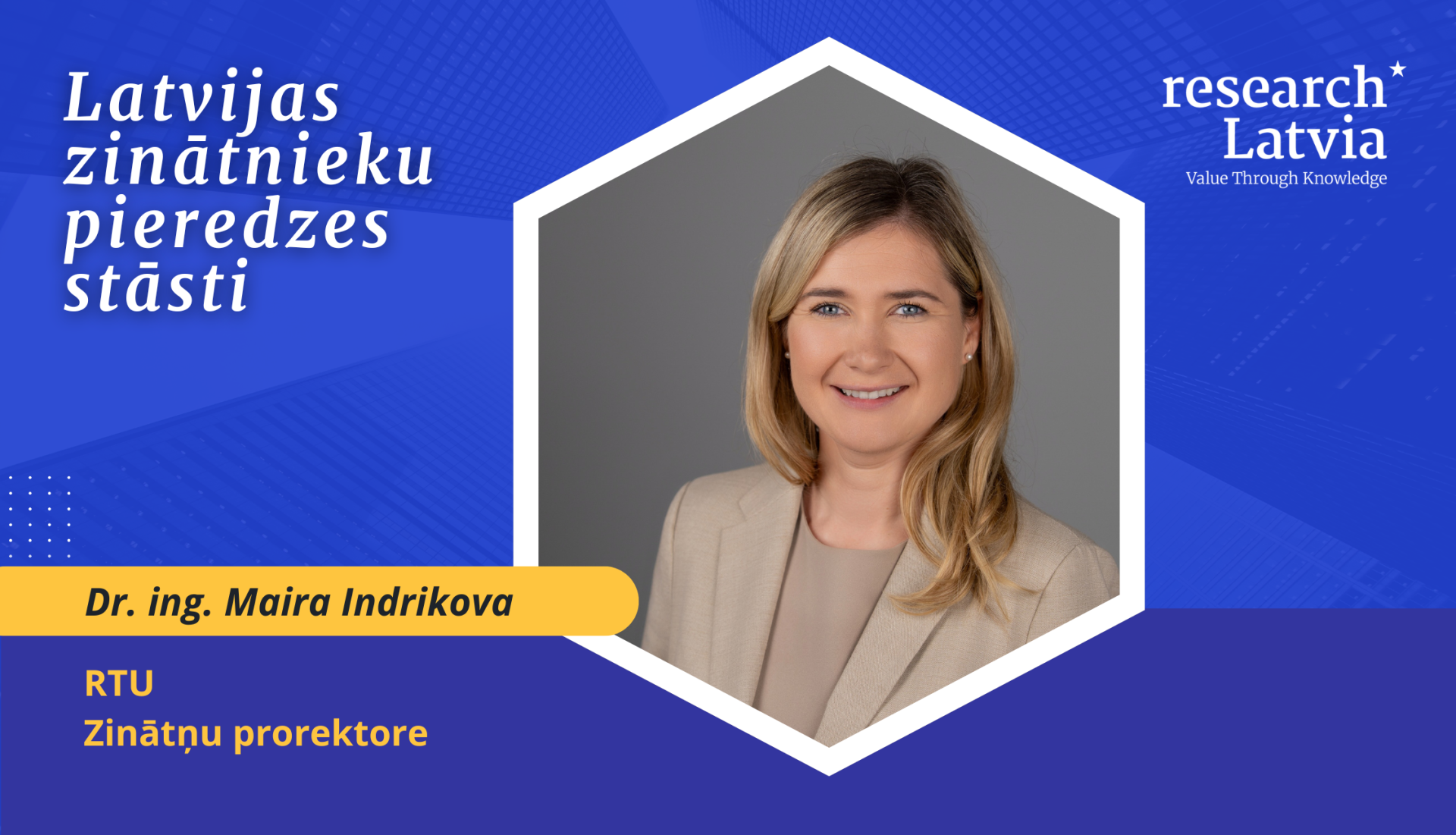
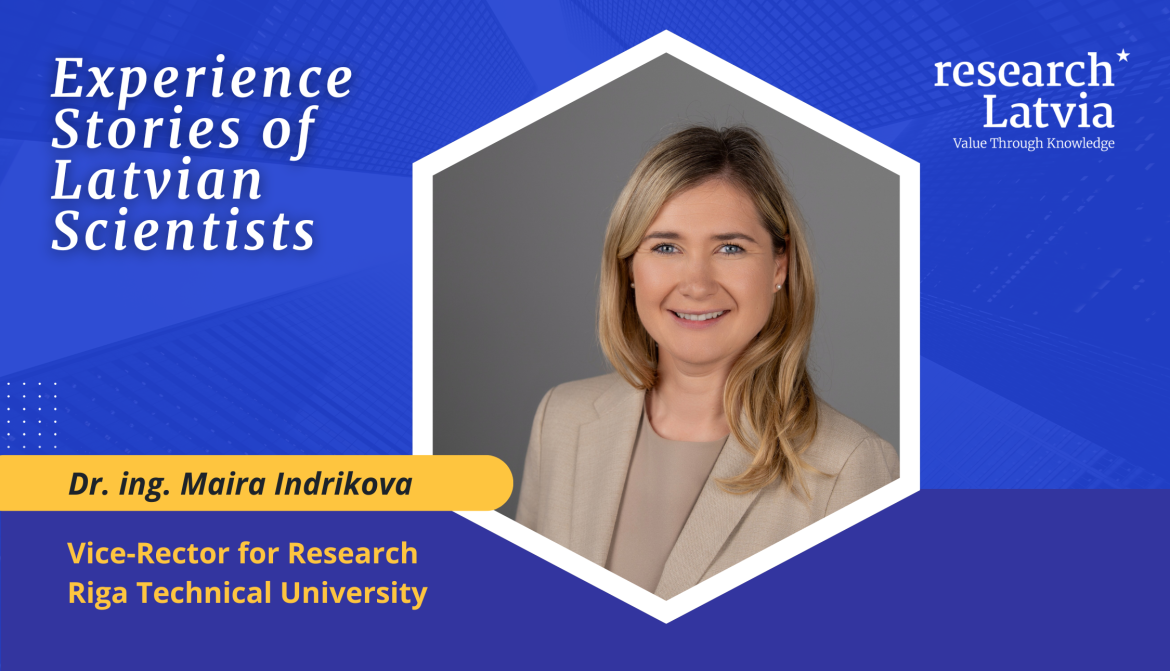
Dr. Ing. Maira Indrikova is a scientist whose example can inspire any young researcher. After earning a bachelor’s degree in Physics at the Faculty of Physics and Mathematics of the University of Latvia, Maira went to Kiel University in Germany, where, in cooperation with the technology and engineering giant “Bosch”, she wrote both her master’s thesis and doctoral dissertation on lithium-ion batteries. Maira has always been enterprising and open to new opportunities, so after some time she became a research engineer and innovation manager at the large company. But her success story does not end there, as Maira Indrikova returned to Latvia more than a year ago. Maira now uses the knowledge and skills she has acquired in the responsible position of Vice-Rector for Science at Riga Technical University.
How did your interest in science and working in research begin?
My interest in science began in early childhood, because I always wanted to understand how things work and what the invisible processes are that make them function.
After finishing secondary school, I began studying at the Faculty of Physics and Mathematics of the University of Latvia, joining what at the time were popularly known as the “fizmati”. I studied physics, and during my studies, with the help of the Erasmus+ programme, I went to Umeå University in Sweden. During that time, I developed a liking for the international environment.
I wrote my bachelor’s thesis at the Institute of Solid State Physics of the University of Latvia. In my research, I focused on materials science. Encouraged by my mentor, Inta Muzikante, I went to Germany to study materials science at Kiel University, where this field is highly developed. Step by step, I increasingly came to understand what working in science means and how it can be combined with work in industry.
How did the study and research process take place in Germany, at Kiel University?
In Germany, there is a very typical model – students work there as laboratory assistants. Alongside my master’s studies, I also worked in a materials science laboratory, where we focused on topics related to the characterization of solar cells, the characterization of silicon using electrochemical methods, and etching methods for creating pores. At the time, the laboratory was headed by Professor Helmut Föll, and he collaborated with industry. He was developing a solar-cell characterization device that was later marketed to a research centre at the technology and engineering company “Bosch”, and at the time, as my mentor, he said to me: “Maira, there is no industry experience on your CV. Would you like to write your master’s thesis at ‘Bosch’?”
When I was studying at university, I was quite certain that I wanted to pursue an academic path – I really liked science and everything that was happening at the university, but in Germany I decided to try something different and change the direction of the path I had started on. I decided to go to “Bosch” and write my master’s thesis in cooperation with the company.
I remember that at the very beginning, all I knew about the company “Bosch” was that they manufactured washing machines, so I wondered – what could I possibly still research in this field? At the time, my assumptions were quite mistaken, because I did not know how large and diverse the company was. I also did not know that highly developed research centres had been established within German companies. At first, I imagined that “Bosch” would mainly be a manufacturing environment. I was wrong about that as well – there were several hundred students from all over the world there, researching a wide variety of topics. They included Americans, French, Dutch, Colombians, and Canadians – I made many friends from all over the world.
Since electromobility and sustainability are topics close to me, I wrote my master’s thesis on lithium-ion batteries. I had two supervisors: one at the company and the other at the university. This was a great opportunity – to write my master’s thesis at the company in cooperation with Kiel University.
After obtaining your master’s degree, you stayed in Germany and continued working in research while writing your doctoral dissertation.
Yes. While writing my master’s thesis, I had regular meetings with my supervisor from the university to understand whether the thesis had been written to a sufficiently high scientific standard. Overall, this period was a completely different world, which I liked so much that I decided to write my doctoral dissertation in industry as well. Of course, a company cannot award me an academic degree, but in Germany companies cooperate very successfully with universities in this field.
The “Bosch” research centre is like one large interdisciplinary campus. The research opportunities available there are at a very high level. I believe that fundamental science and applied science are equally important in the broader scientific landscape. Since at the time I was working more in the field of applied science, I quickly realized how important it is for a scientist to cooperate with industry, because industry representatives know what the market and people currently need. In my dissertation, I continued researching lithium-ion batteries for electromobility in order to understand how electrode morphology and properties affect battery performance. My goal was for electric cars to travel farther, charge faster, and last longer for their owners.
So, in a way, the seed of the “doctoral degree” was planted within the company itself, because through the company you began looking for a supervisor for your work at a university… Does this kind of thing happen in Latvia at all?
Yes, the company looked for a supervisor for me who was an expert in the field. That is how I came to Prof. Arno Kwade from the Technical University of Braunschweig.
In Latvia, the industry is gradually showing interest in industrial doctorates, but this is not yet as pronounced or widespread.
Overall, however, I cannot say that Latvia is doing badly. Often, when we continuously live in the same environment, we do not notice the changes. When I went abroad to gain knowledge, science in Latvia was very different from what it is today.
Returning home after 12 years, I saw very significant changes – both in terms of infrastructure and in what we have learned from foreign colleagues, and I think it will get better with each passing year. Smart people are everywhere – regardless of what part of the world or country a person lives in. And although our country is small, that is also our advantage, because we are connected to one another, we know each other, and in this way we can quickly develop new ideas together.
For example, if we look at the digital solutions developed in Latvia, we can conclude that we are one step ahead of other countries. Perhaps Germans had access to the internet at home earlier, but at the moment Latvia’s fibre-optic cables and everything else happening in terms of digital infrastructure are much more modern than in Germany. Therefore, there are areas where we have moved ahead, and there are areas where other countries are ahead. It seems to me that it is more important to learn from one another what works well, rather than to focus on what we lack.
Why is it important to build networks and promote international cooperation?
This is important because only in rare cases can we achieve something significant without cooperation. We are not a country with a large population, so if we want to be part of the broader ecosystem, cooperation is inevitable, for example, in the development of quantum technologies, chip development, and digitalization. Latvia needs to be realistic in finding its niche – the area in which we can provide added value.
International networks and cooperation play an essential role in the development and progress of science, so I strongly support young scientists going abroad to gain experience and knowledge. Afterwards, we should look forward to their return home, so that they can bring both new knowledge and international contacts to their country to further promote this cooperation.
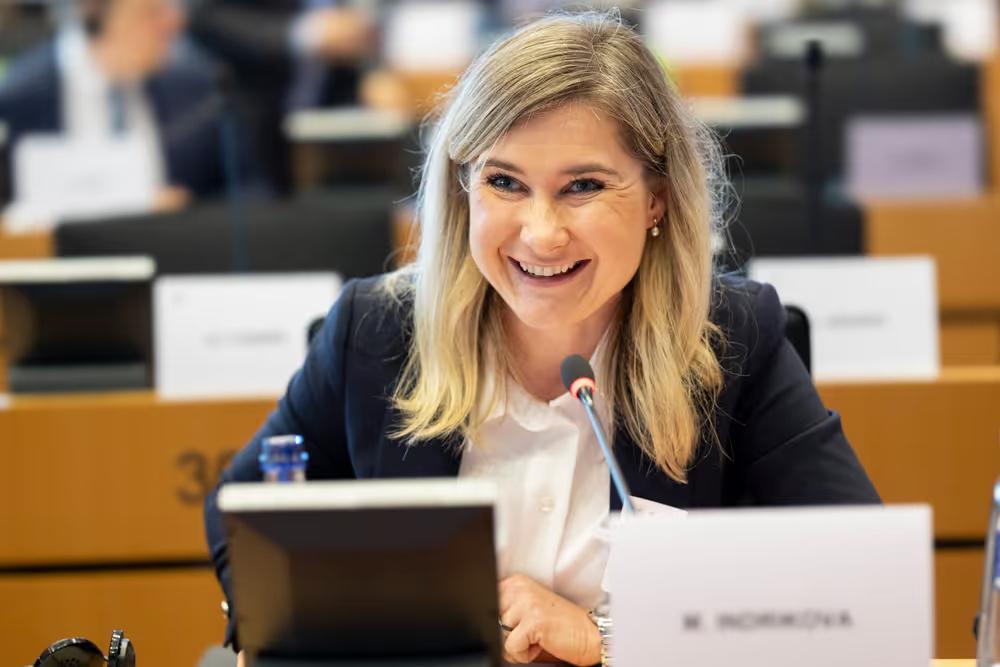
What, in your opinion, could be Latvia’s niche, our success story?
It is important to understand what we have available and what our strengths are. And, of course, it is essential to follow developments and current issues in Europe in order to understand the reality – what the needs are and what we can offer.
If I were asked where Latvia has advantages, I would say – in the digital field, for example artificial intelligence and cybersecurity. Speaking of cybersecurity, the reason for this is quite clear due to the geopolitical and geographical situation. These topics are very close and relevant to us.
I had the honour of representing Latvia in an OECD panel discussion on quantum technologies, where I became acquainted with the diverse work of scientists at Latvian universities. And it is remarkable how much our scientists have achieved, each in their own field.
What was your motivation for returning to Latvia after so many years in Germany?
I wanted to return to my homeland and share everything I had learned while being away. For me, that is a strong motivation in the position I currently hold.
In Germany, I learned a great deal about organising processes, and in Latvia I see that many existing processes can be improved. Of course, other countries could also learn from us – it works both ways. My experience at “Bosch” changed the way I look at how things are organised, and in Latvia I see that, with small steps, we can also organise our environment in a way that allows us to achieve major goals, for example, to attain high rankings in international university assessments.
Compared with researchers from other countries, Latvians are characterized by great diligence and the speed at which we work, as well as flexibility across different fields. Of course, sometimes it is important to focus on one specific field in order to be excellent in it, but in Latvia scientists are often also broad-ranging specialists. It is important to mention that people in Latvia work with tremendous dedication – especially considering that scientists in our country are not guaranteed financial stability.
On 1 May 2025, you began working as Vice-Rector for Science at RTU. How do you feel here?
This time has flown by; it has been extremely dynamic, but I feel good. I like being home, and I strongly feel that there is a difference between doing something for the benefit of your own country and working for a private company in another country. There is definitely greater satisfaction in introducing a new process in your own country. I also feel great pride in being able to represent my country at various international events. I do it with great respect, pride, and a sense of responsibility.
Yes, there are things in Latvia that we can improve, but in my opinion, all those challenges are our opportunities. If I ever feel discouraged, I remind myself that everything is really just a matter of time and that anything can be accomplished. Challenges motivate me to keep working.
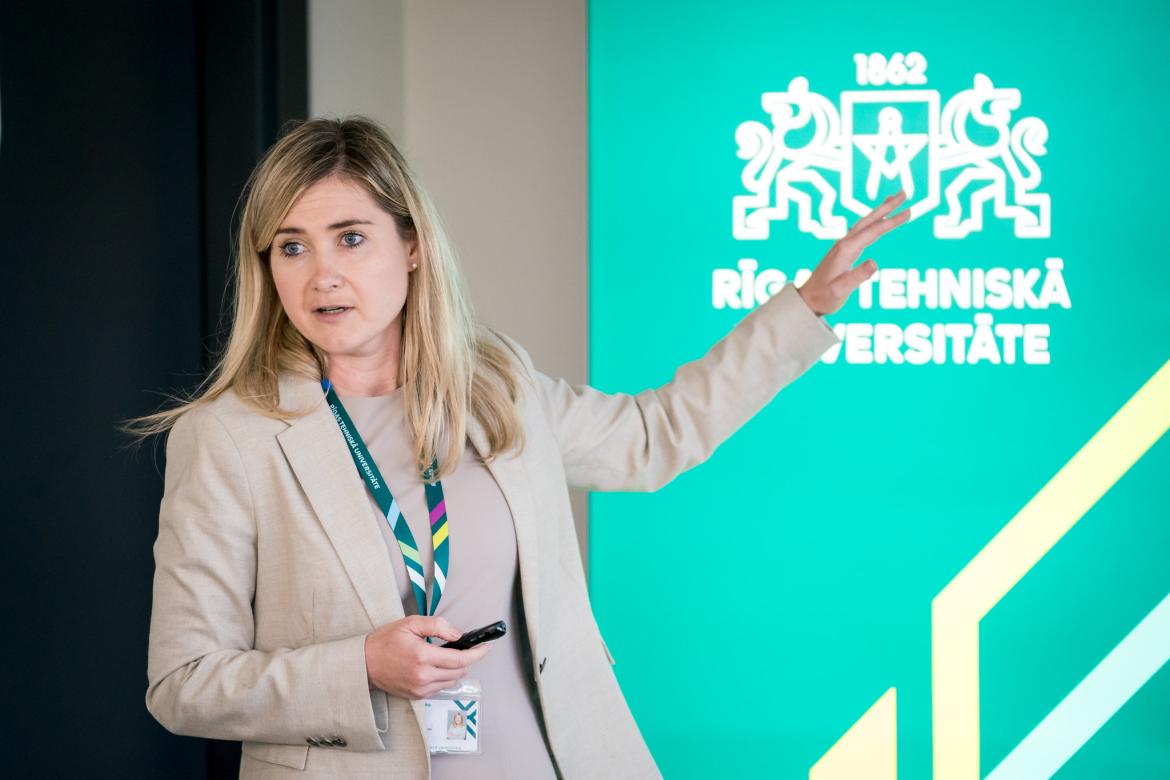
What interests do you have outside of science? What inspires you?
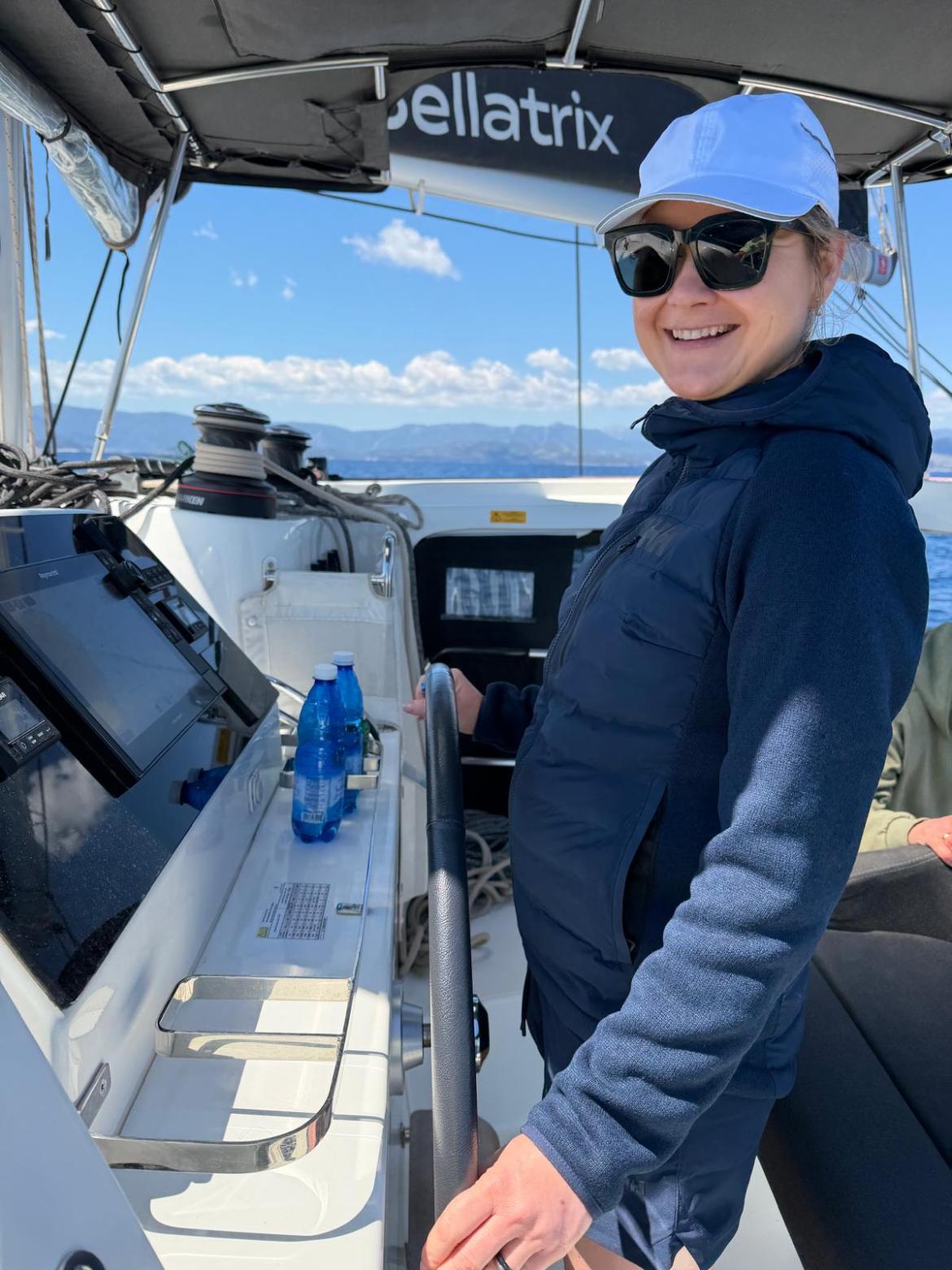
I like to maintain balance in life, because only when I have had enough sleep, rested, and put my thoughts in order can I be a better leader. One of the things I really enjoy and that helps me is sailing. After returning to Latvia, I realized that I had the opportunity to do it in the Baltic Sea, and I decided to obtain an international recreational boat operator’s licence. Although I am a beginner, my experience once again confirms a lesson that I always carry with me – where there is a will, there is a way. It is definitely a hobby that helps me clear my head and organize my thoughts.
I enjoy spending time in nature, so I also often go hiking and mushroom picking. I also enjoy travelling – it gives me the opportunity to develop my knowledge not only through work, but also by discovering the world – different places on the world map and their cultures. I also enjoy reading books.
What do young scientists need to know in order to succeed?
A scientist must be persistent. It is important not to give up and to keep moving forward, because solutions can always be found. If, after the first failed experiment in experimental science, a researcher had given up, nothing would ever have been discovered or invented. We learn from our mistakes, and a mistake is also a result. We need to be open to the world and its opportunities.