Modern Olympic and world records would not be possible without solutions created by engineers, ranging from biomechanics to technological tools that make it possible to improve both an athlete’s physical performance and equipment. Sport and science go hand in hand, researchers from Riga Technical University (RTU) said on the Latvian Radio programme “Zināmais nezināmajā”.
Every detail matters
The development of technologies and materials is an important key to success in any technical sport, especially, for example, in motocross, but not only there – running shoes, for instance, and their cushioning can also make a significant difference. In recreational sport, many people may never notice such nuances, but at the level where hundredths of a second matter, every smallest detail counts, acknowledged Jānis Lungevičs, Senior Researcher at the Institute of Mechanical Engineering, Aerospace Technologies and Transport of the Faculty of Civil and Mechanical Engineering at Riga Technical University.
“When it comes to high-performance sport, every single little detail is hugely important, and sometimes you do not even need a revolutionary discovery. It is enough to notice and change one small nuance for it to give you an advantage over the others, who are not standing still either – everyone wants to improve,” he said.
Running is a good example of how sport needs to work together with science in order to break records, agreed Andrejs Pupurs, Senior Researcher at the Institute of High-Performance Materials and Structures of the Faculty of Civil and Mechanical Engineering at Riga Technical University.
The athlete’s and the shoes’ contribution
Many people certainly noticed that this year the historic men’s marathon world record was broken, but probably only a few thought about the fact that not only the athlete himself, but also an entire team of scientists contributed to this achievement.
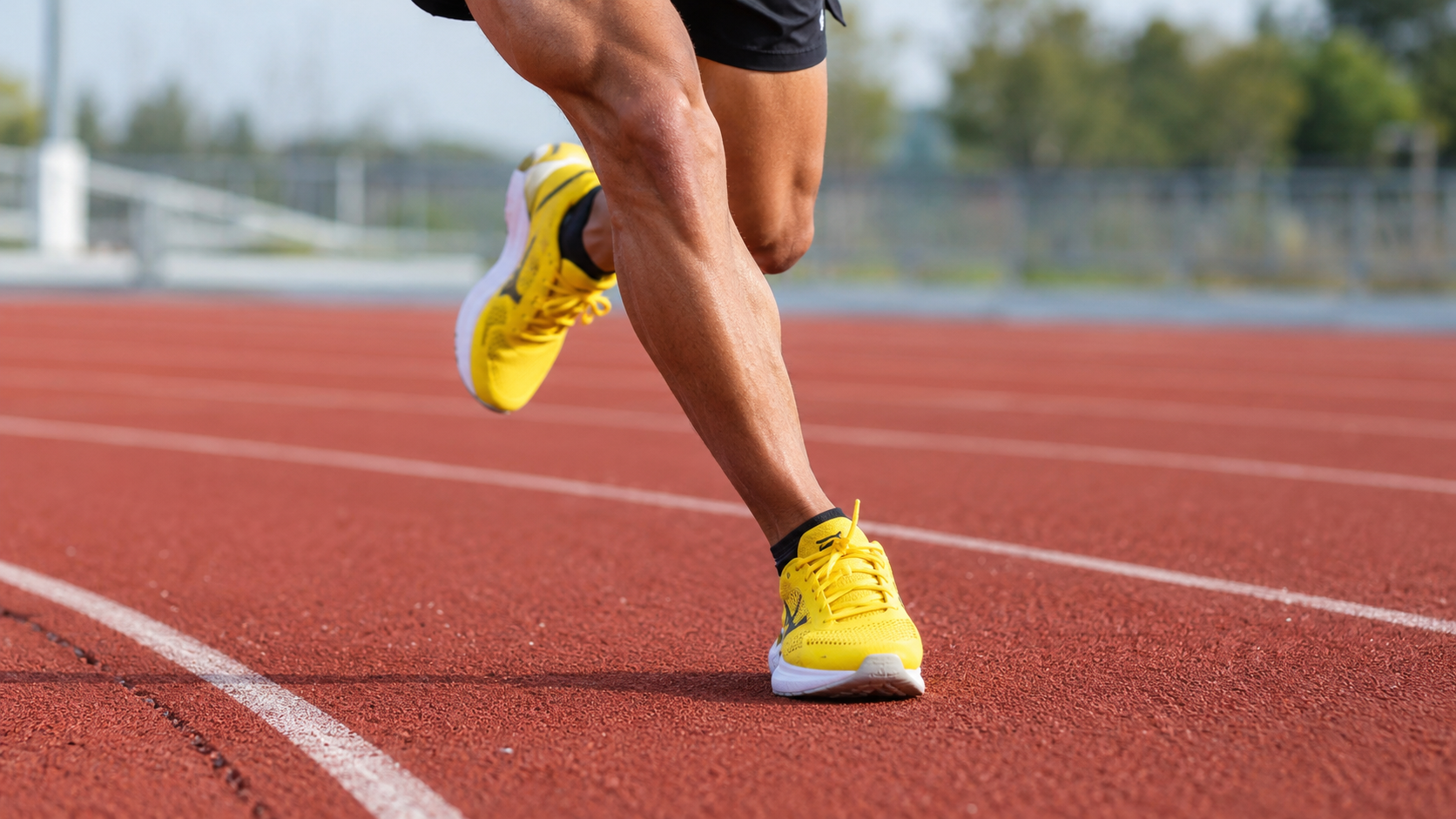
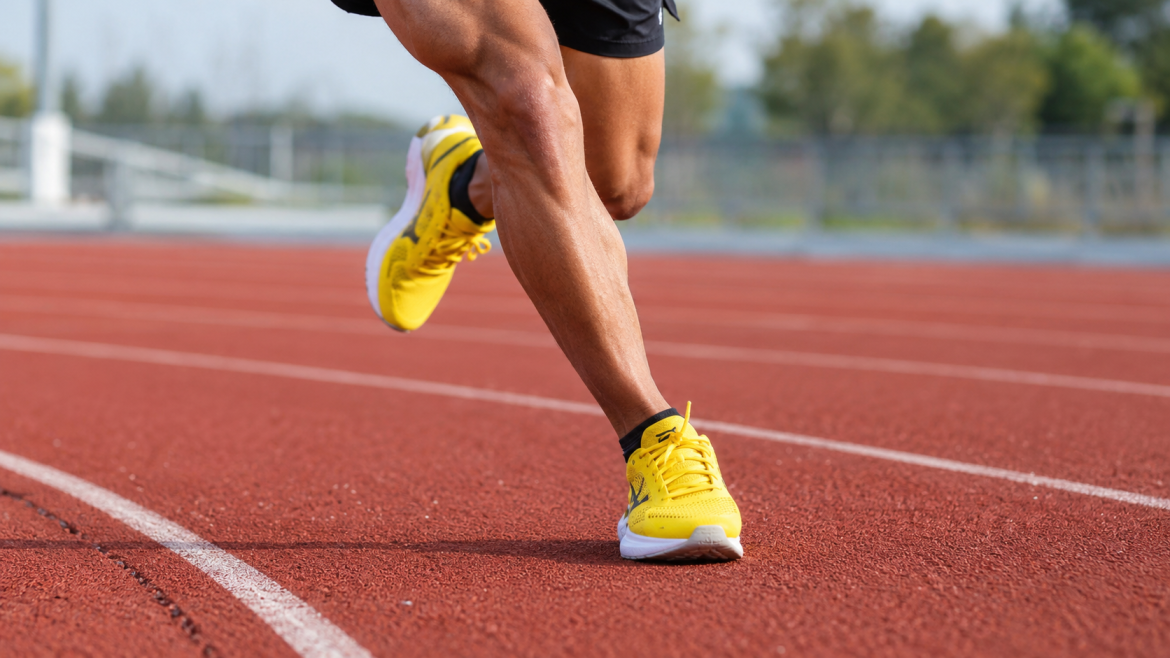
“The first attempts by the athlete to break this two-hour barrier were carried out almost under laboratory conditions, in an isolated environment. Special shoes were also used, containing composite material plates that help, so to speak, return energy – providing the runner with additional power with every step and an opportunity to break this record,” Pupurs said.
No one denies the importance of Kenyan runner Sebastian Sawe’s performance, because shoes alone are not enough – breaking a world record requires incredible strength, power, endurance and long-term, hard work, but equipment also unquestionably plays a role. In this case – the shoes.
“He is an outstanding athlete, but to a large extent it is also thanks to the shoes. Within the framework of the federation’s rules, which restrict the use of various additional elements, the engineers had really done a very good job to make this possible. This record has been broken also thanks to the development of this technology,” Pupurs said.
Who are Latvian researchers helping?
Latvian researchers, engineers and scientists are also working to help our athletes achieve ever higher results. We have long-standing traditions in luge, but researchers are also focusing on cycling and other sports.
“At the moment, we have entered the final stretch of the national research programme ‘Sports’ (as it is known for short), which makes us very happy because, essentially for the first time in history, specific funding has actually been allocated to sports research,” Lungevičs noted.
The research programme was developed in several directions, while RTU worked specifically on high-performance sports and the technologies, methods and tools used in them. The main research questions concerned sliding performance, composite materials, aerodynamics and data collection using specialised sensor systems.
“These four directions have now gained considerable momentum, although, of course, it was not the case that we started completely from scratch – for this programme, we deliberately advanced topics in which we already had some groundwork,” Lungevičs said.
At the same time, they tried to cover as many sports as possible and to communicate especially with the federations of technical sports in Latvia, so that their findings could help as broad a range of athletes as possible.
“Thanks to this communication, we are now cooperating not only with luge technicians, improving their equipment, but cooperation has also developed with the Cycling Federation – bicycle frames have been studied – and with the Archery Federation as well. Thanks to this project, we have managed to reach out to those who perhaps had not approached us themselves, but have now realised that we can help them,” Pupurs said.
Skiers and biathletes are also very interested in the researchers’ work and in continuing these studies in Latvia, as sliding performance, the properties of different materials and aerodynamics are very important factors for them to understand and improve. Moreover, many of the discoveries initially intended for sport later prove useful in the economy and in other sectors as well, including, for example, defence, Lungevičs emphasised.