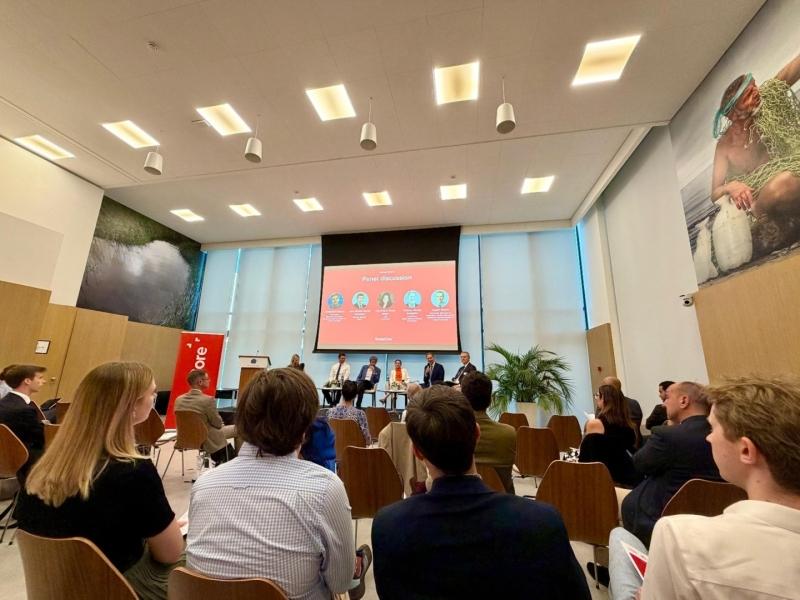
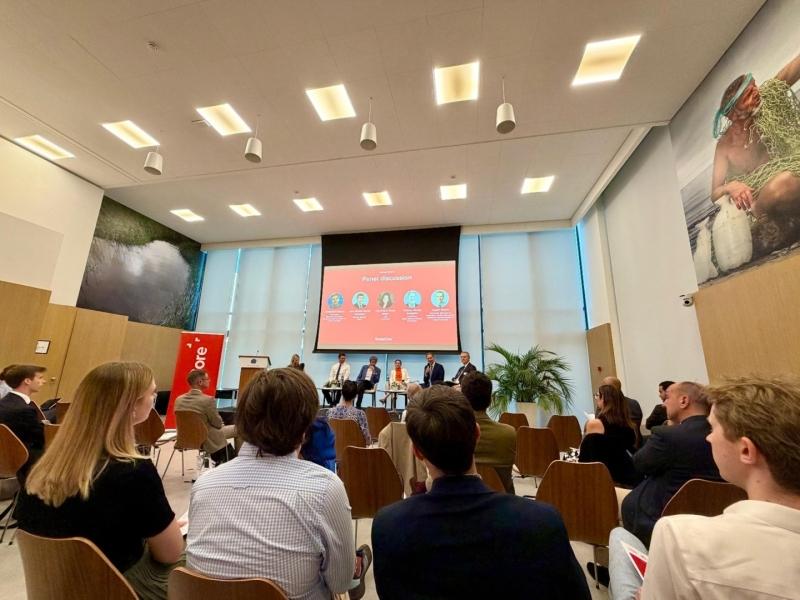
On 29 June this year, the annual event of SwissCore, the Swiss office for European research, innovation and education, “Cooperate to Innovate — What We Can Learn from the Eureka Network”, took place in Brussels, Belgium, and was also dedicated to the conclusion of the Swiss Eureka Presidency. As Switzerland concluded its Eureka Presidency, the SwissCore annual event assessed the achievements of international cooperation under the guiding theme “cooperate to innovate” and what we can do together in the future. The event offered an opportunity to explore the key aspects that underpin successful innovation both in Switzerland and in the Eureka network, as well as the lessons that can be learned when preparing innovation funding instruments in the 10th Framework Programme and the related European Union (EU) innovation policy.
Representing Latvia’s science and innovation community, the event was also attended by Dr Linda Vecbiškena, representative of the Latvian Council of Science in Brussels, and Aleksandrs Mārtiņš Blūms, Sectoral Adviser on Research and Space at the Ministry of Education and Science. In the discussion dedicated to the importance of international cooperation in innovation, A. M. Blūms emphasised:
“The European Union’s international partners cover a very broad spectrum — from closely connected and like-minded partners to countries with significantly different political interests. Therefore, the issue of cooperation conditions is largely a matter of foreign policy, not only science policy. In this context, Switzerland is an example of a reliable and like-minded partner.”
The discussion concluded with a shared understanding that safeguards must be introduced to protect research security, using an individually tailored approach depending on the country concerned. In this context, the focus should first and foremost be on research security rather than an excessively restrictive approach.
The second part of the event was dedicated to the presentation of Eureka’s 40th anniversary book, “Blueprint for a Better Tomorrow”. This book serves as a testament to the opportunities offered by the Eureka network in cross-border cooperation, demonstrating the importance of pragmatic, trust-based and impactful cooperation platforms that connect public administration institutions, companies and research organisations.
The book also highlights Latvia’s success story on organ-on-chip technology, which provides a new approach to drug discovery, titled “Latvia: Organ-on-Chip Technology: A New Approach to Drug Discovery”. As Gatis Mozoļevskis, Co-Founder and CEO of Cellbox Labs, has concluded:
“Eureka has provided us with a valuable opportunity to cooperate with international partners in the development of innovative products, such as the gut–brain axis model and prebiotics. We also appreciate the simple application process and minimal administrative burden.”
It should be noted that, since its establishment in 1985, Eureka has become the world’s largest intergovernmental network supporting international cooperation in innovation across 47 countries in Africa, the Americas, Asia and Europe. Latvia has been a full member country of the programme since 2000.
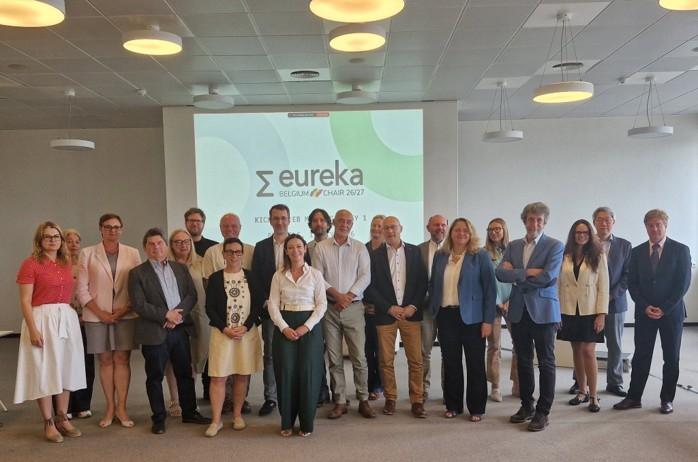
On 1 and 2 July this year, with the first meeting of the Eureka Executive Board (EB) at the Royal Library of Belgium (KBR), which was also attended by Dr Linda Vecbiškena, representative of the Latvian Council of Science in Brussels, the Eureka Belgium Chair 2026–2027 was launched and will run until 30 June 2027. This EB meeting discussed approaches to funding dual-use innovation that balance openness with security, expanding cooperation beyond national funding institutions and attracting international partners, as well as improving project quality through cooperation between Eureka and the Enterprise Europe Network.
The Belgian Chair outlines three priorities:
- Strengthening security standards;
- Increasing the flexibility and adaptability of the Eureka network;
- Continuously improving Eureka programmes.
More information about the events and activities of the Chair is available here: Eureka Belgium Chair
“Only through cooperation can we find solutions to challenges that transcend national borders, especially in the fields of research and economic security. While promoting national competitiveness, we must also be able to create the preconditions for reliable and sustainable international cooperation in science and innovation. Without reliable and secure mutual cooperation, the rapid development of modern technologies, which is the driving force of national economic growth, is not possible,” emphasises L. Vecbiškena, representative of the Latvian Council of Science in Brussels.
The participation of the representative of the Latvian Council of Science in Brussels in the Eureka Board will strengthen cooperation with representatives of Belgium, Canada, Poland, South Korea, Spain and Switzerland, as well as with their countries’ institutions. The Eureka EB is a body in which seven countries participate on a rotating basis, discussing initiatives and proposals that are subsequently submitted for approval to the Eureka High-Level Group (HLG).