What do the first apple to ripen in the garden and the first scientific discovery have in common? Every apple begins with a tiny seed, and every scientific discovery begins with an unanswered question. Both a rich harvest and new knowledge require curiosity, patience, perseverance and the courage to seek answers.
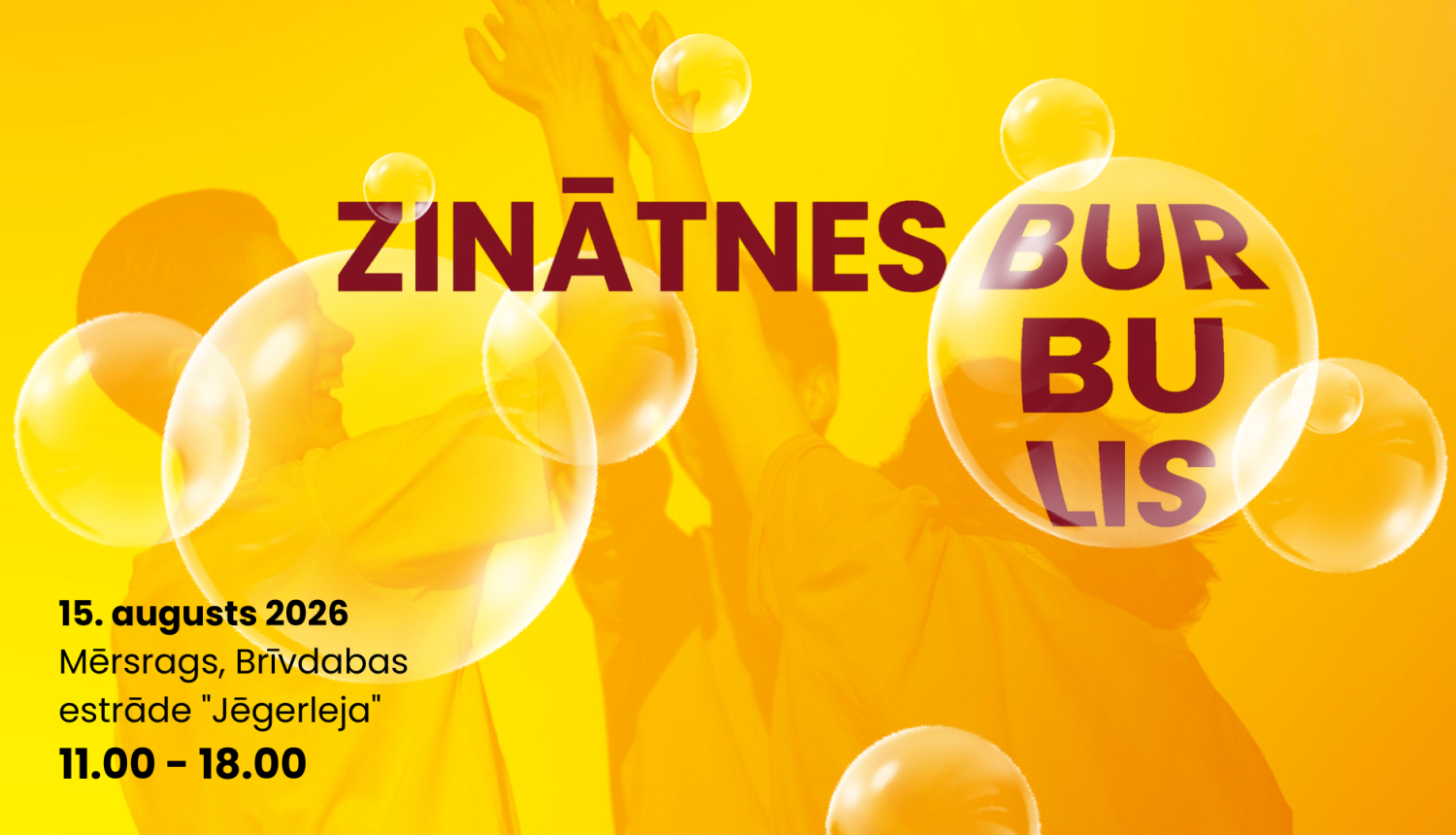
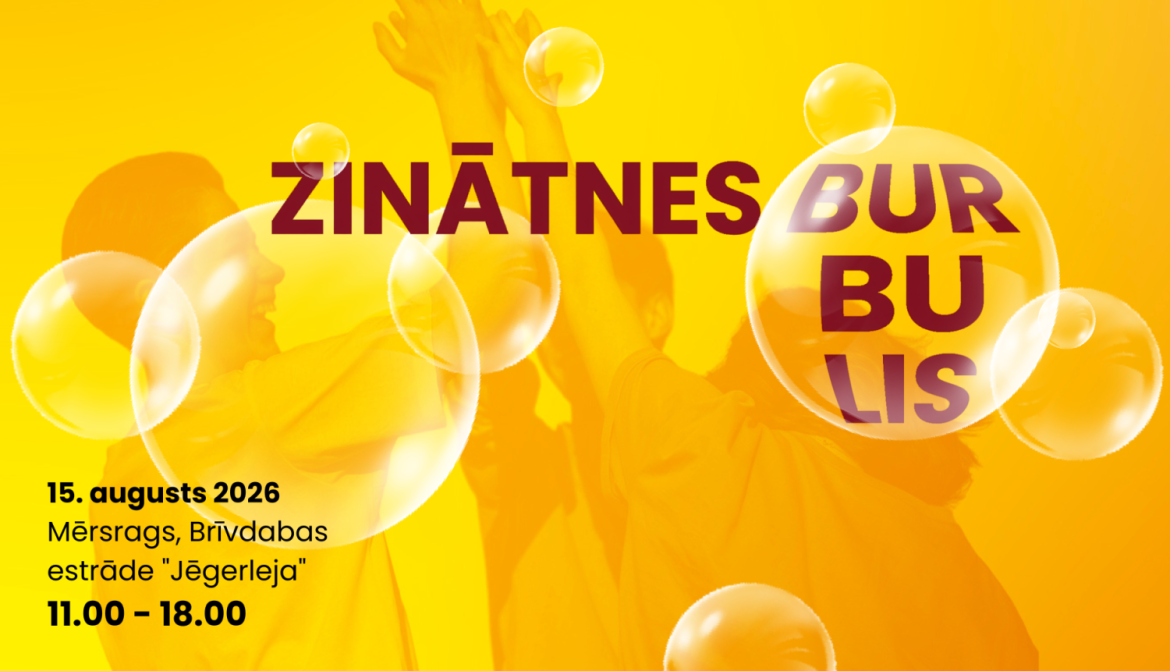
That is why the Latvian Council of Science invites visitors to the “Mērsraga ābols” festival on 15 August from 11.00 to 18.00 to stop by the Science Bubble – a place where science will become tangible, understandable and exciting.
This event is special – the “Mērsraga ābols” festival is taking place for the first time. Symbolically, many of the researchers you will meet in the Science Bubble are also at the beginning of their scientific journey. They are early-career researchers who, with courage, curiosity and perseverance, are seeking answers to questions that may lead to important discoveries in the future.
In the Science Bubble, visitors will have the opportunity to meet researchers implementing projects under the Latvian Council of Science Postdoctoral Research programme, as well as within the Swiss-Latvian Cooperation Programme “Applied Research” project LACISE. Their research covers a broad range of topics – from artificial intelligence, new materials and energy technologies to food safety, health, sustainable food production and environmental protection.
Visitors will also be able to explore the #ScienceForLatvia travelling exhibition, created as part of the Ministry of Education and Science’s science communication initiative. The exhibition introduces 12 Latvian scientists and researchers whose work strengthens Latvia’s scientific excellence and international recognition.
Perhaps this is where you will meet the scientists whose ideas today will become tomorrow’s solutions – improving our everyday lives, helping to protect the environment, advancing new technologies and shaping a more sustainable future. Every major discovery once began with a single question, a single idea and a person who dared to search for the answer.
What Can You Experience in the “SCIENCE BUBBLE”?
The diverse activities will invite both children and adults to experiment, explore and ask questions, discovering how science helps address important challenges facing society today.
During the festival, visitors will be able to explore the possibilities of artificial intelligence and machine learning, try out algorithmic thinking, observe light spectra and plasma demonstrations, learn about the role of microorganisms in human health, test their senses in recognising food, find out more about food safety and dietary supplements, discover sustainable energy technologies and sensors used in forest management, watch chemistry experiments, and taste innovative food products created using science-based solutions.
The Science Bubble will be a place where science can not only be observed, but also experienced – through conversations with researchers, hands-on experiments and interactive activities showing that science is an integral part of our everyday lives, innovation and a sustainable future.
Information about the Science Bubble participants and their activities is available here.