Climate change is rapidly altering familiar environmental conditions, affecting both agriculture and natural ecosystems. The frequency of extreme weather events is increasing, precipitation patterns are shifting, and as a result, vegetation growth conditions are changing as well. At the same time, the spread of diseases and pests is intensifying, and new species are appearing in areas where they were previously not found. In such circumstances, the preservation of biological diversity becomes especially important, as it increases the capacity to adapt to these changes.
One of the most important tools in this field is gene banks, which collect and preserve plant genetic resources for future needs. In Latvia, this work is coordinated by the Latvian State Forest Research Institute “Silava”, where the Genetic Resource Centre systematically maintains and expands seed collections. Gene banks serve as a safeguard, enabling the preservation of local varieties and their characteristics, thus providing a foundation for sustainable agriculture in the future.
Primary Objective – Preservation of Genetic Resources
As noted by Dainis Ruņģis, leading researcher at the Latvian State Forest Research Institute Silava, the importance and role of gene banks cannot be overstated—especially today, when environmental changes of various scales, some even irreversible, are occurring across many regions. He emphasizes that preserving the genetic foundation of living nature requires a carefully considered, long‑term strategy: “The Genetic Resource Centre operating within the institute coordinates activities in this field throughout Latvia—covering crop plants, forest vegetation, as well as the genetic resources of livestock, fish, and even microorganisms used in various processes. Our institute’s task is to safeguard crop genetic material—developing a seed bank and preserving plant material of Latvian origin, while maintaining as much genetic diversity as possible and enriching the gene pool.”
This work is not an end in itself but a crucial prerequisite for agricultural development. “Genetic diversity is the basis of all breeding,” the researcher explains. “In the context of climate change, one of the main ways to ensure that plants can adapt to new conditions—and thus maintain food security—is the selection and development of new varieties. The key requirements are that they must be both productive and suited to changing conditions. Without diverse genetic material, such a task is impossible.”
The Work Began in the 1990s
Although genetic resource preservation in Latvia had taken place earlier, a modern gene bank system was established relatively recently. “During the Soviet era, various collections existed—mainly within agricultural and breeding institutes—but there was no unified gene bank,” Ruņģis notes. “Some breeding results were sent to the Vavilov Institute in Russia, but this certainly did not cover all material of Latvian origin.”
The situation changed in the mid‑1990s, shortly after Latvia regained independence, when systematic efforts in genetic resource preservation began. In cooperation with the Nordic Gene Bank, a structured system for safeguarding genetic resources was created. This was also when the Latvian crop gene bank was founded, with the first samples placed in its cold storage at the end of the 1990s. This marked the beginning of what we now recognize as a coordinated, nationwide system.
What Is Stored in the Gene Bank
Today, the Latvian crop gene bank holds a substantial amount of material that reflects the diversity of local agriculture. “We have around 2,000 different seed samples representing approximately 70 species,” says Dainis Ruņģis. “Essentially, it includes everything that grows in Latvian fields and can be preserved in seed form—cereals such as wheat, barley and oats; grasses; legumes; flax; grey peas; vegetables; tomatoes; hemp. Moreover, this collection is not limited to modern varieties. We hold Latvian‑bred varieties—both older and newly developed ones—as well as breeding material that has not yet been granted official variety status but already contains valuable traits. We also maintain wild‑collected material from species that grow naturally in Latvia and may be useful for future breeding.”
The gene bank focuses primarily on plants with practical value. “These are mainly species cultivated in agriculture and used in our food supply. Therefore, for example, species listed in the Red Data Book are currently not represented in our collection, although in some cases this could change in the future,” the researcher adds.
Security Through Collaboration
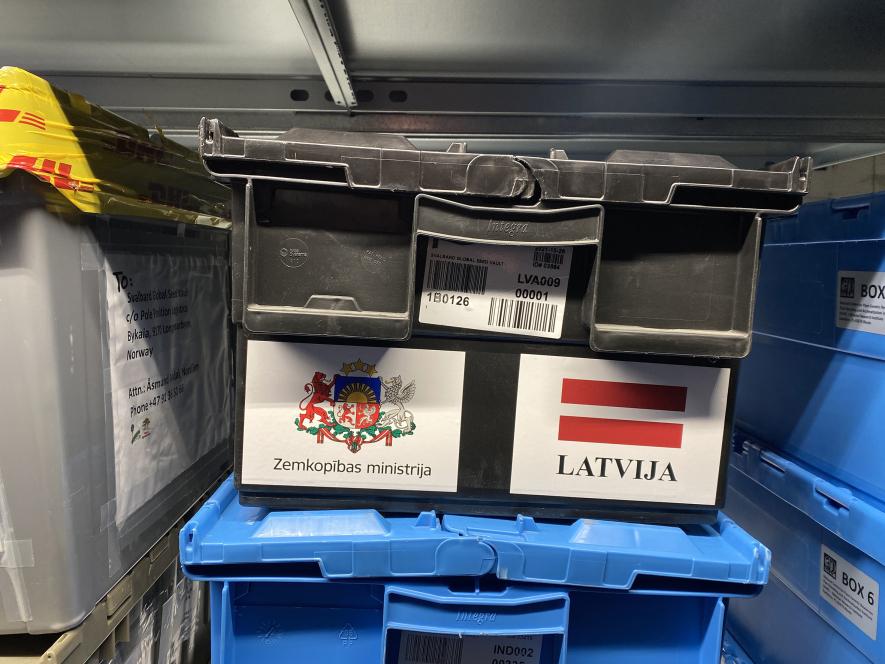
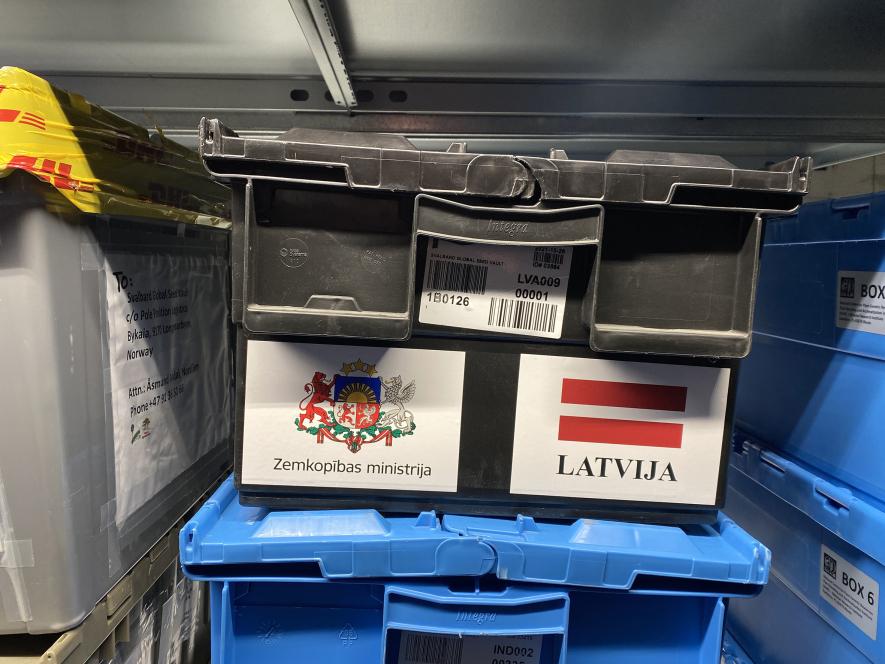
Preserving genetic resources also requires strict maintenance standards. The core collection—around two thousand seed samples from roughly 70 species—is stored in Salaspils, at the Silava Forest Research Institute. “Seeds are kept under controlled conditions at low temperatures, around minus 18 degrees Celsius, and we are prepared for emergencies—for example, with high‑quality fire safety systems and automatic backup generators in case of power outages,” Ruņģis explains. “But that alone is not enough. This is why safety duplicates are also stored abroad. Part of our material is held in Denmark, at the Nordic Gene Bank, with which we have long‑standing cooperation. Since 2021, some samples have also been stored in the Svalbard Global Seed Vault. This means that even in extreme circumstances, we do not lose our material.”
The Collection Expands Over Time
“Every year our collection grows,” explains Dainis Ruņģis. “Newly developed varieties are added, as well as breeding material obtained in collaboration with plant breeders and agricultural researchers across Latvia, and wild‑collected samples gathered by local species experts. It is also important to note that we study the collected material. We do not only store it—we also evaluate the traits each sample possesses. In cooperation with specialists from the Latvia University of Life Sciences and Technologies’ Institute of Agricultural Resources and Economics (AREI) and the Institute of Horticulture, we carry out both seed multiplication and trait analysis of the material, including with the aim of understanding how these samples could be used in future breeding.”
Climate Change – The Main Challenge
Runājot par gēnu bankas nozīmi mūsdienās, Dainis Ruņģis īpaši uzsver klimata pārmaiņu ietekmi: «Mēs redzam, ka viss ļoti strauji mainās – ne tikai pēdējās desmitgadēs, bet pat atsevišķos gados. Svārstās temperatūra, nokrišņu daudzums, pieaug gan sausuma, gan pārmērīga mitruma periodi, turklāt viens gads var būt diametrāli pretējs iepriekšējam. Turklāt ar to pārmaiņas nebeidzas. Parādās jaunas slimības, kuras agrāk šeit nav bijušas, kā arī sveši kukaiņi un citi kaitēkļi. Tas viss rada papildu riskus lauksaimniecībai. Šādos apstākļos kļūst skaidrs, ka paļauties uz nelielu šķirņu skaitu vairs nav iespējams. Ja mēs audzējam tikai vienu vai dažas šķirnes, pastāv risks, ka nelabvēlīgos apstākļos viss var aiziet bojā. Savukārt lielāka daudzveidība paaugstina iespēju, ka vismaz daļa kultūraugu izdzīvos un nodrošinās ražu.»
In Conclusion
In conclusion, Dainis Ruņģis emphasizes that the importance of gene banks in the context of climate change will only continue to grow. He believes that the greater the genetic diversity we preserve, the more opportunities we will have in the future for plant breeding. We cannot yet accurately predict how climate change will manifest in different parts of the world or what weather conditions will be like in 20 or 50 years. Moreover, it is likely that we will not be able to grow the same varieties that have been developed, for example, for Central European conditions. This is why we need our own varieties—those adapted specifically to the characteristics of our climate zone. We can prepare for the changes that are already unfolding, and the gene bank is one of the key tools that makes this possible.
The project “Green Future. From Awareness to Action” is financially supported by the Emissions Trading System auctioning instrument.