Insects are an essential part of forest ecosystems; they perform many important functions that help maintain forest health and balance. Just as in ancient times, people spoke of the world resting on three whales or elephants, so too can the role of insects in nature be compared to one of the great pillars supporting the entire world.
“Insects provide a vast range of ecosystem functions, whether we are talking about forests, grasslands, or waters. One of their most important roles is pollination. Although we most often discuss this in the context of food production and agriculture, it is just as crucial in forests, because for plants to reproduce and grow, many of them require pollination,” explains environmental expert Mārtiņš Kalniņš from Latvia’s State Forests (LVM).
Pollinators, “cleaners,” and food for other creatures
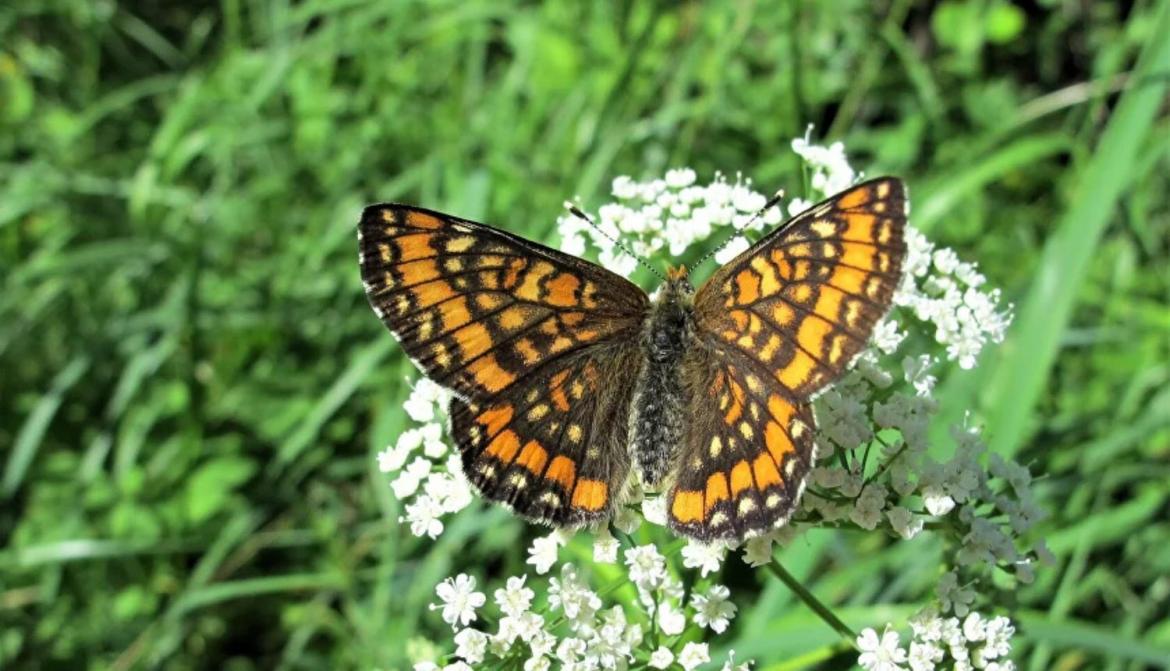
In Europe, approximately 78% of wild flowering plant species are fully or at least partially dependent on pollinators. People often assume that pollination is carried out only by bees, usually meaning the well-known honeybee. However, the range of pollinators is much broader. In Europe, it includes many wild bee species, as well as butterflies, beetles, and wasps. Although honeybees are often highlighted, in natural ecosystems their role is actually smaller than that of many other insects.
In forests, insects also contribute to the decomposition of organic matter, such as dead wood, leaves, and other residues. While fungi are also involved, insects are among the most important groups performing this work. Another key function of insects is “cleaning” ecosystems. Creatures living in forests leave behind waste, and some animals die naturally; insects help these remains decompose and mineralise, returning them to the nutrient cycle.
“Insects and other invertebrates also play an important role in maintaining soil fertility. For example, earthworms and various insects move nutrients through the soil, create burrows and tunnels that allow oxygen to penetrate more easily, making the soil looser and richer in nutrients. Moreover, insects are an essential food source for many animals. In Latvia, about half, or even more, bird species are insectivorous, and even seed-eating birds largely feed their young insects. Amphibians such as frogs and toads, as well as many mammals – foxes, hedgehogs, and others – also rely on them,” the expert emphasises.
What harms one may benefit another
As the biologist points out, in reality, no organism harms the forest itself. What we usually call forest pests are not truly harmful to the forest.
“We are used to using this term, but in fact, these organisms only cause harm from a human perspective. Humans want to obtain certain resources from forests, most often timber. If an insect causes a tree to grow more slowly, remain smaller, or reduce its quality, we perceive that as damage. However, in nature, this is completely normal. In forests, as in any ecosystem, species interact; some organisms use others as food or habitat,” Kalniņš explains.
For example, bark beetle activity may kill a tree that hosts a black stork’s nest, making it unsuitable for nesting. Yet such situations are part of natural processes and ecosystem interactions. “From a biological point of view, this cannot be called damage to the forest – it is simply the result of natural processes,” he adds.
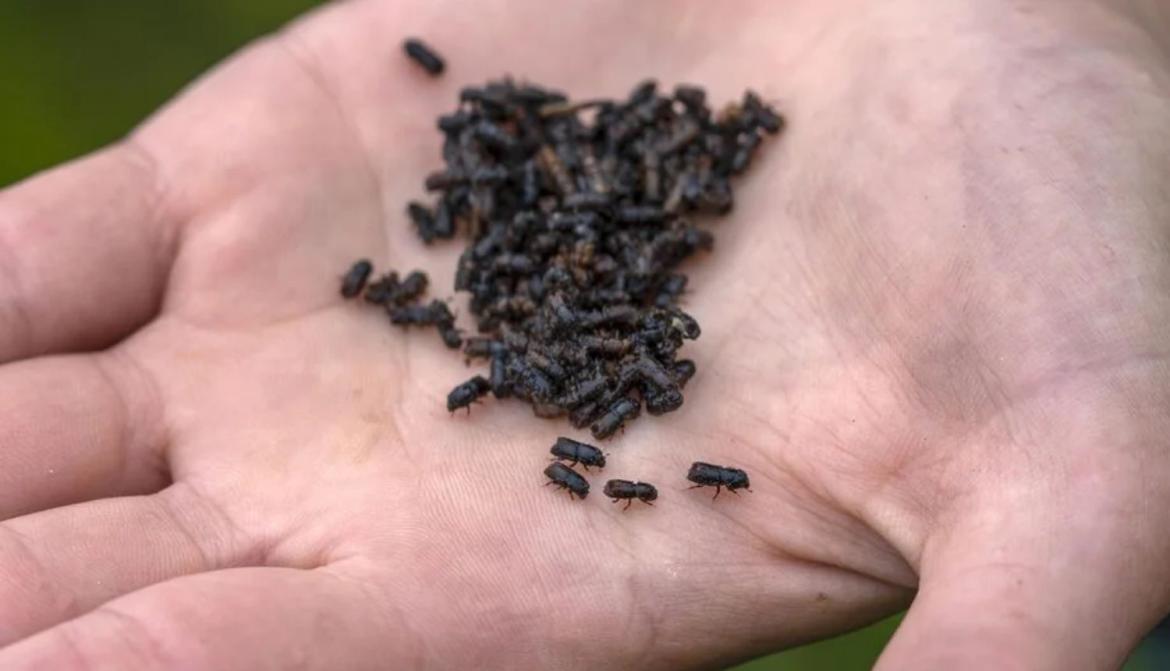
However, speaking specifically about insects that can significantly affect timber resources in Latvia, the eight-toothed spruce bark beetle is among the most commonly mentioned species, as it damages spruce stands. Natural enemies alone cannot prevent large outbreaks, so controlling their spread largely depends on forest management practices.
"“Spruce is one of the main tree species used for timber in Latvia, so the impact of this insect is particularly noticeable. There are also other bark beetle species affecting other trees, such as pine. Occasionally, sawflies multiply and feed on pine needles or young shoots, as well as certain moth species like the gypsy moth. However, their impact is usually local and relatively small, often resulting only in reduced growth in a given year, and trees rarely die,” Kalniņš notes.
The bark beetle is not poisonous, so it has many natural enemies. Among the most important are checkered beetles and parasitic wasps related to bees and wasps. They are also preyed upon by other predatory insects such as beetles and ants. In this way, these insects naturally help regulate bark beetle populations.
“The three-toed woodpecker must also be mentioned – its main food is bark beetle larvae. Without them, this bird would likely be very rare in Latvia or might even disappear,” the expert adds.
Rare species and discoveries
Environmental experts and planners at Latvijas Valsts Meži (Latvian State Forests) actively study rare and endangered species, including both insects and birds. They conduct inventories and, based on the data obtained, plan conservation measures. This helps better understand where species occur and how to ensure suitable living conditions.
“New species appearing more frequently in Latvia are mostly southern, warmth-loving species, both butterflies and beetles. Species that fly well spread most easily, but others also gradually move north. Usually, these species are not highly endangered, but our climate can make winter survival difficult, as harsher winters may reduce populations. If a species adapts successfully, it gradually expands its range,” the scientist explains.
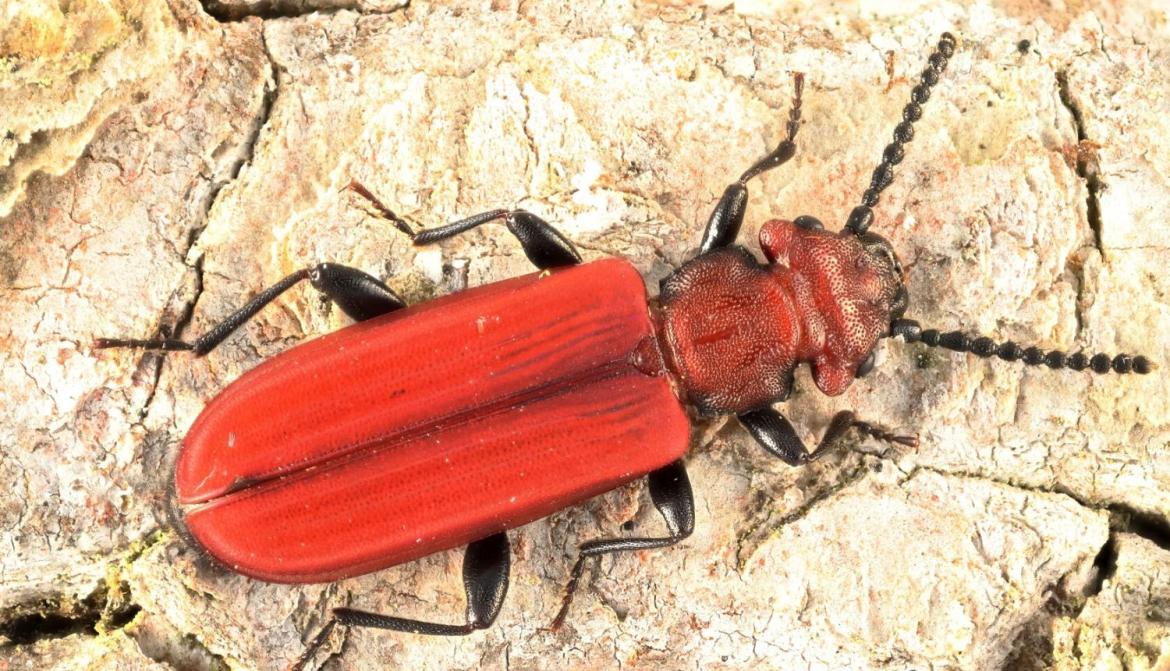
Researchers are particularly excited when they discover new locations of already known but rare species. For example, in early January 2025, the red flat bark beetle was found near Jēkabpils. This species lives under the bark of recently dead aspens and is considered relatively rare and interesting in Latvia.
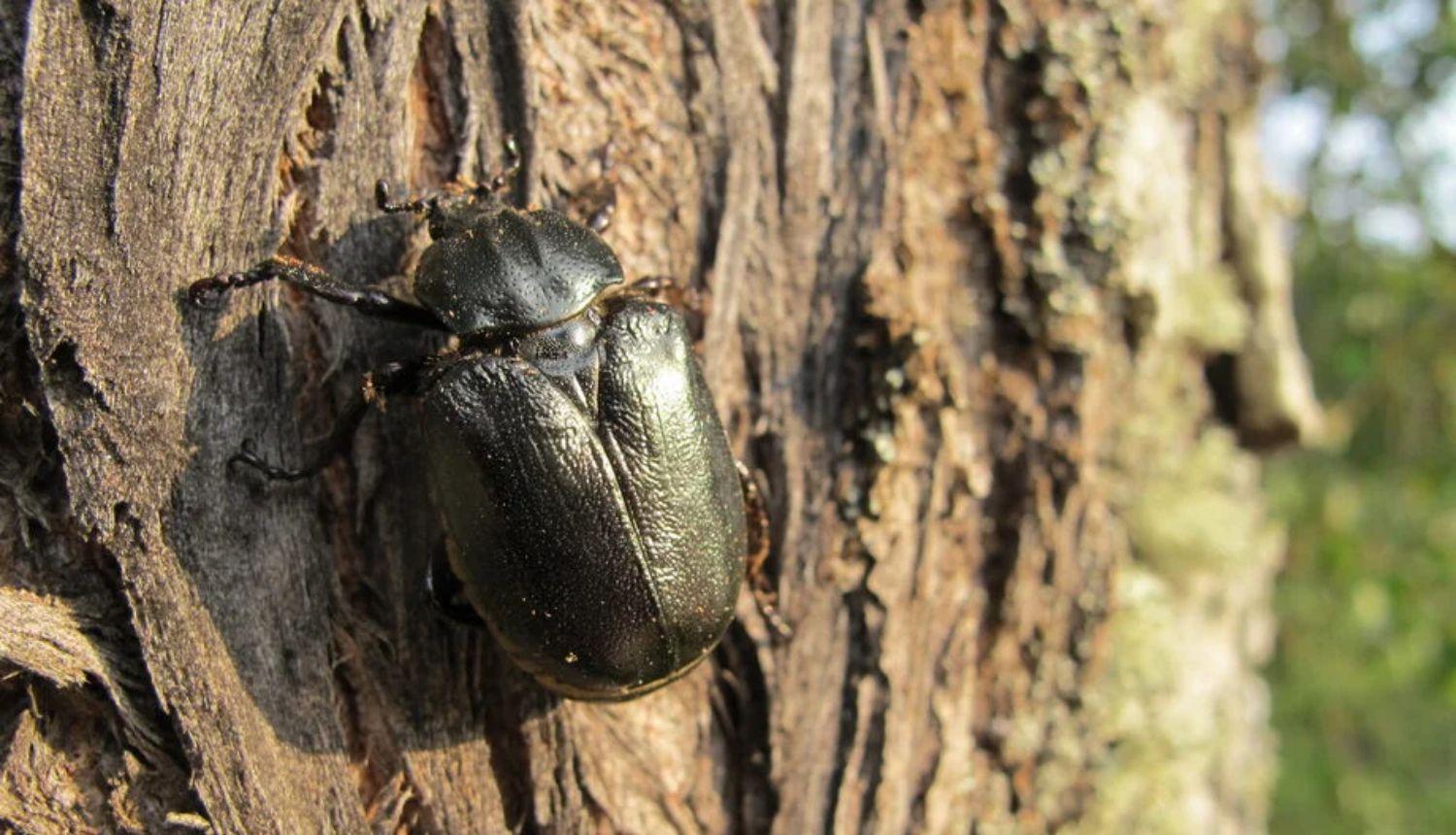
“Each new finding brings genuine joy to researchers. Last year, the red-winged grasshopper was also recorded. It lives in dry, sandy areas, usually at forest edges, clearings, or heathlands. The insect itself is quite dark and hard to notice, but in flight its red wings become visible, and it produces a characteristic clicking sound, which gives it its name. Additionally, new hermit beetle locations have been found, both in known areas and in entirely new territories. Such discoveries help us better understand species distribution and living conditions,” the expert shares.
From a balcony flower box to the Red Data Book – where to look
Trees left in clear-cuts, both living and dead, are highly valuable in forest ecosystems. For example, a pine left in a clearing can serve as a warming and hunting site for insects. An old oak may host dozens of insect species. “Each such tree is like a treasure chest,” says Kalniņš.
Latvijas Valsts Meži (Latvian State Forests) has developed a system for creating protected areas. If a species requires protection, territories are designated – sometimes specific trees, groups of trees, or entire forest areas. However, one challenge is ensuring these areas form connected networks rather than isolated spots, as species may struggle to spread if habitats are too far apart.
“The recently published Latvian Red Data Book also discusses threats to species, including a volume dedicated to insects and other invertebrates. Researchers assessed species over several years, identifying both the number of threatened species and the main risks. I recommend exploring it – it is also available electronically,” Kalniņš notes.
However, this is not the only source of information. To explore the world of insects, you do not need to go far; observations can start in your own yard or even a balcony flower box by watching which insects visit flowers. More interesting observations can be made in meadows or forests.
To notice more, pay attention to various objects. The simplest is observing flowers. An interesting micro-world can also be found on old trees and dead wood. Although most insects in Latvia are active during the day and in warm weather, it is sometimes worth taking a walk with a flashlight on a warm summer night.
“Today, information about insects is easy to find, including online sources. However, it is worth seeking more in-depth information rather than just brief descriptions. Nature observation platforms can also be used,” Kalniņš encourages.
One of the most popular platforms is iNaturalist, used worldwide, where users can upload photos and others help identify species. In Latvia, the portal Dabasdati.lv is particularly suitable for recording observations.
“In Latvia, it is still a great privilege that insects can be observed almost everywhere, even in intensively managed agricultural areas, although their numbers may be lower. Roadsides also offer opportunities, but forests provide even broader possibilities,” the researcher concludes.