Three months ago, an experiment was launched at the Latvian State Institute of Wood Chemistry (LSIWC), where the student team “The Mushroomers" (Sēņotne”), led by research assistant and Master’s student Mikus Kampuss and supervised by leading researcher Dr. biol. Ilze Irbe, set out to cultivate turkey tail mushroom (Trametes versicolor) under laboratory conditions. A fungus that naturally grows in the wild was, in a sense, “persuaded” to develop in a controlled laboratory environment. Today, this question already has its first answer.

The project is implemented within the framework of the “Innovation Grants for Students of the Latvia University of Life Sciences and Technologies” (No. 1.1.1.7/1/25/A/001), co-financed by the European Regional Development Fund, in cooperation with the Latvia University of Life Sciences and Technologies (LBTU) and project partners. The contact person at LSIWC is leading researcher Dr. chem. Māris Lauberts.
The focus of the student team’s research is the turkey tail mushroom — a widely распространён species in Latvia that has historically been used in medicine, particularly in East Asia. It contains polysaccharide–peptide complexes, β-glucans, triterpenoids, and phenolic compounds with immunomodulatory, antiviral, antioxidant, and potentially anticancer properties.
The aim of the project at LSIWC is to obtain fruiting bodies under laboratory conditions, extract biologically active compounds, and evaluate their potential for further development and practical applications.
After three months: first results
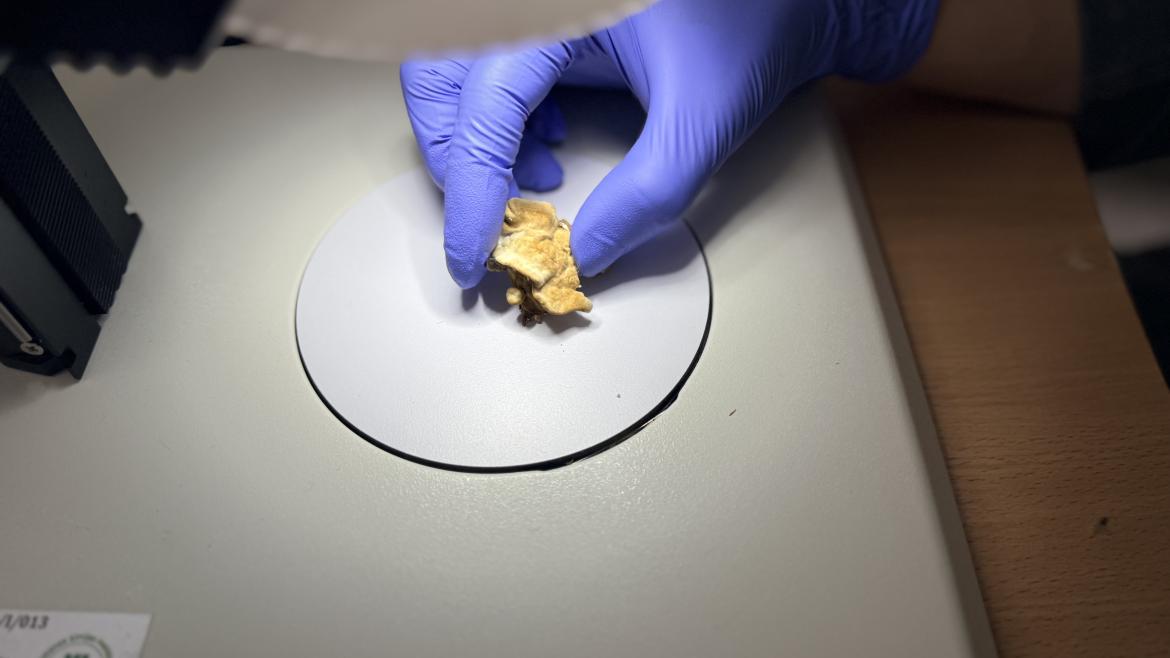
After three months, the project has reached a significant milestone. The first fruiting bodies of turkey tail mushroom have not only been cultivated but also harvested under laboratory conditions.
Mikus Kampuss, research assistant at the Cellulose Laboratory and leader of "The Mushroomers" team, explains that the formation of fruiting bodies is a gradual and precisely controlled process consisting of three stages:
- Colonization: the mycelium colonizes the substrate (24–28 °C, ~90% humidity, elevated CO₂ levels).
- Primordia formation: the initial fruiting structures develop (20–24 °C, ~95% humidity, light required).
- Fruiting stage: fully developed fruiting bodies form (around 18 °C, ~85% humidity, light required).
“The main goal was to achieve the formation of fruiting bodies, and we succeeded. It took three months, which was slightly longer than initially expected,” says Mikus.
“My role was to ensure suitable growth conditions for the fungi and to contribute to building the incubator.”
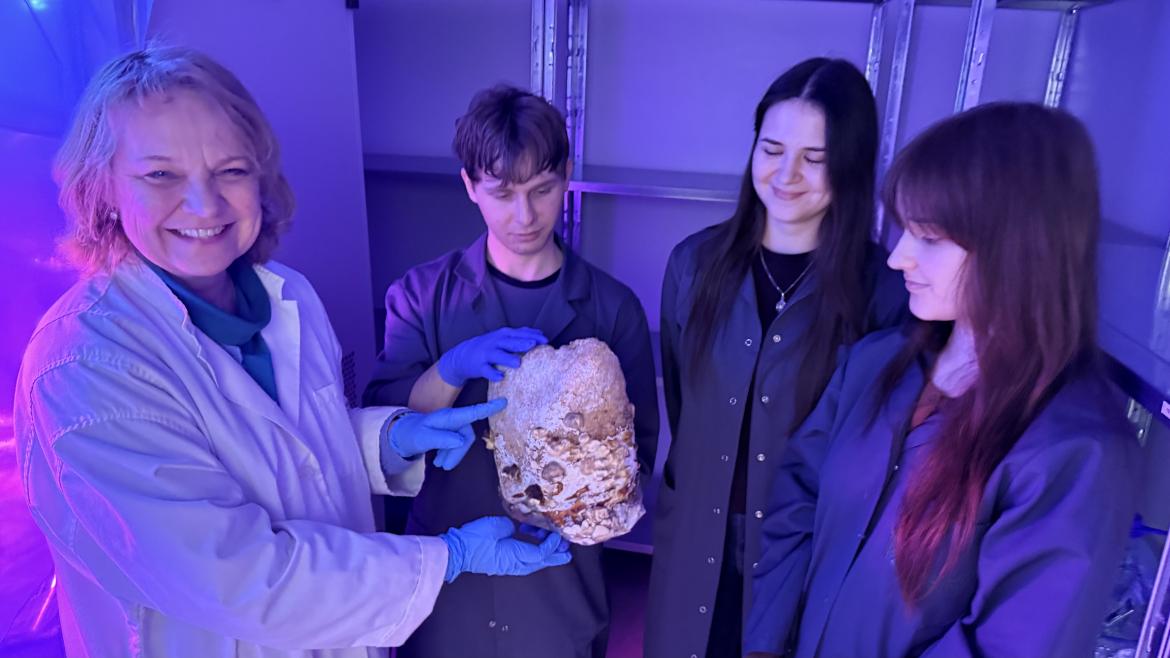
First “harvest” in the laboratory
Project supervisor and leading researcher at the Cellulose Laboratory, Dr. biol. Ilze Irbe, emphasizes that this process requires time and precise control:
“We cultivated the mycelium in bags for four weeks, then transferred it to the incubator. The formation of primordia took another four weeks, after which the fruiting bodies developed and have now been harvested.”
“According to the literature, the entire process takes around 10 weeks. At this stage, we are learning through practice — identifying optimal conditions and building our own know-how,” she explains.
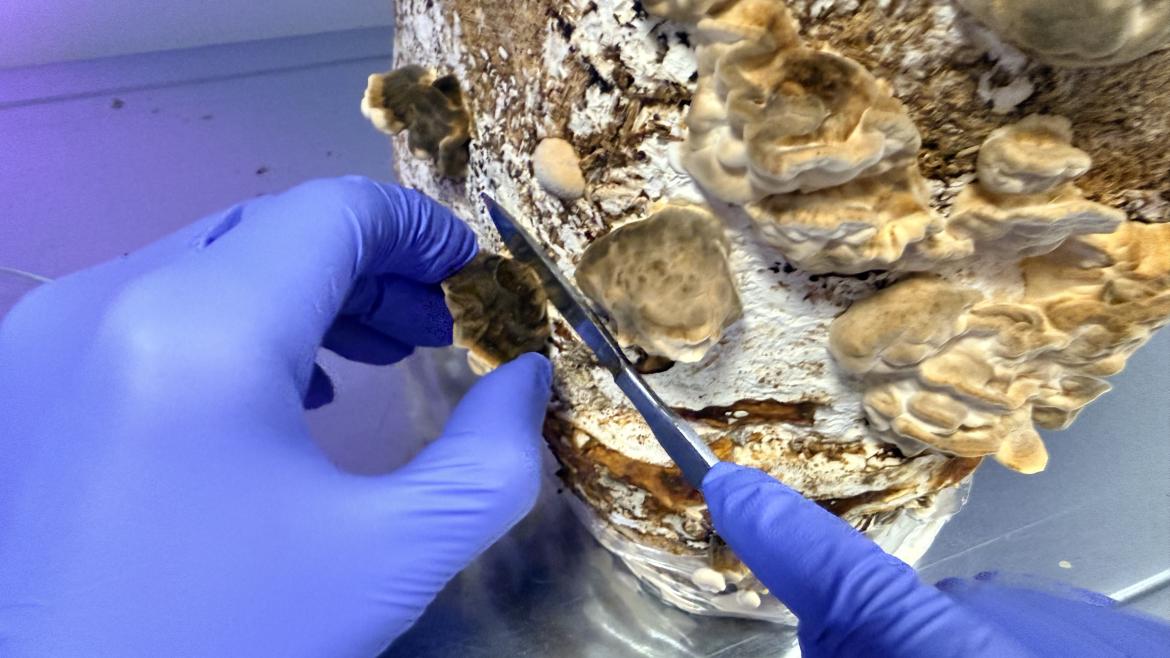
The team’s work also includes parallel experiments and continuous environmental monitoring.
Emīlija Skrupska, a member of “The Mushroomers” team, adds:
“We prepared cultivation bags and developed several experimental variants with different substrate compositions. The goal is to determine the most suitable conditions.”
Sensors installed in the incubator continuously monitor humidity, temperature, and CO₂ levels.
“We can track all parameters on our phones. If something changes, we receive notifications and can react immediately. At the beginning, there were more alerts while we were adjusting the system, but now the process has stabilised,” adds Emīlija.
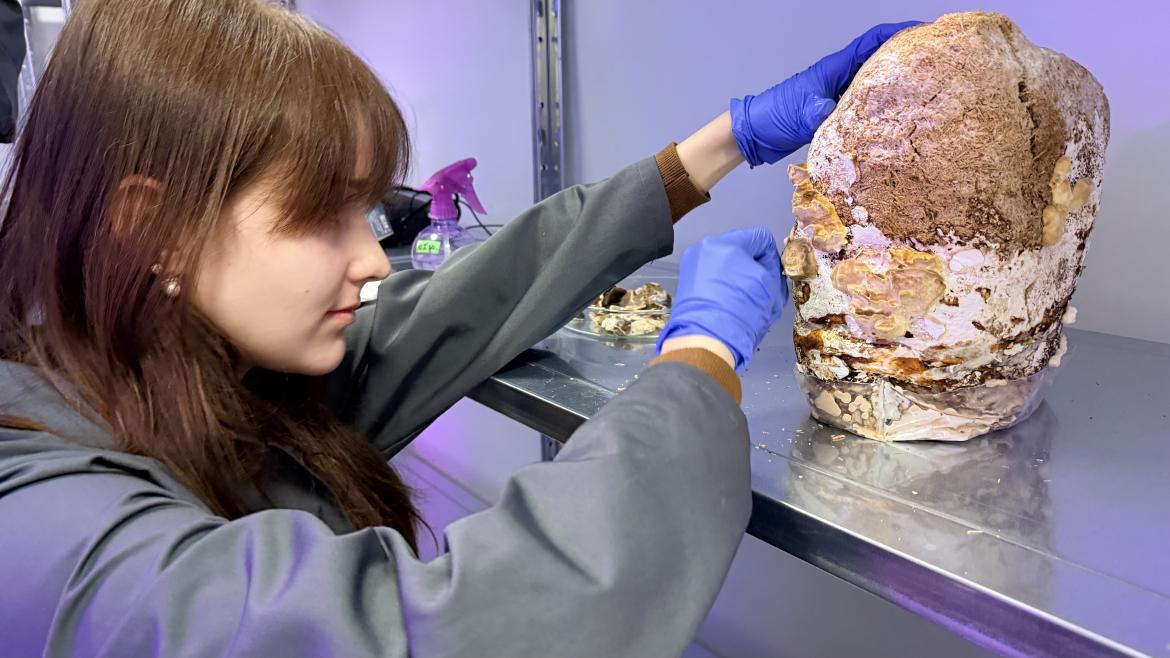
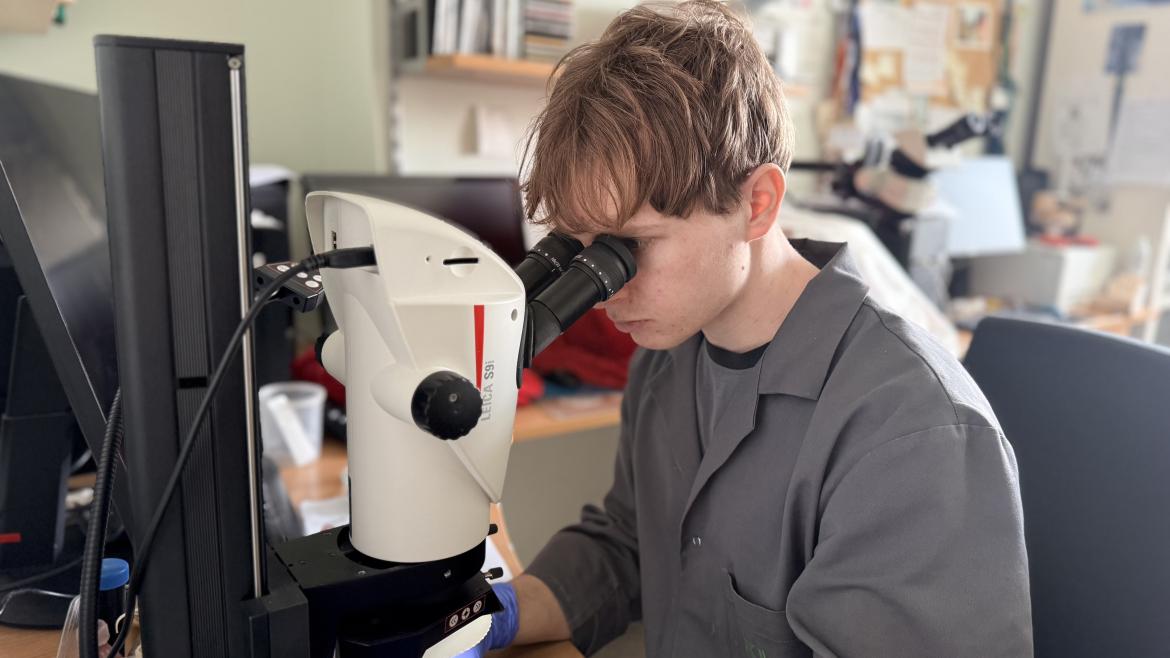
The harvested fruiting bodies will be used for chemical analysis to determine their composition and the presence of bioactive compounds.
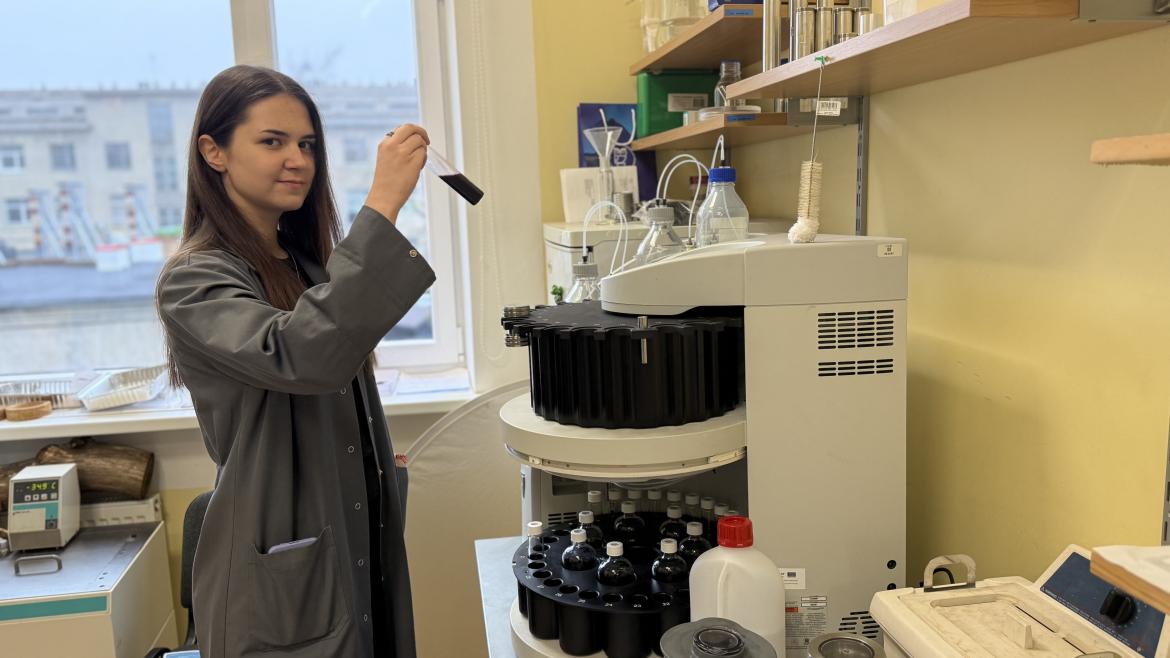
Ksenija Radovska, research assistant at the Laboratory of Lignin Chemistry explains:
“My part of the work is still ahead. So far, I have been working with mushroom samples collected from the forest. I have performed extractions using both accelerated solvent extraction (ASE) and Soxhlet methods, with water and ethanol as solvents. This allows us to determine extraction yields and characterize the chemical composition of the compounds.”
The project extends beyond laboratory work
According to Dr. Ilze Irbe, this project is not only a scientific experiment but also a first step towards practical application:
“We have long been interested in whether fruiting bodies can be obtained from laboratory-grown mycelium. This has not been done in Latvia before. Thanks to this project, and with the support of our colleague PhD Mārtiņš Andžs, we built a mini-incubator with controlled conditions and achieved our first results within three months.”
The obtained material will now be used for further analysis of bioactive compounds, with the next goal being the development of initial prototypes.
“We plan to develop a prototype form, such as capsules. This will demonstrate that this process can lead to tangible, usable products. Further development will, of course, require scaling up.”
The project continues beyond the laboratory.
The LSIWC team “The Mushroomers” is preparing for the next stage — in May, the team will compete in the final round of the LBTU Student Innovation Programme with their developed innovation.
The programme “Innovation Grants for Students” provides structured support for the development of student ideas — from early-stage experiments to solutions with practical and commercial potential. It includes mentoring, training, collaboration with industry, and culminates in presentations to an expert jury.
“The Mushroomers” team has already taken the first steps on this path. The next challenge is to turn this experience into a scalable innovation.