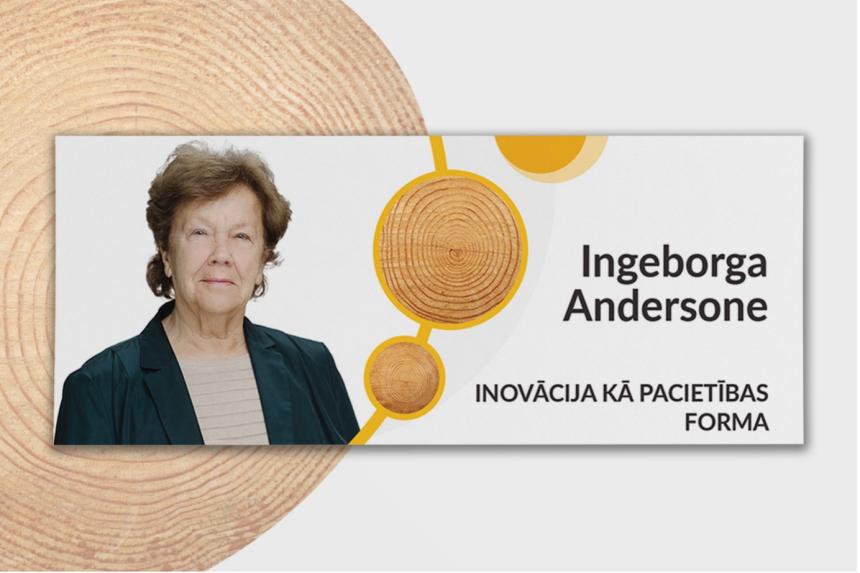
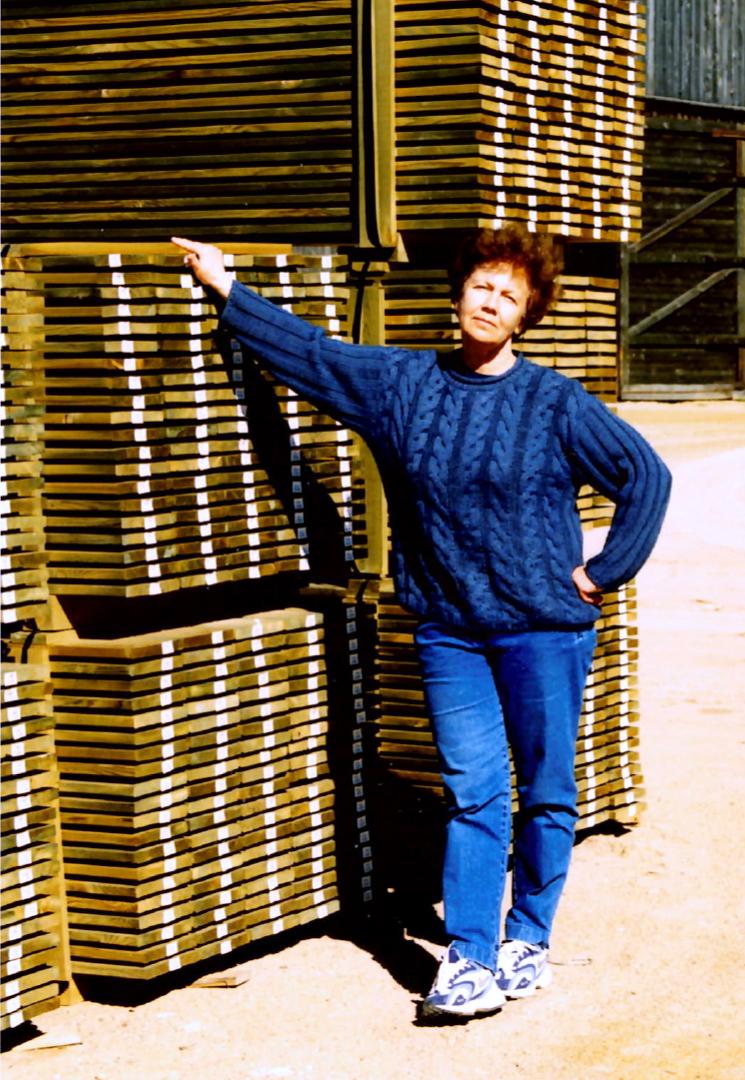
The professional path of Dr. chem. Ingeborga Andersone has been closely intertwined with the times of change in Latvian science and with long-term, patient work in wood research. For more than 40 years, she has worked at the Latvian State Institute of Wood Chemistry together with her husband, Dr. chem. Bruno Andersons, Head of the Laboratory of Wood Degradation and Protection, studying the durability of wood, its protection, and its use in construction, the living environment, and cultural heritage.
The name of Ingeborga Andersone, laureate of the Arvīds Kalniņš Award, was also highlighted in the context of the most significant achievements of the Latvian Academy of Sciences in 2020, where she was part of the team that developed innovative solutions for improving wood durability. She has participated in several dozen international conferences. Dr. Andersone’s pedagogical work at Riga Technical University, delivering lecture courses and supervising qualification theses, has resulted in a number of successfully defended student works.
Her contribution is also evidenced by her involvement in the preservation of Latvia’s wooden cultural heritage, including sacral heritage. She has participated in the inspection, research, and conservation of numerous historical objects. Among them are the wooden figures of Lestene Church, formerly stored in the collections of Rundāle Palace Museum, the roof and tower structures of Riga Cathedral, the Holy Trinity Roman Catholic Church in Kuldīga, the Holy Trinity Cathedral in Liepāja, the buildings of the The Ethnographic Open-Air Museum of Latvia, and a large number of sacral buildings throughout Latvia. I. Andersone has also contributed to attracting foreign funding for the preservation of these objects.
In this interview, Ingeborga Andersone reflects on innovation as a long-term, knowledge-based, and collective process, on working in unstable conditions, and on research in which precision, responsibility, and perseverance are more important than loud promises.
The Logic of Innovation in Research
Is innovation in practice a linear process?
Innovation, when it is the aim of research, in the classical sense – a new product, technology, or design with higher value – is theoretically a straight (yet long) path from a knowledge-based idea to its practical implementation. The most important steps are: noticing the potential for a new solution, researching and repeatedly testing it (iteration) in the laboratory, assessing originality and benefit, securing intellectual property rights, scaling up, testing in conditions close to reality or in real-life settings, and selling it to a manufacturer or producing it oneself. Each stage differs in terms of the effort and time required and demands various competencies; therefore, a genuine innovation result is almost always the outcome of teamwork.
How would you define innovation in the bioeconomy – not only as a technological solution, but as a mode of thinking in professional practice?
Innovation is both a process and a result, and in the bioeconomy, in my view, it does not differ from processes in other fields – its foundation is thinking directed toward a development/production-oriented solution. In any innovation, alongside novelty, aspects such as the efficient use of resources, the environment, health, well-being, and others are essential.
Innovation is both a process and a result, and in the bioeconomy, in my view, it does not differ from processes in other fields – its foundation is thinking directed toward a development/production-oriented solution. In any innovation, alongside novelty, aspects such as the efficient use of resources, the environment, health, well-being, and others are essential.
What role, in your opinion, does intuition play in chemistry and materials science? Can it become a catalyst for innovation alongside rigorous analytics and methodology?
In research, intuition is difficult to separate from solutions grounded in a knowledge base. A well-considered methodology, including research methods, allows us to obtain reliable and trustworthy results, while an understanding of the relationships within the acquired data comes from knowledge and experience. I do not believe that intuition can become a catalyst for innovation if there is no knowledge about the products of the field, its problems, demand, and similar aspects.
Have you experienced situations in which significant innovations emerged because you or your team were able to maintain professional conviction even in a skeptical environment?
No – our laboratory’s innovation experience is primarily based on solving problems that are of interest to manufacturers and practitioners. I believe that deep knowledge is necessary in order to convince a manufacturer to change established practices and invest in a new solution without certainty about financial benefit, whether in the short or long term. A good example is the idea of obtaining suberin from birch bark, nurtured for many years by Dr. Jānis Zandersons and excellently realized by his student Dr. Jānis Rižikovs together with his team.
In research, intuition is difficult to separate from solutions grounded in a knowledge base. A well-considered methodology, including research methods, allows us to obtain reliable and trustworthy results, while an understanding of the relationships within the acquired data comes from knowledge and experience.
Iekšējā vertikāle pētniecībā
What helps you most to maintain your “inner vertical”: the principles of research and a sense of creative independence?
At this stage of my life, my “inner vertical” is rooted in remaining within the space of research, and it is shaped both by my interest in scientific activities in the laboratory and in the wider world, and by my desire to stay in contact with colleagues. My professional principles do not differ from the basic principles of living – to do one’s work properly, not to deceive, not to lie, to share, to listen, to help; in relation to research, this means academic (scientific) integrity. Creative independence is an ambiguous issue: on the one hand, there is relatively free choice of research topics; on the other, there are strictly defined deadlines and expected results. Moreover, it is not always possible to develop a topic more deeply over a longer period.
How do you view the idea that a material (including wood) could be perceived not as an object, but as a partner in the innovation process?
For me, the concept of a “partner” is associated with cooperation, interaction, discussion, and mutual enrichment. No – wood, for me, is a cherished research object through which to explore how it can be used carefully, purposefully, and in many different ways.
My professional principles do not differ from the basic principles of living – to do one’s work properly, not to deceive, not to lie, to share, to listen, to help; in relation to research, this means academic (scientific) integrity.
In the bioeconomy, a resource is what used to be considered waste. How does this paradigm shift transform the space of innovation?
The fundamental idea of the bioeconomy is to create products with higher added value from renewable biological resources. It is not entirely true that biomass residues in the past – whether in the wood industry or agriculture – were not used at all (sawdust was burned, straw was ploughed into the soil, and so on). Research in this direction opens up new funding opportunities, which is positive. At the same time, there is a major challenge in creating something fundamentally new, better, and economically more viable from these residues. Developments often become stuck at the level of patents or licenses.
Which stage of your professional life or which thematic field has been the most transformative, both scientifically and personally?
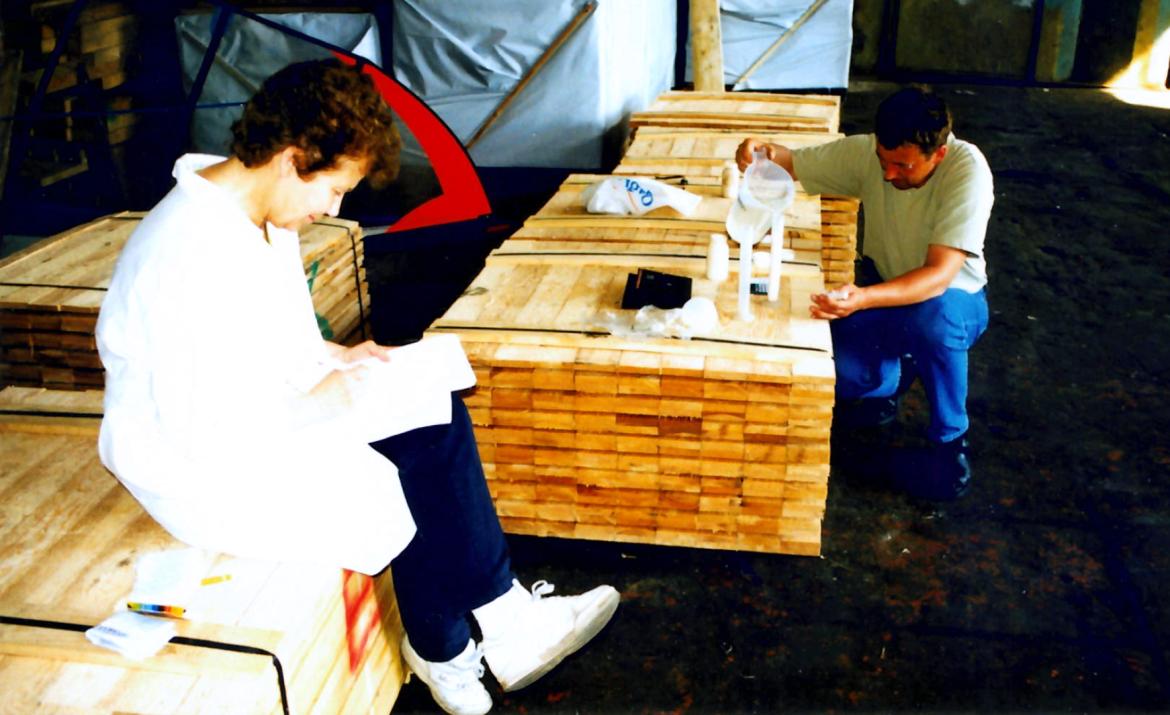
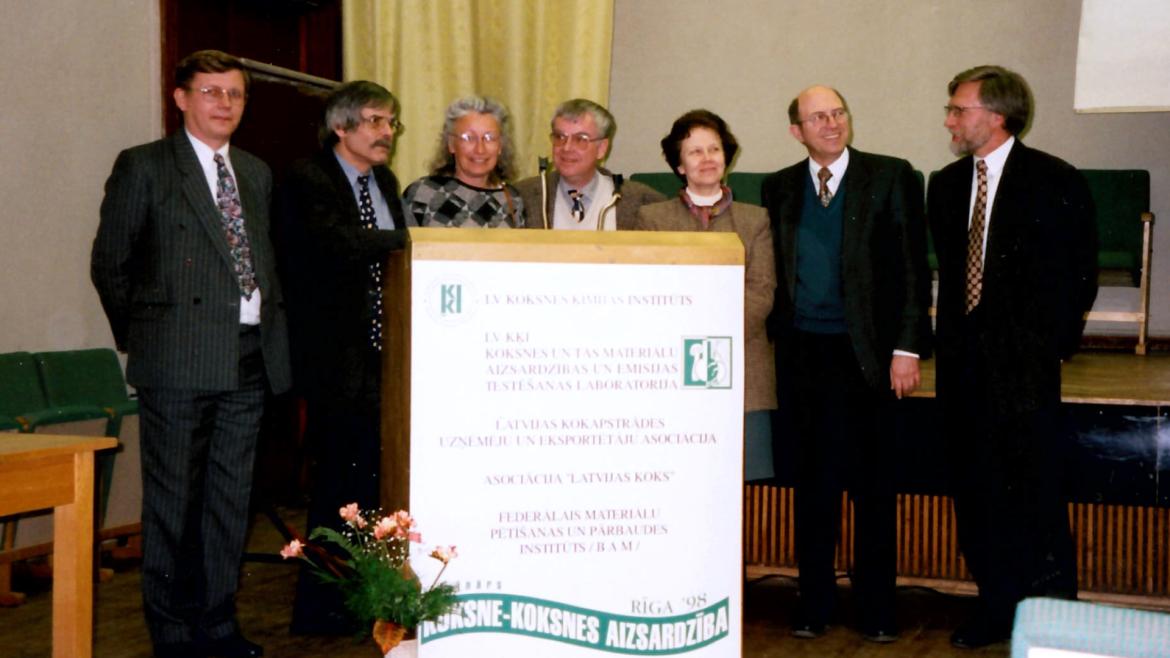
The 1990s of the last century, when the funding system changed radically. We did everything possible to survive and preserve our research direction. Alongside research, we sold the wood protection products we had developed, consulted manufacturers on practical issues of wood impregnation technology, and advised builders and private individuals on wood preservation and on combating the dry rot fungus Serpula lacrymanss. During this period, the first limited liability companies were established on the basis of the institute’s developments, some of which continue to operate successfully to this day. With the support of German funding, we established and became the first in Latvia and Germany to accredit a wood testing laboratory. We had wonderful colleagues who, for example, travelled to Germany without hesitation to learn testing methods, having previously intensified their German language studies. We built contacts with foreign colleagues and gained recognition by participating in conferences and COST actions. It was an exciting and dynamic time!
The Role of the Researcher Today
In your opinion, what skills are most necessary today for those who wish to create innovation in materials science and the bioeconomy?
Innovation – in any field, not only in materials science – requires solid theoretical knowledge and an understanding of practical and economic aspects, including the needs and capabilities of manufacturers, market demand, and similar factors. Furthermore, in line with the concept of the bioeconomy, biological resources for product manufacturing must be used in a sustainable, health-safe, and environmentally friendly manner, from production to disposal. Innovation is a collective effort; therefore, the ability to cooperate, organise, and lead is essential.
How do you see the dynamics of innovation in teamwork? Does interdisciplinarity help, or does it sometimes complicate the creative process?
I have already mentioned that, in my view, creating innovations requires a group, laboratory, or collective with a creative core and committed, responsible contributors. Knowledge in different fields is undoubtedly an advantage and can in no way be a reason to limit the creative process. For example, it is difficult to imagine innovation in wood processing technology if the group does not include a chemical technologist. The dynamics of innovation after the laboratory research stage are largely determined by successful cooperation with a manufacturer or entrepreneur – the implementer of the idea.
The dynamics of innovation after the laboratory research stage are largely determined by successful cooperation with a manufacturer or entrepreneur – the implementer of the idea.
Do you think that a woman’s experience in the STEM environment can bring a specific quality to the creation of innovation? What might that be?
It is difficult to imagine the creation of innovations in materials science and chemistry without the participation of STEM professionals. Of course, for a woman with an education in STEM, technical and technological solutions are more readily understood. However, every member of a team contributes in their own way, and anyone – whether a woman or a man – can bring a specific quality according to their knowledge and experience. Rather, one could speak about the influence of a woman on the microclimate of the team (for example, creativity?).
Have you experienced moments when innovative ideas had to be proven more thoroughly simply because you are a woman?
I have not had such an experience – perhaps also because any idea, proposal, or development is usually presented together with colleagues.
Which technologies, concepts, or methodologies do you think will most significantly change wood chemistry and its connection to issues of health and quality of life in the coming decades?
Wood will be used more extensively in construction, including public buildings. I do not believe that wood or its hybrid structures will dominate in high-rise buildings. I also doubt that within the next 20 years chemical compounds or biofuels will begin to be produced industrially from wood, replacing other plant-based raw materials – that is, whether technologies will be developed that would make the production of chemical compounds or biofuels from wood economically more advantageous.
If you had the opportunity today to pose one major question for the next stage of research – what would it be and why?
When will Latvia’s leadership understand which fields of science are strategically necessary and promising for the country, so that they can be developed in the long term with adequate and stable funding? By fragmenting research into small, short-term projects, one cannot expect major breakthroughs in innovation. But is the problem only a matter of funding?