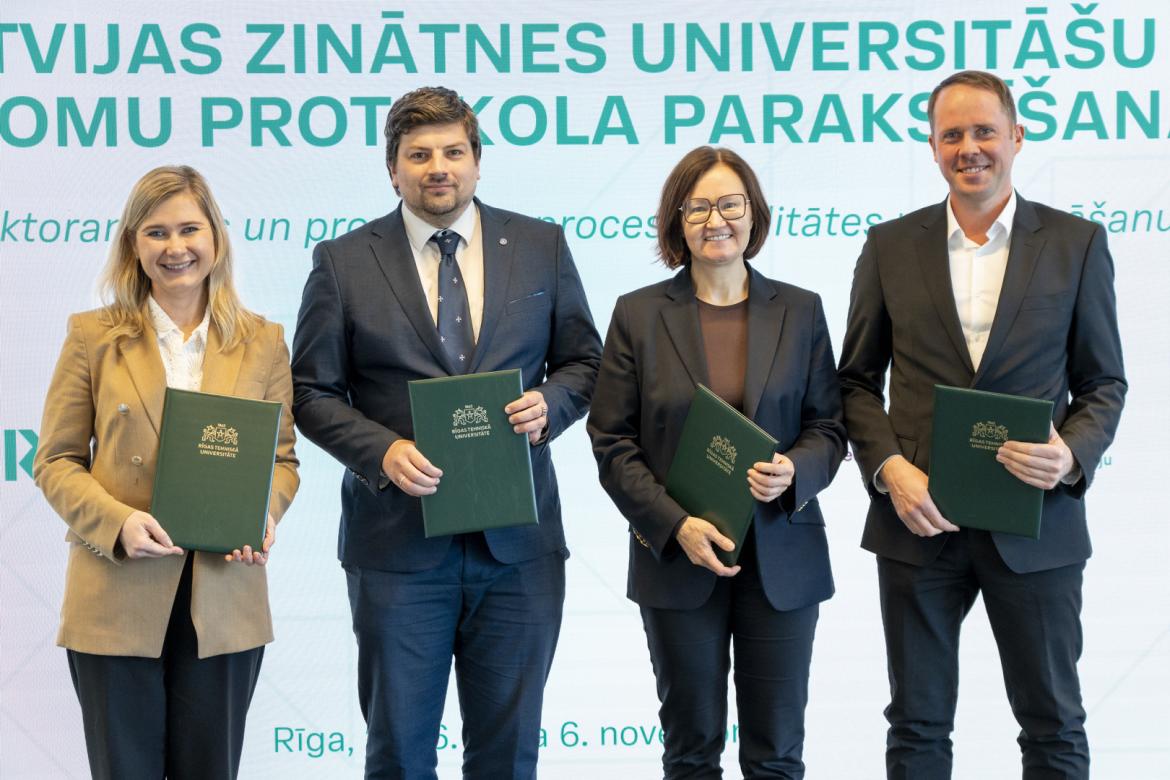
Greater institutional autonomy for universities in the doctoral degree awarding process will not reduce the requirements for doctoral candidates, even after the new Cabinet of Ministers regulations come into force next year, allowing higher education institutions greater freedom in organising the doctoral degree awarding process. Latvia's research universities have agreed on this position, with their Vice-Rectors for Research signing a memorandum of intent on Friday, 6 November, affirming their commitment to ensuring the comparability of doctoral degree awarding processes and creating a reliable, internationally competitive doctoral education environment in Latvia.
On 1 January 2027, the Cabinet of Ministers regulations "Basic Qualification Requirements for Supervisors of Doctoral Theses and Members of Doctoral Degree Awarding Committees in Academic Doctoral Study Programmes and Basic Requirements for the Establishment of Doctoral Degree Awarding Committees" will come into force, changing the legal framework of the doctoral degree awarding process and granting higher education institutions greater autonomy in organising doctoral studies and the doctoral degree awarding process. This means that universities will be able to choose the model of the doctoral degree awarding process that best suits their needs more flexibly, while assuming responsibility for its quality.
One of the most significant changes will be the abolition of the State Scientific Qualification Commission (VZKK), meaning that doctoral theses will no longer be evaluated by an anonymous reviewer appointed by the VZKK. Therefore, greater responsibility for the quality of doctoral thesis evaluation and the transparency of the doctoral degree awarding process will henceforth rest with higher education institutions themselves and the doctoral degree awarding committees they establish.
By signing the memorandum of intent, the four research universities – Riga Technical University (RTU), the University of Latvia (UL), Rīga Stradiņš University (RSU) and Latvia University of Life Sciences and Technologies (LBTU) – affirm that greater institutional autonomy will not reduce the requirements for scientific quality. The universities agree to maintain a high level of doctoral thesis quality regardless of the chosen organisational model of the doctoral degree awarding process, thereby promoting scientific excellence, as well as strengthening mutual trust by informing one another about significant changes to their internal regulations.
The universities promise to pay particular attention to the application of qualification requirements for members of doctoral degree awarding committees, the prevention of conflicts of interest and ensuring the quality of doctoral thesis evaluation. They have also agreed to meet as necessary to discuss their experiences in implementing the new regulations, identify potential challenges and jointly seek solutions.
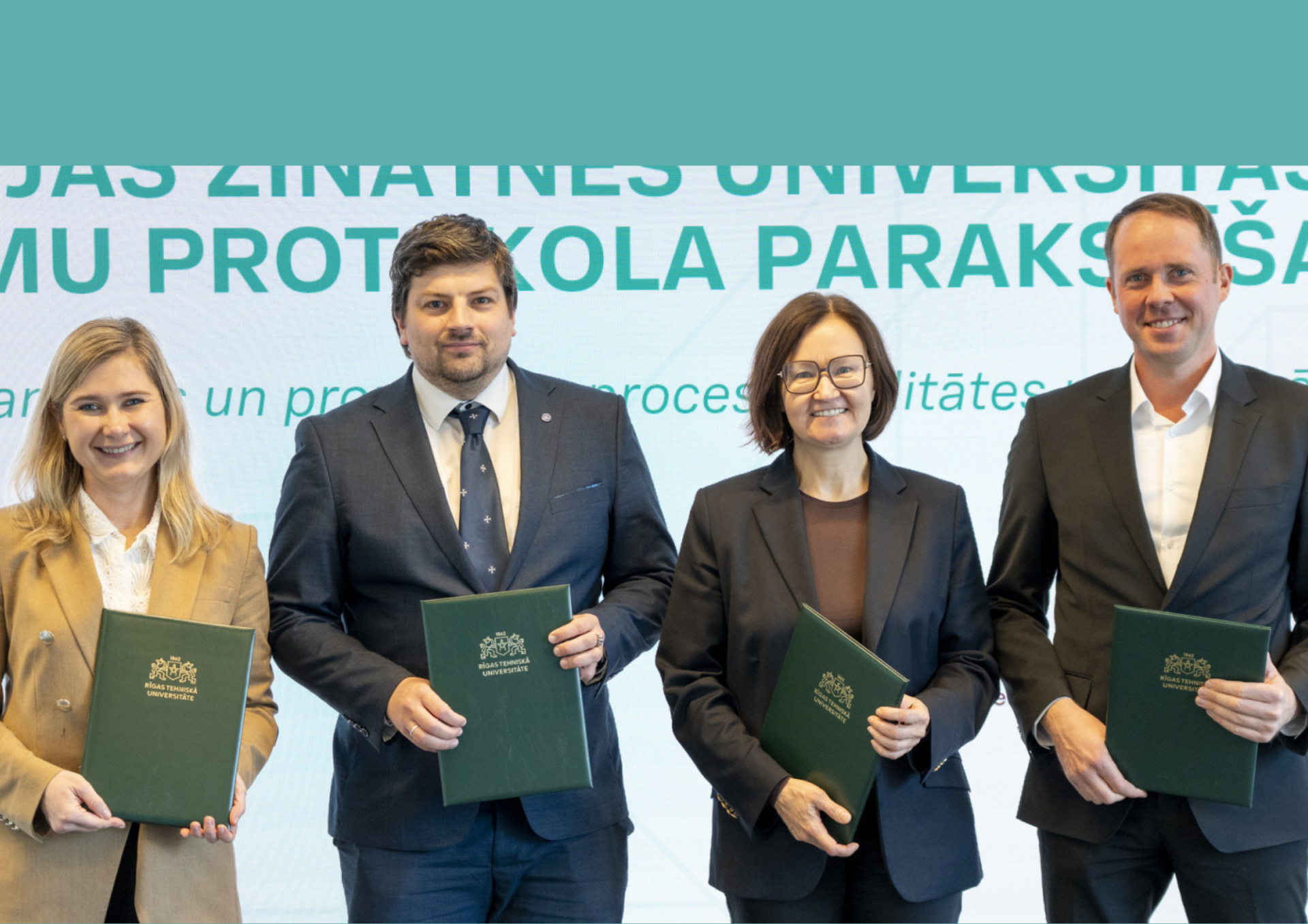
The memorandum of intent was signed by RTU Vice-Rector for Research Maira Indrikova, UL Vice-Rector for Research Guntars Kitenbergs, RSU Vice-Rector for Research Agrita Kiopa and LBTU Vice-Rector for Research Gatis Vītols.
"The main responsibility of research universities is not only to provide high-quality higher education, but also to maintain high standards of scientific research and promote scientific excellence. At RTU, we are purposefully working to strengthen the quality of research by attracting internationally recognised and highly qualified scientists, including tenured professors, as well as promoting the involvement of our researchers in the international scientific community and the preparation of publications for high-level scientific journals. However, it is equally important to ensure the development of a new generation of scientists, which is why high-quality doctoral education is important to us, preparing new, competitive researchers who will continue to develop Latvian science in the future. The new regulations grant higher education institutions greater autonomy, but our commitment remains unchanged – to ensure the high quality of doctoral theses and maintain scientific excellence. The agreement between Latvia's four research universities demonstrates that we recognise our responsibility and are ready to cooperate," emphasises RTU Vice-Rector for Research Maira Indrikova.
RSU Vice-Rector for Research Agrita Kiopa also expressed satisfaction with the cooperation between all four research universities, while UL Vice-Rector for Research Guntars Kitenbergs believes that the ability of higher education institutions to agree on joint action also makes the work of decision-makers easier. Meanwhile, LBTU Vice-Rector for Research Gatis Vītols points out that by signing the memorandum of intent, the research universities are setting an example for other higher education institutions in their commitment to strengthening common quality principles. The memorandum of intent provides that other higher education institutions registered in Latvia that offer academic doctoral study programmes may also join it.