What happens when a centuries-old medicinal mushroom, known from the forest floor, is encouraged to grow in a laboratory? Is it possible to replicate a slow and complex natural process under controlled conditions — and obtain high-value bioactive compounds from it? These are the questions the Latvian State Institute of Wood Chemistry (LSIWC) aims to explore in a new project, “Innovation Grants for Students of the Latvia University of Life Sciences and Technologies” (No. 1.1.1.7/1/25/A/001), co-funded by the European Regional Development Fund and implemented in collaboration with LBTU and several partner institutions.
The turkey tail mushroom (Trametes versicolor) is a perennial bracket fungus common in Latvian forests and historically used in traditional medicine, particularly in East Asia. Its composition includes polysaccharide–peptide complexes, β-glucans, triterpenoids and phenolic compounds, which research has associated with immunomodulatory, antiviral, antioxidant and potentially anticancer activity. The project aims to obtain the first laboratory-grown fruiting body and extract prototypes, and to evaluate their potential for controlled cultivation and future commercial applications.
The goal for LSIWC is to grow the fruiting bodies under laboratory conditions, extract the biologically active compounds, and assess their prospects for further development and practical use.
Students’ First Steps
The team’s work begins with developing the methodology and carefully planning each stage.
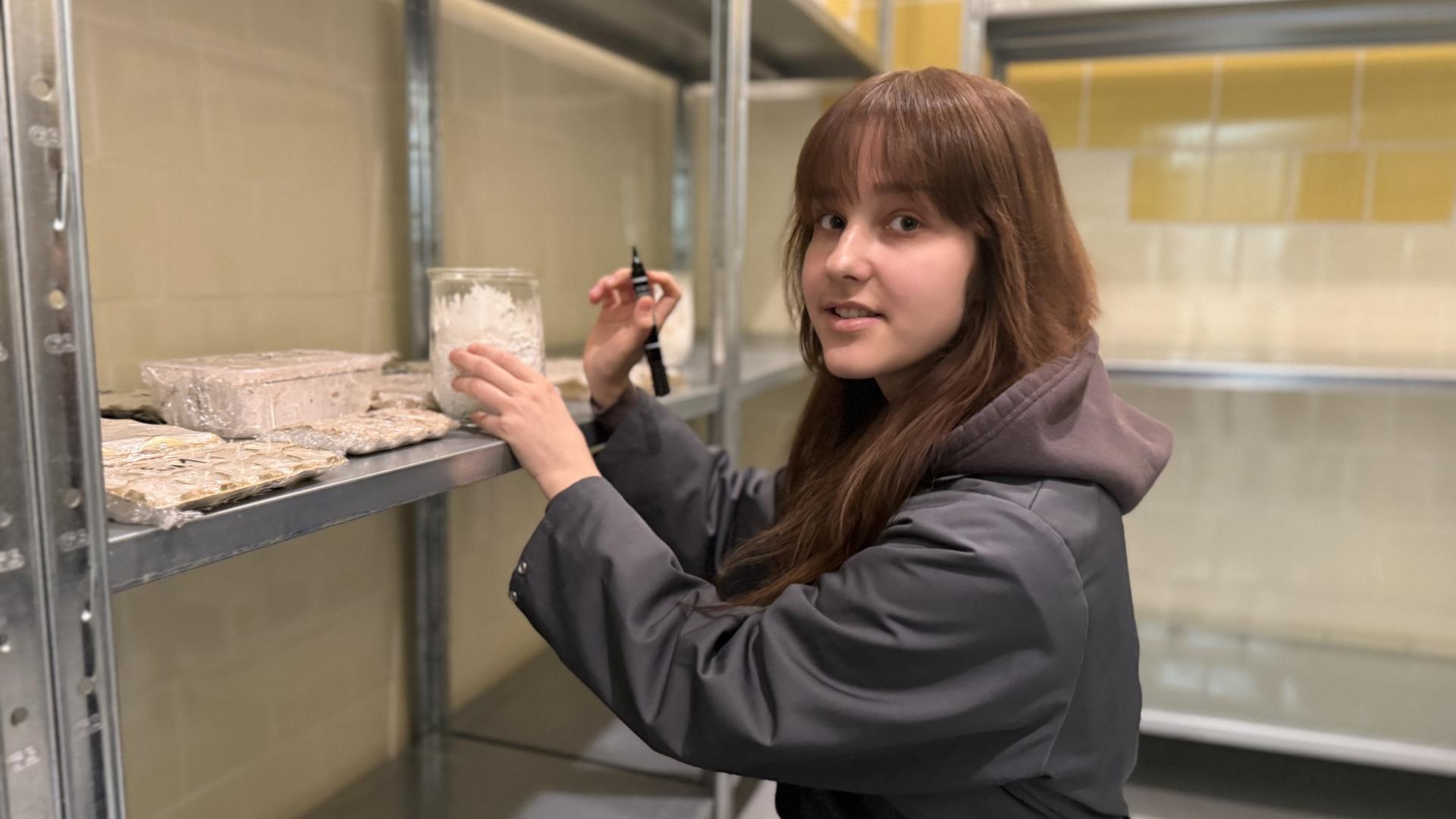
Emīlija Skrupska, a third-year student at the University of Latvia’s Faculty of Biology, explains:
Right now we are planning the schedule and looking step by step at how we will carry out the process — where we will obtain the materials and what the cultivation conditions should be. This will be a new experience, as the turkey tail fungus has not been grown in a laboratory in Latvia before.
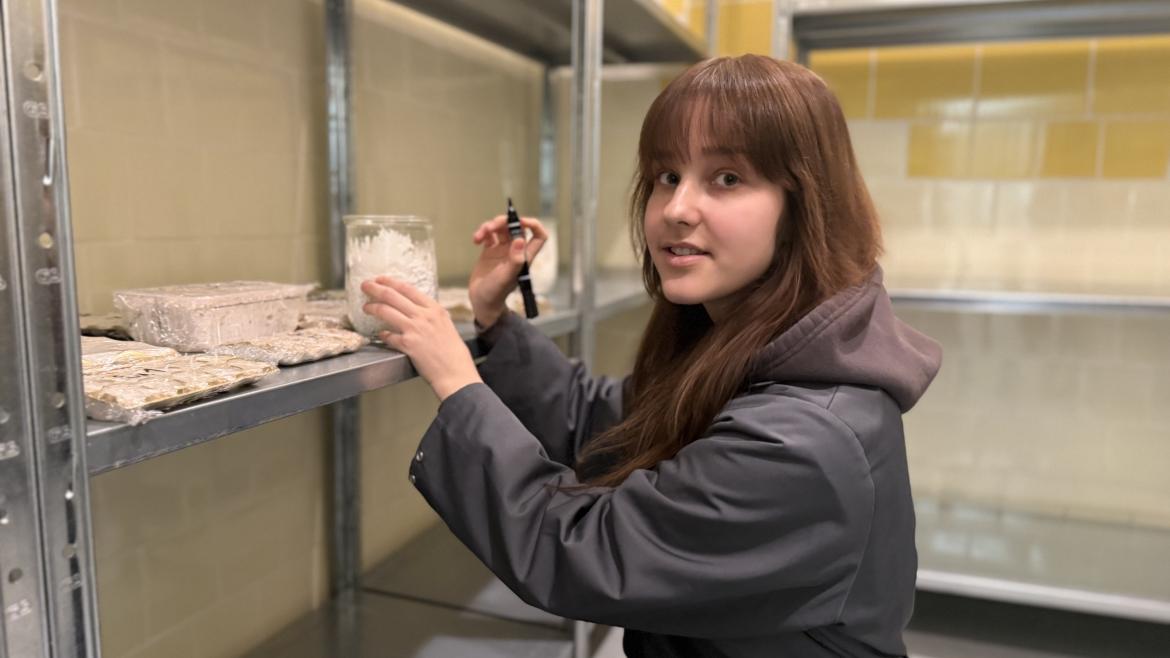
The Mushroomers team is led by Mikus Kampuss (a Master’s student at the University of Latvia) also hopes to deepen his knowledge and gain experience in research project management:
Until now, I have only grown mycelium, so I would really like to learn how to cultivate fruiting bodies. I am also interested in understanding how to lead a project and a team — skills that will be valuable in my future research work. It’s inedible, which is a bit sad, but it's quite beautiful and very common in nature. Turkey tail grows slowly, so we will need to keep the mycelium alive and in stable conditions for a long time.
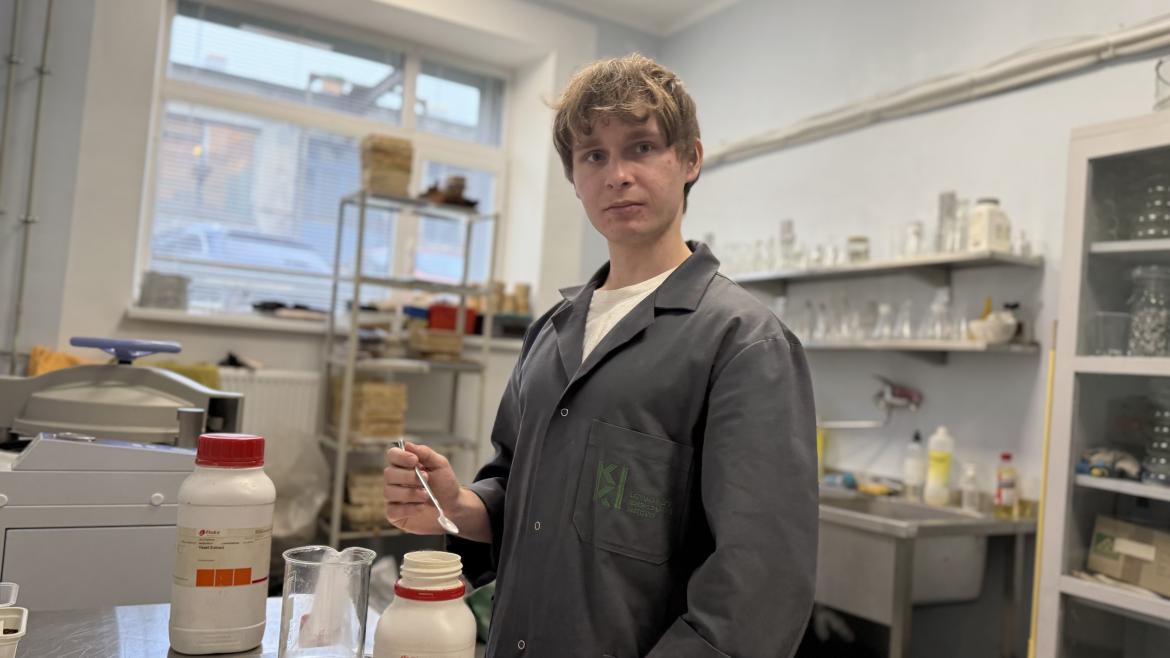
Ksenija Radovska (Master’s student, 2nd year, University of Latvia, Faculty of Chemistry) is waiting for the first samples for extraction:
I have worked with fungi before, but it will be interesting to see whether there will be any differences when working with Trametes versicolor.
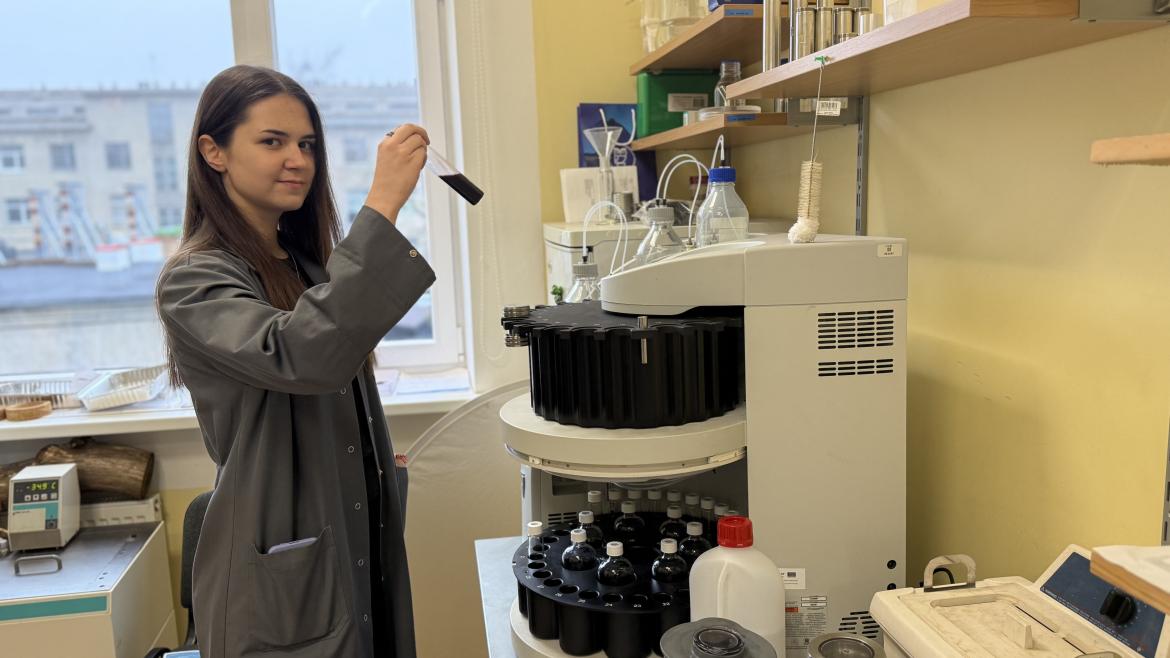
Meanwhile, Reinis Štāls (a student at the LBTU Faculty of Economics and Social Development) emphasizes the importance of teamwork and his role in coordinating the project:
I am very happy to take part in this project, as it gives me the opportunity to work together with talented and goal-driven people. My responsibility will be to oversee the financial side of the project and help the team achieve its objectives.

The perspective of the supervisor
The Mushroomers' supervisor Dr. biol. Ilze Irbe, Leading Researcher at the Cellulose Laboratory, emphasizes that this is the first stage in assessing the feasibility of the idea:
This is a six-month grant. In essence, we are ‘jumping into cold water’—neither the students nor I have ever tried cultivating Trametes versicolor in the laboratory. In the forest it grows beautifully, but we don’t yet know how it will behave under our controlled conditions.
At the same time, Dr. Irbe highlights that successful cultivation examples exist in other countries, including commercial farms in Japan and North America, demonstrating the potential of this research direction. After six months, it will be possible to evaluate whether the first fruiting body prototype has been obtained in laboratory conditions and whether the project should be developed further.