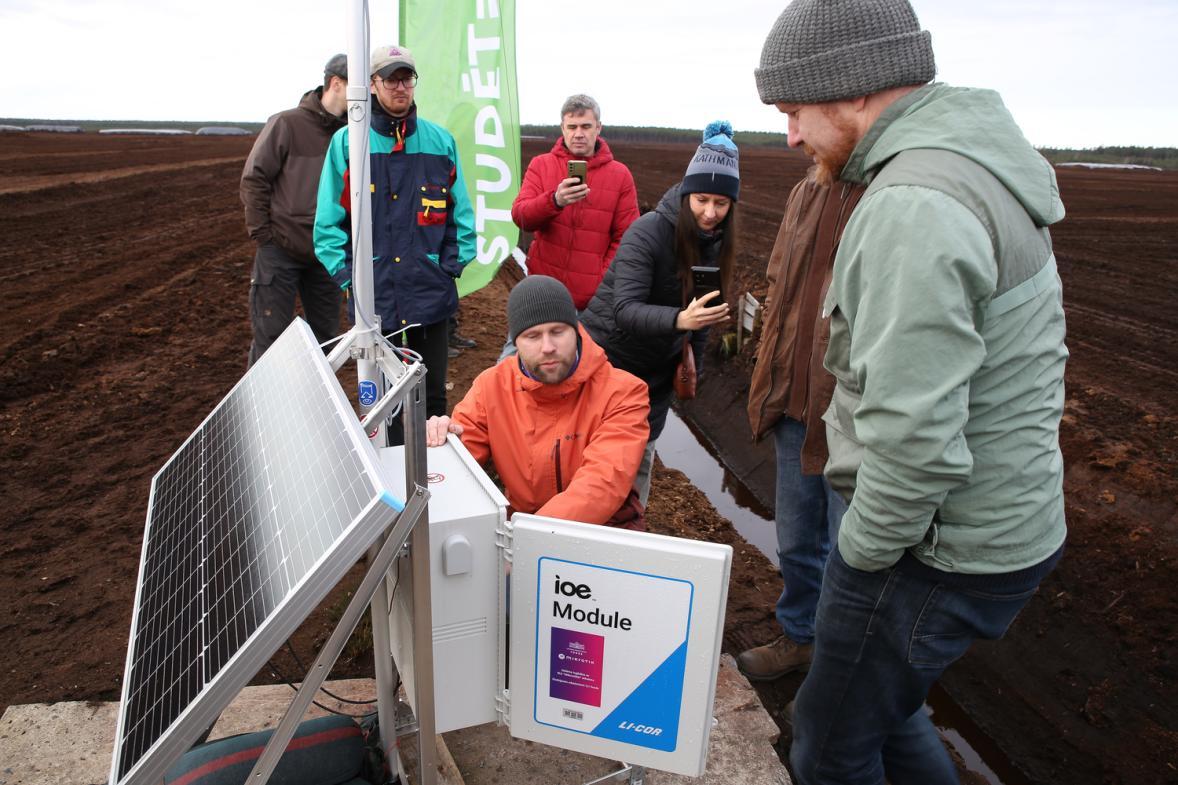
Latvia is a European leader in the export of peat substrates, and calculations show that the country’s peat resources are sufficient for at least the next thousand years. However, in light of the European Green Deal, there is a possibility that peat extraction in Latvia may face future restrictions. To obtain accurate data on actual emissions generated in peatlands, a unique greenhouse gas research project was launched in November. Researchers from the University of Latvia’s (UL) Department of Geology have begun measuring carbon dioxide (CO₂) emissions in peat extraction fields, including sites operated by Laflora. The measurement equipment was purchased thanks to the support of the UL Foundation patron, Mikrotīkls Ltd.
“This is a significant milestone for Latvian science, industry, and our progress toward climate neutrality. It has been made possible by the long-standing support of our patron Mikrotīkls for science and innovation,” emphasizes Zaiga Pūce, Director of the UL Foundation. “Support in the early stage of a research project is critically important, yet often difficult to secure. We highly value the patron’s trust, which has allowed scientific work to result in tangible and important real-world applications.”
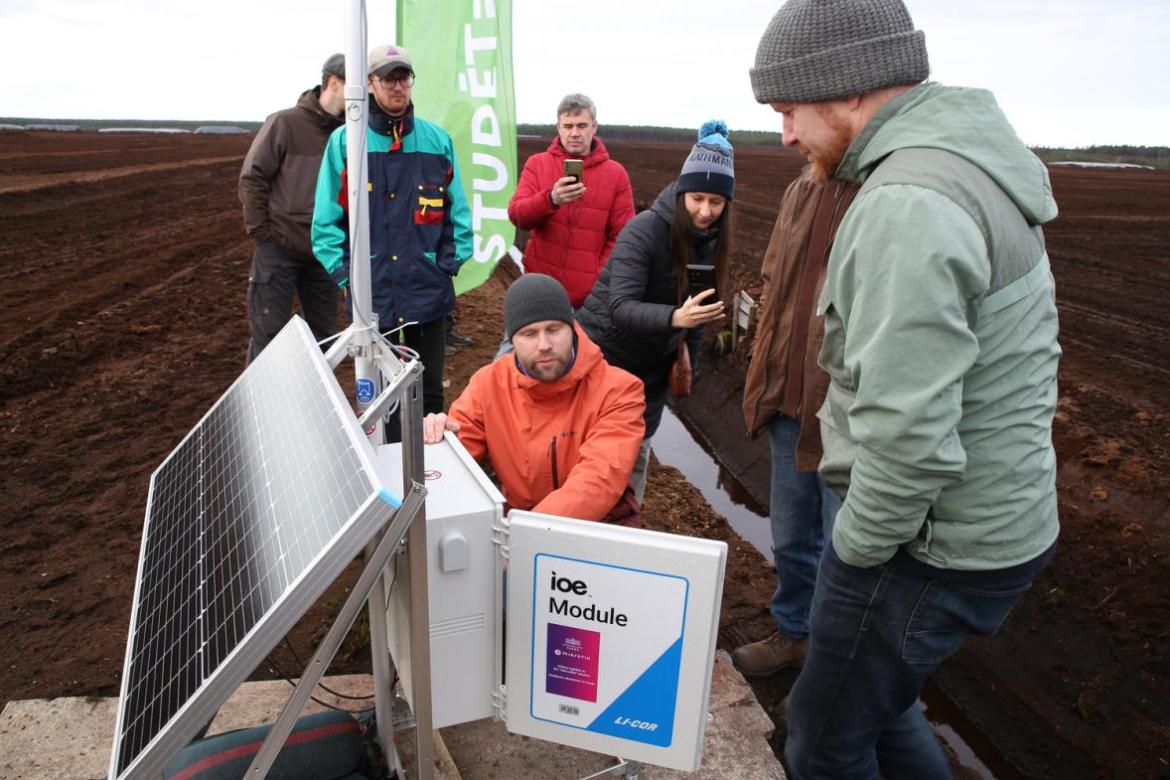
This spring, researchers from the UL Department of Geology participated in the UL Foundation’s MikroTik Project Competition in the fields of natural sciences, technology, and medicine, receiving funding to acquire a next-generation eddy covariance monitoring system. This method enables direct and continuous measurement of CO₂ fluxes between the land surface and the atmosphere, providing high-precision data on greenhouse gas exchange.
“Thanks to the support of the UL Foundation and Mikrotīkls, we can now begin measurements that were previously impossible in Latvia. Collaboration with industry partners allows us to apply scientific methods directly in active production areas and contributes to the long-term data collection needed for emission inventories and climate targets at both national and international levels,” explains Professor Normunds Stivriņš of the University of Latvia’s Department of Geology.
The eddy covariance method is recognized as a Tier 3 (highest-accuracy) approach under the IPCC Guidelines for National Greenhouse Gas Inventories. Measurements follow the World Meteorological Organization (WMO/GAW) quality control requirements and the ISO 20988:2007 standard Air Quality — Guidelines for Estimating Measurement Uncertainty, ensuring data precision, repeatability, and international comparability. This scientifically validated and verifiable direct-measurement method is also recognized within the SocialCarbon and Gold Standard frameworks, enabling objective assessment of CO₂ fluxes in both peat extraction and land-rehabilitation areas.
“Direct emission measurements using eddy covariance technology represent a crucial step toward scientifically sound and transparent carbon accounting in the peat sector. The results of this study will provide a reliable foundation for determining the future of peat extraction in Latvia,” notes Uldis Ameriks, CEO of Laflora Ltd.