In his postdoctoral project "Effective Topological Invariants for Representation Discovery in Image Diagnostics", Jānis Lazovskis, a researcher at the Institute of Clinical and Preventive Medicine (KPMI) of the University of Latvia, will use mathematical topology models to enhance the capabilities of artificial intelligence (AI) algorithms to detect gastric cancer and precancerous conditions.
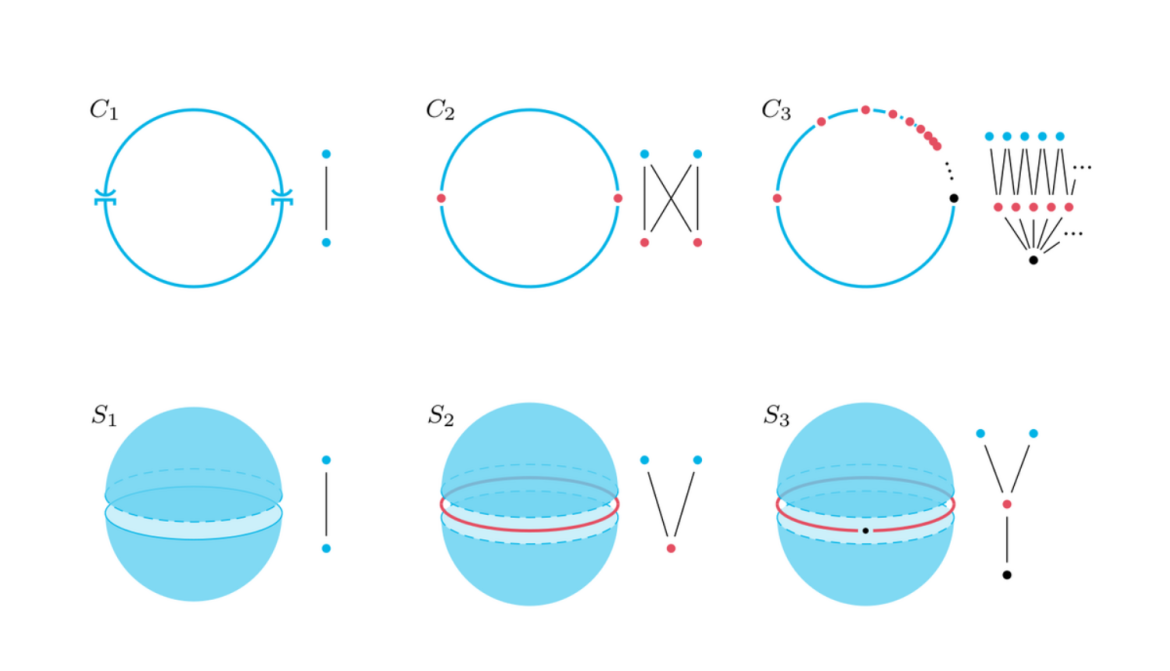
Image:
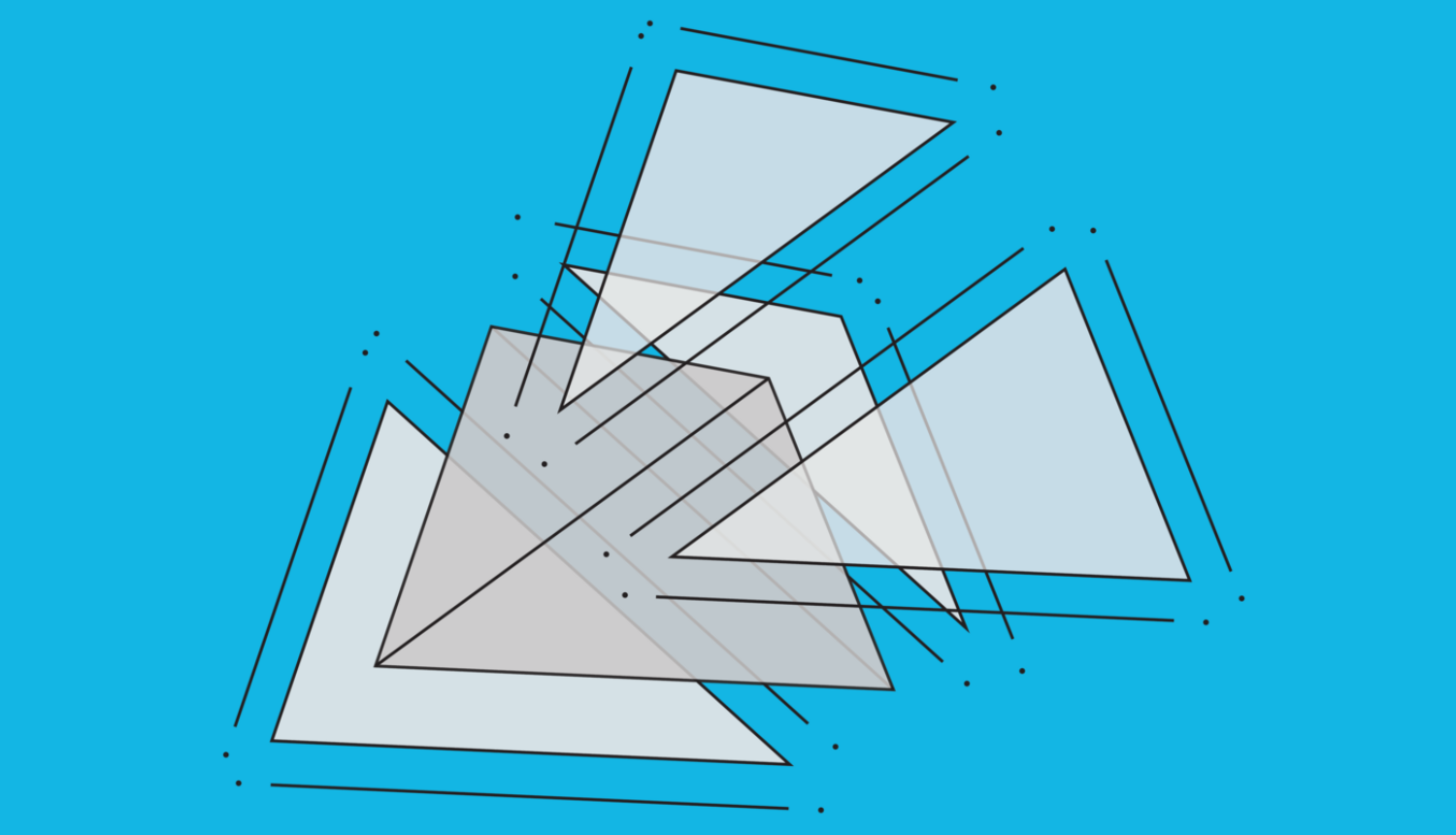
- Division of a simple three-dimensional topological space (a tetrahedron) into lower-dimensional spaces. In topology, a branch of mathematics, the focus is on characterising and constructing spaces by combining smaller, simpler ones.
- Topological division (stratification) of a circle and a sphere in various ways. A circle can be described using open and closed intervals, as well as individual points between them. A sphere can be constructed from a circle by attaching two discs, one on each side.
ne of the projects at the University of Latvia’s Faculty of Medicine and Life Sciences, specifically at the Institute of Clinical and Preventive Medicine, that focuses on training and developing AI, is AIDA – an AI-based diagnostic assistant for detecting gastritis. It could potentially help identify gastric cancer and various precancerous conditions.
Data are being collected in the participating countries – Latvia, France, Spain, Lithuania, and Portugal – including tissue images with various precancerous or cancerous conditions, where expert pathologists have marked areas that show cancerous or precancerous cells.
These files are then analysed by AI, which "learns" by comparing images with and without tumours. Based on the processed information, a model is developed that the AI will subsequently use to recognise cancer cells. The more samples collected, the better the AI becomes. After more than a year of successful collaboration between KPMI and researchers at the Institute of Electronics and Computer Science (EDI), the AI can now recognise tumour-affected cells in a simple task with 92% accuracy.
Improving the results obtained by AI remains one of the major challenges for scientists worldwide, as there is still no single method to enhance the algorithm’s precision. Therefore, the postdoctoral project will develop a topology-based approach, building on knowledge gained during the development of AIDA models.
“The AI algorithm that analyses these images still has some shortcomings – when it receives an image, it tries to determine which areas are healthy and which are pathological. Sometimes it succeeds, sometimes it doesn’t. The possible flaws may be related to the fact that the algorithm analyses the image in separate parts that should be connected. Here, mathematical topology could be used to link different parts of the same image and perform computations to achieve more consistent results across all parts,” explains Jānis Lazovskis, a mathematician and researcher at KPMI.
Mathematical topology in data analysis could significantly enhance and improve AI approaches for recognising cancer cells, since topological data analysis allows a region or image to be described not only by classical features such as pixels, shape, or texture, but also by topological structures. These structures can be quantified and used as additional input for AI models. For example, while a standard AI model is trained using colour or texture filters, topological data analysis can supplement existing information with so-called topological “signatures” that characterise changes typical of cancer or precancerous conditions (atrophy, metaplasia). This would enable much more precise visualisation and analysis than classical statistics.
Since cancer and precancerous cells sometimes appear very similar, topological data analysis could reveal global shape features that existing calculations fail to capture – highlighting how structured or multicentric the cell nuclei are, and whether an atypical microenvironment has formed in the tissue.
“Mathematical topology is a powerful tool for analysing complex shapes and structures where traditional geometry or statistics lose accuracy. With its help, AI becomes more robust against data variability and more precise, especially in borderline cases,” emphasises Jānis Lazovskis.
A mathematician who cares about science communication, strengthening the new generation of scientists, and the sustainability of mathematics in Latvian. For more information about Ph.D. Jānis Lazovskis, watch the video story: