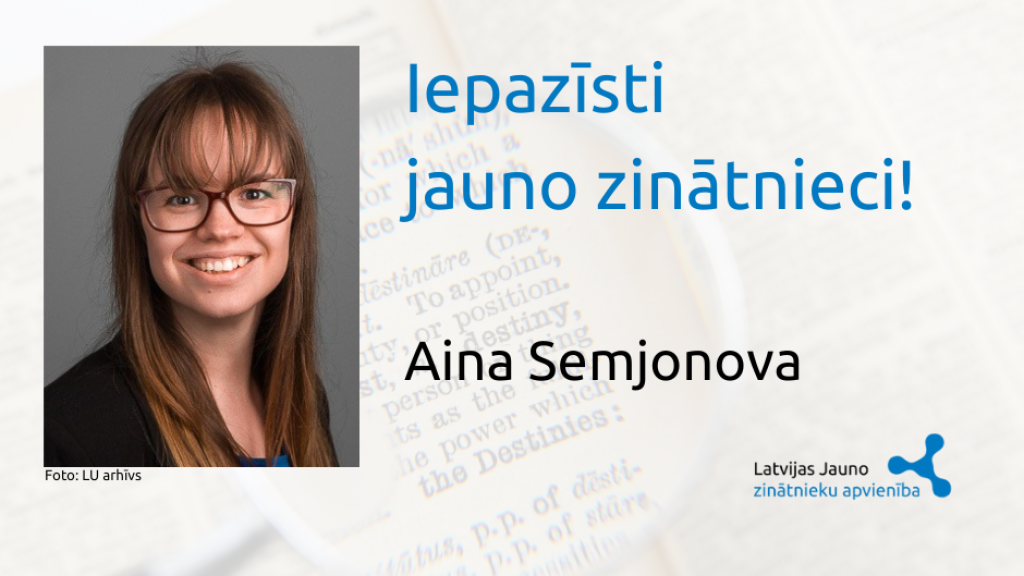
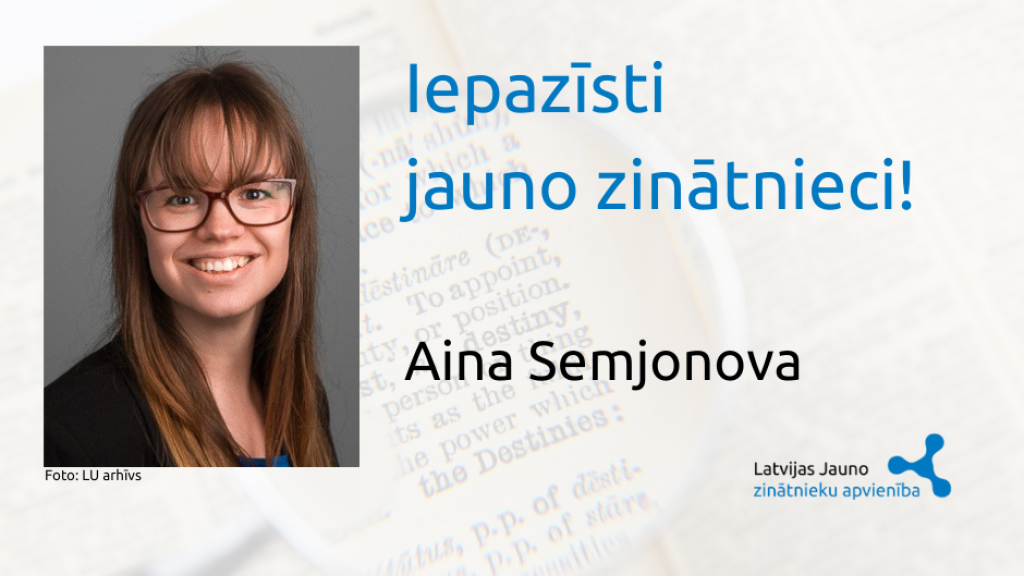
Aina Semjonova is a researcher at the Faculty of Medicine and Life Sciences, University of Latvia, and an Assistant Professor (acting) at the Faculty of Pharmacy, Rīga Stradiņš University. Aina is currently implementing a postdoctoral project entitled “The Importance of Co‑former Selection in Cocrystals for Improving the Physicochemical Properties of Pharmaceutical Active Ingredients Relevant to the Pharmaceutical Industry.”
She is a highly regarded lecturer among students and, at the same time, creates witty and engaging content about everyday life in the laboratory. Aina is also a board member of the Latvian Young Scientists Association (LJZA).
To learn more about substance interactions and openness to the unknown, we invite Aina to a conversation as part of the interview series “Meet the Young Scientist!”
You are currently implementing a project on cocrystals — crystals composed of two substances, one of which has pharmaceutical activity while the other does not. How did you come up with the idea for this project?
The idea for the project first emerged during my PhD studies — if I remember correctly, around my second year. Typically, crystal engineers focus on a pharmaceutically active substance and search for various co‑formers (inactive substances) that could improve its solubility, bioavailability, or other properties. However, what is often missing is a broader evaluation of the underlying patterns and principles.
Most studies tend to follow a familiar narrative: “Hey, we’ve created a new crystal, and it dissolves better than the active substance!” But the question remains — why does this happen? And could similar effects be expected for other substances as well? This question — or rather, this idea — kept bothering me for about a year and a half.
Eventually, I mentioned it to my supervisor, Professor Agris Bērziņš, suggesting that it might be something worth studying after my PhD — perhaps as an FLPP project. As my dissertation defense approached, there was growing talk about the launch of a new postdoctoral project call. The defense fell right in the middle of that call, which gave me about three weeks to find international mobility partners, refine the idea a bit further, and, admittedly somewhat hastily, write a research proposal.
While preparing the application, I honestly didn’t expect the project to be approved. I submitted it mainly to receive reviewers’ feedback so I could perform better in the next call. Then, in January 2025, I received a surprise email — my hastily written project had been approved. And that’s when the real work began.
How would you briefly explain why your research is important for society?
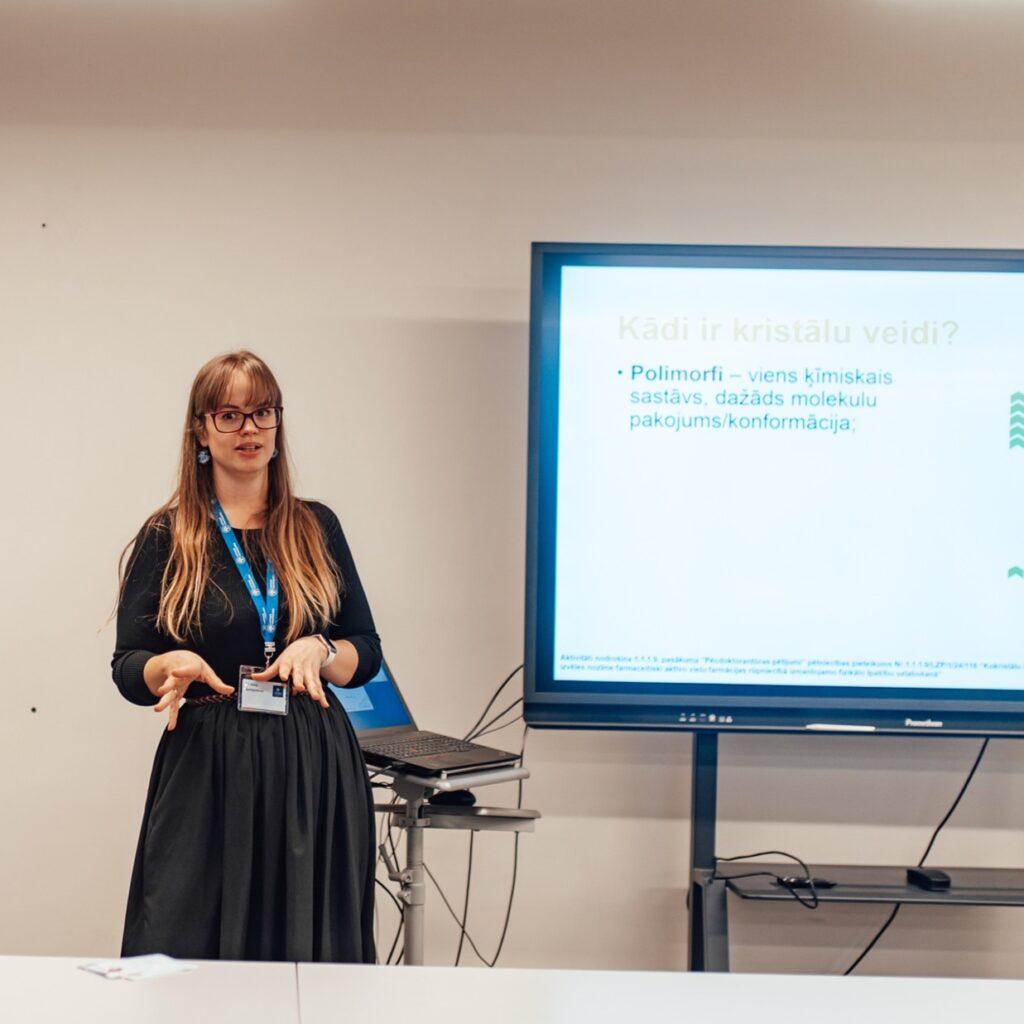
Today, a large proportion of medicines have very poor solubility, which means they cannot be absorbed by the human body in sufficient amounts. Cocrystallisation is a method that is already widely used in the pharmaceutical industry to improve the solubility of pharmaceutically active substances.
My research aims to explain whether there is a relationship between the second component of a cocrystal — the co‑former — and how it affects the solubility of the active substance. Could a similar substance produce an identical effect? It is no secret that many active pharmaceutical ingredients share a similar molecular “skeleton,” which is largely responsible for the effectiveness of the medicine, while additional functional groups differentiate drugs within the same class.
For this reason, I have selected two active substances that are very similar in chemical structure, which I am currently attempting to cocrystallise with various co‑formers. The main benefit for society would be more effective medicines that can be taken in smaller doses due to improved solubility.
Of course, I am not focusing solely on solubility — although it is undeniably the most important physical property — but also trying to identify certain patterns that could ease the path for other crystal engineers by reducing experimental time and costs, and ultimately lowering the price of the final product.
What motivates you in research?
What motivates me is the unknown — and the joy, or sometimes even disappointment, that comes when something unexpected happens. There are times when experiments are carried out for months without success. Then, suddenly, a small clue appears that allows new hypotheses and ideas to grow.
I have always been fascinated by the molecular level, starting with my pharmacy studies in physiology, biochemistry, and medicinal chemistry, where a relatively small molecule can influence the entire human body. I look at crystals in a similar way — how might one molecule interact with another to achieve the outcome I’m aiming for?
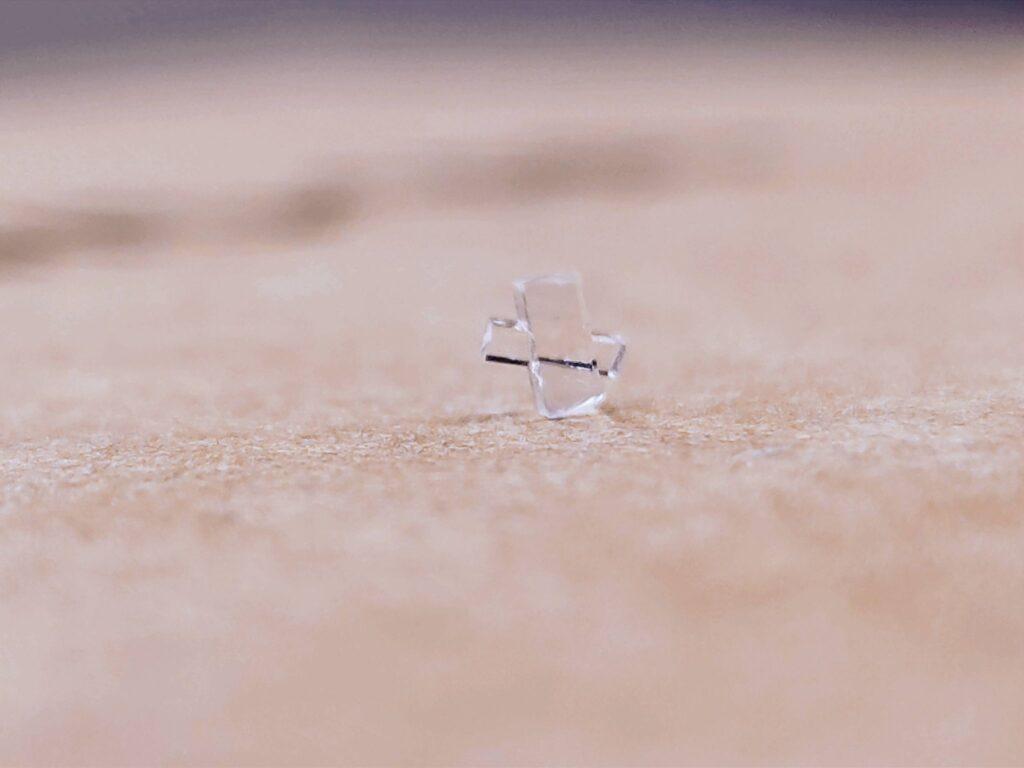
The moment when I manage to influence the outcome of crystallisation or successfully obtain a new cocrystal — which is the main objective of my current project — is what keeps me going. Of course, this usually opens up new unknowns: Will a single crystal grow? Will other, similar molecules form something as well? These questions then provide continued motivation to move forward.
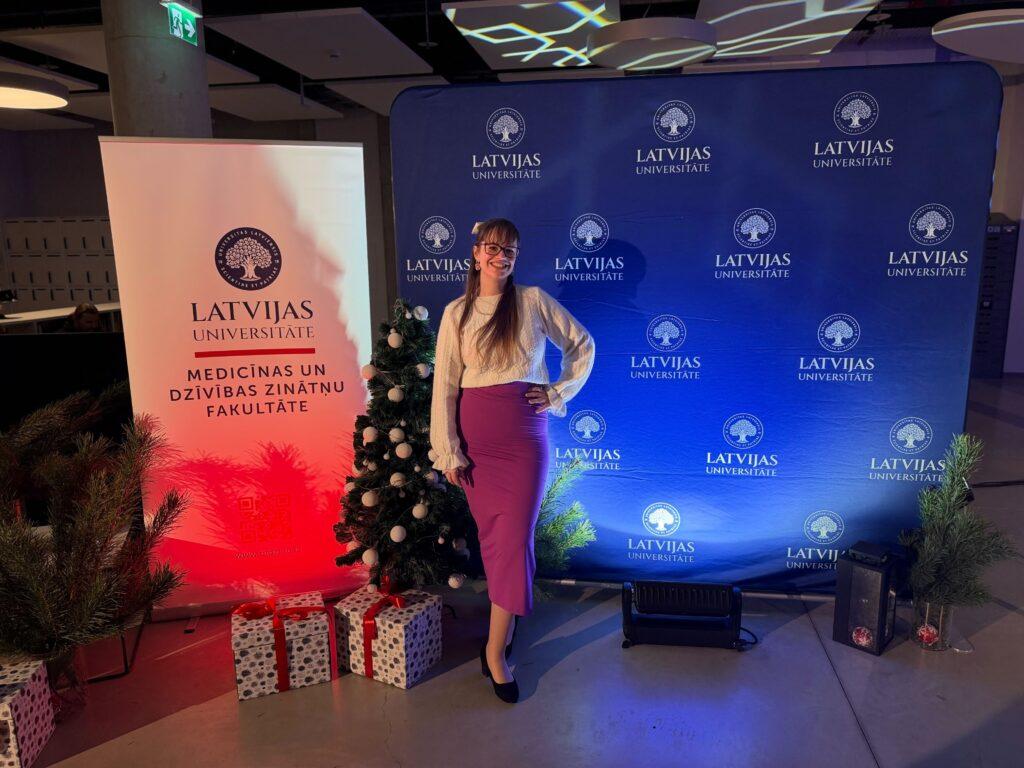
You have described yourself as “a chemistry PhD with a pharmacist’s degree,” highlighting your experience across different fields of study. How do chemists and pharmacists differ? They both work in laboratories, but do these two ‘species’ have different academic temperaments?
Chemistry and pharmacy follow broadly the same direction, but each field emphasises a different set of knowledge and skills. Pharmacists tend to have a stronger understanding of medicine and related biological sciences—such as physiology, biochemistry, and in‑depth medicinal chemistry—whereas chemists focus more on “pure” chemistry, including organic and physical chemistry. I would say I’m somewhere in between.
Pharmacists can work in laboratories, but their primary professional role is usually in pharmacies and pharmaceutical care. That said, their training also allows them to work in pharmaceutical companies, manufacturing facilities, and analytical chemistry laboratories. Chemists, on the other hand, are more typically associated with laboratories and industrial production environments.
I wouldn’t say the academic temperaments are very different. Pharmacists might be slightly better at communicating and explaining complex concepts in simpler terms, because working in a pharmacy requires providing guidance to people with very different levels of background knowledge.
When I started my master’s degree in chemistry after completing pharmacy studies, I often encountered comments like: “She’s just a pharmacist, she doesn’t really know or understand anything,” either directly or indirectly. That’s why I want my skills and experience to be seen as an asset rather than a weakness—something that professors Andris Actiņš and Agris Bērziņš recognised.
With both backgrounds, I’m able to combine medicine and pharmacy with chemistry and physics. I like to think this provides an additional perspective—one that isn’t always immediately obvious, but can be extremely valuable.
You are a lecturer at Rīga Stradiņš University (RSU), and in 2023 you received the RSU Lecturer of the Year award—clear recognition from pharmacy students who value not only the theoretical content of your courses, but also your empathy and positive attitude. What gives you the greatest satisfaction in teaching?
The greatest satisfaction comes from the moment when students who have been struggling finally understand and manage to master the necessary skills and knowledge. Stronger students often give that sense of fulfilment later—when you see a new generation of scientists growing and finding their way.
I have never refused a student who wants something explained again, or who needs a short chat about career decisions, study experiences, or just life in general—if it helps them survive their studies. University life after secondary school can be tough: complex subjects, fast pace, large volumes of information, and everyday challenges on top of that.
In my classes, I try to maintain a professional approach to the subject matter, while adding a human element—a small joke or an everyday story. We lecturers are people too, just like the students who come to study with us. We will be colleagues in the future, so we need to learn how to coexist.
From your social media posts, it’s clear that you find genuine joy in observing chemical and physical processes, and you actively share the fascinating—sometimes beautiful, sometimes unpredictable—side of experiments with the public. As a project leader and lecturer, are you able to balance hands‑on laboratory work with your other responsibilities?
I’ll answer honestly—not always. Balancing responsibilities, let alone work and personal life, doesn’t always work out. Sometimes other duties take priority, sometimes work spills into weekends, and sometimes there’s a desire to drop everything and open a café instead.
Sharing both successes and failures on social media helps relieve a certain level of mental fatigue—not only by “venting” frustrations, but also by inspiring other early‑career researchers. At first, I thought no one really needed this content except me. Years later, hearing young researchers say that it helped them “survive their master’s studies” or overcome academic challenges was a real surprise. It showed me how much simple, everyday posts can mean to others.
I still share my daily life on my Instagram account @aina_and_crystals, where I post not only successes, but also failed experiments, broken glassware, and the greatest problem every chemist faces—washing dishes.
What motivated you to join the Latvian Young Scientists Association?
During my pharmacy studies, I became involved in the Latvian Pharmaceutical Students’ Association (LFSA), which helped me gain a broader perspective on the field and socialise. Otherwise, my routine would have consisted of attending lectures and classes and then disappearing into notebooks and textbooks.
During my master’s studies in chemistry, I learned about LJZA and noticed that several active chemists were involved there. Once I realised that I wanted to pursue a PhD, I had already decided that if I were accepted into the programme, I would join LJZA as well, largely because of my positive previous experience with LFSA.
I saw LJZA as a community where I could meet like‑minded people at a similar stage of their careers. Since I had a general idea of what doctoral studies entail, I knew I would need such a community. My suspicions were confirmed — life during a PhD can be complex, lonely, and often feels like living in a vacuum. It sometimes feels like you are thrown into a large shark tank with the instruction: “Swim.” The support of LJZA members helped me stay afloat.
When you joined the association, did you already intend to be actively involved and run for a position on the LJZA board, or did that decision come later?
I definitely knew that if I joined an organisation, I wanted to be actively involved, but running for the board was not initially my goal. When I joined LJZA, the then‑board member Laura Bužinska was looking for help with managing social media accounts. Since I had experience managing a small business account, I volunteered to help.
Later, Laura encouraged me to run for the board for the first time. I was very hesitant, but since it seemed necessary, I agreed. I was actually relieved when I was not elected. Three years later, a new election took place. Again, I had not planned to run, as I was perfectly satisfied with being an active member.
After the 2025 writing retreat, however, I made the decision that I would run — but only if specific people, whom I wanted to work with and learn from, also decided to stand as candidates. And here I am.
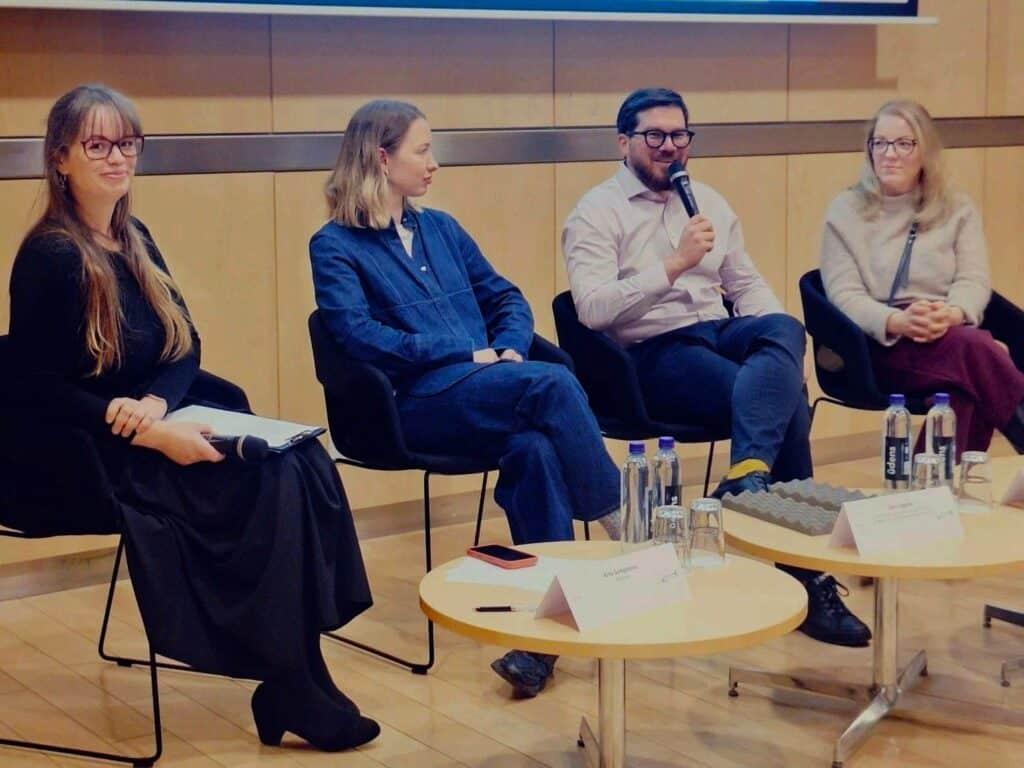
In 2025, you took part in the Latvian Radio 1 programme “Ģimenes studija”, where you spoke about the challenges faced by young parents working in academia. The Latvian Young Scientists Association (LJZA) has also previously advocated for young researchers’ rights, for example, the right to legally guaranteed parental leave. In your opinion, is the academic environment becoming more inclusive and are solutions being found to support work–life balance?
I don’t really have experience of academic life without children, because I enrolled in the chemistry master’s programme while on parental leave with a three‑month‑old baby. In the meantime, our second child arrived, I completed my master’s degree without taking academic leave, and immediately entered doctoral studies. I started working in academia only after my second parental leave ended.
Of course, I hear about the experiences of others and can say that things are better than they used to be. While preparing for the radio interview, I familiarised myself with issues from earlier PostDoc Latvia calls related to parental leave. In short, parental leave was technically “allowed,” but project extensions were not granted. This meant that postdoctoral researchers were expected to complete exactly the same amount of work as if they had worked continuously throughout the project — which is unfair both to the researcher and their family, and to Latvia’s future generations, which are already at a demographic low point.
At present, it is encouraging to see that the programme implementers have found a solution to this problem: if a postdoctoral researcher is absent for an extended period, for example due to parental leave, the possibility of extending the project is now clearly defined.
When it comes to children and the academic environment, I would also like to commend Rīga Stradiņš University for providing a children’s room for the youngest children while parents study or teach. There have been times when this support has been extremely helpful. I very much hope to see a similar initiative developed at the University of Latvia’s Academic Centre as well.
What would you like to wish or recommend to students who are currently considering enrolling in a PhD programme?
I would give two main pieces of advice. First, find a supervisor with whom you feel safe and comfortable communicating. Second, find a research topic that genuinely interests you and has a financial basis — for example, through an existing project led by your supervisor.
Ideally, find two supervisors who understand your research field. If one supervisor is overwhelmed with their own academic commitments, the other can step in and provide support. In my view, these are the two most important factors for successfully starting and completing a PhD: a good supervisor and secured funding.
I myself started my doctoral studies with only a supervisor and a project idea, but without financial support. I would not recommend this approach to anyone. Without funding, you are constantly worried about finances, which leads to taking on additional jobs. That, in turn, slows progress toward the PhD.
It quickly becomes a vicious circle: no funding — look for work — find work — no time for the PhD — reduce workload — time for the PhD — no funding again.
I wish future PhD candidates to avoid this cycle — and to find a supervisor with whom communication is truly possible.