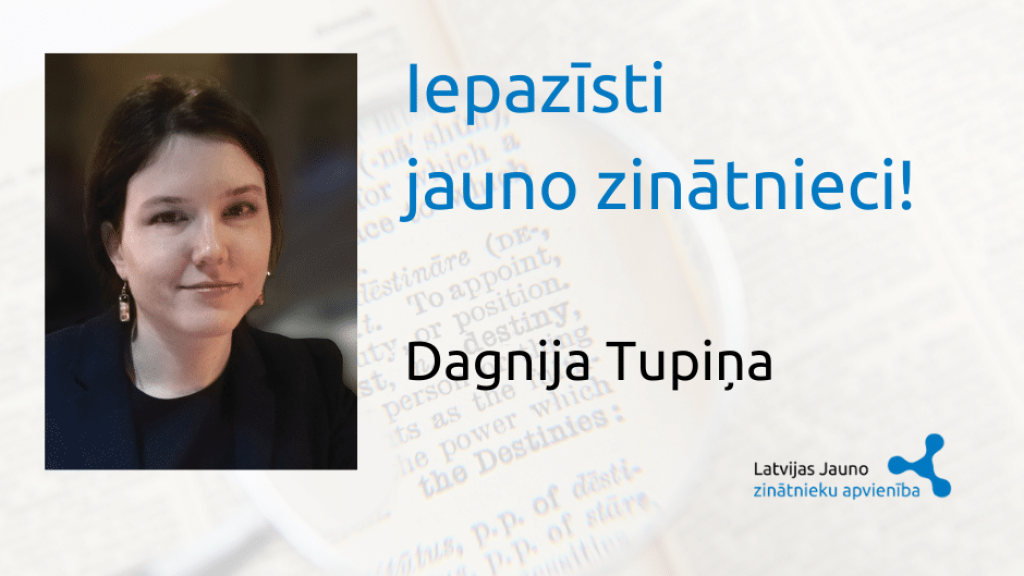
Dagnija Tupiņa is a microbiologist and researcher at the National Research and Innovation Centre (NIRI)*, where she is carrying out the postdoctoral project “Structural Characterisation of the B. burgdorferi Flagellar Collar and Motor Proteins”. Dagnija’s work is related to the development of vaccines for the prevention of Lyme disease, which is one of the studies included among the most significant achievements in Latvian science in 2025 named by the Latvian Academy of Sciences. We congratulate Dagnija on her success and invite you to a conversation in the interview series “Meet the Young Scientist!”
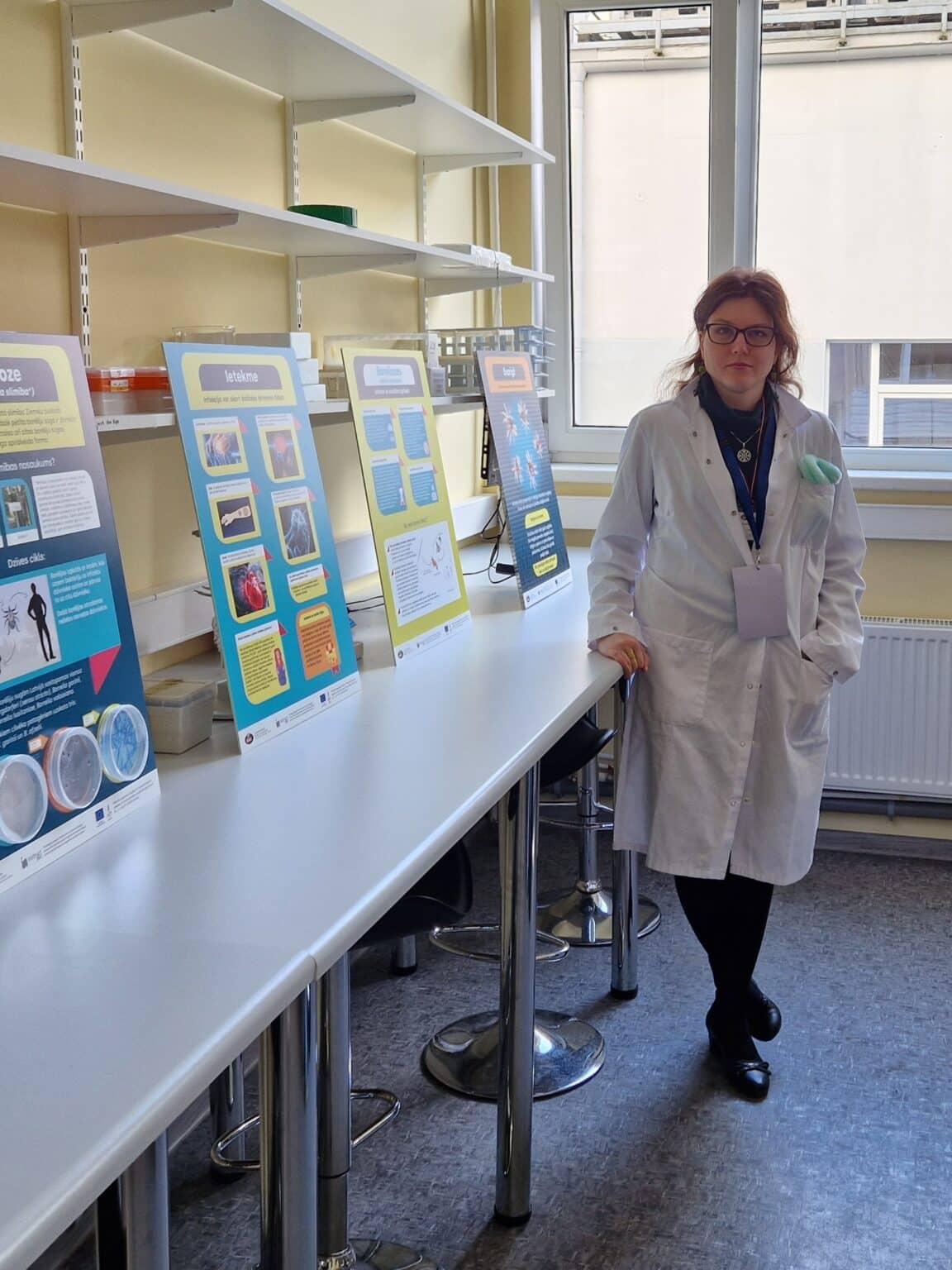
How did you become interested in microbiology and studies in biomedicine?
I probably would not call myself a microbiologist, but a molecular biologist, because although I have worked in a microbiology laboratory as part of my doctoral studies, I have spent a lot of time in the field of structural biology, as well as structural bioinformatics, and have also worked a little with plants, yeasts and cell cultures, so a fairly broad term would be needed. When talking about my work, I usually introduce myself as a scientist and then explain exactly what I do, if I am asked.
In my bachelor’s studies application, I selected only one programme — biology, but I have never been able to remember the specific moment when I made that decision or explain why I was so certain about it at the time. I know that in secondary school I read a book about the basic principles of genetics, which interested me greatly at the time. Only many years later did I come to the conclusion that the choice was probably connected with much deeper reasons — finding and claiming my own “field” and achieving as much as possible in it — but the nuances of that reason are too personal for an interview of this format.
As for my choices of direction and specialisation, it would be dishonest to tell a polished story about how I always went and chose to do what I liked most. Behind every turning point in my career there is some person, or people, who had a decisive influence at that moment. Even an action that seems insignificant to you can break your colleague’s and fellow human being’s career or lift it to great heights — in those moments, what truly interested or fascinated me mattered not in the slightest, but rather where the existing situation was directing me. Therefore, behind every step in which I have chosen a work topic, research direction or laboratory, there is another name besides my own.
How would you briefly explain why your research is important to society?
The project mentioned in the introduction on the development of a Lyme disease vaccine, which received recognition from the Latvian Academy of Sciences, is the long-term work of Dr Kalvis Brangulis, Head of the Tick-Borne Pathogen Research Group, of which I am only one of the co-authors. I will say more about that later, but in my postdoctoral project I am currently working on the study of proteins of the Lyme disease-causing bacterium Borrelia burgdorferi, which enable this bacterium to move. However, all the studies carried out in the group are based on one current issue — Lyme disease is one of the most common tick-borne diseases both in Latvia and in Europe, and the proportion of infected ticks is high: website of Centre for Disease Prevention and Control warns that it is on average between 20% and 40%. This disease poses challenges to healthcare, requiring timely diagnosis and treatment in order to avoid complications. There is also the so-called post-Lyme disease syndrome (the terminology also differs depending on the translation), the mechanisms of which are still not understood. It causes a long-term decline in quality of life and patients’ complete or partial withdrawal from the labour market. The development of a fast, safe and effective vaccine, as well as a detailed understanding of the molecular structure of Borrelia in order to find a potentially unique way to affect only the function of this pathogen, would significantly ease the burden that this widespread tick-borne disease places on society.
What motivates you in research?
This is a truly difficult but important question to answer. I will answer from three perspectives.
First, on a philosophical level, I see the natural sciences as a search for truth about how the world works — even if it is a very small fragment of the world, the size of a molecule. Science is not always flawlessly precise, but in my view the natural sciences are the less subjective part of science, which is personally important to me from the perspective of searching for truth. And every published discovery becomes one brick in the building of knowledge, where there are many rows below us now and many will be above us, so it becomes part of something larger and an opportunity to leave something behind in this world, even if it is intangible. Knowledge remains after us, at least for as long as our civilisation remains functional.
In turn, from a purely practical, down-to-earth perspective, it is difficult to find satisfaction in scientific work on a daily basis, because the moment when the results come together and something good emerges comes only after countless failures, negative or unclear experiments and mistakes. That is precisely why it is extremely important to be in the right place, because this desire and motivation to do something despite difficulties can survive only if the available conditions allow it, just as a plant can grow only with light and water, or fail to survive when encountering a pathogen.
Perhaps the shortest way to answer this question is from the other end — I have become convinced that I could not settle for doing anything else, even if science can be difficult on a daily basis.
We can congratulate you on your recent success — the topic of your research was included among the most significant achievements in Latvian science in 2025 named by the Latvian Academy of Sciences! Please tell us about the path from a new idea to a successful solution.
As I began to mention in the second question, the topic of the achievement of the year — the development of a vaccine against Lyme disease — is Kalvis Brangulis’s idea, which he had been working on for a long time before I joined his laboratory. I am grateful for the opportunity, while working in his laboratory, to contribute to this study with specific data and thus be part of this achievement, but the full story should be asked of its main author. I recommend listening to the interview on the programme “The Known in the Unknown”, as well as on Latvian Radio’s “Good Morning”, where he himself talks specifically about this study. Kalvis has worked throughout his career on the structural characterisation of Borrelia proteins and has made a very significant contribution to this field of science, so it is only natural that what has been accomplished with his experience has resulted in success. The path of big ideas is longer than the duration of a single funding call. My own ideas still have to stand the test of time.
It should be mentioned that you obtained your doctoral degree at the University of Warwick in England, your master’s degree at Lund University in Sweden, and before that — your bachelor’s degree at the University of Latvia. Was it difficult to take this step and go to study outside Latvia after your bachelor’s studies? How did you choose the universities where you studied?
After completing my bachelor’s studies in biology in Latvia, I wanted to further specialise in molecular biology at master’s level, and at that time there were no such specialised programmes in Latvia. There was also a break in EU structural funds around that time; back then I did not know how funding in science worked, only what people in the field were talking about — that there would be a huge funding crisis in science.
Everything pointed to the need to try something new, and at that moment I was still brave. I knew nothing about the challenges that awaited when starting life elsewhere — I had only one goal, which now seems ridiculously abstract: “to become an excellent scientist”, and going abroad was the most logical means of achieving it, not an end in itself. At the time, I also took very seriously the story I heard in a lecture that academic excellence is inherited and that it is therefore important to be in as excellent a laboratory as possible. It is true that the environment and the supervisor are decisive in scientific development, but nowhere near according to the parameters and rankings that I imagined at the time when making the decision to leave Latvia.
For my master’s studies, I chose programmes primarily based on where the programme itself had no tuition fee, the relevance of the content and also the university ranking, so I mostly applied in Sweden, Denmark and Finland. The doctoral programme at the University of Warwick was also attractive because, if selected in the admission process, the tuition fee, research costs and living stipend were all covered. This programme also had a unique structure, involving two supervisors and two locations — at the University of Warwick and in Singapore — as well as a fixed duration of studies, which is not typical of doctoral studies in most European countries. This programme was very focused on research, which made it more effective, and I was very fortunate with both supervisors, who were both good scientists and good, humane supervisors.
What are your observations about the differences between academic environments in different countries?
In my view, there are many differences, and there are written and unwritten things that work differently in each country. Practical structural things differ, such as the length of programmes, the conditions for completing studies and doctoral studies, credit systems and assessment systems. Each country has its own basic mentality, and this affects how laboratory teams function, how long it takes and to what extent it is possible to integrate, and whether it is necessary, as a temporary newcomer. There are different levels of hierarchy, different forms of communication, starting from how directly information is expressed and what has to be understood indirectly, as well as different mechanisms of internal regulation. And, of course, it must be taken into account that each institution also has its own specific features within a country. Overall, this means that in a new place one has to accept that one knows nothing, and assumptions based on previous experiences can even become an obstacle.
What prompted you to join the Latvian Association of Young Researchers?
Returning to Latvia after eight years of absence, I had almost no contacts and started from a blank slate, almost as if in a foreign country. In the Latvian Association of Young Researchers (LJZA), I learned more about institutes and research directions in Latvia. Unfortunately, I have not had enough time and energy to become more actively involved in LJZA’s activities, but I have not abandoned this idea, because precisely because Latvia is small, one person has greater chances of influencing something with their voice. After joining, I was greatly inspired by the study carried out by LJZA on violations of academic ethics, which, in my view, highlighted one of the facets of the scientific working environment that goes hand in hand with unresolved issues of general ethics in a broader context. I hope that one day I will succeed in being heard by the scientific community on the fact that the working environment and communication norms are the shared responsibility of all of us, not the problem of the person next to us as long as it does not affect me personally. I would like to emphasise that this does not apply to the group where I currently work, but is a reflection on broader long-term experience from both good and bad examples, both experienced by me personally and heard from others. I hope to find a way in which this could be linked to LJZA’s goals of defending the interests of young scientists in Latvia.
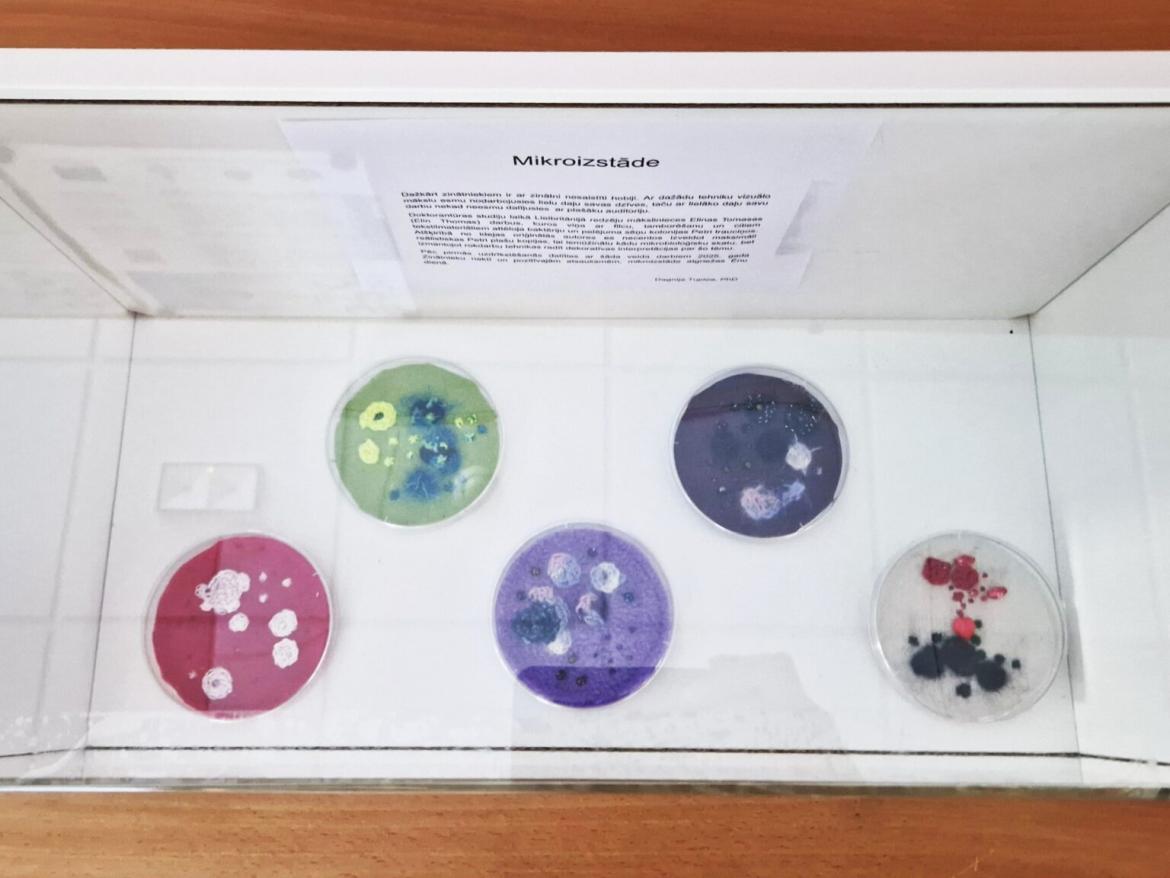
In your free time, you have engaged in overglaze painting on porcelain, and last year, during Researchers’ Night, you surprised the most observant event visitors with a mini-exhibition of textile Petri dishes. Now, in your free time, you practise karate. These are hobbies that require patience, discipline and attention to detail. How do these character traits help you in science?
I engaged in overglaze painting on porcelain from the 5th grade until completing my bachelor’s studies, while I was in Latvia. I think that this part of my life may have translated into the fact that I quickly mastered the things in the laboratory that require manual precision, such as micropipetting. In a way, it is also a fairly technical art form, because the result is not visible immediately, the colours before and after firing are visually different, one has to work in several layers, and therefore one has to be able to plan and visualise ahead to some extent in order to achieve the desired result after several firings. I will always miss this art form, because in my view no other material comes close to it.
The mini-exhibition at Researchers’ Night was a chance idea, because I had been gradually making these textile Petri dishes over many previous months. This technique is not originally mine — during my studies, I saw realistic textile representations of Petri dishes in a museum, and several years later I decided to try making something similar, but with less emphasis on realism and more on decorativeness. Thanks to the encouraging attitude of my colleagues, it found its debut venue at Researchers’ Night.
Karate has a completely different function in my life — physical activity is the only way to process stress to some extent and switch my mind off for the duration of the training session, though even then not always. Karate is also important because it gives my life another long-term investment outside work, for which I set aside time and which I try not to miss or postpone for any reason other than if my physical health truly does not allow me to attend that day. In essence, karate seems much more motivating to me than other physical activities, because there is a great deal to learn and goals to set and achieve, which is why I continue doing it. I suppose that in the structure of the learning process too, preparing for each next exam in order to obtain the next belt in a different colour and receive an assessment of what has been accomplished over a certain period of time, there is some similarity with work after all…
What myth or stereotype about scientists would you like to break?
I suppose I would like to say that being in science does not automatically make anyone “smart and intelligent”, and scientists are people just like everyone else. I had no example of a scientist in my life, so at school I imagined that in science I would end up among intellectual, independent people who talk about big ideas. Recently, I was reminded that people outside science sometimes still see scientists in that idealised or distant form. In reality, those who were bullies and gossipers in the school classroom remain the same in the laboratory. Emotional intelligence does not come together with intelligence in a narrow field. Scientists also run along with trends and are subject to herd mentality. This does not mean that our work is automatically unreliable, but that it is carried out by exactly the same kinds of people as everyone else. Judge a person not by their profession, but by their actions and how they treat others — scientist or not.
What would you like to suggest or wish to students who are currently considering applying for doctoral studies?
An individual wish would depend on what motivation the student has in entering doctoral studies, because these motivations vary greatly — for some, it is a specific career goal that simply requires a qualification, while for others science is the whole essence and way of life. Regardless of whether you undertake doctoral studies in Latvia or elsewhere, different challenges will await you in every place — and certainly ones you have not anticipated. I have met almost no doctoral students who mostly felt good during their doctoral studies and did not regularly suffer from doubt and a lack of confidence. Before taking on doctoral studies, it is important to find out as much as possible about the laboratory from its employees, speaking with them one to one about how they feel working there, and to ask the potential supervisor the uncomfortable questions in good time — about what your cooperation will be like, what you expect from each other, how often you will meet to discuss progress, what level of independence is expected, and how conflict situations will be resolved. Unfortunately, this is not always possible and, I assume, many students at that moment cannot imagine what could go wrong in order to ask questions about it beforehand rather than afterwards. Ask others as much as possible about their experiences; collect data. Doctoral studies are a marathon of mental endurance that rarely leaves a person unchanged, and you must have a very clear conviction that this is something you absolutely need to achieve in order to reach the end, and that you will be ready to sacrifice a great deal for it — preferably from yourselves, not from those around you. I would like to wish those who will still study, are studying and will complete doctoral studies, becoming part of Latvian science, to leave science better than it was when you found it — precisely because there are so few of us.