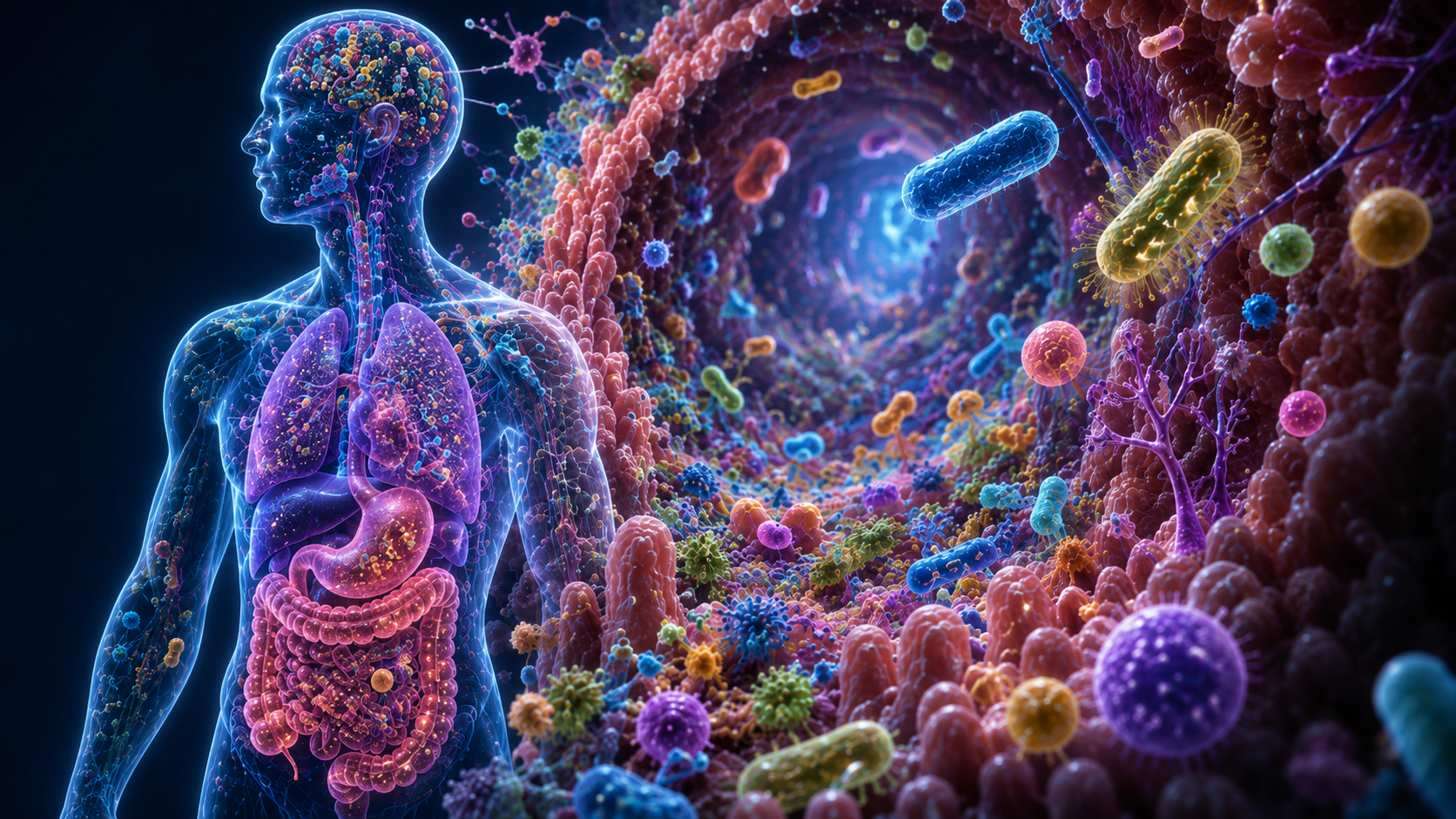
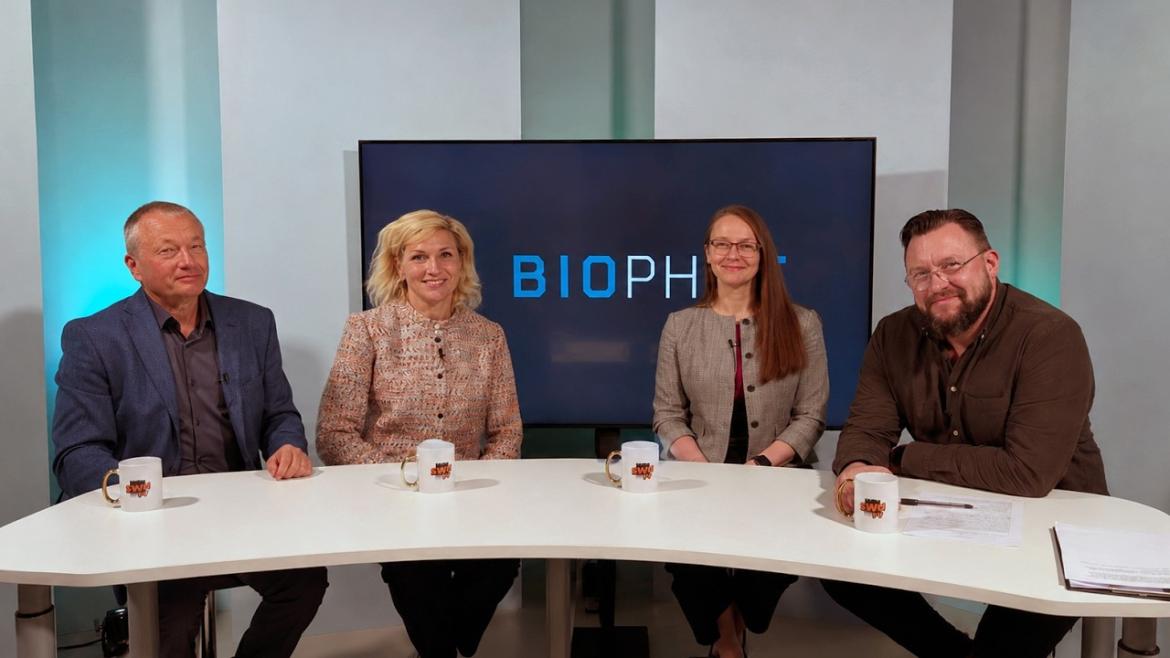
Can our well-being really be closely linked to the billions of microorganisms living in the intestinal tract? In the programme “Latvia in Science”, Ilze Elbere, a leading researcher at the National Research and Innovation Institute (NIRI), an associate professor at the University of Latvia (UL), and the head of the “SynGABA” project of the “BioPhoT” research platform, together with business development manager Līga Brasliņa, explain how microbiome research helps us better understand human health and how an idea moves beyond the laboratory.
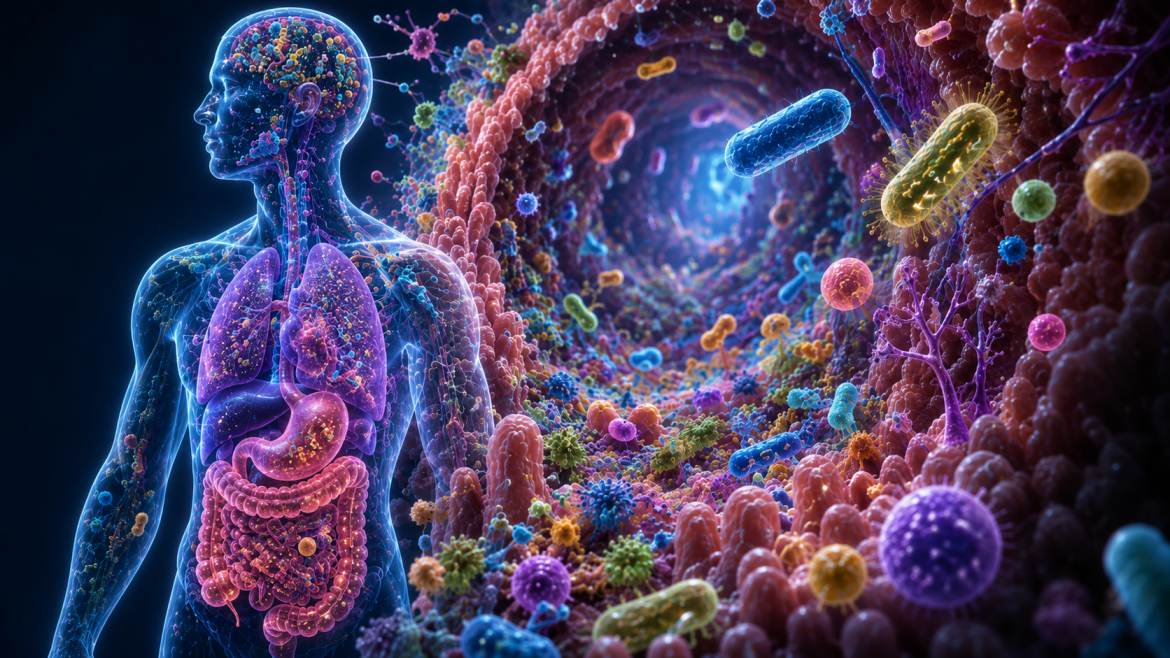
Ilze Elbere has been studying the microbiome — the collection of microorganisms and the metabolites they produce that live in the human body — for more than 12 years. The intestinal tract is often referred to as the human body’s “second brain” because there is constant communication between the microorganisms living there and the brain. “There is a range of signals that come directly from the microorganisms in the gut, and they affect both how we feel and how the body responds to what we eat,” the researcher explains.
According to her, the microbiome is influenced by many more factors than we often realise, including stress, dietary choices, physical activity, medication use, smoking and also the environment in which we live.
Speaking about stress, Elbere emphasises that its consequences are felt not only by the person, but also by the gut microorganisms: “Our microbiome does not particularly like an unhealthy lifestyle and anxiety. The stomach physically tightens. The idea that we can take miracle pills and continue living a stressful lifestyle, not sleep, eat only French fries all the time and expect the pills to save us is also misguided.”
The more scientists understand how the microbiome functions, the clearer it becomes that health is not determined by a single miracle remedy, but by a complex interaction between the characteristics of the human body, lifestyle, the environment and billions of microorganisms. Turning this knowledge into practical solutions is currently one of the key challenges.
Research into the intestinal tract is at the core of the “SynGABA” project. As part of it, researchers are seeking to develop an innovative product — a synbiotic — for the targeted enhancement of microbiome function. The idea behind the project is to combine specially selected bacteria with suitable nutrients in order to promote the production of gamma-aminobutyric acid, or GABA, in the body. This substance plays an essential role in the functioning of the nervous system and in gut–brain axis processes. The team has currently selected probiotic bacterial candidates from microbiome samples collected from residents of Latvia, whose characterisation in the laboratory is being carried out in cooperation with University of Latvia researcher Māris Seņkovs, and is searching for the most effective combinations of bacteria and their specific nutrients.
However, the path from a researcher’s idea and laboratory work to an actual product is much more complex than the scientific discovery itself. “At the very beginning of the idea, something clicked for me — no, I like this, I believe in this,” Elbere recalls. Therefore, one must keep believing and looking for opportunities to develop the idea: funding must be sought. In the past, during her studies, scholarships from the University of Latvia Foundation helped with this; now it is funding from the national research and innovation platform “BioPhoT”.
For the research results to eventually reach people, it is necessary to understand where and how such a solution could be used. This is precisely where the work of business development and commercialisation begins.
Līga Brasliņa, the business development manager of the “SynGABA” project and a researcher at the Faculty of Economics and Social Sciences of the University of Latvia, notes: “The food supplement market is one of the most saturated in the world. Consumers encounter various promises of health benefits every day, so it is becoming increasingly difficult to distinguish science-based solutions from loud marketing claims. The wide range of products creates an enormous amount of noise, in which it is difficult to recognise which are the ‘pearls’ — the truly valuable things grounded in high-level science.”
Brasliņa emphasises that it is important to understand what the final result will be. It will not always be a product on a shop shelf, as the solution may be useful to a pharmaceutical company. However, that too represents the idea reaching the market. While new bacterial strains are being studied in laboratories, discussions with companies are taking place in parallel, funding is being sought for further development, and intellectual property protection is also being planned.
Discussing what innovation is, the expert says: “Innovation is a verb. It is not a straight path from an idea to a result. But even if innovation encounters a ‘mountain’, that does not mean it cannot find a way around it.”