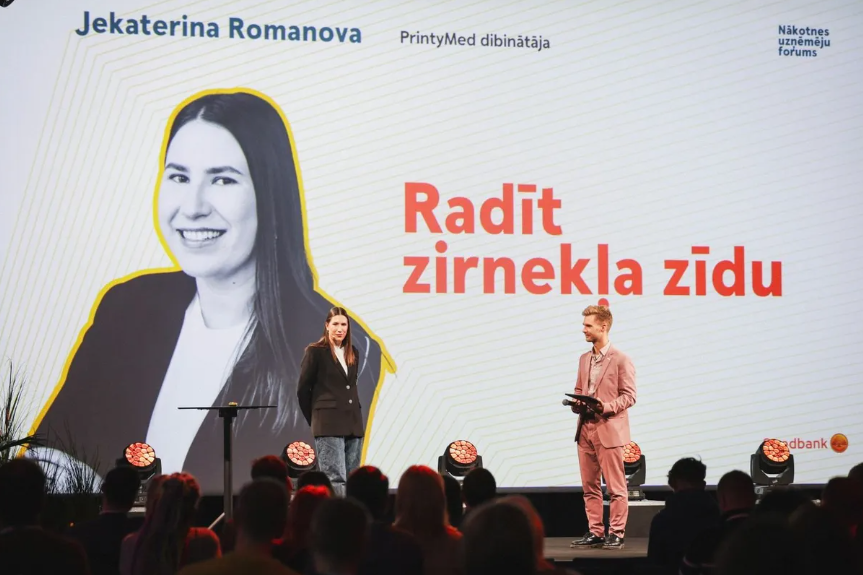
Latvian startup “PrintyMed” is developing a material that could in the future be used to manufacture membranes for organs-on-chips, wound dressings, heart valves, and even scaffolds for artificial organs. The journey from the laboratory to the market requires not only excellent science, but also entrepreneurial courage, patience, and the ability to find the right people. In an interview with TVNET, the company’s CEO and co-founder Jekaterina Romanova explains how a company grew out of a discovery by Latvian scientists, why the right contacts can sometimes be more valuable than money, and how support from the Latvian Investment and Development Agency (LIAA) has helped bring the complex journey from the laboratory closer to the market and the patient.
Spider silk is one of the most impressive materials created by nature. It is simultaneously strong, lightweight, and elastic, as well as biocompatible and biodegradable. It is precisely the combination of strength and elasticity that makes it special - in terms of certain mechanical properties, spider silk can even outperform steel and Kevlar. However, there is one problem - spiders cannot be farmed and their silk cannot be obtained in the same way as silkworm silk.
“Spiders are cannibals. They simply eat each other,” Jekaterina Romanova, CEO and co-founder of the biomedical startup “PrintyMed”, explains succinctly in the interview.
Spiders are not only predatory but also territorial, so obtaining spider silk proteins, or spidroins, from spiders themselves on an industrial scale is practically impossible. Moreover, depending on the need, a single spider can produce as many as seven or eight different types of silk - one for building a web, another for capturing prey, and yet another for protecting eggs. Each of them has a different amino acid composition and, consequently, different properties.
This is precisely why scientists around the world have been searching for ways to replicate the unique properties of spider silk in the laboratory for several decades. In Latvia, researchers at the Latvian Institute of Organic Synthesis, in collaboration with scientists from the University of Latvia, Riga Technical University, and Karolinska Institutet, have succeeded in doing so (currently - the National Institute for Research and Innovation).
The “PrintyMed” team and researchers have developed a biomimetic technology - a method that mimics the processes by which a spider produces silk in nature. For this work, the team of scientists received recognition from the Latvian Academy of Sciences as one of Latvia’s most significant scientific achievements of 2024.
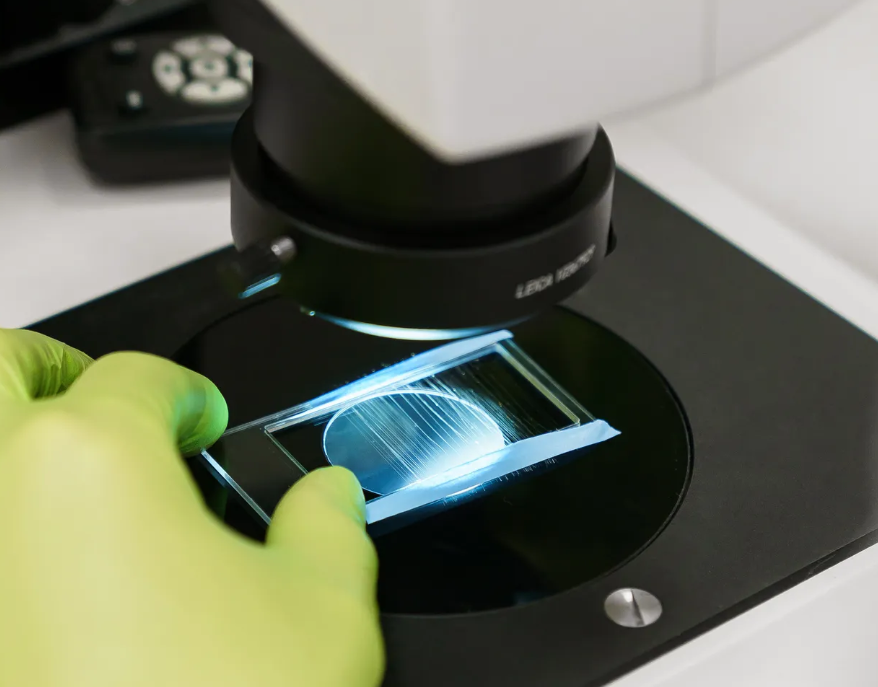
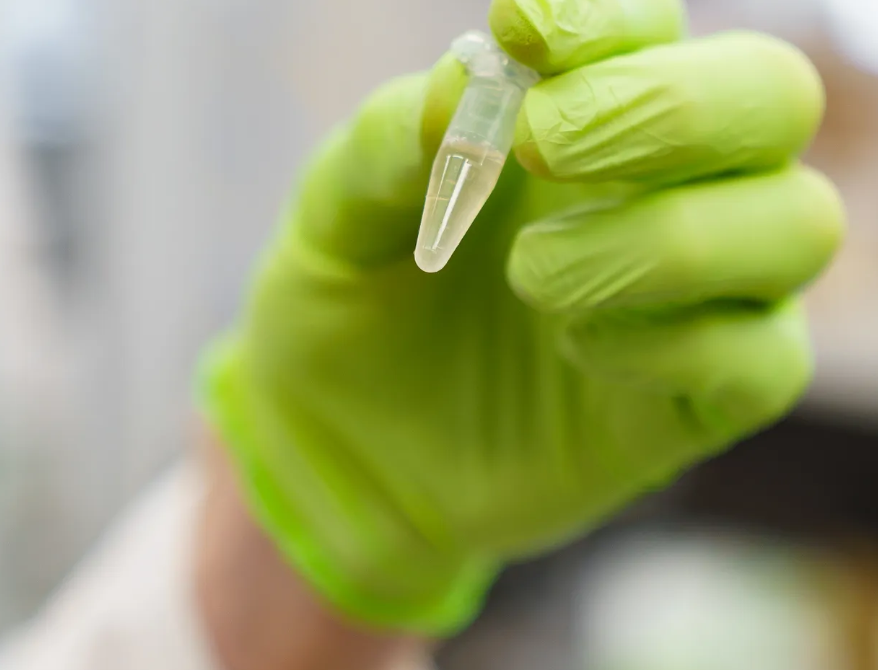
No spiders or other animals are used in the laboratory. Bacteria become a kind of biological factory: the necessary genetic information is introduced into them so that they produce spider silk proteins. Chemists then modify and combine these proteins, mimicking part of the work that a spider performs in nature.
Because it is more efficient for bacteria to produce shorter protein fragments, Latvian researchers have developed a method for connecting them after they have been obtained. What initially seemed like a disadvantage has been turned into an advantage - under certain conditions, the resulting artificial spider silk fibres can be almost twice as elastic as natural spider silk.
A material that combines the seemingly incompatible
A wide variety of materials are already used in medicine. Some are extremely strong, others are elastic or biocompatible. However, often one good property has to be sacrificed for another.
The artificial spider silk developed by “PrintyMed” is special because it combines several properties important in medicine in a single material - strength, elasticity, low weight, biocompatibility, and a high ability to support cell attachment. The latter property is particularly important if the material is intended for use in tissue engineering, wound treatment, or the creation of artificial organs.
“Many existing materials are either very strong or biocompatible, but all the necessary properties are usually not combined in a single material. Our material combines strength, biocompatibility, and a very high ability to support cell attachment. It is also lightweight and elastic,” Romanova says.
The company’s technology makes it possible to modify the properties of the silk according to the specific application. For example, antibiotics or other active substances can be attached to the material. Water is used as a solvent in production, while the protein itself is obtained in bacteria without using materials of animal origin.
This opens up a very wide range of possibilities. Spider silk could be used in the textile industry, mechanical engineering, the defence sector, and elsewhere. However, the “PrintyMed” team chose from the outset to focus on medicine.
Three people who barely knew each other before
The story of “PrintyMed” did not begin with a classic business idea - a problem identified in the market for which entrepreneurs then seek a technological solution. This time, science and a unique material came first. Only afterwards did the most suitable commercial application for it have to be found.
Professor Kristaps Jaudzems and his colleagues at the Latvian Institute of Organic Synthesis studied the mechanisms of spider silk formation and the possibilities of artificial production for many years. Once the first material had been obtained in the laboratory and it became clear that the technology had commercialization potential, the next question was - who would turn this scientific result into a product?
The answer began to take shape at the end of 2022 at a commercialization event where scientists presented their technologies to entrepreneurs, who in turn could form teams to commercialize these ideas.
The presentation generated unusually high interest. As many as three potential teams were formed to further develop a single technology - one saw opportunities in medicine, another in the defence sector, and the third in mechanical engineering.
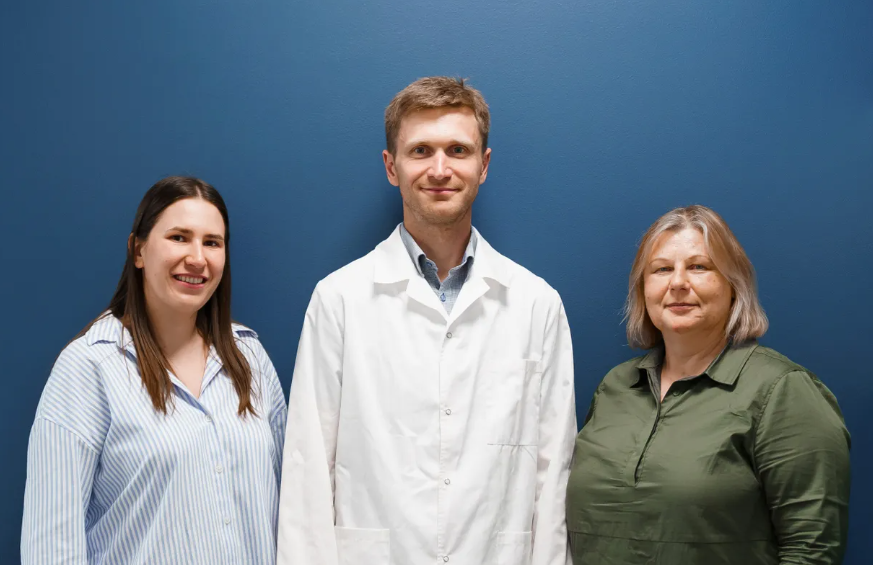
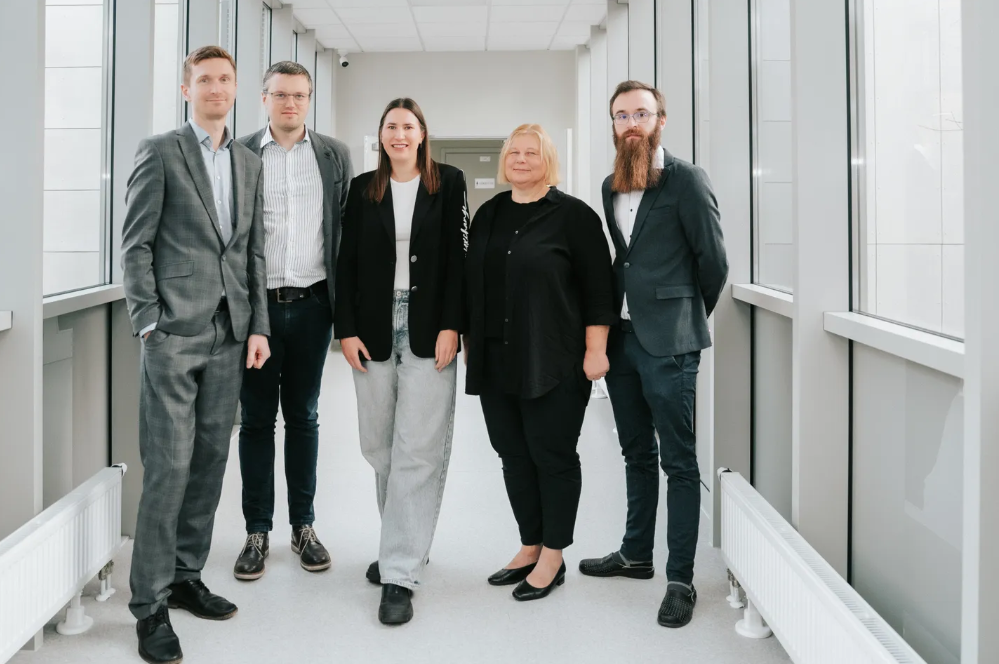
As time went on, only one of the three teams remained - the medical-focused team consisting of Jaudzems, entrepreneur Jekaterina Romanova, and medical technology expert Sandra Treide. Until then, they had barely known each other. However, they were united by the belief that the scientific discovery could be turned into a material that could one day help patients.
The company was founded in January 2023 - at a point when the team had become convinced that they wanted to develop the idea in the long term. The company’s website emphasizes that the founders’ expertise combines organic chemistry, business strategy, and medicine.
This was not Romanova’s first step into the startup world. “This is my third startup. Overall, I have been doing this for about ten years,” she says.
It was precisely the combination of entrepreneurial experience, science, and medical expertise that became the foundation of “PrintyMed”. Later, scientists Gints Šmits and Viktors Romaņuks, who had already been working with spider silk technology for several years, joined the team.
From a heart valve to an organ-on-a-chip
“PrintyMed’s” largest and boldest long-term goal is the creation of artificial organs and their scaffolds. However, the path to a medically certified implant is long, expensive, and complex. Therefore, the company is simultaneously developing several products with different times to market.
One of the most ambitious directions is a heart valve prosthesis made from artificial spider silk. The company has created the first prototype and carried out initial testing with rat blood, concluding that the valve is capable of performing its intended function.
In 2024, “PrintyMed” secured two grants from the Smart Materials Competence Centre totalling more than 800,000 euros. Of these, a 447,200-euro project was intended for developing the production method and prototype of a heart valve prosthesis, as well as evaluating the biomedical properties of artificial spider silk. Unfortunately, the project had to be abandoned because sufficient co-financing was not available.
The other - 362,700 euros - is intended for the development of a cell-binding membrane for use in organs-on-chips. Including the initial investments in research, approximately two million euros had already been invested in the development of the technology by that time.
An organ-on-a-chip is a small microfluidic system, or a miniature model of a human organ or tissue, that mimics part of the function of a real organ in the laboratory. Such systems are used for testing drug substances, studying disease models, and other experiments.
They can help reduce the need to use animals in research and more accurately assess how the human body might respond to a specific substance..
These systems require a membrane on which cells can attach, grow, and interact with one another. Artificial spider silk, with its high cell-attachment capacity, could become an alternative to the materials currently used.
Membranes are currently “PrintyMed’s” closest route to market. This application does not require medical device certification as complex as that required for a heart valve, so the company could begin sales significantly sooner.
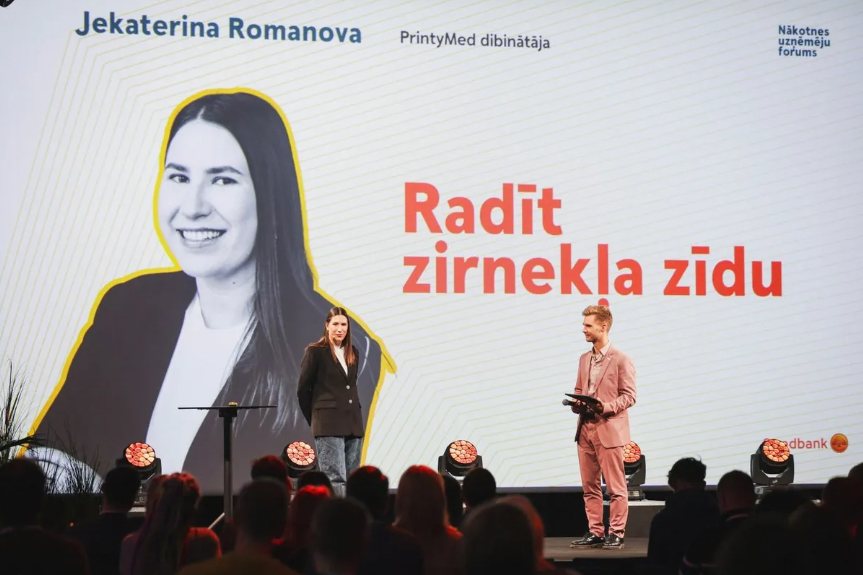
According to the project development data published on the company’s website, in 2025 a technology was developed for producing 100 grams of artificial spider silk proteins, and a small membrane prototype with a diameter of five centimetres was also created. In the first quarter of 2026, a technology was developed for purifying the proteins from endotoxins - an essential step for the safe use of the material in biomedicine.
According to the project development data published on the company’s website, in 2025 a technology was developed for producing 100 grams of artificial spider silk proteins, and a small membrane prototype with a diameter of five centimetres was also created. In the first quarter of 2026, a technology was developed for purifying the proteins from endotoxins - an essential step for the safe use of the material in biomedicine.
However, the team is well aware of the limits of its capacity. In the cosmetics market, the regulatory path would be comparatively simpler, but the competition is enormous. In the field of medical membranes, the market is more specialized, but “PrintyMed’s” technology has a clearer advantage.
Therefore, the company is trying to identify a direction in which the first sales results can be achieved more quickly with a reasonable level of investment, while continuing to work toward its long-term goal - materials that could be used to create artificial organs and tissues.
“A good contact is sometimes more important than money”
Romanova had known about the support opportunities offered by LIAA even before “PrintyMed” was founded. The experience accumulated in startups allowed the team to actively use the available instruments from the company’s very first years.
The company has participated in LIAA’s Business Incubation Programme, the aim of which is to promote the development of innovative, export-capable companies and creative industry enterprises by providing financial and non-financial support to strengthen competitiveness and growth. Participation in the programme provided the company with the opportunity to develop its business idea, improve its product or service, and prepare for successful growth in local and export markets.
At the beginning, support for participation in international exhibitions, conferences, and trade missions was important. Over the course of a few years, the “PrintyMed” team has made approximately 20 such trips to various countries.
From the outside, support for airline tickets or participation in an exhibition may seem less significant than a large grant. However, for a science-intensive startup, meeting the right person can change the entire course of the company’s development. At these events, “PrintyMed” has found cooperation partners with whom to develop products, potential clients, and also an investor.
“Good contacts are sometimes even more important than money, because they can bring with them everything a company needs,” says Romanova.
The company has also operated for approximately two years within LIAA’s technology representation. Within this framework, grant support is available for product development, employee costs, the purchase of materials, the rental of premises, and other development needs.
“PrintyMed” has also used innovation vouchers for cooperation with research organizations. For example, in 2025, with funding from a LIAA innovation voucher, the company, together with the Latvian Biomedical Research and Study Centre, studied cell viability on an artificial spider silk hydrogel. The total cost of the project was 6,050 euros.
When going on a trade mission, the company must also initially pay for the flight, hotel, and business trip expenses itself. Part of the costs is reimbursed later, but in any case the company needs cash flow in order to start the activity at all.
The situation is similar with technology representation grants - not only co-financing is required, but also time for documentation, procurement, and reporting, Romanova notes.
The entrepreneur says openly: “Applying for support and meeting the criteria is often not the most difficult part. What is harder is securing funding for your own share and the administrative capacity to implement the project.”
In the case of a science-intensive company, genuine innovation is also required - the technology must be based on research, and the team must be able to explain how the scientific result will be turned into a product.
At the same time, the support conditions are being improved. Changes approved in 2026 for certain startup projects provide for funding of up to 150,000 euros, support intensity of up to 80%, and the possibility of receiving an advance payment of up to 50% of the allocated funding. Such an advance payment option is particularly important for companies that do not yet have sufficient cash flow to initially cover all project expenses.
From a single conference award to half a million euros
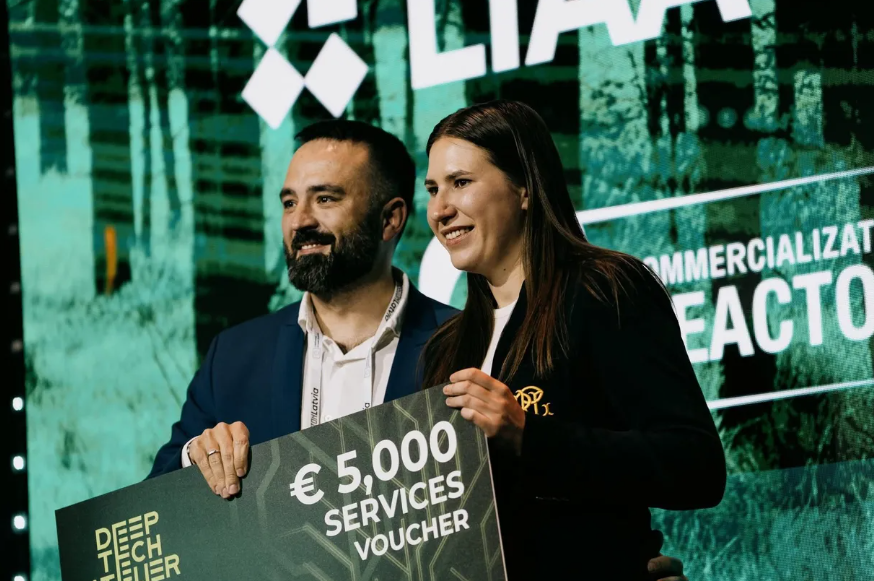
The importance of contacts and the ecosystem is particularly vividly demonstrated by “PrintyMed’s” experience at the “Deep Tech Atelier” conference organized by LIAA.
The company won several awards at the conference, including a service voucher from a company that helps science-intensive startups prepare applications for major European funding programmes.
At first glance, a consulting voucher might seem like just one of many small awards. However, it was precisely this introduction that developed into a collaboration that helped prepare for a much larger European competition.
In the spring of 2026, “PrintyMed” became one of two Latvian companies to receive a 500,000-euro grant under the European Innovation Council’s “EIC Pre-Accelerator” programme. As part of the project, the company will optimize and validate the functionality of the spider silk membrane, as well as integrate it into a specific organ-on-a-chip model. The programme is intended for early-stage science-intensive companies seeking to increase their technology, business, and investment readiness.
In this way, several levels of support have been connected within a single chain of the company’s development - a conference organized by LIAA, a consulting voucher received there, cooperation with international funding experts, and finally - a successful application for a 500,000-euro European grant.
This is an example of how the value of support cannot always be measured solely by the amount initially awarded. Sometimes the most important thing is the first contact that leads the company to the next door.
Medical innovations take time
“PrintyMed’s” technology has great potential, but there is no shortage of challenges.
Bringing a medical device to market requires extensive testing, clinical evidence, and certification. A heart valve is a high-risk medical device, so its development path will be considerably longer than that of a membrane used in laboratory research systems.
European requirements for medical devices are strict, and not all of the infrastructure needed for the company to scale and certify its product is available in Latvia. Therefore, some of the work has to be outsourced to other countries.
Production scaling also needs to be addressed. A few years ago, the company was able to obtain approximately ten grams of artificial spider silk at a time. This may seem like a small amount, but in the development of a scientific technology, such a volume was already a significant achievement. A method for obtaining one hundred grams has now been developed, and the next task is to continue increasing production capacity without losing the material’s quality and biological properties.
The entrepreneur does not hide the fact that developing a medical technology company in Latvia requires particular resilience. At an early stage, a great deal of money has to be invested in research, while revenue may only appear after several years. Local grants are often relatively small, co-financing is required, and private investors’ interest in projects with such a long development cycle is not always sufficient.
However, the new European funding has given the company the opportunity, at least in the near term, to focus on the technology rather than constantly searching for the next source of funding.
The team has already begun work on integrating the membrane and testing it with the first potential customers. The hope is to reach the first sales in the near future. In parallel, wound dressings and other medical applications are being developed, gradually bringing the company closer to certifiable medical products.
Information for entrepreneurs
Latvian entrepreneurs have access to a wide range of state- and European Union-funded support for business development, compiled in the unified business portal business.gov.lv and its subsite liaa.business.gov.lv. There, companies can find information about various programmes – ranging from funding for innovation and new product development, export promotion and international cooperation opportunities to grants for business digitalization, technology implementation, and productivity improvement.
The article was created in cooperation with LIAA.
The project was implemented within the framework of the project “Development of Innovative Entrepreneurship for SMEs”, co-financed by the European Regional Development Fund and the European Union.