When a scientist makes an interesting discovery in the laboratory, there can still be a very long road to a product on a store shelf. Since 2017, the Latvian biotechnology company “Alternative Plants” has been trying to shorten this distance by developing naturally derived active ingredients for the cosmetics industry. The company, which started with a team of four people and one plant cell cultivation technology, has now grown to 11 people and three production platforms. To accelerate product development and demonstrate their effectiveness, “Alternative Plants” has also repeatedly used innovation voucher support from the Investment and Development Agency of Latvia (LIAA).
The company's co-founder explains that the idea of establishing their own company did not come out of nowhere. Before founding “Alternative Plants”, its founders already had several years of experience in biology, microbiology and biotechnology, collaborating with manufacturers from various industries – including developers of cosmetics, medical devices and food supplements. It was precisely during these projects that a problem became apparent: manufacturers are constantly looking for new raw materials, but obtaining naturally derived active compounds and demonstrating their effectiveness is far from simple.
“We saw that new raw materials are still being sought, and this is often quite a significant challenge – especially when we are talking about naturally derived metabolites and molecules. Where can they be obtained? Is the resource even available? And how well can we characterise how it will work and for what application?” she explains.
This is precisely where two things came together – a market need and scientific knowledge.
Not Research for the Sake of Research, but Seeing the Result on a Store Shelf
From the very beginning, the motivation of the founders of “Alternative Plants” differed from academic research in its classical sense. It was important to them not only to understand biological processes but also to see scientific work result in a real product.
“Perhaps we are not typical scientists who are only interested in researching things and explaining various phenomena. Our motivation was to see where research is actually put to use and where, after some time, we could see the results on a pharmacy or store shelf,” says the company's co-founder.
The “Alternative Plants” brand name itself will usually not be visible on the final product. The company does not manufacture face creams or serums that consumers buy in stores. It develops active ingredients that cosmetics manufacturers then use in their products.
“It is not exactly our product that we see in the store. Our product is a raw material, but we can see our ingredient in the composition of a product that is on a store shelf.”
This model also means a very different path to the customer. “Alternative Plants” does not only need to appeal to the end consumer – it must first convince cosmetics ingredient distributors and manufacturers themselves that a particular ingredient is both technologically suitable for use and effective.
From Four People to a Team of 11
The company was founded in 2017. Initially, two co-founders worked on the idea, but very soon two more colleagues joined the team, playing an important role in the development of the technology and the first products.
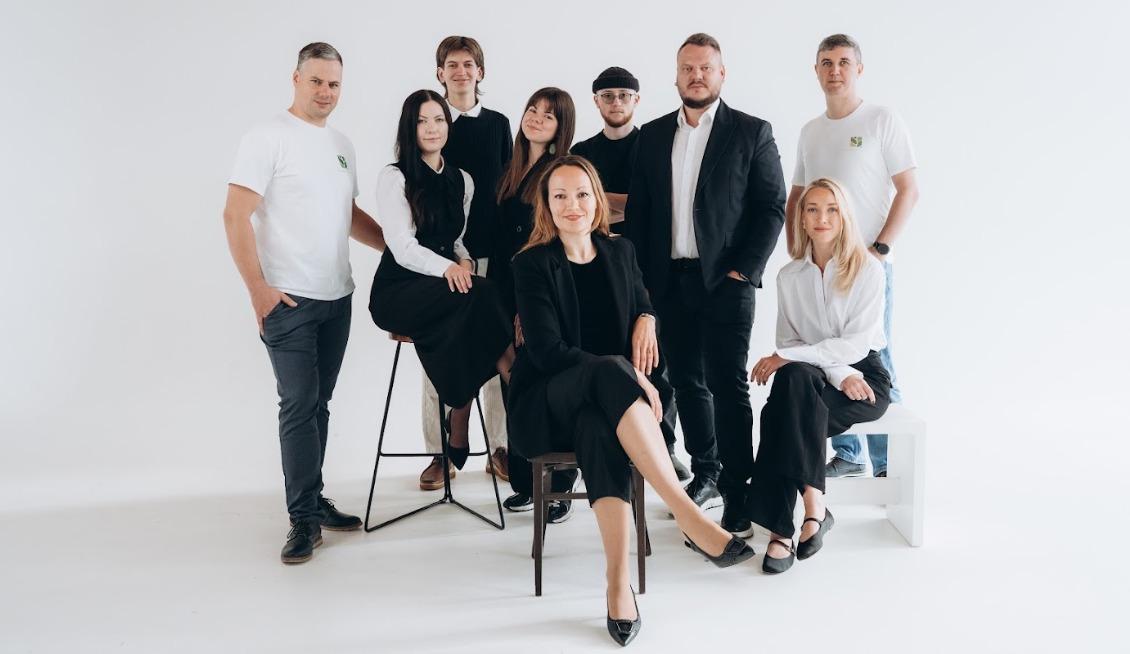
Thus, the company's initial team effectively consisted of four people. Today, “Alternative Plants” employs 11 people.
“We started as four people working together, but now there are 11 of us. The team has grown overall, and both co-founders are still actively involved in the company – it is our main day-to-day job,” says the company representative.
However, it is not only the team that has grown. The technology and product portfolio itself has changed much more significantly.
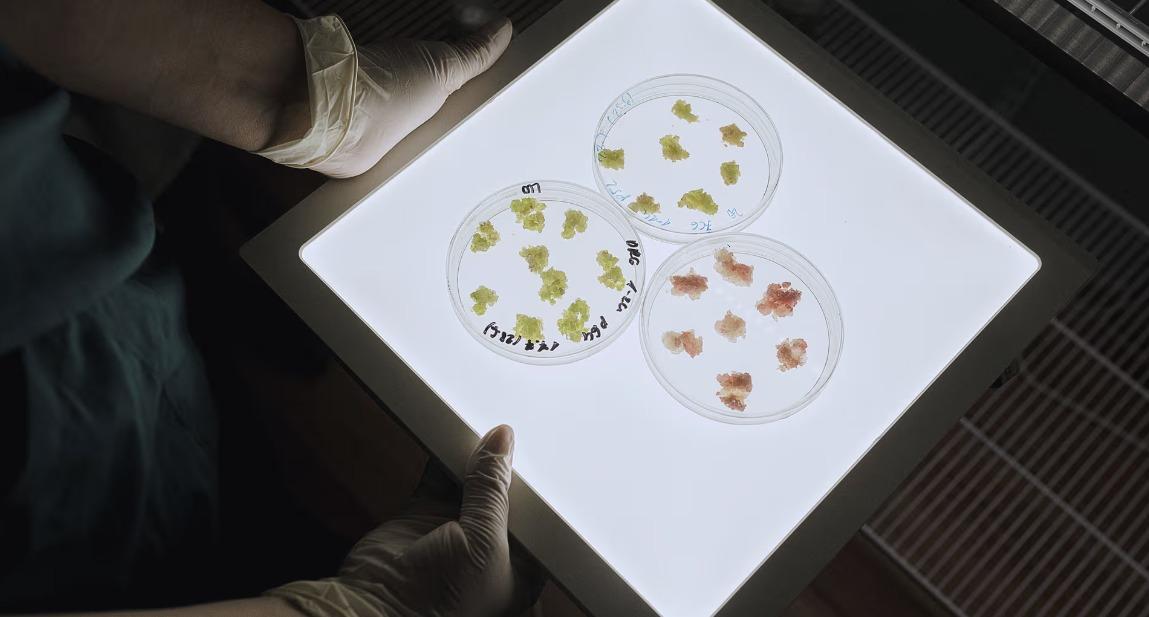
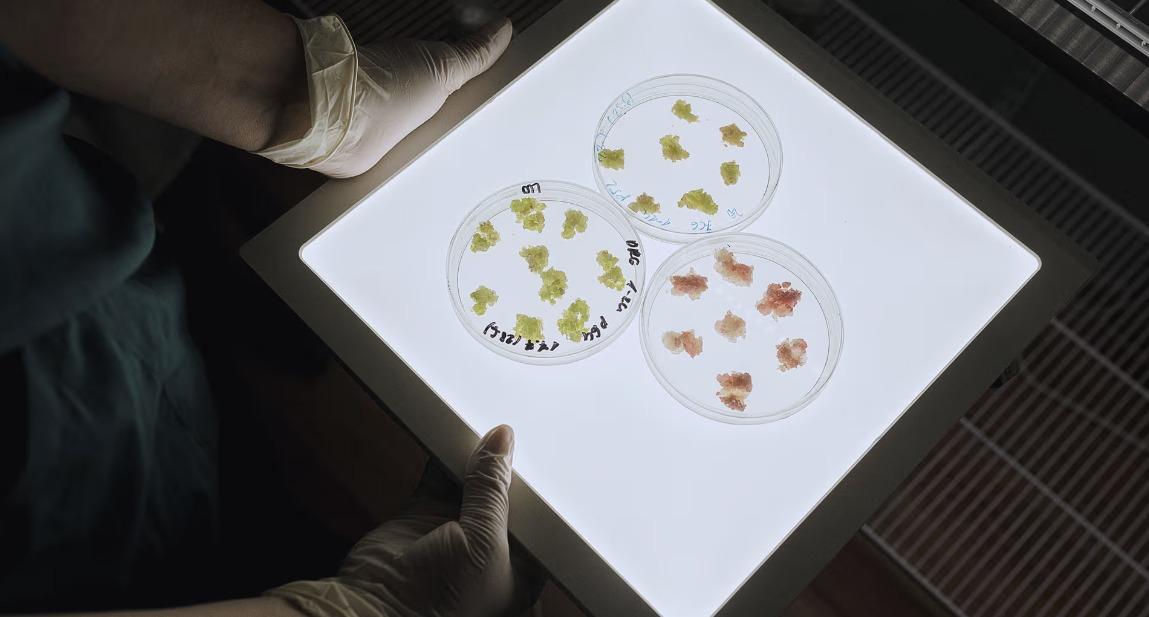
During the company's first five years, the main focus was on a single production technology – plant cell cultivation. Instead of growing whole plants and then extracting the necessary compounds from them, plant cells are grown in the laboratory, and conditions are sought under which they produce the specific substances of interest as efficiently as possible.
The company now operates with three different production platforms.
Plant Cells, Algae and Food Industry By-Products
The first and longest-used approach remains plant cell cultures. The second involves ingredients derived from algae. The third and newest approach is based on biorefining and circular economy principles – valuable compounds are sought in food industry by-products.
“We are not a single-product company. We currently work with three different production platforms – plant cell products, algae-derived ingredients and biorefining, where we use food industry by-products that, from our perspective, are very rich in compounds of interest to the cosmetics industry,” she explains.
This also reflects one of the company's fundamental operating principles – not sticking to a single solution simply because it initially seemed to be the best.
The company representative emphasises that the product portfolio has changed due to both market demand and technological possibilities.
“In the industry, it is important to keep up with what is in demand, rather than clinging to the idea that I have come up with something, it will be the best, and now everyone else has to believe in it,” she says.
How to Choose a Plant from Which to Develop the Next Product?
From the outside, it may seem that the process begins with an interesting plant and the question – what could be obtained from it?
In reality, “Alternative Plants” follows two parallel approaches. One involves analysing scientific literature, patent databases and other sources, searching for plants and the compounds they contain with potentially interesting biological activity. According to the company's experience, northern flora in particular holds a great deal of untapped potential.
“It is something of a paradox – northern flora contains many valuable plants that have not been sufficiently well characterised, and in them we can find compounds that may be valuable and useful to the industry,” says the company's co-founder.
However, in recent years, the process has increasingly started from the opposite direction – with the question of what exactly the cosmetics industry currently demands. If market interest grows, for example, in a particular biological activity, the company's scientists first analyse which compounds could provide this effect and then search for natural resources from which they can be obtained.
Then comes the next filter: is it even possible to produce this ingredient in a technologically and economically viable way?
Sometimes Six Months Are Enough, Other Times More Than Two Years Are Needed
Theoretically, it is possible to attempt to develop a plant cell line from a wide variety of species. However, this does not mean that each of them will produce the necessary compounds in sufficient quantities in the laboratory or that production can be scaled up.
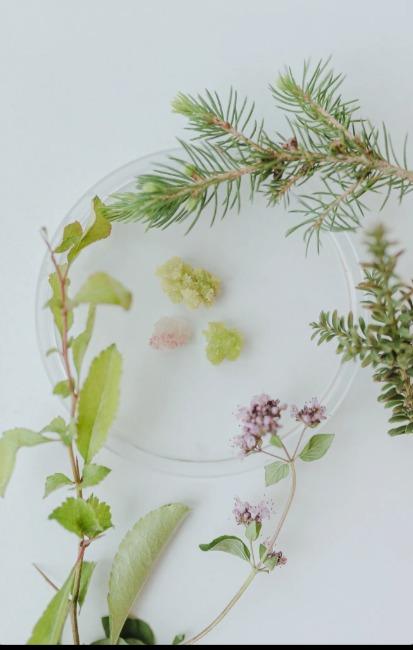
“We can develop a cell line, but the next question is – does it actually produce what we are interested in? And can we do it on a scale that makes the process efficient?” explains the company representative.
If existing cultivation protocols can be used and adapted to the specific plant, the process can be relatively quick.
“We have had very successful cases where we can develop a cell culture and already begin scaling up within six to nine months. But there are also cases where it takes two years or more.”
This is not just a question of a small company's capacity. According to the experience of “Alternative Plants”, larger European companies working with such biotechnologies also have a similar pace of development.
LIAA Innovation Voucher – Helping an Idea Become a Finished Product Faster
One of the latest developments by “Alternative Plants” was created in response to specific demand from the cosmetics industry for multifunctional active ingredients.
The company aims to offer not an ingredient with a single narrow application, but a raw material with several proven biological activities that can therefore be used in various product formulations.
At this stage of development, the company used LIAA innovation voucher support. This was not the first project of its kind for “Alternative Plants” – the company had previous experience with this programme.
“In my opinion, this cooperation is very convenient, personal and straightforward. If something needs to be clarified, we make a phone call and they explain it to us. The electronic application process has also become much more convenient compared to how it was before,” says the company representative.
However, the most significant benefit is not the application process itself, but the opportunity to finance tests and research more quickly, which can be expensive when developing a research-intensive product.
“This support is very, very important to us. It allows us to cover part of the external expenses and investigate a sufficiently large number of different factors in our development process within a short period of time. This significantly accelerates product development and brings it to the stage of readiness.”
Scientific Evidence – One of the Central Elements of the “Alternative Plants” Business Model
The company does not want to simply tell a customer – this is a natural ingredient from an interesting plant, try it in your product.
“We always say that we do not offer our customers just a kilogram or a barrel of raw material. It comes with a data package – evidence of both its chemical composition and its effects in various tests,” emphasises the company's co-founder.
For example, if a particular ingredient is claimed to have antioxidant or pigmentation-regulating effects, it is important for the company to be able to demonstrate with data that such effects actually exist.
Multifunctionality also has a very practical business advantage – a single ingredient can be offered for a much wider range of cosmetic products.
In a Company of 11 People, a Large Proportion Are Still Involved in Research
Although “Alternative Plants” is already a manufacturing company with customers and distributors in various markets, research has not become a thing of the past.
Quite the opposite – a relatively large proportion of the team is still working directly in research and development.
In day-to-day operations, one part of the team handles sales and communication with partners, another works in production – large-scale cell propagation, biomass production, extraction and product standardisation – while another develops new products and scales up existing processes.
“Even though we are a small company, a relatively large proportion of our employees work directly in research and development. We constantly feel the demand and pressure to expand our product portfolio,” she explains.
Another ongoing research task is scaling up – how to make an already functioning process larger and more efficient.
From Latvia to Scandinavia, Germany, Italy and North America
The direct customers of “Alternative Plants” are most often not cosmetics brands themselves, but ingredient distributors.
The company has chosen to cooperate with partners who have a good understanding of their local markets. The interview mentions distributors in Scandinavia, Germany, Italy, Poland, as well as the USA and Canada. At the end of the supply chain, the ingredients developed by “Alternative Plants” are incorporated into cosmetics manufacturers' products.
They are most often used in facial skincare products, but there are also more unexpected applications.
“We have had foreign partners who have found applications that we ourselves had not even thought of initially – for example, in hand and nail care products,” says the company representative.
How Can a Small Latvian Company Compete with the Giants?
The cosmetics ingredients market is enormous, but at the same time, it is also highly saturated. The competitive advantage of “Alternative Plants” is based on a combination of two factors.
The first is unusual and interesting sources of raw materials. The second is the ability to provide scientific evidence supporting them.
“We focus on quite unique sources of raw materials that are interesting to customers and that they can communicate further. The second is our very strong emphasis on evidence that they work. This is precisely where the voucher programme has also helped us,” she explains.
Together with distributors, the company also works on prototypes of finished formulations, demonstrating that the ingredients can be easily incorporated into various types of cosmetic products – from facial and hair care to beard care products.
“The main thing, in my opinion, is the ability to demonstrate with data that an ingredient works and what applications it works for. This puts us a step above a situation where there is simply an extract from a particular plant, but no real evidence of its effects.”
The Hardest Part Begins When Laboratory Results Have to Be Translated into Production
When asked about the most difficult stage of the company's development, the co-founder gives a fairly clear answer – scaling up.
In the laboratory, it is possible to prove that a process works. However, this does not mean that the same process can simply be multiplied ten or a hundred times.
“When we transfer something in cell cultivation from laboratory scale to pilot production, the mathematics does not work. A great deal of experimentation and work is required to find the right technological way to do it,” she says.
Scaling up is currently one of the company's main areas of development.
At the same time, new products are being developed, taking into account not only short-term trends in the cosmetics industry but also needs that, in the company's view, will generate long-term demand.
“We are working on new products to expand our portfolio, while constantly increasing our capacity – how many kilograms we can produce per month, how much biomass we can obtain. We are constantly trying to take all of this to the next level.”
The Most Important Advice – Don't Wait Until the Product Seems Perfect
At the end of the interview, the company's co-founder adds one more point that she considers particularly important for other young, research-intensive companies.
In her opinion, one of the biggest mistakes is spending too much time trying to perfect a product in the laboratory before even showing it to a potential customer.
“Don't be afraid to approach your customer very, very early – even with something half-finished. Let them immediately share their perspective and feedback, rather than trying to bring something to your own imagined perfection, which may ultimately turn out to be something the customer does not need at all.”
In a way, this very approach also characterises the development of “Alternative Plants” itself. Starting with scientific expertise, listening to the industry, changing the product portfolio as demand changes, demonstrating with data that the technology works, and at the same time looking for ways to translate what has been achieved in the laboratory into increasingly larger-scale production.
The article was produced in cooperation with LIAA.
The project is co-financed under Measure 1.2.1.4 "Support for the Improvement of the Technology Transfer System" of Specific Objective 1.2.1 "Strengthening Research and Innovation Capacities and Introducing Advanced Technologies in Enterprises" of the European Union Cohesion Policy Programme 2021–2027.