The bacteriophage (phage) research team at Rīga Stradiņš University (RSU), led by Associate Professor Dr Kārlis Rācenis, has secured the largest international support to date for bacteriophage research by joining the EUR 15 million Horizon Europe project REPhRAME. This funding significantly strengthens Latvia’s capacity for research into phage therapy and its clinical application. For the first time, the project will test the combination of phage therapy and gut microbiota restoration in a randomised clinical trial involving women with recurrent urinary tract infections.
Urinary tract infections affect more than 400 million people worldwide each year, and in 30% to 50% of cases they recur. Women are affected most often. Each new episode of infection means another course of antibiotics, and with every course the likelihood increases that the bacteria will become resistant to antibiotics. This creates a vicious cycle in which many patients remain for years without finding a long-term solution.
RSU has joined the REPhRAME research project, which aims to break this vicious cycle. The project has received EUR 15 million from the European research and innovation programme Horizon Europe, of which EUR 350,000 is allocated to the work of RSU researchers. The project is led by University Hospital Frankfurt (Universitätsmedizin Frankfurt) and brings together 16 partners from eight European countries. The work began in June 2026 and will continue for five years.
REPhRAME is one of three large-scale phage therapy projects to which the European Commission has allocated more than EUR 45 million in total to assess whether phage therapy can become a safe and effective treatment for bacterial infections that are increasingly resistant to antibiotics.
A New Strategy to Break the Vicious Cycle of Infections and Antibiotic Use
The treatment is based on bacteriophages, or phages – viruses that infect and destroy only bacteria. Unlike antibiotics, which also affect bacteria that the body needs, phages act very selectively: each phage recognises only specific bacteria and leaves most of the microbiota intact.
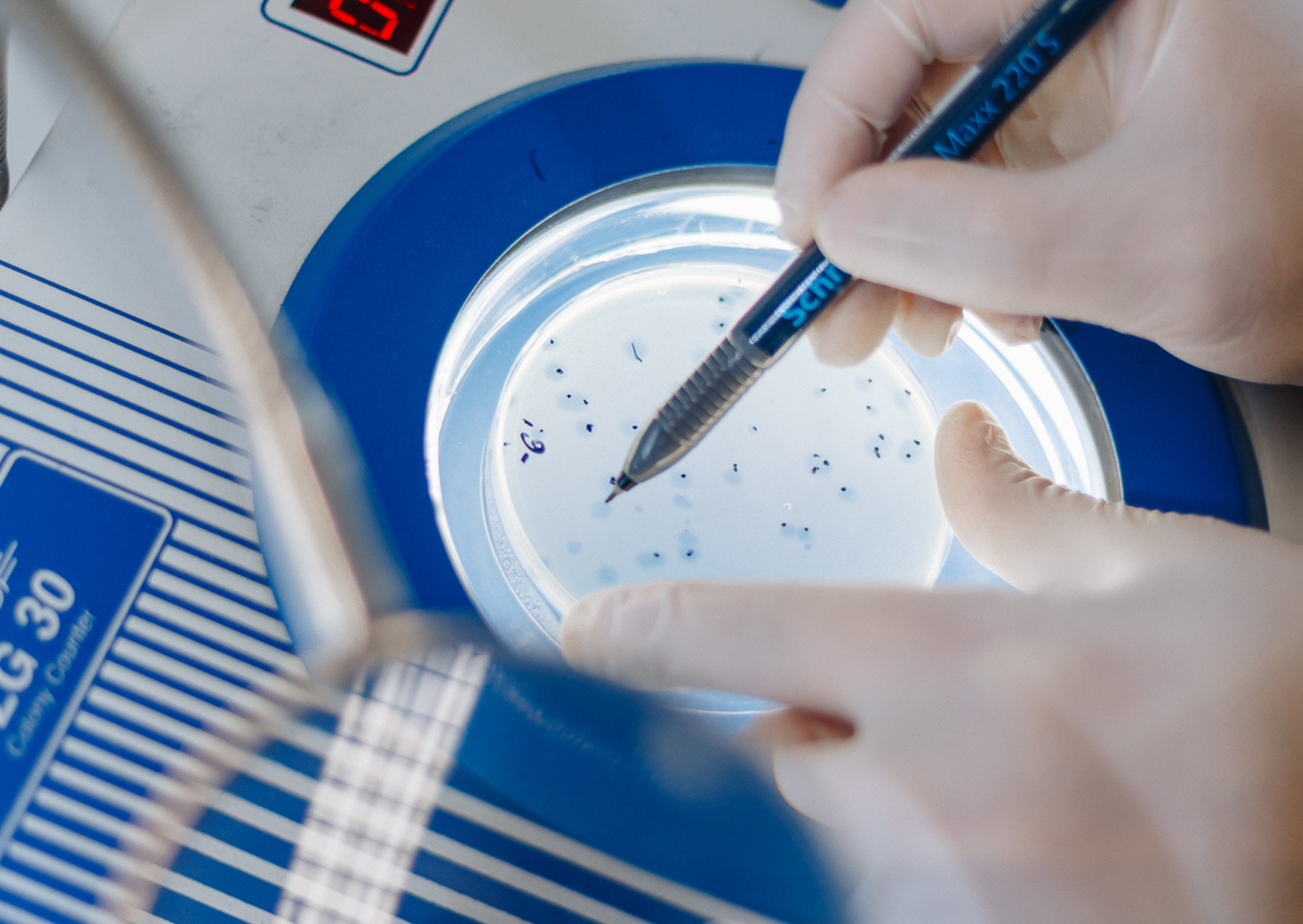
In the first stage of treatment, a “phage cocktail” (a combination of several phages) will be used to target the most common causes of urinary tract infections – certain strains of Escherichia coli – while also reducing the likelihood of new resistance developing.
In the second stage, the gut microbiota will be restored. This is important because the gut often serves as a reservoir from which bacteria repeatedly enter the urinary tract. INTESTIFIX 001, a product developed by the Cologne Microbiota Bank, enables the transfer of gut bacteria from a healthy donor, helping to restore the natural balance of the microbiota and thereby protect the patient from new infections.
At the heart of the project is a multinational clinical trial that will systematically assess the safety and effectiveness of the new treatment approach. Three approaches will be compared: phage therapy alone, phage therapy combined with antibiotics, and phage therapy followed by microbiota restoration. In Latvia, the clinical research component is planned to be carried out in cooperation with university hospitals – Pauls Stradiņš Clinical University Hospital and Riga East University Hospital.
“The aim of REPhRAME is to transform phage therapy from a promising research concept into a clinically validated treatment option by generating data on its safety, effectiveness and practical implementation. In this way, we hope to lay the foundations for integrating phage therapy into routine medical practice across Europe,” says the project coordinator, Professor Maria J. G. T. Vehreschild, Head of the Department of Infectious Diseases at University Hospital Frankfurt.
RSU’s Role: Immune Response and Phage Susceptibility
As part of the new Horizon Europe project, RSU will carry out the phage susceptibility and immunological components of the clinical trial. The study will combine several innovations: determining phage susceptibility in accordance with EUCAST (European Committee on Antimicrobial Susceptibility Testing) standards; assessing the immune response by studying cytokine production, phage neutralisation and antibody formation; and the possibility of combining therapy with faecal microbiota transplantation, which could provide significant benefits for patients with infections that are particularly resistant to antibiotics.To ensure the high-quality implementation of these methods in Latvia, RSU researchers will apply previously established laboratory techniques in cooperation with partners in Switzerland and Germany.
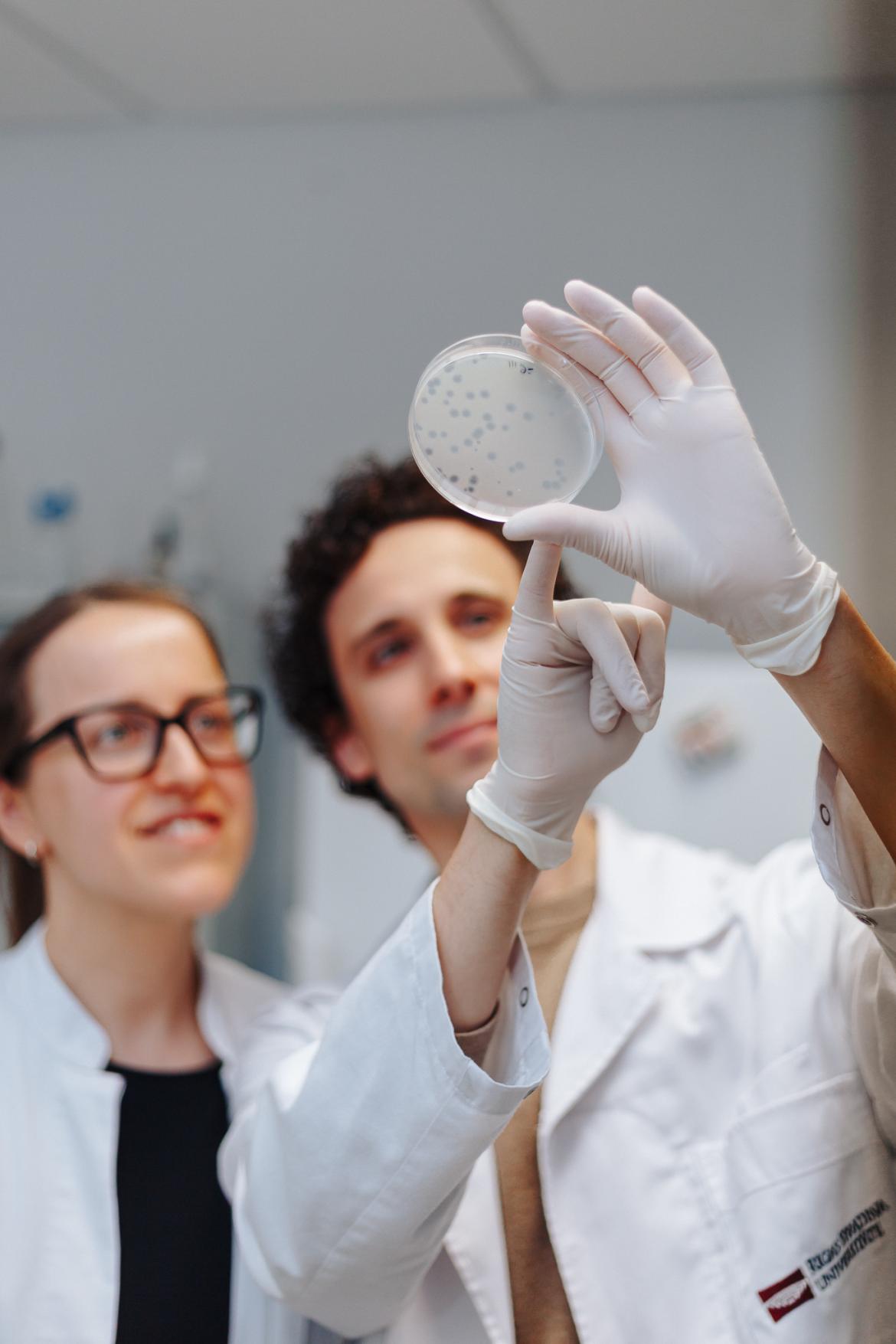
“Phage therapy is one of the most promising approaches to combating antimicrobial resistance, and Latvia is currently on the right path to becoming an innovative player at the European level. In recent years, we have become a regionally recognised centre for phage research, implementing a number of national and international projects,” says Associate Professor Dr Kārlis Rācenis, a leading researcher of the RSU phage research team.
From a Small Initiative to Clinical Trials
Phage research at RSU began more than a decade ago as a small initiative within the Department of Biology and Microbiology under the leadership of Professor Juta Kroiča, driven largely by the enthusiasm of researchers. This field of research took on an entirely different scale when Kārlis Rācenis chose the topic for his doctoral studies and began intensive and systematic work on phage research. International cooperation, developed through NATO research networks and later within European Defence Fund projects, opened the door to a higher-level research environment and provided access to Europe’s leading phage laboratories.
The subsequent development of this research has been based on institutionally organised research activities: contacts established through NATO and active project applications increased the visibility of the RSU team, while internal consolidation grant programmes and funding from the State Research Programme made it possible to build a stable, interdisciplinary team.
“Today, RSU’s phage research team includes biologists, physicians, a clinical pharmacist, molecular biologists and visiting researchers, which has enabled us to expand the scope of our research from laboratory work to the implementation of clinical trials in hospitals,” emphasises Professor Juta Kroiča, Head of the RSU Phage Research Group. She also notes that the work of RSU researchers has provided direct support to the defenders of Ukraine: the team participated in the treatment of a complex infection in a Ukrainian soldier, and the results are currently being prepared for publication in a leading medical journal.
Associate Professor Dr Kārlis Rācenis is also a member of the EUCAST Phage Susceptibility Testing Subcommittee (PST) and works on issues related to phage susceptibility testing. The subcommittee develops standards for use in medical practice to personalise phage therapy. It brings together 23 leading experts from 16 countries around the world, and the participation of a Latvian representative in this group demonstrates the professional expertise and international recognition of the RSU team.
More information about the research project is available on the RSU website.