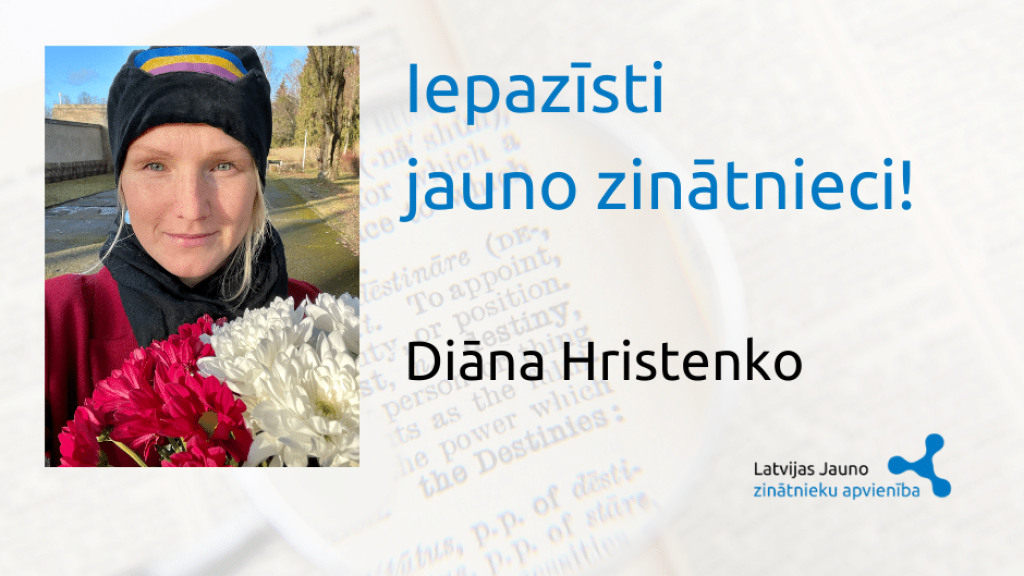
Diāna Hristenko is a doctoral candidate at the University of Latvia’s Faculty of Humanities, where she is developing her dissertation “The Sovietization of the Evangelical Lutheran Church in the Baltic States, 1944–1953.” To learn more about research in theology, international collaboration, and the ways science shapes both heart and mind, we invite Diāna to a conversation in the series “Meet the Young Scientist!”
How did you find your way to history and theological studies?
I have always been interested in books — in reading as such. I spent much of my childhood in physically limited spaces, while books and stories gave me the chance to travel through time and place. I have always been fascinated by people: why they act and think the way they do, how human actions shape their surroundings and the people around them. And that naturally leads to history, because history is about human actions and their motives — just on a massive scale.
Mass behaviour in real time, which is the focus of fields like contemporary anthropology or sociology, actually confuses me. That’s why I prefer working with something static — something that has already happened and been recorded. There is a certain charm in that, even a detective‑work element, although I don’t read detective novels because life surpasses any possible fiction.
Theology and religious studies were the field I wanted to pursue after high school, but to be honest, I was afraid. During my history studies, however, questions of theology and religion are essentially present up until the first half of the 20th century. Humanity has believed in various gods throughout its entire existence, always asking where we come from, where we are going, and whether someone placed us here with intention.
How would you briefly explain why your research on the Sovietization of the Lutheran Church is important for society?
There are many “blank spots” in 20th‑century Baltic history that still need to be researched. This is partly due to the nature of historical science — we need a certain distance in time — and partly due to research trends, language skills, and other factors. Sovietization as a process has not been studied systematically, at least not on this scale. What we usually see are studies of how Sovietization affected one specific field or another.
For example, our LJZA member Gatis Krūmiņš recently presented to the wider public the results of an extensive study on the economic, socio‑economic, and demographic damage caused by the Soviet regime to the Latvian state and its people. My research falls into a similar category — what the Soviet regime did, or attempted to do, to a very specific group: Lutherans in the Baltic states.
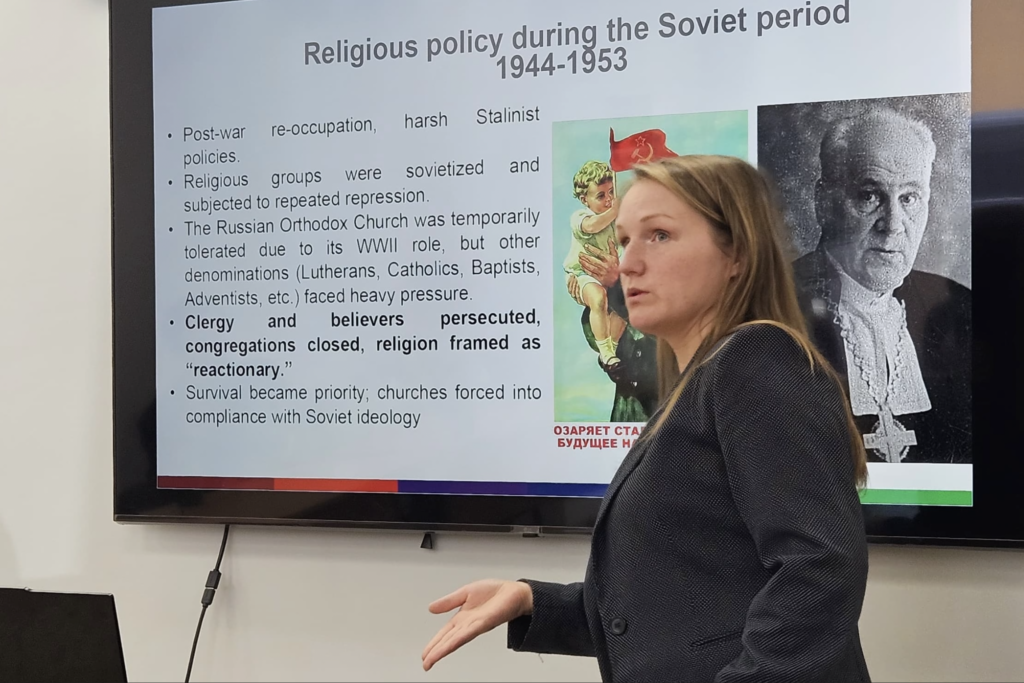
The chronological scope of my research covers the most turbulent period — from the end of the war to Stalin’s death. In this study, I find answers to questions about what happened to the churches at the highest institutional level and why some echoes of the Soviet era can still be heard today. I also look at the grassroots level — what it meant to be a believer in the immediate post‑war Baltic region.
This can help many people understand their own relationship with faith and the church today, as well as why their family members experienced various forms of repression, deportation, or marginalization under the Soviet regime.
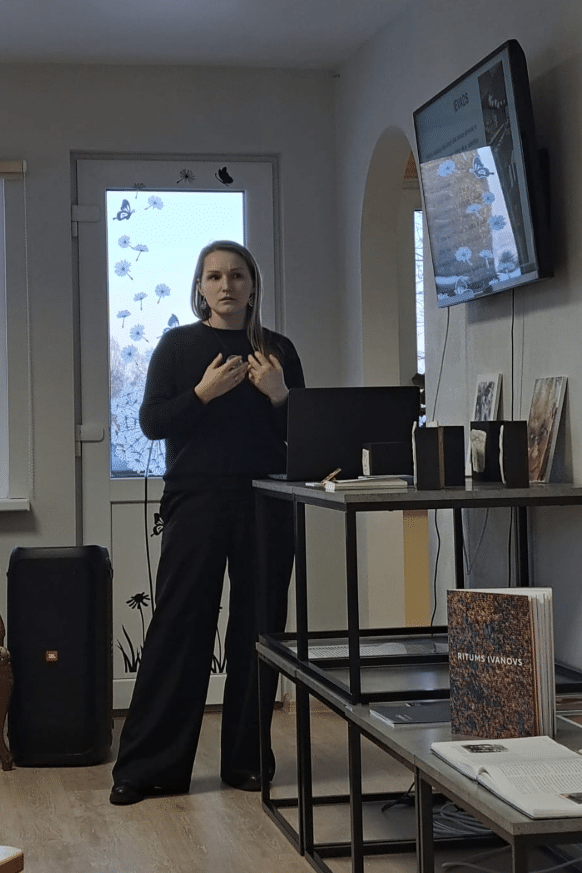
What motivates you in research?
I am not a very creative person; more often I am in the position of someone who enjoys works of art, but research offers the opportunity to combine a certain kind of creativity with real application. Of course, the application of my work is not the same as in the STEM fields, but the role of the humanities is more about caring for the human heart and mind. If even one person gains a clearer understanding of our history, and if even one more person understands that extreme and populist ideas do not bring collective happiness, then this research has had meaning.
International collaboration is often emphasised as important in a scientist’s career and in the development of science. Your research topic is connected to a specific region — the Baltic states. Is the experience and history of the Baltic states important on a broader scale, and how do you see your place in the context of global science?
Of course, it is always interesting to look outside your own pond and look into the neighbouring pond or into larger waters; it forces you to stay in shape intellectually and professionally. The time of solitude in science is probably over at all levels. The experience of the Baltic states is important on a broader scale today — for example, since Russia’s full‑scale invasion of Ukraine, the Baltic states have been particularly active in defending democracy and freedom, not allowing things to be forgotten, to quiet down, or to be flattened by indifference, because unfortunately we have direct experience with the USSR and with Russia, and no illusions about the ambitions of our neighbouring country.
In historical research, working on a Baltic scale is logical; we have long been perceived as a single space by both our friends and our non‑friends, even though each country is very different, at least in terms of language and dominant religious affiliation. My dissertation is a concrete contribution to Baltic historical research, because I work with sources and languages of the Baltic states, but I write in a way that can be read by colleagues both in the north and in the south.
You have long collaborated with the Estonian academic environment, and your dissertation supervisor is Professor Riho Altnurme of the University of Tartu. Why this choice? Does Estonia provide valuable material for your scientific topic, or has successful cooperation developed due to human factors and the academic atmosphere?
There are several reasons — in December 2025, my first supervisor, Valdis Tēraudkalns, passed away; he was an outstanding person, supervisor, and researcher. Riho Altnurme advised me during the development of my master’s thesis, so it was logical to ask him to continue supervising the dissertation.
Secondly, the University of Tartu has very strong theology and also a separate field of church history, which means quality and resources.
Thirdly — at present, doctoral students in theology at the University of Latvia’s Faculty of Humanities collaborate with the Tartu doctoral school, because both we and they have relatively few theology students, so we organise joint conferences and other activities. Therefore, both academically and personally, positive relationships have developed.
How do you feel as a doctoral candidate? Do you have the feeling that the hardest part is already behind you?
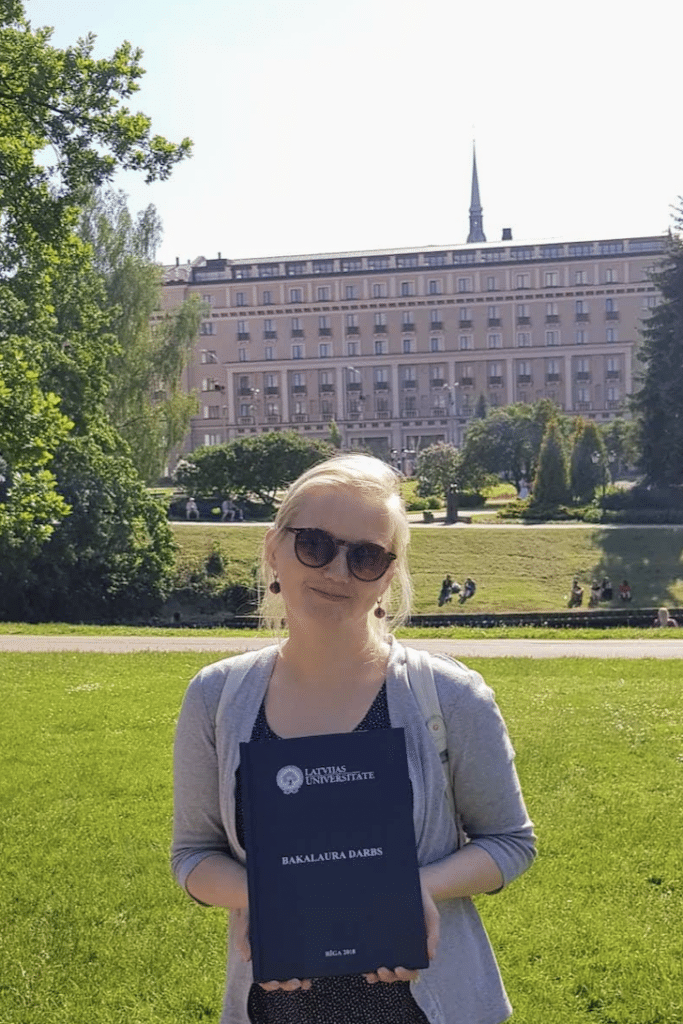
What myth or stereotype about scientists would you like to break?
Scientists in pop culture are often portrayed as somewhat antisocial, somewhat dreamy, somewhat inflexible people. I would like to think that we are not entirely like that, but… :) But seriously — scientists are ordinary people who deal with unusual things, the results of which may not be visible immediately, not even for decades or centuries, and therefore one must be patient and tolerant.
Regarding theology and religious studies, I want to break the stereotype that it is “something in the air” and therefore less important or less useful. Recently, religion has been instrumentalised extremely often in the world, legitimising processes that are alarming. More precisely, religion has always been instrumentalised — the eternal “Christ and Caesar” problem — but combined with the decline of religious literacy among Western populations, the last decade has provided me and my colleagues with a great deal of research material.
For example, the fact that several of Donald Trump’s advisers and state officials are radical evangelicals who do not hesitate to express and implement their convictions by using their authority, thereby influencing decisions made in the country, is the work of theologians and scholars of religion. It would be better if such a situation did not exist, but if it does, we need educated people who can read and hear through the specifically used Holy Scriptures, populism, references to traditional Christian values, etc.
The political theology course that I teach provides insight into church–state relations and the development of ideas; you are welcome to attend the open lectures in spring :)
What encouraged you to join LJZA?
I wanted to find like‑minded people who have similar academic joys and academic sorrows, and maybe something even better would come out of that. A sense of community is important in moments of change, and young scientists go through enormous changes in a relatively short period of time. The LJZA summer school in 2025 and informal conversations with LJZA members truly inspired me — I came home wanting to write, research, do things.
You are not only a member of LJZA, but you also participate in the Latvian Lutheran Women Theologians’ Association and in the student sorority Varavīksne. What motivates you to be socially active and to participate in associations?
These are academic and professional associations that directly correspond to what I do. I am not in orchid‑growing or sticker‑collecting associations. I can describe the influence of the sorority on my academic ambitions very directly — at the age of 18 I met educated, interesting women for whom a bachelor’s degree was the bare minimum, a master’s degree was the norm, and naturally there were fewer with doctorates. I joined LLSTA because my research led me to the question of women’s ordination in Latvia, where this is one of the main topics on the organisation’s agenda. At the moment, I am researching how Soviet women served before ordination, because nothing appears out of thin air.
Organising events and participating in the sorority, LLSTA, or LJZA is easy — there are many educated people around who want to act and change the world for the better. And it really works.
What would you wish or recommend to students who are currently considering applying for doctoral studies?
Martin Luther once said: “Here I stand, I can do no other!” If a student has exactly this feeling about their research topic, then they simply need to prepare their academic CV and get ready for the journey into doctoral studies.