Researchers from the University of Latvia (UL), in collaboration with Swedish and Australian palaeontologists, have discovered and described a new, previously unknown lungfish species in Upper Devonian deposits in Kurzeme. The species has been named in honour of the Latvian deity Jumis. The researchers’ discovery provides important new insights into vertebrate evolution around 360 million years ago, when part of the territory of present-day Latvia was covered by a shallow tropical sea and a vast delta existed in Kurzeme.
“This discovery is an outstanding example of international scientific cooperation. By working together with experts from Sweden and Australia, we have once again demonstrated that Latvia’s Devonian deposits are a world-class treasure trove for researchers of ancient fish,” emphasises the project leader, palaeontologist Ervīns Lukševičs, Professor and Leading Researcher at the Department of Geology, Faculty of Science and Technology (FST), University of Latvia (UL).
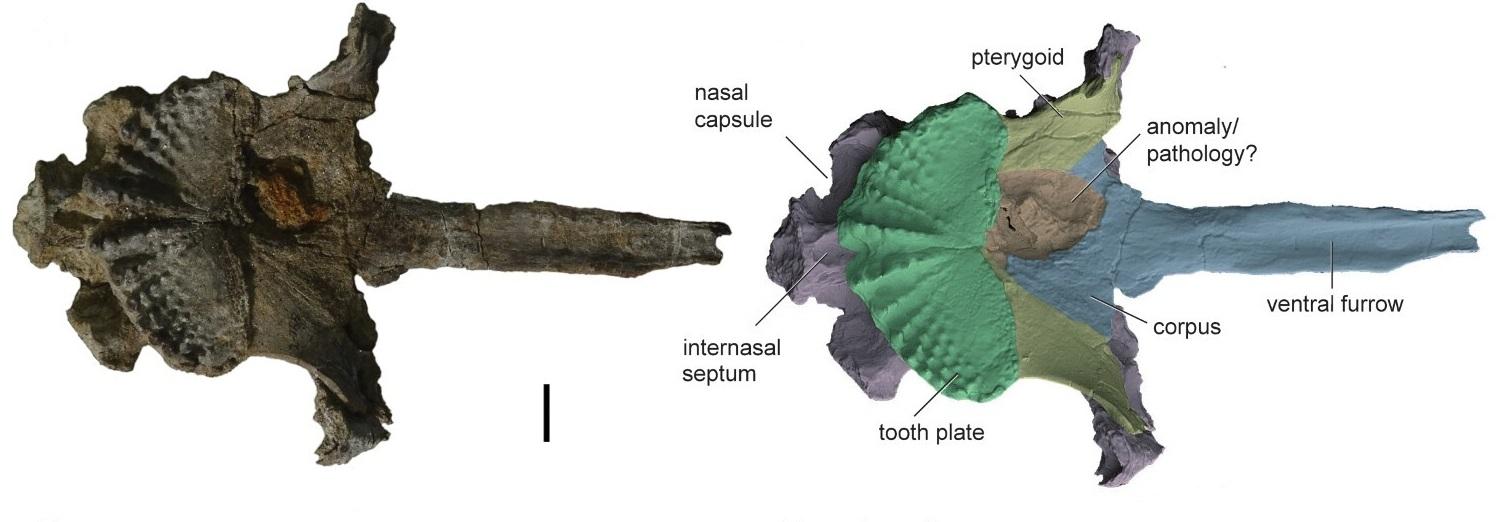
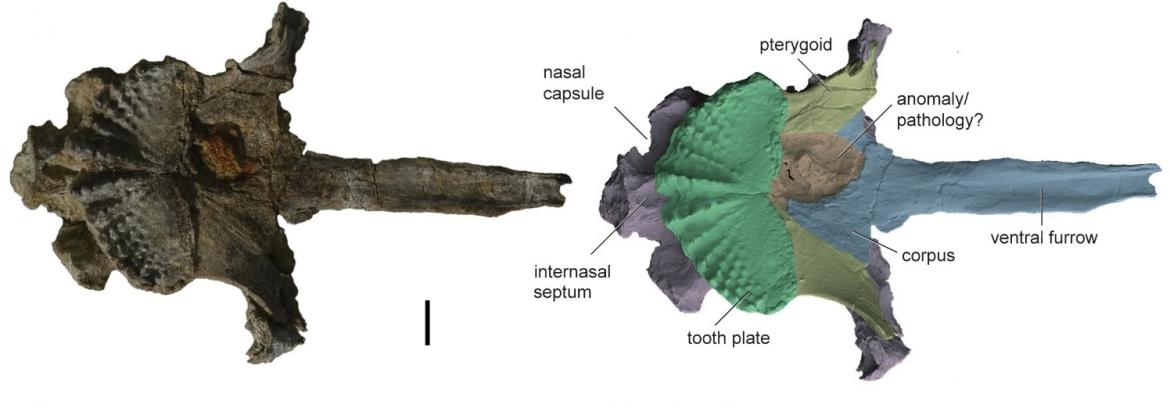
The new species and genus were identified through careful examination and morphological analysis of the only known specimen – a complete palate, part of the braincase, and tooth plates. The fossil was discovered during the 2022 palaeontological excavation season at the “Pavāri-2” outcrop in the Ciecere River basin by Valters Alksnītis, Lecturer at the Department of Geology, Faculty of Science and Technology, University of Latvia. The specimen was studied by UL researchers Ervīns Lukševičs and Valters Alksnītis, Flinders University researchers Aubrey R. Keirnan and Alice M. Clement, as well as Uppsala University researchers Per Erik Ahlberg and Grzegorz Niedzwiedzki.
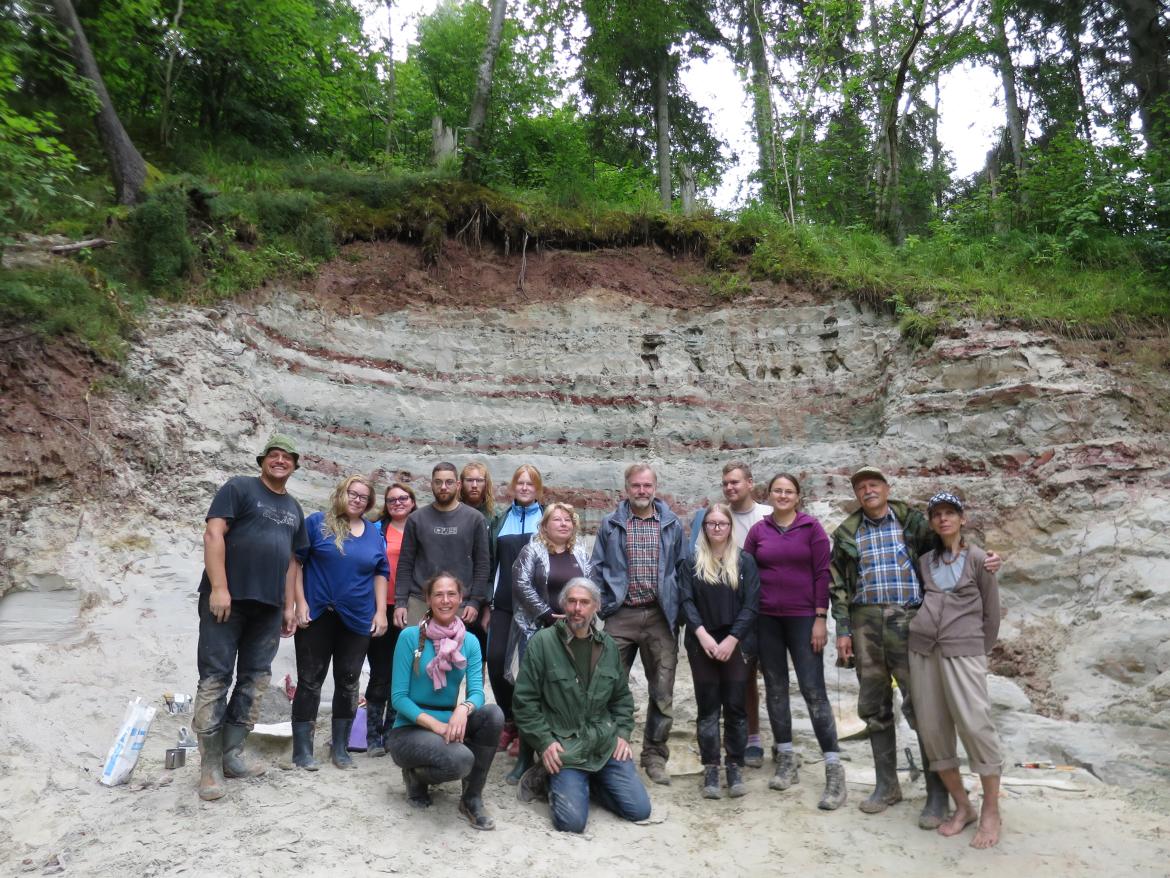
The skull fragment of the discovered lungfish is exceptionally well preserved and displays unique features that allowed it to be distinguished as a new species. The outlines of the tooth plates resemble the symbol of Jumis, which is why the species (its full name is Jumisodus latus) was named in honour of the Latvian deity of the fields (fertility), Jumis.
The significance of the discovery is confirmed by the scientific article “A new Late Devonian dipnoan from the Ketleri Formation of Latvia”, published at the end of August in the Journal of Vertebrate Palaeontology. It is one of the most prestigious journals in the field of vertebrate palaeontology and specialises in publishing significant research on vertebrate origins, evolution, morphology, taxonomy, and palaeoecology. The publication of the study in this journal confirms the scientific significance and international relevance of the discovery. Publishing the article makes the discovery known to the wider international palaeontological community and increases its visibility and use in future research.
About the project:
Palaeontological excavations and fossil research are co-financed within the Latvian Council of Science Fundamental and Applied Research Project “Late Famennian Tetrapod Vertebrates from the Equator to the Southern Polar Circle: Diversity and Palaeoecology”.