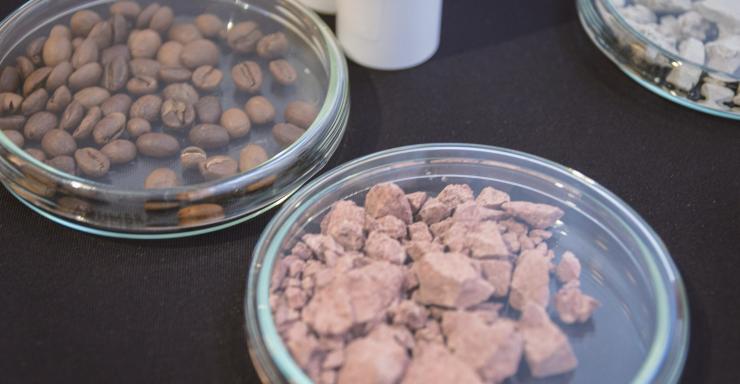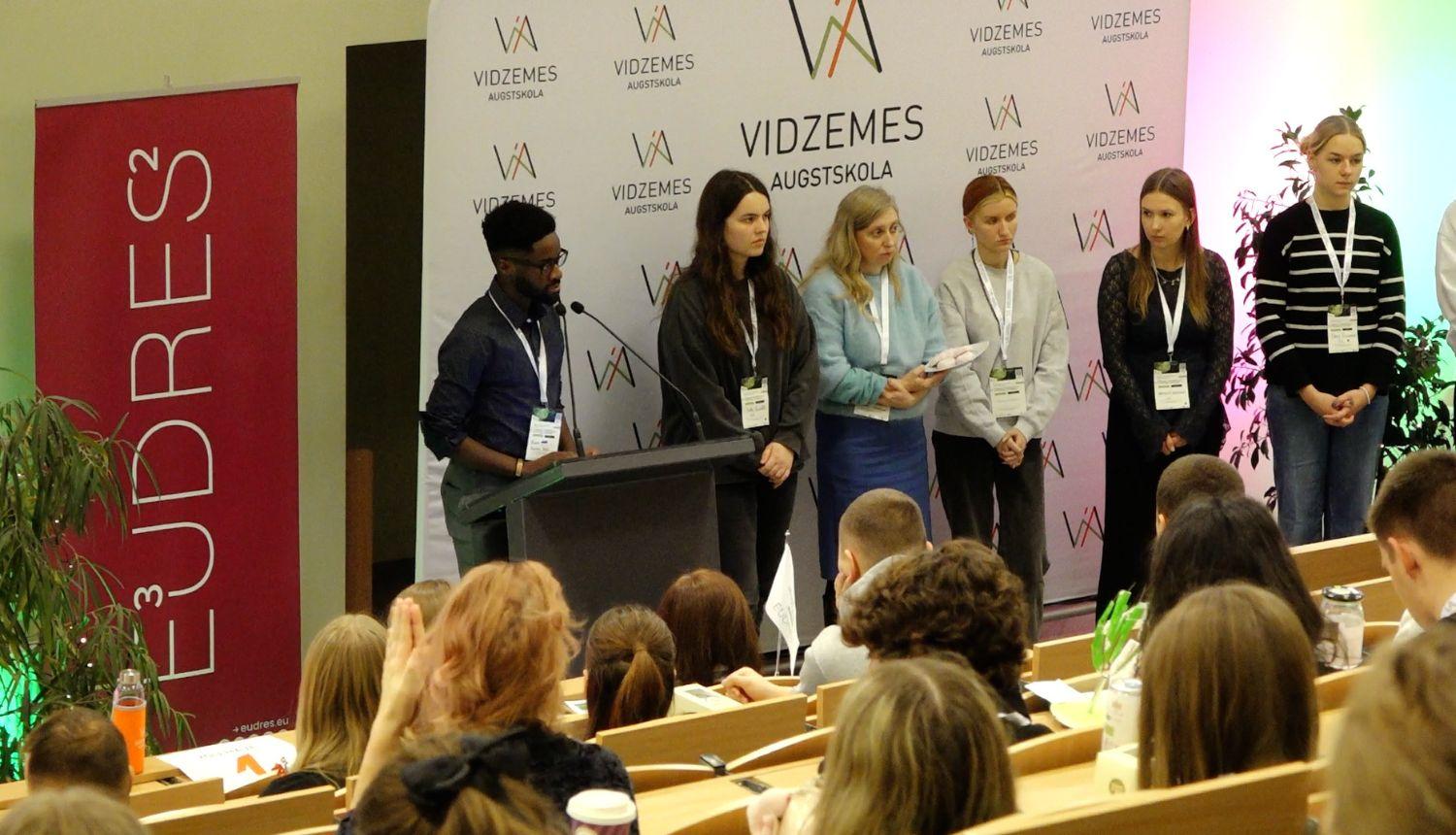
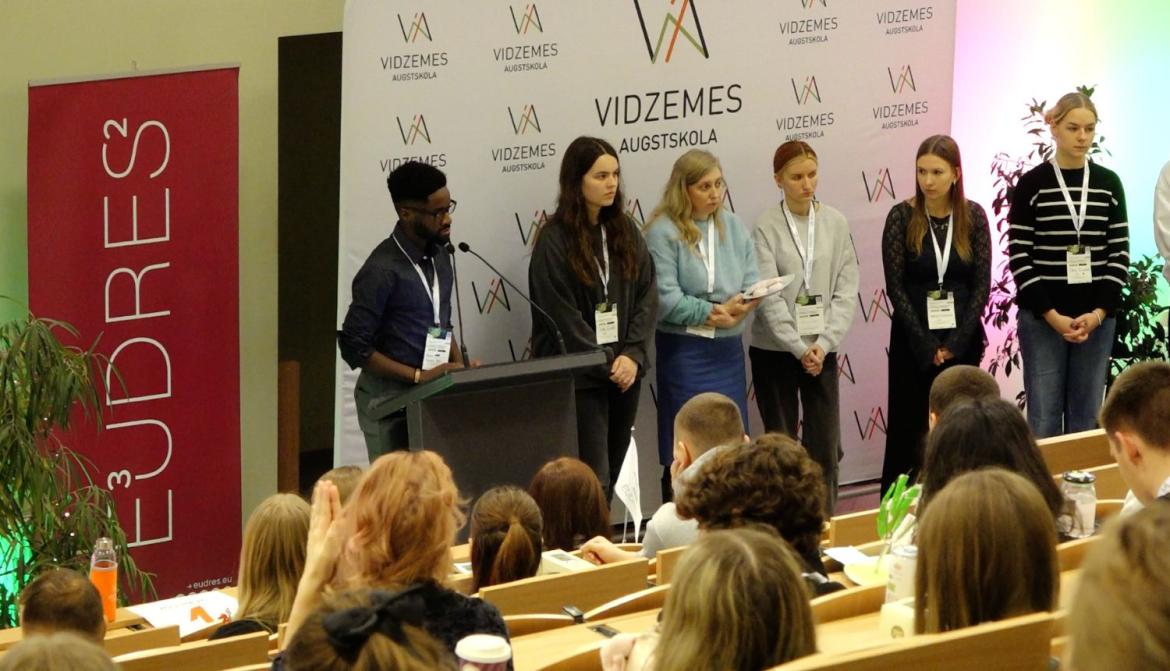
How can new flavours be created for ice cream, beverages, or how can whey or food leftovers be transformed into yet another product? Students from Vidzeme University of Applied Sciences and abroad searched for answers to these questions together with researchers this week. Several Latvian food and beverage companies submitted their daily challenges to the Innovation Co-creation Lab. The idea presentations have just taken place.
In total, ten challenges were given to students and researchers by eight Latvian food and beverage companies. For example, the company Fazer Latvia submitted two challenges. One of them was to find a sustainable solution to the large amount of baking paper used in the production process, and the other was to make use of food leftovers to create products with added value.
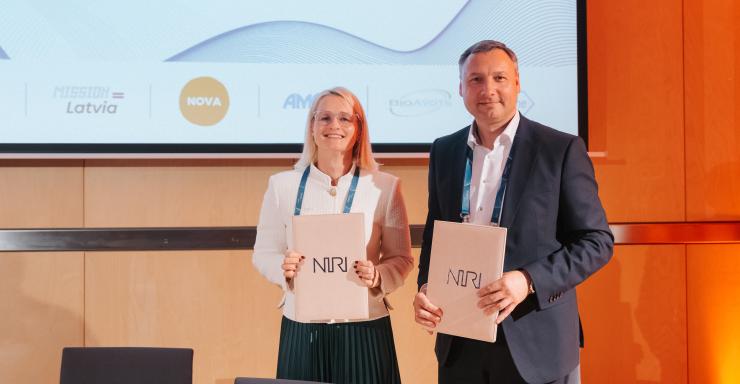
Līga Ostrovska, Head of the Confectionery Production at Fazer Latvia, shares her thoughts on the experience: "It was a wonderful experience with entrepreneurs and researchers. The situations we tackled here truly stemmed from our values. Sustainability is one of our core values. We genuinely enjoyed the results. We'll gather with colleagues and discuss the ideas we've gained."
Each team consisted of students from Vidzeme University of Applied Sciences, international students, and researchers from Latvia and 11 other countries.
Professor Christine Rosata from Clermont Auvergne University in France appreciates the opportunity to work with students from several countries: "I helped build a connection between people. At first, the students in my team were timid. Now they laugh together; everyone wanted to take part in the presentation. We succeeded in creating a special bond with one another!"
Companies gave the teams immediate feedback, commenting on the feasibility of their ideas and how processes work within the companies. Rūjienas Saldējums also submitted a challenge to develop new flavours for its ice cream-on-a-stick. The team created four flavours, each representing a season and enriched with added protein.
Loreta Roze, Head of New Product Development at Rūjienas Saldējums, notes that the work on ideas will continue and the concepts will be tested: "This was my first experience from the company side; I usually participate in these events as a student. It was very refreshing to see the students' ideas, ideas I might not have thought of myself. The students really impressed us with their eagerness to work, their enthusiasm, and their creativity."
The Vidzeme Open Innovation Centre organises the Innovation Co-creation Lab for the fourth year. In the first years, it involved collaboration between researchers and entrepreneurs; in the second year, students were also included in the process. This year, researchers and students from abroad also joined, adding additional knowledge and experience.
Santa Vītola, Head of the Vidzeme Open Innovation Centre, explains: "The benefit of working together like this is that international expertise and interdisciplinary teams come together at one table with companies, which is not something that happens often. Education, research, and entrepreneurship work hand in hand to discover new ideas and perhaps future collaboration potential."
At the conclusion of the Innovation Co-creation Lab, the three best ideas received funding for research scholarships, allowing students and researchers to continue their collaboration for several months.
Third place went to the team working on the challenge submitted by "plūkt" – automating the production process of fireweed tea.
One of the team members, Ēriks Ralfs Blaubergs, shares: "This was powerful. I truly enjoyed the challenge I was given and the opportunity to be the team leader. Coordinating the work, developing the idea, creating something – it brought back a joy I hadn't felt in a long time when it comes to projects like this!"
Second place was awarded to the team that tackled the challenge from Valmiermuiža Brewery, developing an idea for a next-generation fermented non-alcoholic functional beverage. First place went to the team that created a new, sustainable product idea for Smiltenes Piens.