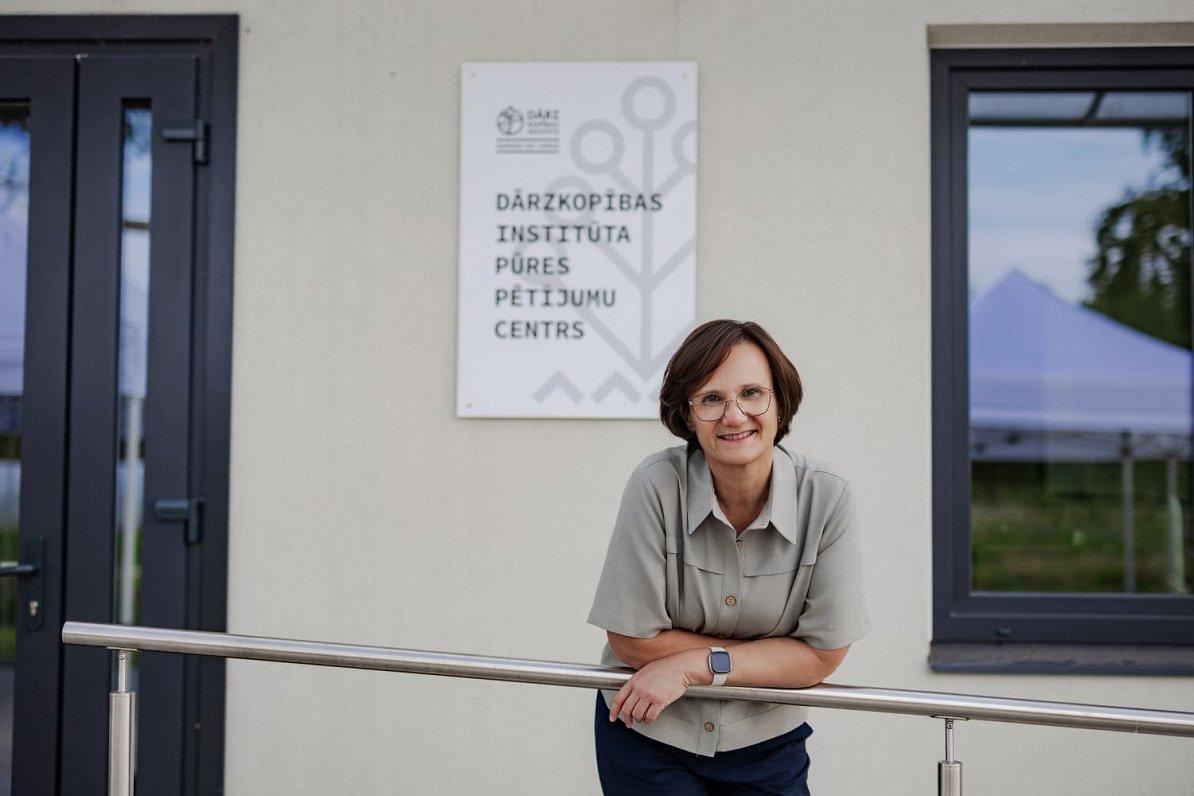
In Latvia, the first melon variety bred by local plant breeders – “Solo” – will soon receive official approval.
Its origins can be traced back to the first half of the 20th century, when various melon varieties were widely cultivated in Latvia during the interwar period, said Dr. Līga Lepse, leading researcher at the Latvian Institute of Horticulture, in the Latvian Radio programme “Zināmais nezināmajā”.
Soviet occupation set back plant breeding efforts
This year, the vegetation period in Latvia has begun roughly a month earlier than usual, meaning that wild plants are already awakening. Many garden crops should already be sown, or gardeners should be preparing to do so. Active work is also underway at the Latvian Institute of Horticulture.
Although annual crop breeding is not very common in Latvia, the first locally bred melon variety – “Solo” – will soon be officially approved.
At that time, seed companies across various European countries were developing rapidly, making significant investments and expanding their infrastructure, technologies, and molecular biology capabilities. These large companies also established a stable base for seed production outside Europe – in warmer climatic regions – and as a result, we are no longer able to compete with these foreign firms, the specialist noted.
“Therefore, what remains for us are small niche crops. They could rather be called our local treasures – the ones we work with and gradually refine so that they can eventually be registered as varieties,” Lepse explained.
Melons were already grown during the interwar period
Melons were being bred in Latvia as early as the 1920s and 1930s. At that time, many people in Latvia were engaged in melon cultivation – both Western European and Eastern varieties were grown here.
“All that diversity was cultivated in Latvia, but the melon is a cross‑pollinating plant – and without proper seed production practices and without observing isolation zones and distances, all the varieties cross‑pollinated and turned into a mixed population, which was maintained by the breeder Pauls Sukatnieks,” Lepse explained.
Sukatnieks shared his collection further, and it became even more diverse. In the early 2000s, the Latvian Institute of Horticulture obtained seeds of melons grown in Latvia from breeder Ēvalds Piļka.
“It was a completely mixed population – large, small, round, elongated, green, yellow, netted, smooth, tasty, not tasty,” the specialist said, describing the melons.
It all began as voluntary work
Researchers at the Institute of Horticulture set to work and carried out inbreeding – crossing the plants with themselves over several generations to break down the existing diversity and achieve the most uniform result possible.
Lepse noted that at the time, the researchers carried out this work voluntarily – without state funding or dedicated projects.
“We had reached the fourth or fifth generation, and a few lines had begun to emerge that were truly worth developing further. But then difficult times came, and the seeds ended up sitting in a cupboard…
Eventually, the Ministry of Agriculture decided it could expand the list of species eligible for breeding in Latvia. Thankfully, melons were included. It was good timing, because the seeds were still alive,” the researcher said.
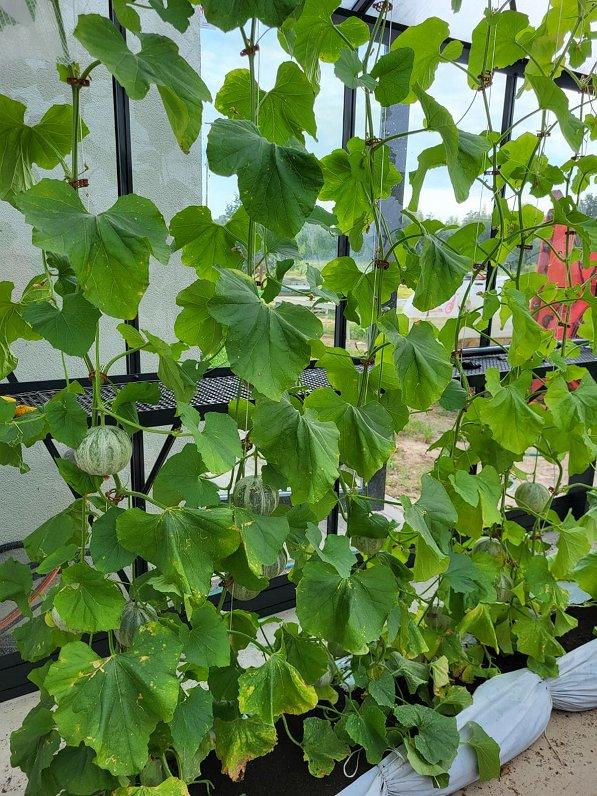
Work then resumed, starting with the evaluation of the lines that had crystallised several years earlier: “We took them out and looked at what grew and what didn’t, what germinated and what didn’t, how everything looked. In the end, line number eight had progressed the furthest and was also the tastiest. Since the fruit is small – just the right size for one person to eat in one sitting – we decided to call it ‘Solo’.”
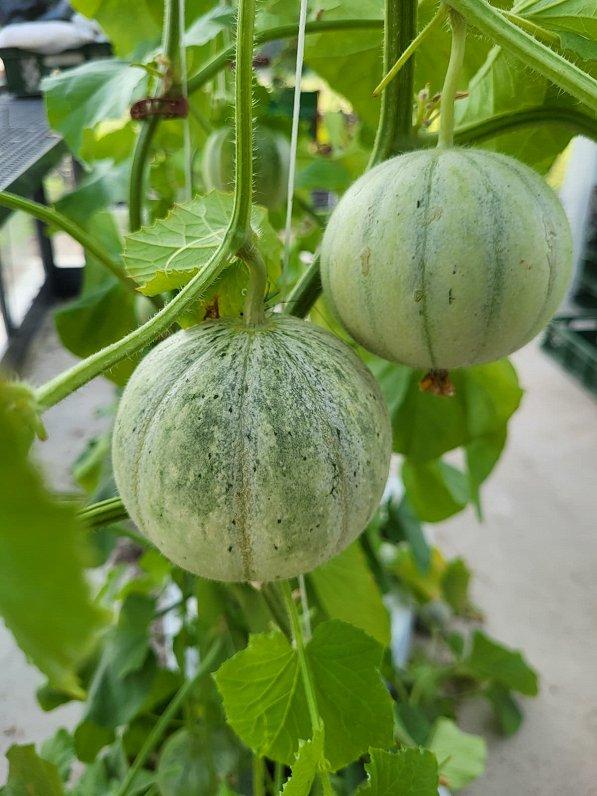
This is how the first officially bred melon variety in Latvia was created, combining the best traits of the old melon types once grown here.
“Those that used to be grown in the past were larger and more elongated; this one is small and round, but very aromatic. People often say that Uzbek melons are very tasty, but to me they seem just plainly sweet. Ours has aroma – several flavour notes come through, making it more interesting in taste. It brings together good selection material from the very best that once existed,” the researcher explained.
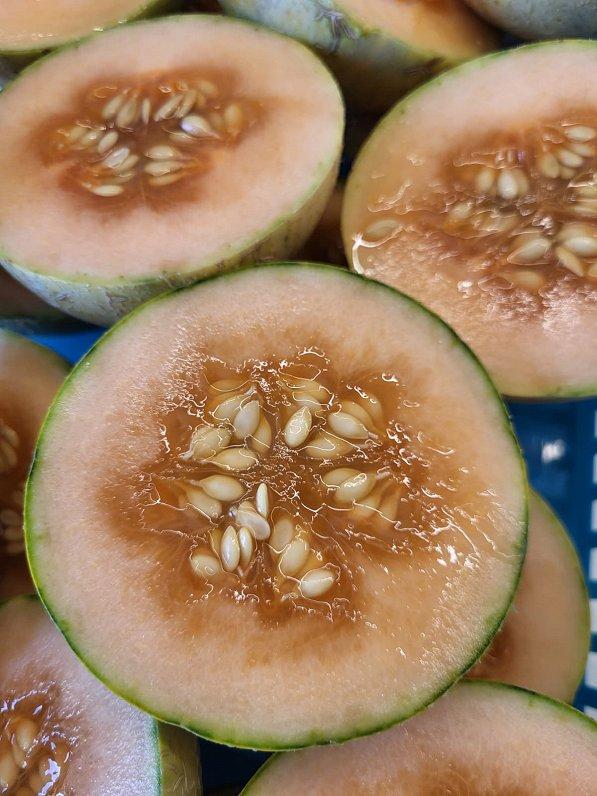
Fruit already ripens at the beginning of August
Melons of the “Solo” variety mature relatively quickly – the sweet fruit can be enjoyed as early as the beginning of August. It should be noted, however, that at the Latvian Institute of Horticulture melons are grown in plastic-covered greenhouses, as summer weather in Latvia tends to be too unpredictable, and cold nights can prevent the plants from developing properly and ripening into sweet, aromatic fruit.
Therefore, if one wishes to grow melons, it is safer to do so in a plastic greenhouse. They can also be grown outdoors, but only if the summer is warm and sunny.
“The sunnier and warmer it is, the more sugars accumulate in the plant. That’s just nature. There’s nothing you can do about it,” Lepse noted.
Researchers are also continuing work on the next melon variety, whose fruits are already slightly larger. Jokingly, the researcher said that the next variety might be called “Duo”, although in reality it will likely take several more years to develop.
Watch a videostory about Dr. agr. Līgas Lepses research
The video was developed within the ERDF-funded project No. http://1.1.1.1/1/24/I/001 “More Efficient Implementation and Management of Latvia‘s Science Policy”, implemented by the Ministry of Education and Science.