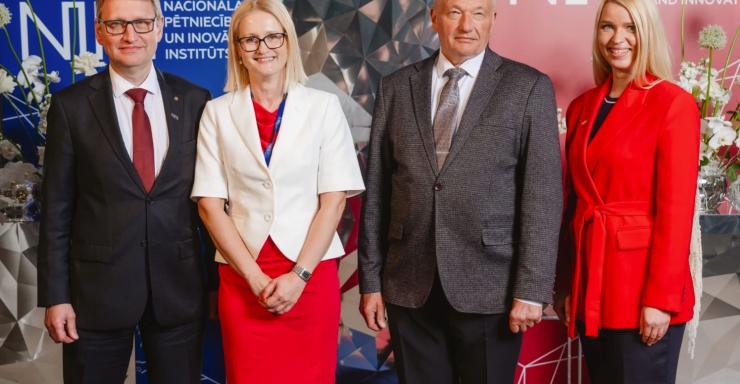
A large-scale research initiative led by Latvian scientific institutions, “Centre of Excellence in an Integrated One Health Ecosystem” (IntegroHEALTH), has received support under the European Union’s research and innovation framework programme Horizon Europe, within the Teaming for Excellence call, securing €15 million in European Union funding. The project aims to establish the first integrated One Health centre in the Baltic States and Eastern Europe, focusing on the interconnections between human, animal, and environmental health and developing solutions to challenges such as antimicrobial resistance, infectious diseases, and the health impacts of climate change.

The One Health Centre will create new opportunities for collaboration between science, the public sector, and industry by enabling the advancement of research and promoting technology transfer to the healthcare, biotechnology, food, and digital solutions sectors. One of the key elements of the project is the development of a digital twin of the entire system. This tool will integrate data on environmental processes, microbiological and chemical risks, and their links to human health observations in a single platform. The digital twin will enable real-time monitoring of system dynamics, modelling of potential development scenarios, and significantly more effective early warning, analysis, and decision-making. It will contribute to improving production safety and quality control, while the infrastructure will provide innovative companies with access to high-value data, algorithm development environments, and demonstration platforms.
The project will be implemented by the Latvian Biomedical Research and Study Centre (BMC) in collaboration with Riga Technical University (RTU), the Institute of Food Safety, Animal Health and Environment “BIOR” (BIOR), the European Molecular Biology Laboratory (EMBL), and the University of Dundee (United Kingdom). The Centre for Disease Prevention and Control of Latvia (SPKC) and the Latvian Environment, Geology and Meteorology Centre (LEGMC; Latvian abbreviation: LVĢMC) will participate as associated partners.
During the project, four new research directions will be established:
- One Health metagenomics – studying how dangerous microorganisms spread, how antimicrobial resistance emerges, and how these challenges can be addressed strategically.
- Integrative environmental bioindicator analytics – examining how environmental pollution affects human health and ecosystems.
- Artificial intelligence–based digital systems modelling – a platform integrating genomic, microbiological, environmental, and health data to model disease risks and predict the effectiveness of interventions at different levels.
- One Health security analytics – early detection and assessment of biological, chemical, and ecological threats, including hybrid threats.
As a result of the project, 24 new scientific positions will be created: four senior researcher or lead researcher positions for research group leaders, eight postdoctoral positions, and twelve doctoral student positions. In addition, the project foresees funding to support existing scientific staff corresponding to approximately 15 full-time equivalent positions.
The total budget of the project “Centre of Excellence in an Integrated One Health Ecosystem” will amount to €30 million, comprising €15 million from the European Union’s Horizon Europe programme and €15 million in national funding, including 85% from the European Regional Development Fund, 11.7% from the state budget, and 3.3% from the project implementers’ own resources. The infrastructure developed and competencies gained during the project will create new opportunities to attract international funding through increased participation in Horizon Europe and other European Commission–funded research and innovation programmes.
Teaming for Excellence is a Horizon Europe funding instrument designed to develop excellent research centres in countries with lower innovation capacity through cooperation with leading European institutions. It supports the establishment of new or significantly strengthened research centres by combining the potential of local institutions with international excellence and national co-financing.