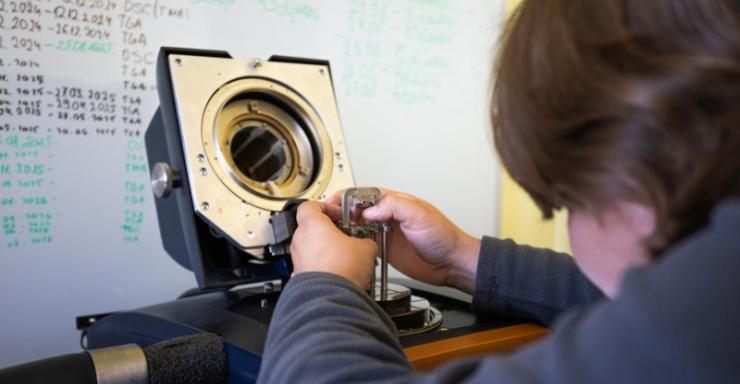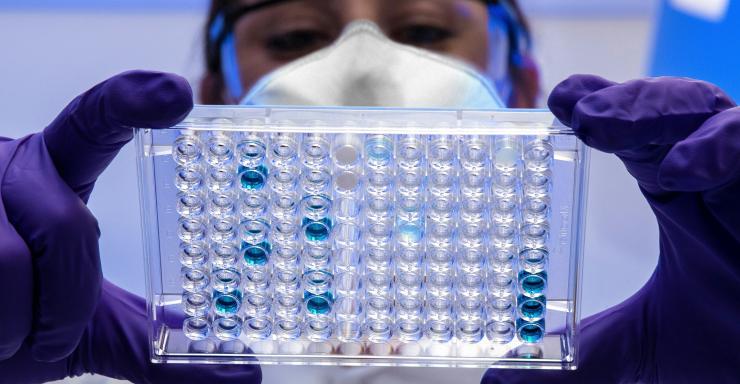
Students who are planning to develop a scientific research project and are interested in topics related to energy, physics, engineering, information technology, or artificial intelligence are invited to take advantage of the opportunity to cooperate with Latvia’s leading research centres within the LACISE project of the Swiss-Latvian Cooperation Programme “Applied Research”.

By developing a scientific research project within the LACISE project, students have the opportunity to cooperate with researchers from the Institute of Solid State Physics of the University of Latvia, the Institute of Electronics and Computer Science (EDI), or Riga Technical University, receiving scientific support and access to modern research infrastructure.
Research on future energy challenges is particularly welcome, including next-generation battery technologies, hydrogen production, renewable energy solutions, and the stability and sustainability of energy supply systems.
Scientific research project topics offered by the Institute of Electronics and Computer Science (EDI) for the 2026/2027 academic year
- Operation of artificial intelligence, its manipulation, and detection of malicious functions
- How the brightness and colour of the sky change during the day
- Utilisation of solar energy potential in Latvia
- Assessment of the implementation of demand flexibility measures to reduce electricity costs for active users
Students are also invited to propose their own research ideas, especially if they are related to energy, sustainability, and climate technology issues.
An opportunity to gain practical experience in science
Participants will have the opportunity to:
- work together with Latvia’s leading researchers;
- use modern laboratories and research equipment;
- gain practical experience in scientific work;
- prepare for further studies in STEM fields.
For inspiration, we invite you to learn about the experiences of previous participants:
Gustavs Latišs’ research: https://www.lacise.com/jaunumi/params/post/5177615/udenradis-no-aluminija-lacise-zpd/
Germans Vlasenko’s work: https://www.lacise.com/jaunumi/params/post/5194352/praktiska-zinatne-skoleniem-zpd-Germans-Vlasenko/
Further information and applications by email: inese.jansone@cfi.lu.lv.
Further information about the Swiss-Latvian Cooperation Programme “Applied Research”: https://swiss-contribution.lv/lietiska-petnieciba/par-programmu/
The Swiss-Latvian Cooperation Programme “Applied Research” is part of Switzerland’s contribution to reducing economic and social disparities in the European Union by strengthening bilateral cooperation between Switzerland, partner countries, and the European Union. The programme promotes the development of science and innovation in Latvia by supporting projects in the fields of smart materials, information technology, and smart energy.