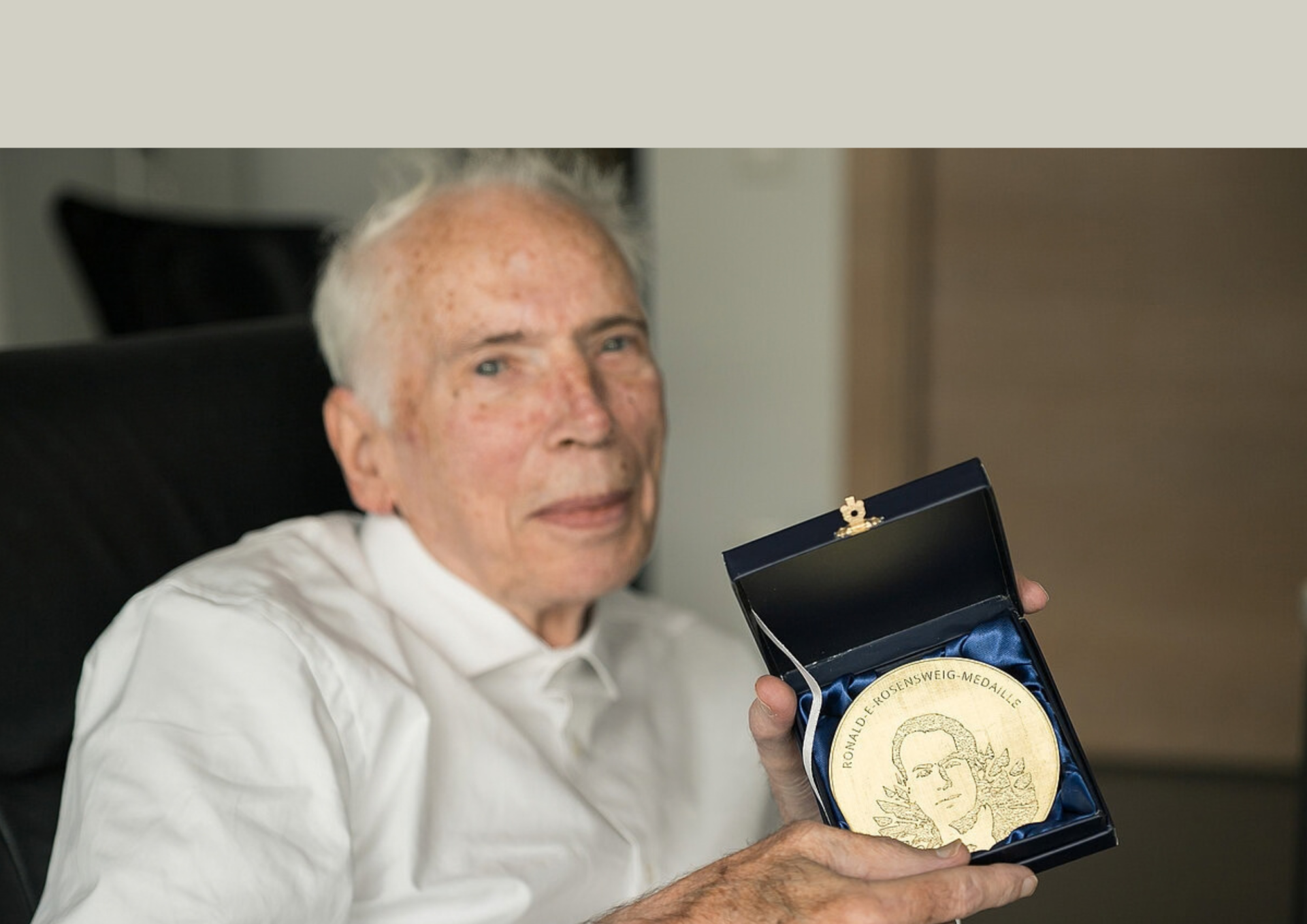
This summer, from 5 to 10 July, the 17th International Conference on Magnetic Fluids (ICMF17) took place in Vienna. During the conference, Professor Andrejs Cēbers of the Department of Physics at the Faculty of Science and Technology of the University of Latvia (UL) received the highest award of the international magnetic fluids research community – the R. E. Rosensweig Medal.
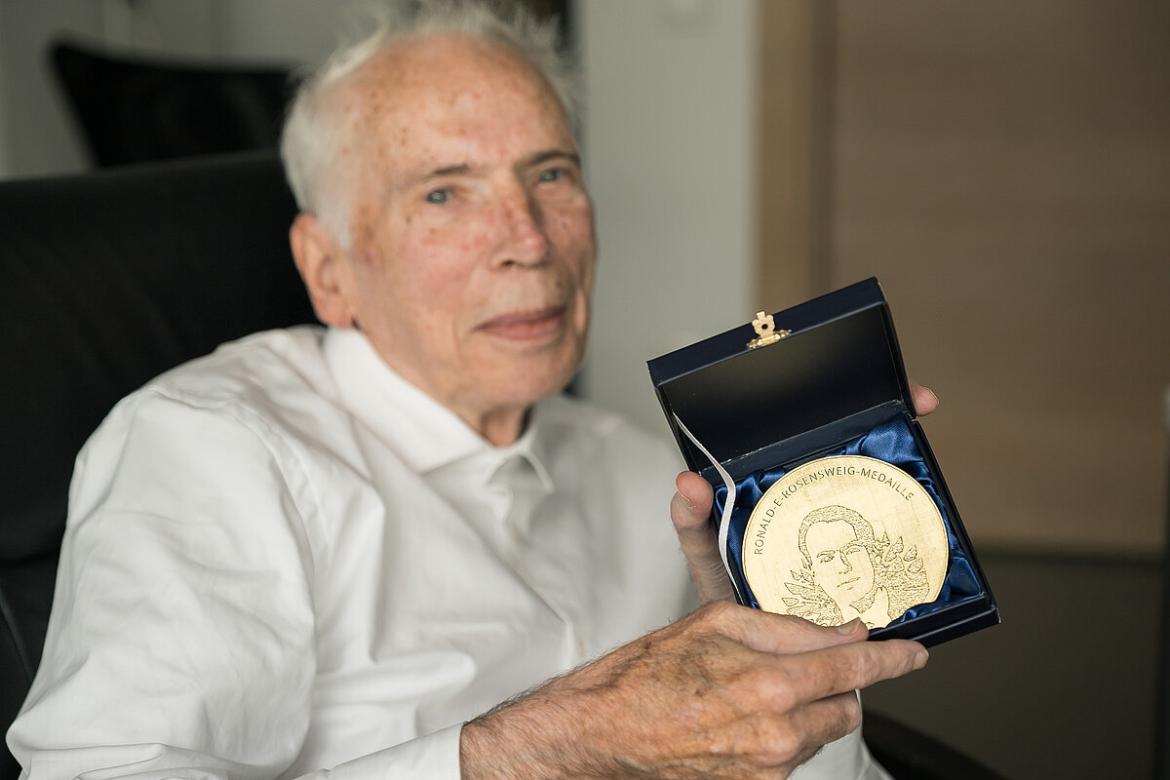
The R. E. Rosensweig Medal is the highest award in the international magnetic fluids research community. It is awarded for outstanding scientific achievements in the research of magnetic fluids and hybrid materials, as well as for contributions to the further development of this field of research.
Professor Andrejs Cēbers says about the award he received: “The field of magnetic fluid hydrodynamics was initiated by R. E. Rosensweig in the mid-1960s, creating colloid-based fluids with strong magnetic properties. Already at the very beginning of the development of this field, it became clear that the combination of magnetism and fluid flow made it possible to observe previously unknown phenomena, which sparked researchers’ interest in this field. In the 1970s, researchers in Latvia, including myself, also turned to it, carrying out a number of significant studies. As the research expanded, it contributed to the development of a number of new directions, including applications of magnetic nanoparticles in biomedicine and robotics.”
The R. E. Rosensweig Medal for special merit in the development of the field of magnetic fluids is being awarded only for the second time. In 2023, the first such medals were presented, and one of them was also received by Professor Elmārs Blūms of the Institute of Physics at the Faculty of Science and Technology of the University of Latvia. This year, two medals were awarded – to Professor Andrejs Cēbers and Professor Stefan Odenbach of Dresden University of Technology. So far, a total of five R. E. Rosensweig Medals have been awarded, and two of them have been presented to professors of the University of Latvia. Meanwhile, France, Israel and Germany can each boast one such medal.
University of Latvia Vice-Rector for Science Guntars Kitenbergs assesses the achievements so far: “With Professor Cēbers receiving the medal this year, and Professor Blūms before him, we can see with great pride that the international magnetic fluids community appreciates the decisive contribution of Latvian scientists to the development of the field. This is a major achievement earned through intensive and creative work over several decades. I hope that our colleagues’ awards will serve as an example and motivation for our young scientists to seek new research directions through which to carry the name of Latvia and the University of Latvia into the world.”
Congratulations to Professor Andrejs Cēbers, and we are proud of his achievements!