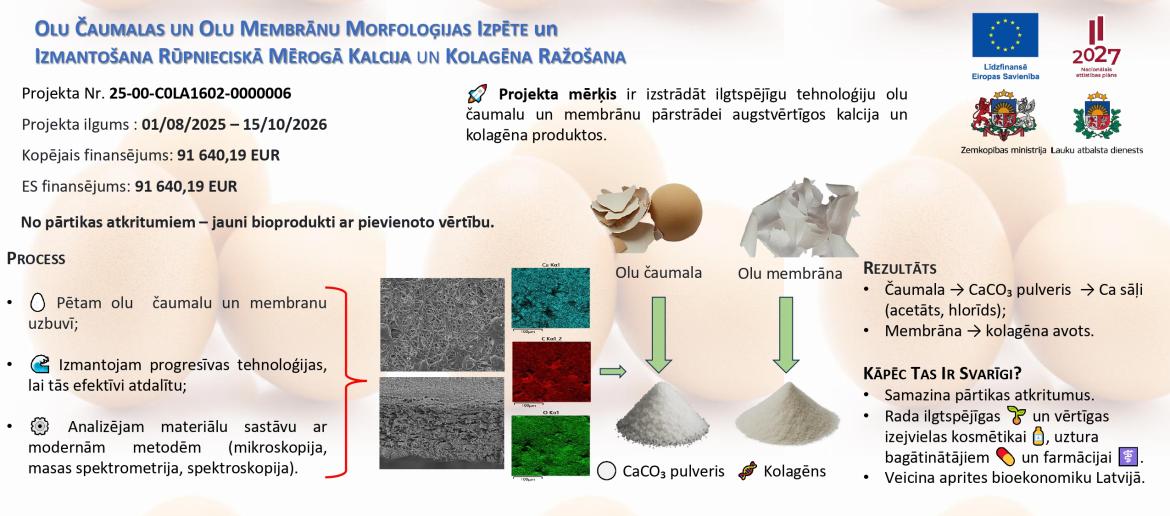
Eggshells and membranes are typically perceived as waste, but they contain valuable substances that can be transformed into high-value products. To make this possible, a project has been launched in Latvia titled "Research on the Morphology of Eggshells and Egg Membranes and Their Industrial Application in Calcium and Collagen Production" (No. 25-00-C0LA1602-0000006). The project's goal is to develop a sustainable technology for processing eggshells and membranes to obtain high-quality calcium and collagen products.

he study aims to conduct a morphological analysis of eggshells, examine their elemental composition across various histological layers using selective and sensitive analytical methods, and determine their chemical composition. The microbiological safety of eggshells will also be evaluated, depending on the type of pre-treatment used – thermal, microbial, mechanical, or chemical.
The project is expected to generate fundamental knowledge about the chemical composition of eggshells from laying hens raised in Latvia and to develop a scientifically grounded and economically viable technological solution for their application in the food or cosmetics industries.
Using advanced technologies, shells will be efficiently separated from membranes, and their detailed analysis will be conducted using modern analytical methods such as microscopy, mass spectrometry, and spectroscopy. As a result, the shells will be processed into calcium carbonate powder and subsequently converted into calcium salts (acetate, chloride), while the membranes will serve as a source of collagen.
This approach will help reduce food waste while creating sustainable and valuable raw materials that can be used in the cosmetics, dietary supplements, and pharmaceutical industries – thereby strengthening the circular bioeconomy in Latvia.
"Our goal is to demonstrate that even food waste can be transformed into new, high-value products. By applying scientifically grounded methods and modern technologies, we can convert eggshells and membranes into innovative raw materials with wide-ranging applications in the food, cosmetics, and pharmaceutical sectors. This project is a significant step forward in the development of a sustainable bioeconomy in Latvia,"
emphasizes the project manager, Dr.sc.ing. Vitalijs Radenkovs.
The project will run from August 1, 2025, to October 15, 2026. Its total funding amounts to €91,640.19, fully provided by the European Union.
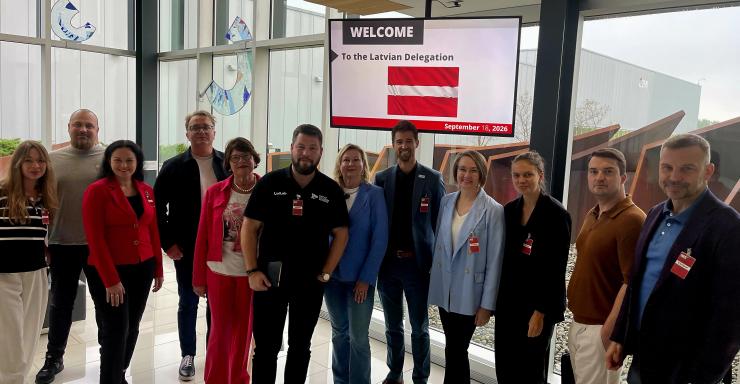
The lead partner is Balticovo AS, with project implementation carried out in cooperation with the Latvia University of Life Sciences and Technologies (LBTU) and Standel Ltd.