Peace of mind in seconds – scientists in Latvia develop a device for rapid skin cancer diagnostics
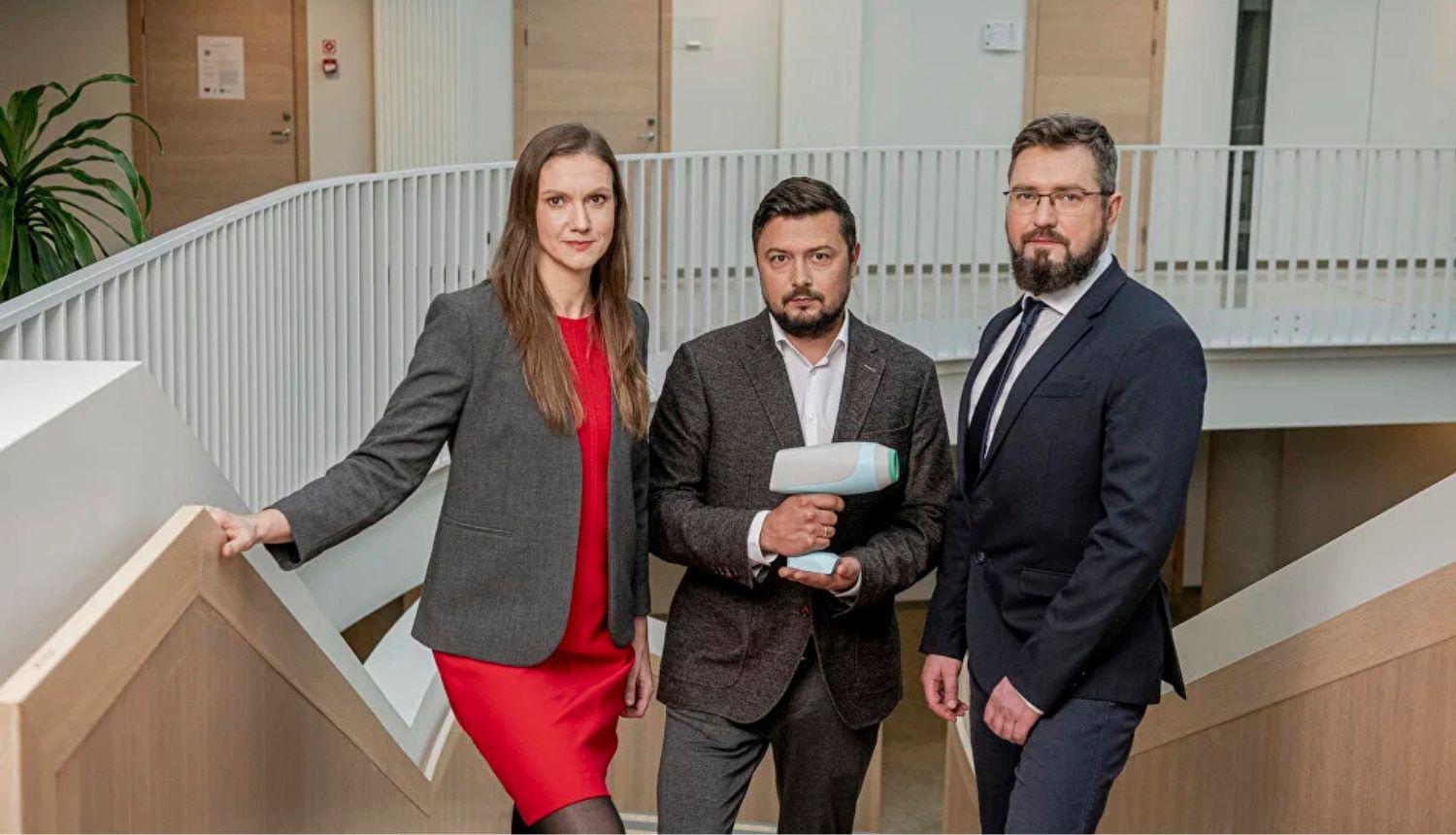
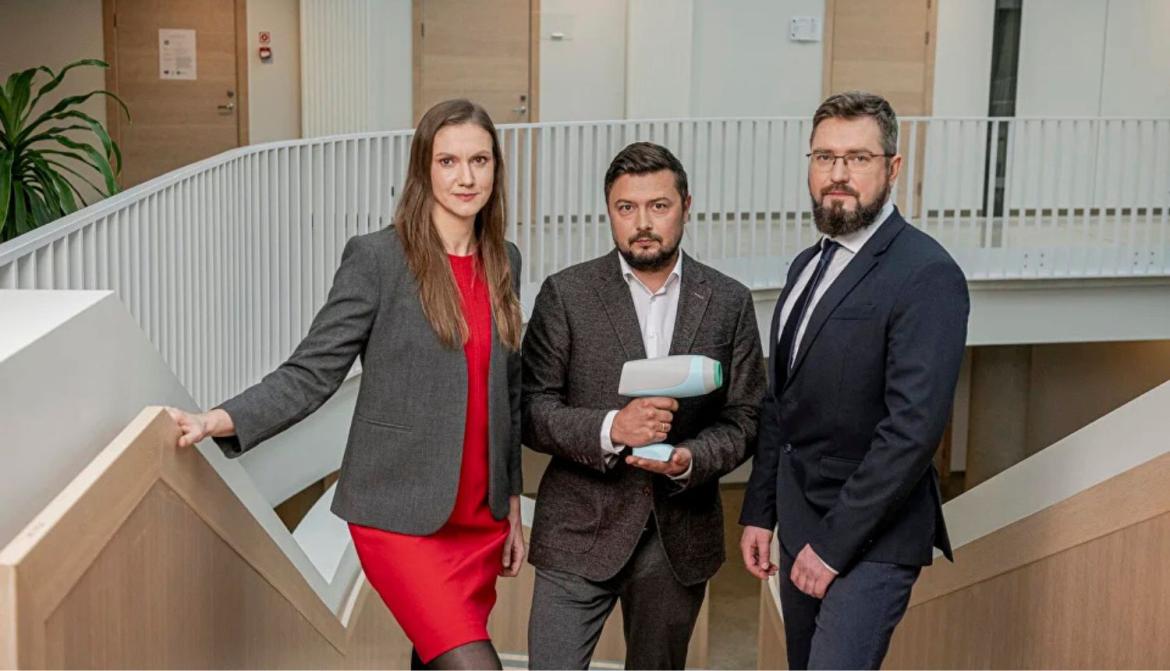
When the main driving force was the desire to help people and to find the most effective way to detect skin cancer at an early stage, the young researchers from the University of Latvia (UL) and Riga Technical University (RTU) needed only to arm themselves with patience and perseverance to bring this idea to life together. The theoretical knowledge they had acquired was applied purposefully and creatively in practice, transforming an initially theoretical concept into a scientifically validated, practically usable device for rapid skin cancer diagnostics. Thanks to funding from the European Regional Development Fund (ERDF), the research work has taken tangible form – a portable device for skin cancer diagnostics that can identify melanoma and benign skin lesions within seconds. The device, visually similar to a handheld scanner, will enable malignant lesions to be detected much faster, for example even during a visit to a general practitioner.
ERDF co-financing for the project "Portable device for early non-contact diagnosis of skin cancer" amounts to EUR 548,649. Additional support has also been provided through public and private funding. During the project, four portable devices were developed to capture and transmit skin images, along with image-processing software and a cloud computing service, enabling remote processing of the acquired images and ensuring that diagnostic results are always accessible.
Early diagnosis of oncological diseases is crucial, especially in the case of melanoma and other types of skin cancer. In its early stages, melanoma does not cause pain or other significant symptoms that would alarm patients and prompt them to seek immediate medical attention, which is why it is often detected late. When skin cancer is diagnosed early, the chances of successful treatment and prolonged survival are significantly higher.
An innovation that truly helps patients
About ten years ago, Ilze Ļihačova, a researcher at the Biophotonics Laboratory of the Institute of Atomic Physics and Spectroscopy at the UL Faculty of Science and Technology, began studying how optical methods could be used to diagnose skin cancer. Research showed that processing skin lesions requires three wavelengths of light. Based on how a particular skin lesion reflects light, it is possible to determine whether it carries a cancer risk.
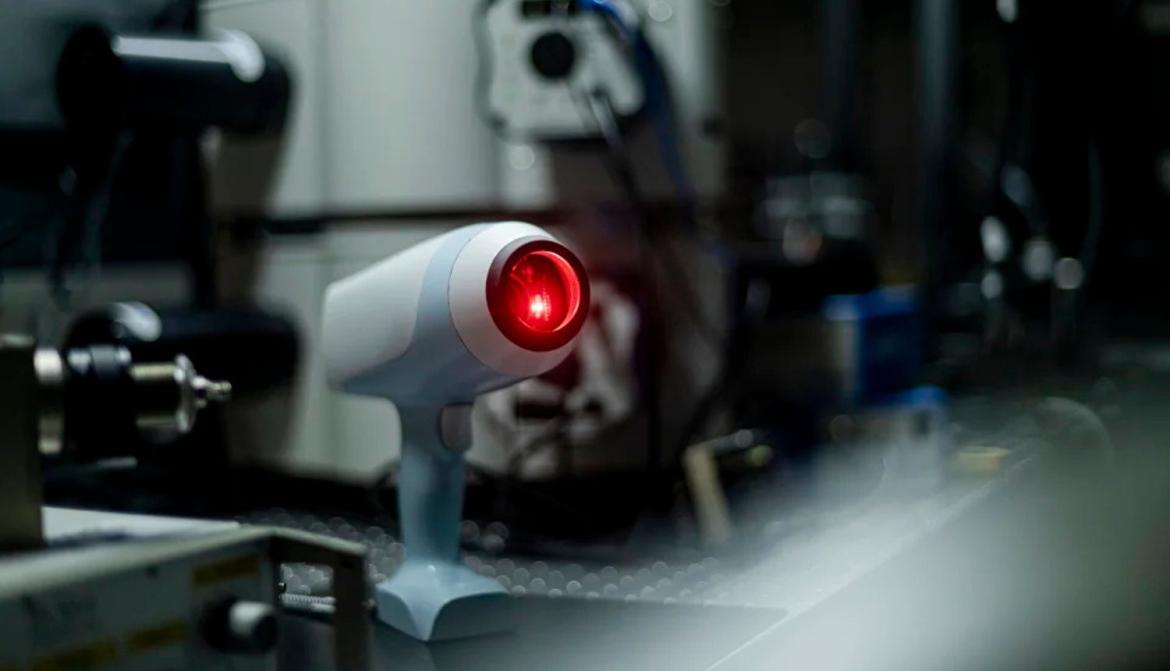
Using specialised equipment at the Latvian Oncology Centre, the researcher collected data, obtaining hundreds of images of skin tumours. After processing the results, it was concluded that the developed parameter for distinguishing melanoma from benign skin lesions was suitable for creating a device that would use three colour diodes – green, red, and infrared.
"The idea had been in the air for a very long time, because we wanted to create something that could genuinely help people," says Aleksejs Ļihačovs, leading researcher at the Biophotonics Laboratory of the Institute of Atomic Physics and Spectroscopy, UL.
After discussions within the laboratory, Dmitrijs Bļizņuks, a leading researcher in computer networks and computer control at the RTU Institute of Applied Computer Systems, was invited to join, and a decision was made to begin developing a portable device – a process that took several years. To successfully implement the idea, the scientists realised that a project proposal had to be developed and ERDF support applied for. A portable device that stores data in a cloud service and analyses captured images using artificial intelligence (AI) requires substantial funding.
"This had a huge impact – it was the first major collaborative project between UL and RTU for our group. The idea was great, the expected results were promising, and the team was strong, with everyone doing their part. If everything hadn't happened at the right time, I don't know whether this device would exist at all," shares Aleksejs Ļihačovs.
The initial mathematical diagnostic method was supplemented with a trained neural network, enabling the device to diagnose not only melanoma but also other types of lesions. Following an extensive research phase involving not only Latvian clinics but also the Dermatology Clinic of Semmelweis University in Hungary, more than 4,000 lesion images were obtained in total. The data were validated to ensure the model's reliability.
"Put very simply – the model was trained on one set of data and then tested on data it had never seen before," explains Dmitrijs Bļizņuks.
The legitimacy of the data is further confirmed by the fact that they were collected in different countries and therefore represent diversity.
The device has been practically tested by general practitioners – the primary target audience – as well as by dermatologists, who have recognised it as valuable and easy to use. Non-contact mole diagnostics can be conveniently performed in a few seconds – the device is aimed at the mole, and a photograph is taken while the diodes illuminate the lesion's surface. The artificial intelligence then determines whether there is a cancer risk, taking into account both colour images and changes in fluorescence images over time.
"As a dermatologist, I do not need to interpret complex imaging models myself – the results are available in a cloud interface in a simple form, which makes it practical for everyday consultations, even when several skin lesions need to be assessed for one patient. Traditional diagnostics are based on visual inspection, dermatoscopy, and ultimately biopsy, which require trained specialists and time. Such tools can also help primary care physicians to identify suspicious skin lesions early and effectively. By expanding access to modern, AI-supported assessment, more patients can be examined early, leading to better outcomes," says Norbert Kiss, Associate Professor at Semmelweis University and Head of the Inpatient Dermatology Department.
Research is still ongoing, as the scientists' goal is to improve the technology further so that it can detect not only melanoma with more than 90% accuracy, but also other types of skin cancer – basal cell and squamous cell carcinomas. Although less dangerous, these carcinomas are very common; when detected early, they respond well to treatment.
The big dream – a device in every general practitioner's office
At present, the main objectives of the initial large project have been achieved – a prototype of the device and an application have been developed, and the technology rights have been secured. Thanks to successful cooperation between UL and the startup commercialisation platform Commercialisation Reactor, a startup called Bdetect has also been established, responsible for commercialising the device and attracting funding through participation in medical technology exhibitions worldwide. "As scientists, we want to continue our research successfully, so it is good that there is a company taking care of that side," says Dmitrijs Bļizņuks. The researchers can thus continue their scientific work without concern.
To mass-produce and sell the medical device, the key task is certification. Estimates show that the certification process will take about a year, and additional funding of approximately EUR 100,000 still needs to be secured, but the team remains optimistic. Once this is completed, a more effective path toward early skin cancer diagnostics can begin in Latvia and beyond. The researchers see this as an opportunity to relieve dermatologists of visits that can instead be conducted in general practitioners' offices, where patients can have their skin condition checked with a certified device, determine whether adverse lesions have developed, and obtain reliable results.
"It is not only an examination, but also a service and trust. If a general practitioner in a rural area, outside a large city, has modern technologies, it represents a different level of service and credibility – patients will want to come and get checked. Greater accessibility of diagnostic services closer to one's place of residence, saved time, a quick examination, and a reliable result," says Aleksejs Ļihačovs.
This and other projects of importance to Latvia have been made possible thanks to investments from the European Union's multiannual budget. For every euro Latvia contributes to the EU budget, it receives on average three to four euros back in public investments. Moreover, the positive impact of EU funds on Latvia's economy continues to grow each year, fostering economic growth, public welfare, and regional development. The Ministry of Finance has calculated that in 2025, the impact of EU funding on Latvia's gross domestic product reached the historically highest cumulative contribution to the national economy – 9.1% (excluding data from the European Agricultural Fund for Rural Development). This has been achieved through EU fund investments that, in the long term, bring about significant changes to the national economy – increasing production capacity, employment, wages, and export competitiveness.