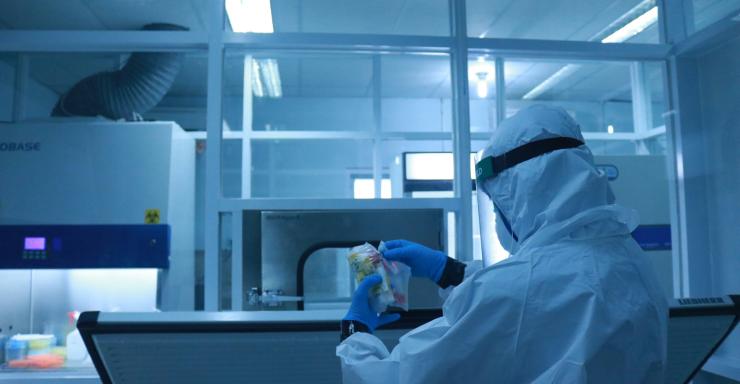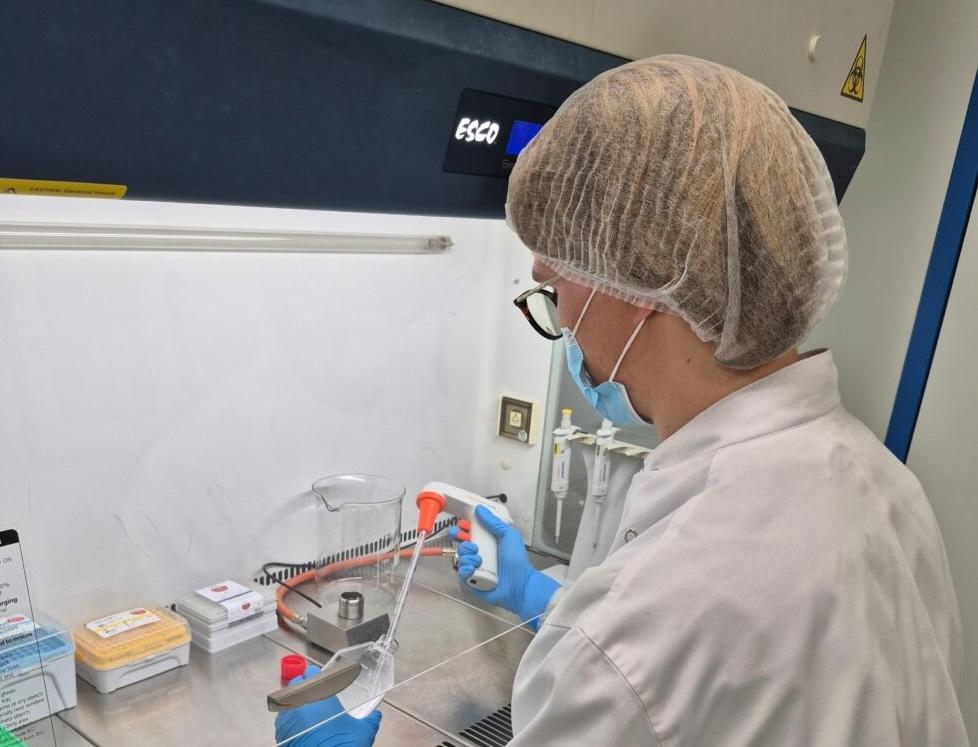
At the Latvian Biomedical Research and Study Centre, a project titled EVBoost is being implemented under the leadership of researcher Karīna Narbute, addressing one of the key challenges in regenerative medicine: the safe and cost-effective production of extracellular vesicles. By improving these processes, the development of new regenerative and cell-free therapies can be accelerated, offering safer and more accessible treatment options for patients with cancer, degenerative diseases, and immune system disorders.
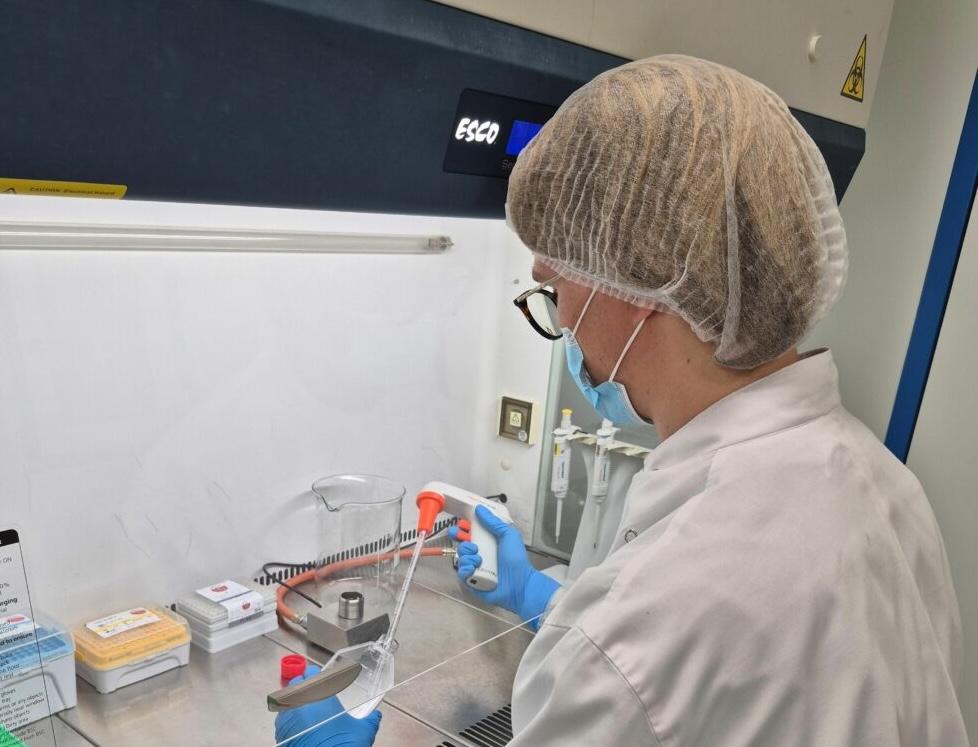
Extracellular vesicles are tiny biological particles naturally released by cells, and they play a crucial role in intercellular communication. They are widely studied as potential therapeutic tools for tissue regeneration, immune system modulation, and the treatment of chronic diseases. However, their production in quantities sufficient for clinical use remains inadequate. Current methods are time-consuming, costly, and often affect the quality of extracellular vesicles.
To address this challenge, the EVBoost team within the research platform Biomedical and Photonics Research Platform for the Development of Innovative Products (BioPhoT) is developing a module for hollow-fiber bioreactor systems already used in laboratories for stem cell cultivation. This module applies electromagnetic stimulation to mesenchymal stem cells, encouraging them to release a greater number of extracellular vesicles. Initial studies indicate that this stimulation does not harm the cells and does not reduce the therapeutic potential of the extracellular vesicles. If validated, this approach will provide a scalable and non-invasive method to significantly increase extracellular vesicle yield.
The project’s main objective is to transfer the extracellular vesicle stimulation module from a laboratory concept to a validated prototype. To achieve this, the module will be tested and validated in a hollow-fiber bioreactor under controlled laboratory conditions, comparing extracellular vesicle production with and without stimulation.
In parallel, the underlying biological mechanisms will be analyzed using multi-omics approaches, mapping changes in proteins and RNA to understand how stimulation affects extracellular vesicle composition and cellular functions. The project will also ensure intellectual property protection by filing a primary patent application to safeguard the innovation and strengthen its future commercialization. Finally, subsequent development stages will be prepared through targeted market research, engagement with potential end users, and the preparation of new grant applications to support scaling and clinical translation.
In healthcare, improving extracellular vesicle production could accelerate the development of new regenerative and cell-free therapies, offering safer and more accessible treatment options for patients with cancer, degenerative diseases, or immune system disorders. The project will also contribute to the growth of Latvia’s biotechnology sector by creating opportunities for local innovation, collaboration with international partners, and potentially new high–value-added jobs.
The project also strengthens the scientific knowledge base by providing new insights into how this type of stimulation affects cells at the molecular level. This may not only support extracellular vesicle–based therapies but also inspire future biomedical technologies in other fields.