Within the framework of the project "Development of RIS3 Research Infrastructure at Vidzeme University of Applied Sciences," in accordance with the performance and strategic specialization of Vidzeme University of Applied Sciences, the latest virtual reality technologies and visualization technologies are being procured, promoting the development of Vidzeme University of Applied Sciences.
The Vidzeme University of Applied Sciences Virtual Reality Technology Laboratory has been conducting applied research and development in the field of virtual, augmented and mixed reality technologies for more than ten years, collaborating with industry, the public sector and international partners. The laboratory's activities cover a wide range of applications – from safety and industrial training, medicine and physiotherapy to cultural heritage, education and digital twins. To ensure research continuity, competitiveness and compliance with modern technological requirements, targeted renewal and expansion of research infrastructure is necessary.
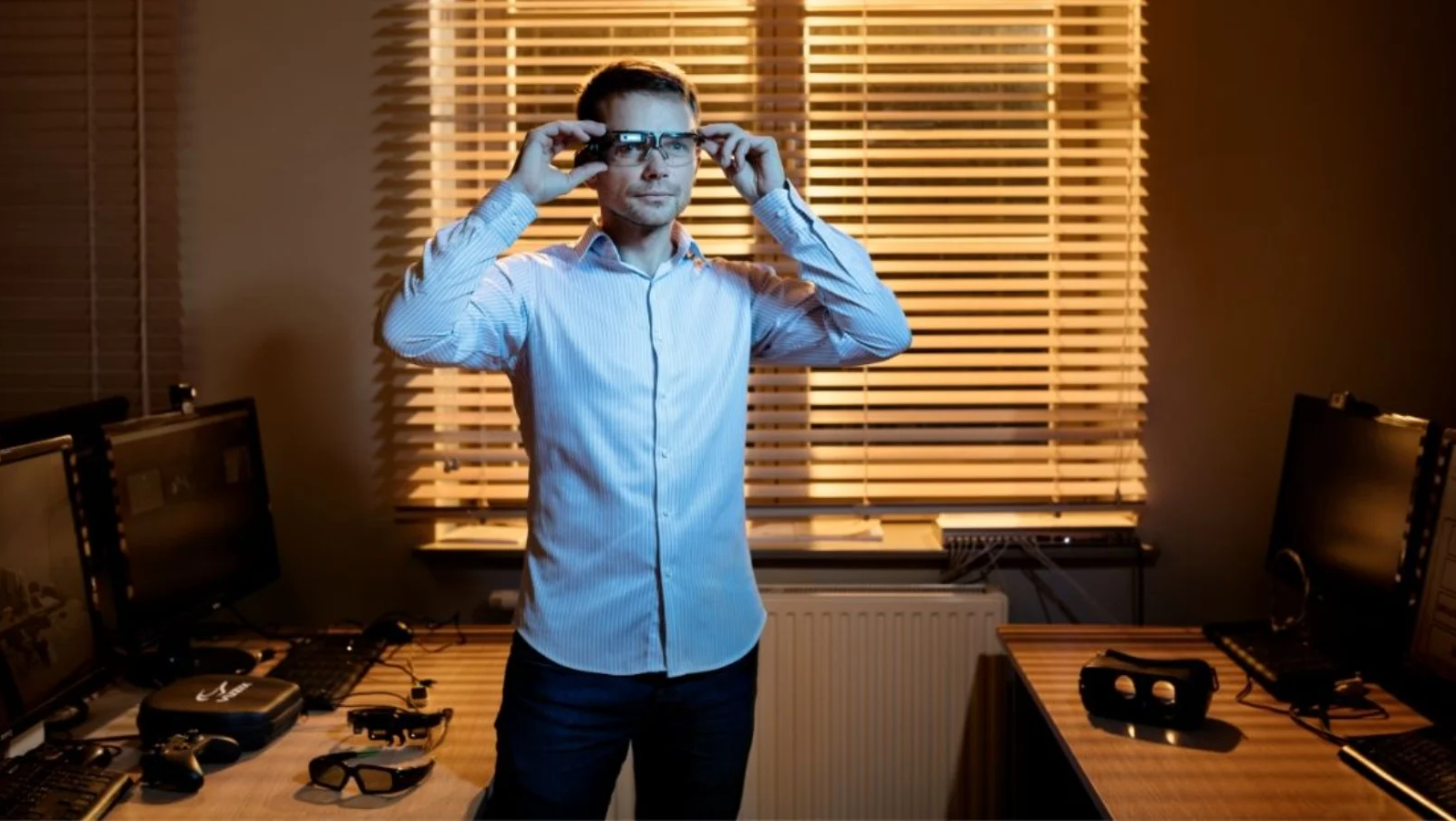
The planned acquisition of new equipment – including stationary and portable computers with virtual reality-compatible graphics processing units, various types of standalone and professional virtual reality and mixed reality headsets, motion, eye-tracking, facial expression and physiological data sensors – will significantly expand experimental research capabilities. This equipment is critically necessary for high-precision simulations, multi-user environments, human-computer interaction research, as well as sensor and artificial intelligence integration in immersive environments. It will provide the ability to collect and analyze complex data on user behavior, movements and physiological responses in real time.
The equipment acquisition will directly support national and international research projects implemented and planned by Vidzeme University of Applied Sciences Virtual Reality Technology Laboratory, including industry-commissioned research, European Union fund and Interreg projects, as well as defense and security sector initiatives. Modern hardware is a prerequisite for developed solutions to meet partners' technical requirements and international quality standards, while strengthening Latvia's scientific and innovation capacity in the field of immersive technologies.
At the same time, the new infrastructure will significantly improve the quality of the study process in Vidzeme University of Applied Sciences master's study program "Virtual Reality and Smart Technologies," providing students with access to the most current industry technologies and practical, research-based training. This will promote the preparation of highly qualified specialists, knowledge transfer to industry, and strengthening of Vidzeme University of Applied Sciences as a regional and international competence center in virtual and mixed reality technologies.
Virtual reality desktop computers and laptops with virtual reality-compatible graphics processing units are basic infrastructure that ensures high-performance three-dimensional rendering, stable frame rate and low latency – critically important parameters for obtaining comparable, reproducible results in research and reducing user discomfort (for example, motion sickness). Desktop computers are necessary for complex simulations (digital twins, physics calculations, multi-user environments, cloud rendering testing), as well as integration of sensor and artificial intelligence solutions where multiple data flow sources must be processed simultaneously. Meanwhile, laptops with powerful graphics processing units allow field research and demonstrations outside the laboratory – at industry partners, educational institutions or testing locations – ensuring equal technical quality and the ability to quickly adapt prototypes to real usage context.
Standalone and professional virtual reality and mixed reality devices (Meta Quest 3, Vive Focus Vision, virtual reality headsets with integrated eye tracking, as well as Pico 4 Ultra Enterprise with body motion sensors) are necessary to compare different platforms, interaction scenarios and user experience parameters in various use cases (training, rehabilitation, cultural heritage, edutainment, multi-user collaboration) in research. Mixed reality functionality allows testing of passthrough and spatial anchoring scenarios, which are essential in industrial training and real-environment integrated instructions. Additional sensors – HTC VIVE Ultimate Tracker (3 motion sensors), facial expression recognition sensor, VIVE Focus 3 Eye Tracker eye tracking module, as well as electrocardiogram and motion data collection module – provide precise full-body tracking, gaze and attention measurements, emotion and expression analysis and physiological response recording. Such multimodal data combination is a prerequisite for quality assessment of usability, cognitive load, engagement and training effectiveness, as well as development of new artificial intelligence-based adaptive virtual reality solutions (for example, systems that adapt content to user state and behavior).
Project number 1.1.1.2/1/25/I/008 "Development of RIS3 Research Infrastructure at Vidzeme University of Applied Sciences" is a project of the European Union Cohesion Policy Programme 2021-2027, specific support objective 1.1.1 "Strengthening Research and Innovation Capacity and Implementation of Advanced Technologies in the Joint Research and Development System," measure 1.1.1.2 "RIS3 Research and Innovation Centers," which will be implemented until February 28, 2027.