The correct answer – science! Science is not something abstract; it permeates our daily lives even where we don’t notice it. For each of us, it means something slightly different. To help us understand it better, we can turn to such rescuers as the Latvian-developed "Tēzaurs" or the internationally renowned Merriam-Webster dictionary, which defines science as knowledge covering general truths or the operation of general laws, mainly as obtained and tested through hypotheses, data collection, and experimentation, in other words, through the scientific method.[1]
[1] Scientific method – principles and procedures for the systematic pursuit of knowledge, involving recognising and formulating a problem, collecting data through observation and experimentation, and testing hypotheses (source: Merriam-Webster, translated by the author).

Science is not something distant or incomprehensible. It is a part of our everyday life.
Where can we find science in the mentioned examples?
In healthy breakfasts, science appears not only in research on which ingredients are the most nutritious, but also in how to make them more accessible, for example, how to grow apples so that yields are higher and fewer harmful protective agents are needed. To ensure the sustainability and digital presence of the Latgalian language, scientific solutions are required in IT and linguistics - transforming available texts into digital formats accessible to all. Meanwhile, innovations such as antibacterial sinks, which reduce the risk of infection spread (for example, in hospitals), are based on research into water filtration systems.
Examples like these are everywhere!
The Latvian Council of Science’s information campaign “Science and Your Life: Notice and Understand!” aims to make this invisible presence of science visible, understandable, and closer to everyone.
Science as the Foundation of Societal Sustainability
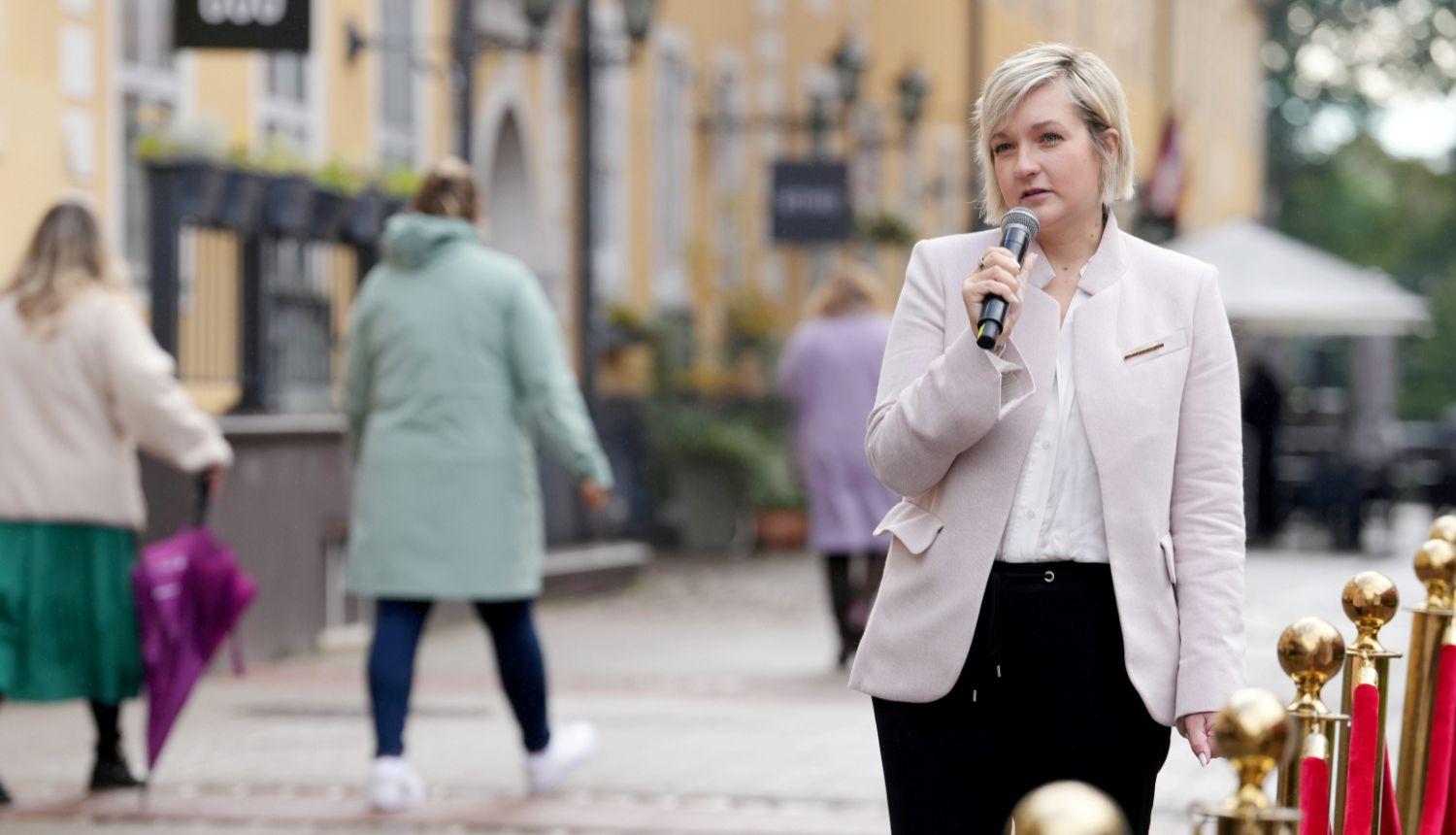
When we opened the outdoor exhibition "Science Street" in Riga this September, the Minister of Education and Science, Dace Melbārde, emphasised that our shared task is to strengthen trust in science and to create an environment where research results form the foundation of social development.
Science is an essential component of a modern, forward-looking society. It provides key elements of progress, data, knowledge, and an informed public capable of using them to form opinions and make decisions based on evidence, not assumptions. Amid disinformation and the allure of quick, simple solutions, we must remember that science helps us make thoughtful choices and that it’s not just “somewhere out there.” It’s also right here, in Latvia. We shape it, it shapes us, and it works for our benefit.
The Work of Latvian Scientists – Visible and Tangible
Throughout the campaign "Science and Your Life: Notice and Understand!", we are introducing the public to the results of national research programs, the work of scientists that directly affects our health, safety, language, environment, and quality of life.
Latvian scientists are developing artificial intelligence tools to improve efficiency in cooperation between the state and businesses, creating methods to assess adolescents’ mental health after the pandemic, advancing digital language resources, studying social cohesion and how to strengthen it to ensure a safe society, and developing sustainable resource use in agriculture, providing secure and diverse food for everyone.
These projects prove that science is not limited to laboratory experiments. It is practical, socially meaningful work that drives innovation, solves problems, and creates new opportunities.
Science Is a Story of Curiosity, Patience, and Trust
Whatever is being studied, the heart of science is always the human being who conducts research and benefits from it. Science is a long process; along the way, failures and setbacks may raise the question: Is it worth it? The answer is yes, for many reasons, but most importantly because our scientists consistently demonstrate expertise, professionalism, international recognition, and an enduring curiosity to understand ongoing processes and address important social challenges.
Their work is recognised across Europe. They participate in international organisations such as CERN and the European Space Agency and secure funding from the Horizon Europe program. This proves that Latvian science can compete globally provided it receives trust and support.
However, public understanding of how science works and why its results are not always immediately visible is still lacking. Scientific progress takes time; knowledge must first be created, tested, and refined before it can be applied and integrated sustainably, for example, in medicine and beyond. It’s a process requiring patience, precision, and long-term thinking.
That’s why it’s challenging to stand against populist and superficial claims questioning research topics or the need for funding. And that’s why it’s our collective responsibility to explain, share, and show what scientists do and how their work impacts everyone.
A Joint Effort to Inform Society
Promoting science is a shared responsibility of the state, scientific organisations, and scientists. Researchers must communicate their work clearly, share discoveries, and show how their efforts shape society. Meanwhile, the state must ensure transparent funding, open project evaluation, and support across all stages of research from fundamental studies to practical applications.
By coordinating national research programs, the Latvian Council of Science oversees a broad range of projects, from bioeconomy and medicine to digital humanities. We can confidently say that Latvian science is diverse, purposeful, and firmly grounded in the future.
Scientific funding is not an expense but an investment in our country’s security, prosperity, and future. In recent years, we’ve seen a positive trend - growing business involvement in research and successful commercialisation of results, as well as increased activity among ministries in developing new research programs and evidence-based policies.
Our goal is to continue this growth, because knowledge and innovation are the keys to national competitiveness.