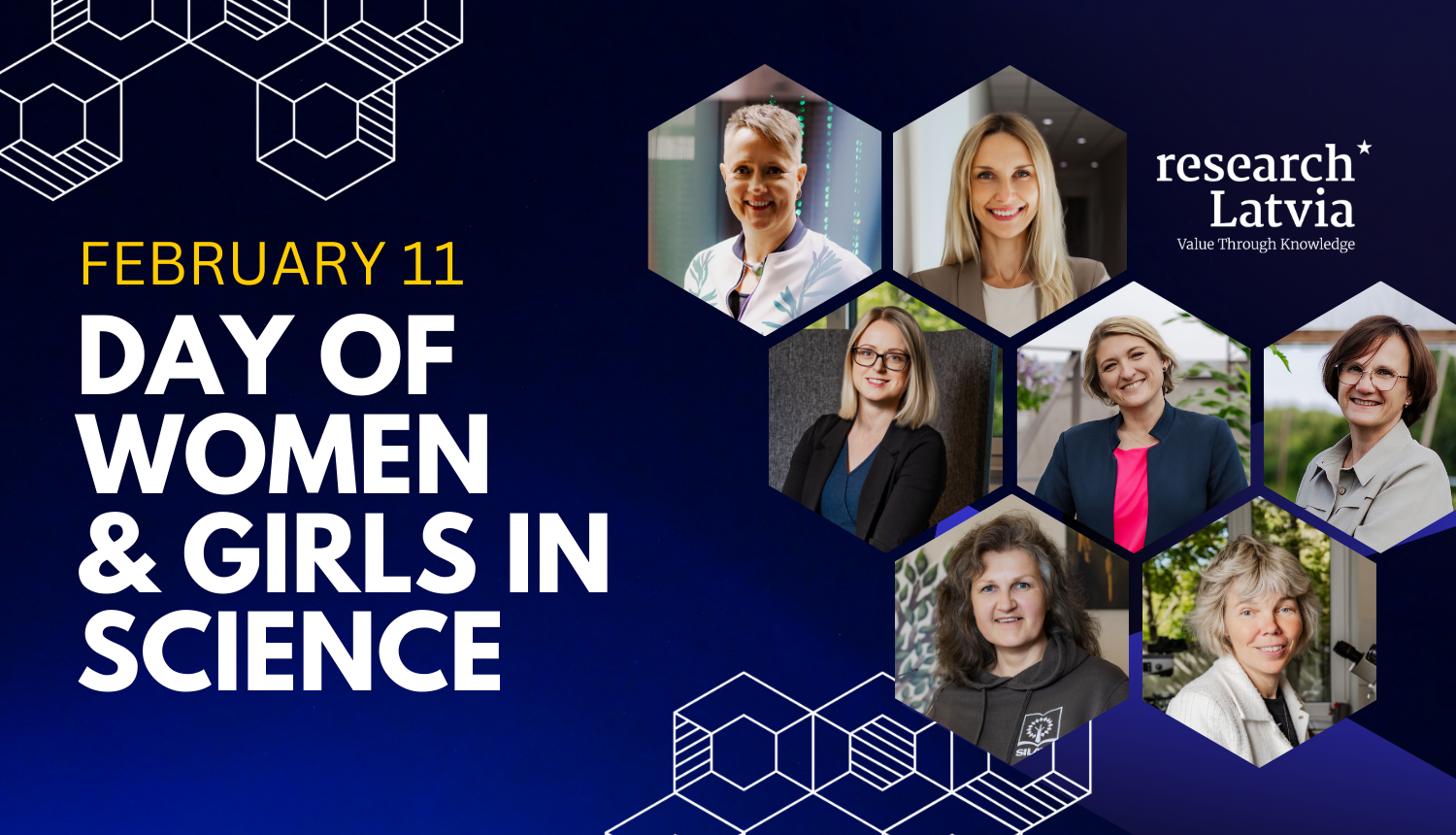
The International Day of Women and Girls in Science is celebrated on 11 February each year, highlighting the achievements of women researchers and inspiring future generations of female scientists to pursue careers in science. We have a special reason to be proud, as Latvia ranks among Europe’s leaders in gender equality specifically in the field of science.
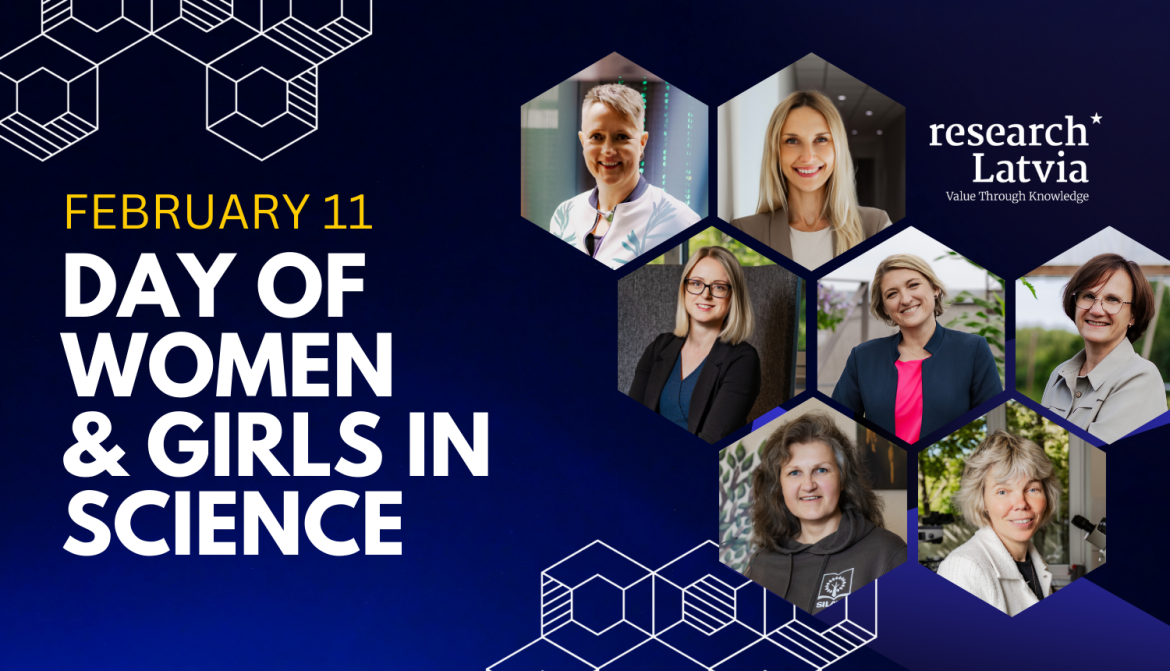
Below is a summary of the latest data on women in science in Latvia, including inspirational quotes from researchers featured in the “Research Latvia 2026” calendar created by the science communication platform researchLatvia.
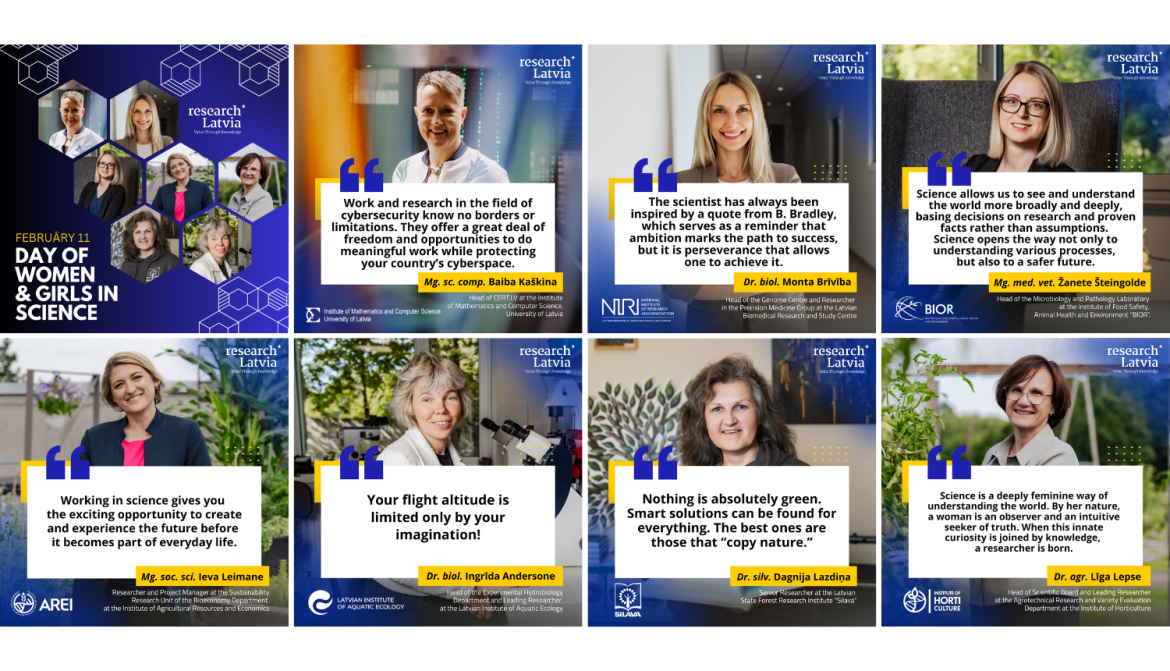
“Science allows us to see and understand the world more broadly and more deeply, basing decisions on research and proven facts rather than assumptions. Science opens the way not only to understanding various processes, but also to a safer future,” says Mg. med. vet. Žanete Šteingolde, Head of the Microbiology and Pathology Laboratory at the Institute of Food Safety, Animal Health and Environment “BIOR” and the March personality of the “Science for Latvia 2026” calendar.
The latest data from the European Commission (Eurostat, 2026) show that 50.9% of scientists in Latvia are women — the fourth highest index among 38 European countries. We are 10 percentage points above the EU average (40.5%) and among the 14 countries that have already achieved gender balance among researchers.
In the dimension of career development, Latvia scores 100 out of 100. This means that women and men in our country have completely equal opportunities to pursue and advance academic careers.
“Working in science gives you the exciting opportunity to shape and experience the future before it becomes everyday reality,” encourages Mg. soc. sci. Ieva Leimane, researcher at the Sustainable Agriculture Research Unit of the Bioeconomy Department at the Institute of Agricultural Resources and Economics and the August personality of the “Science for Latvia 2026” calendar.
In the 55+ age group of scientists, men are proportionally more represented (40%) compared to women (32%). However, among younger researchers the situation is balanced, indicating positive trends for the future. Across the European Union, the current trend shows a faster increase in the number of women scientists compared to men. In Latvia, the growth rate is almost the same (1.9% per year for women, 2.0% for men), precisely because we are already close to balance. Other countries still have progress to make.
Latvian women scientists have successfully proven themselves not only nationally but also internationally, leading Horizon Europe projects, participating in European Research Area working groups, and collaborating within European Strategy Forum on Research Infrastructures (ESFRI) and ERIC consortia. Their scientific work ensures open access to high-quality research infrastructure and enhances the quality of European research by attracting top scientific talent from around the world.
Dr. agr. Līga Lepse, Chair of the Scientific Council of the Institute of Horticulture and the July personality of the “Science for Latvia 2026” calendar, emphasizes: “Science is a deeply feminine path to understanding the world. By her nature, a woman is an observer and an intuition-guided seeker of truth. When this natural curiosity is combined with knowledge, a researcher is born.”
On behalf of the science communication platform researchLatvia, we invited the researchers featured in the “Research Latvia 2026” calendar to inspire others to pursue a career in one of the fields of science.
Our international presence is further strengthened by the ERDF project “More Efficient and Smarter Implementation and Governance of Latvia’s Science Policy.” Within the framework of the project, the science communication platform researchLatvia operates to promote Latvia’s scientific achievements and foster international cooperation. One of its goals is to build strong connections with Latvian diaspora scientists by adding new profiles to the database each year. We invite scientists working both in Latvia and abroad to share their experience on a daily basis, as this is a unique way to demonstrate that Latvia’s research environment is a place where talent and dedication are valued regardless of gender.
_______
This article was prepared within the framework of ERDF project No. 1.1.1.1/1/24/I/001 “More Efficient and Smarter Implementation and Governance of Latvia’s Science Policy.”