This year, nine million euros have been allocated by the state for scientific research in the agricultural sector. A significant portion of the funding is dedicated specifically to laboratory renovations and equipment replacement. The priority research areas include plant health, productivity, environmental protection, as well as food quality and safety. The Latvian Radio explored the research on agricultural pollution being planned and already underway at the University of Life Sciences and Technology.
What scientists are studying in water samples
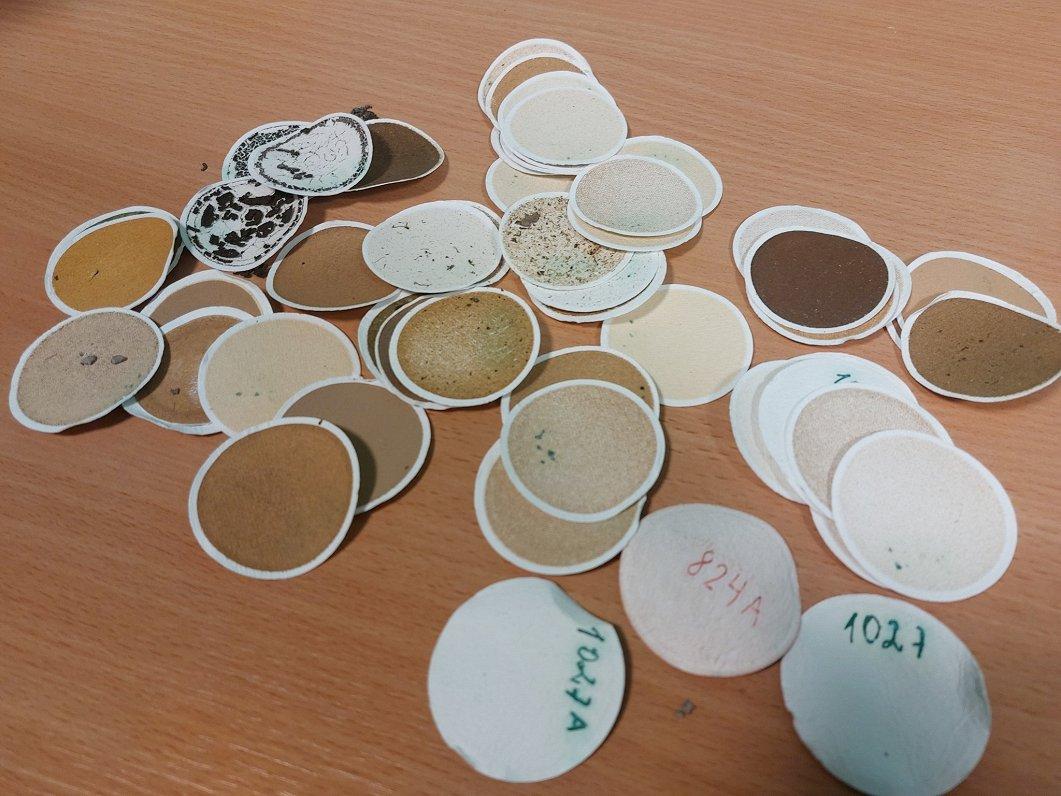
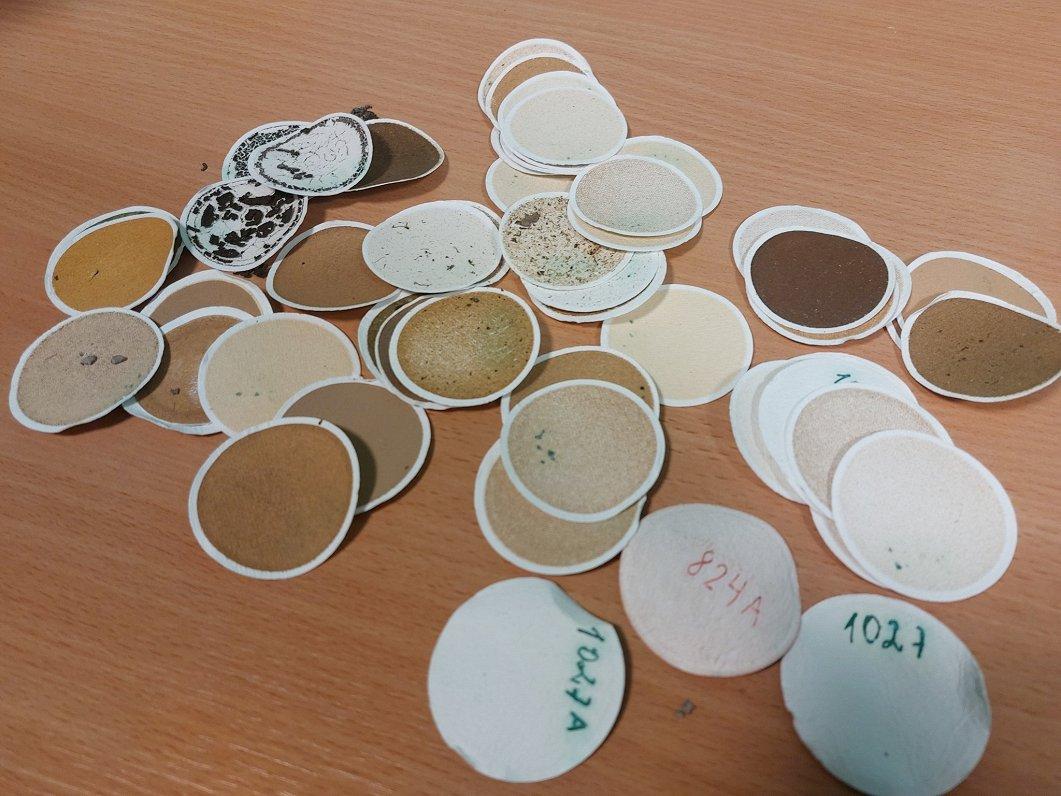
"We currently have water samples collected from artificial wetlands, both before and after. By filtering these samples, we can see how these wetlands reduce the amount of transported particles," explained Ainis Lagzdiņš, head of the Forest and Water Resources Science Laboratory at the University of Life Sciences and Technology, showing water samples in which they study the impact of various environmentally friendly drainage systems on water quality.
Artificial wetlands are human-made areas that replicate the function of natural wetlands in purifying various wastewater, including agricultural pollution.
"Until now, artificial wetlands have shown excellent results, particularly in reducing the concentrations of nitrogen and phosphorus compounds. But this also depends on the construction of the artificial wetlands, what kind of water is being purified, whether it's agricultural runoff collected by drainage systems and then directed to open watercourses, or the second option, where we also study rainwater collected from solid coverings of animal shelters and how we can purify it," explained Lazdiņš.
In any case, both surface and groundwater wetlands, if properly designed and built, are, according to him, one of the best measures to improve water quality. "Here, one of the water samples was collected before, and the other after the artificial wetland. So visually, we can already see these differences in water quality, and of course, the chemical composition also shows that these are significant differences," explained the head of the research laboratory.
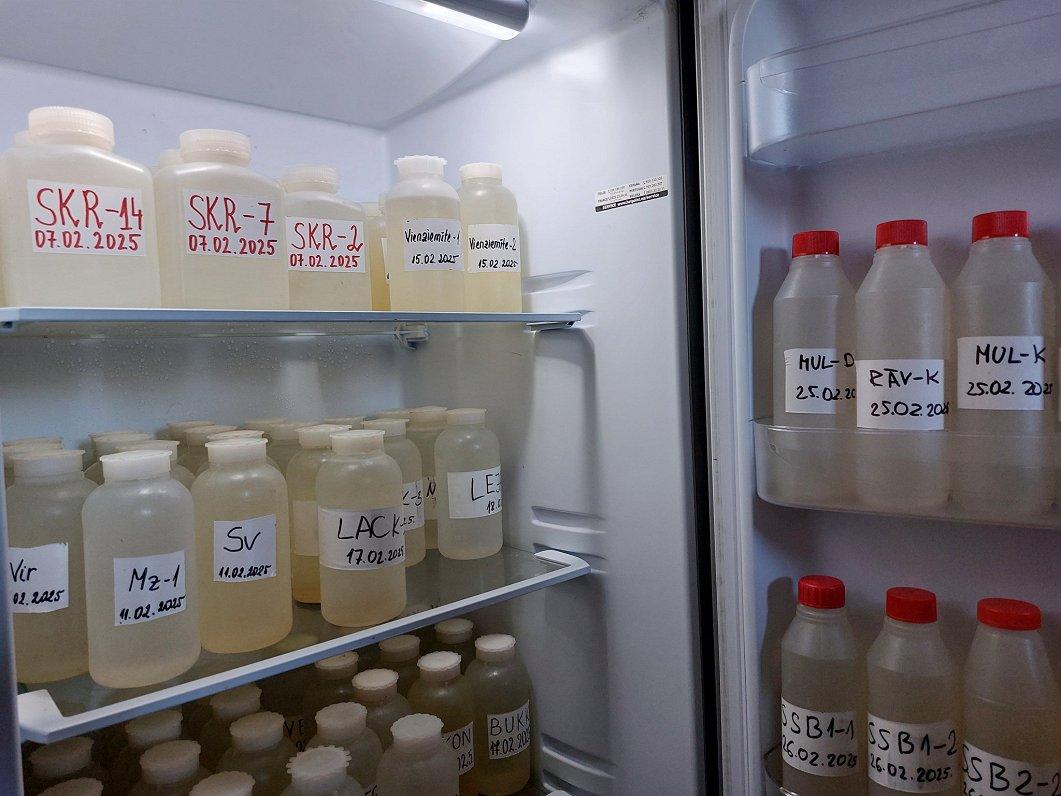
The mentioned water samples were collected from one of the artificial wetland study sites in Jelgava County, but agricultural runoff monitoring samples are taken from around 60 locations across Latvia, as agricultural practices, meteorological, and hydrological conditions differ greatly in different regions. The monitoring has been ongoing for over 20 years, and the data show that the concentration of nitrogen compounds in rivers is gradually increasing, while the presence of phosphorus compounds is declining.
"We see the impact of different agricultural practices on water quality. For example, in one study location, we have a variety of crops that have been planted in recent years, with minimal soil treatment implemented. We see that this was one of the places where the concentration of nitrogen compounds decreased. At the same time, in another study context, we see that by improving the soil pH, we can improve crop yields and also enhance nitrogen fixation.
Thus, we improve both yields and water quality. And then, if we look at the rivers in these particularly sensitive areas, such as Vilce, Vircava, Tērvete, Īslīce, Platone, Svēte, Daumantu Ditch, the values here are mostly very close to zero, indicating that in these places, the nitrate concentrations are stable, neither increasing nor decreasing," said Lazdiņš.
Nine million for research, including laboratory equipment
These and other agricultural sector research conducted last year will be presented in more detail at the Ministry of Agriculture (MA) on Friday. Meanwhile, last week, the government allocated nine million euros for this year's agricultural research, including for the purchase of laboratory equipment.
The Ministry of Agriculture points out that due to climate change, priority research areas are related to innovative cultivation technologies to increase productivity, improve plant health, and resistance to pests and diseases, as well as research on environmentally friendly agricultural practices and food quality. Meanwhile, the Vice-Rector of Science at the University of Life Sciences and Technology, Gatis Vītols, highlights food security as a crucial research area.
"Another area of research that we definitely need to focus on, and which I think is very relevant to our society, is food independence – producing as much food as possible ourselves, especially given our geopolitical situation and the possibility of disruptions in imports from neighboring countries, and how we will survive these times," said Vītols.
In his opinion, unfortunately, Latvia is quite dependent on imports, and there should be a focus on self-sufficiency in agricultural practices. "What we sow, what we do with the harvested crops. And food security is a very important issue because you can buy as many weapons as you want, but if you don't have anything to feed the soldier, at that moment, it will be what it will be," he added.
Additionally, funding for the selection program is significant in the field of food security, as it concerns varieties created and tested specifically for our conditions. A total of four million euros has been allocated by the state for this purpose this year.