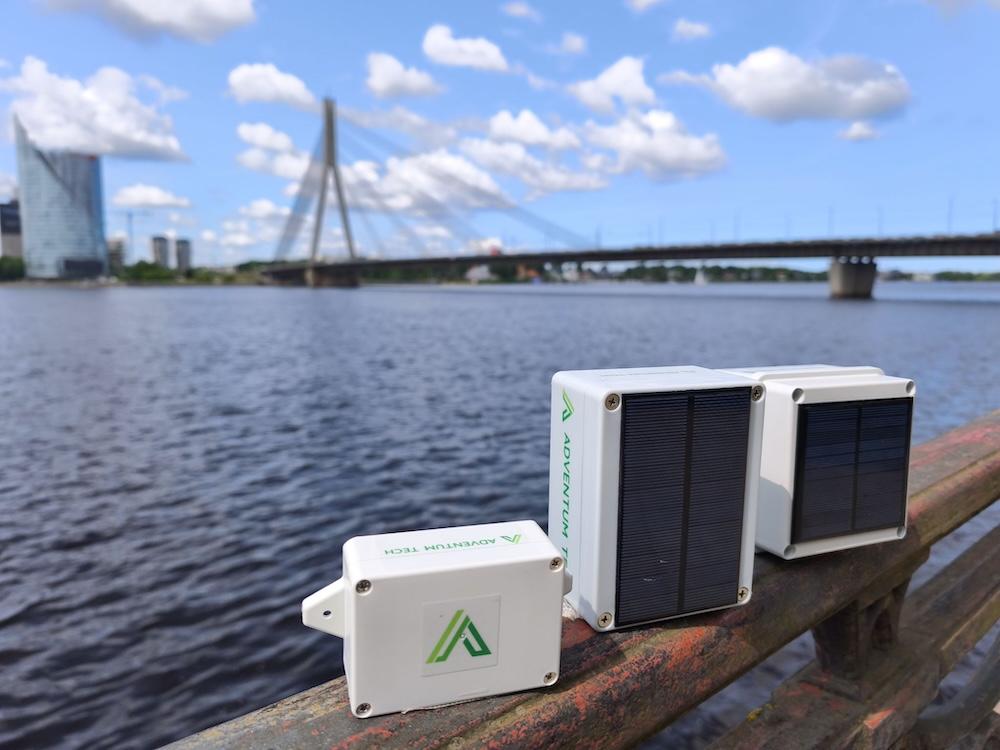
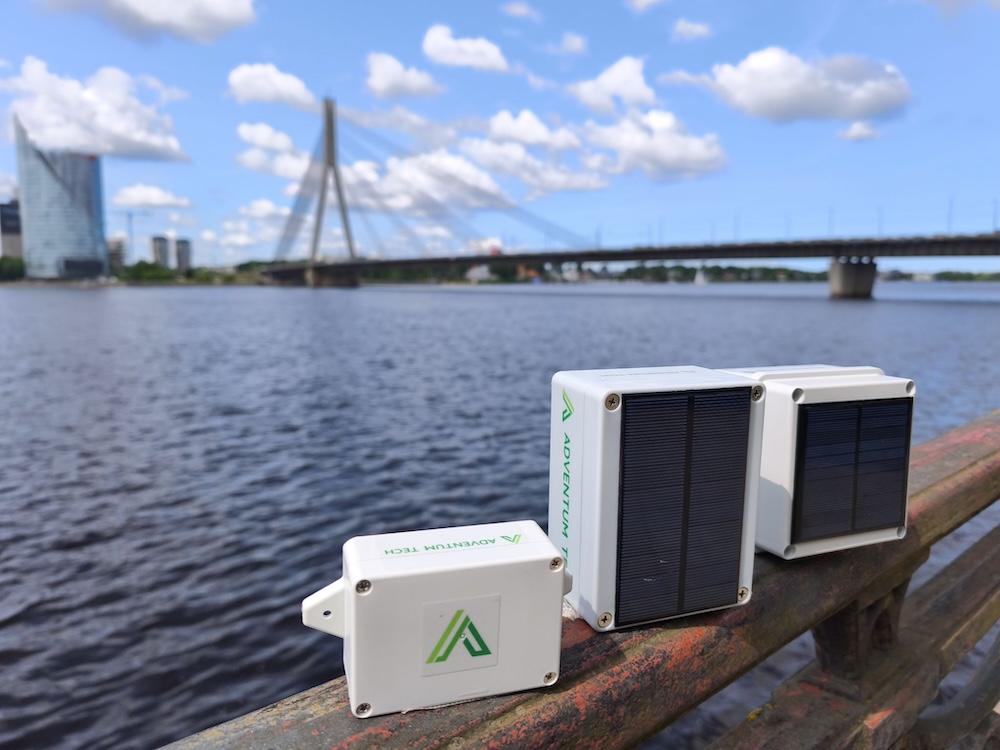
Latvian construction technology startup “Adventum Tech,” in collaboration with the Riga Municipality's Department of Public Outdoor Space and Mobility, will implement its real-time structural performance monitoring system, “Digital Bridge,” on the Vanšu Bridge. The aim of the pilot project is to improve the stability and safety of critically important civil transport infrastructure.
The Vanšu Bridge is one of the busiest bridges in Riga, with nearly 60,000 vehicles crossing it daily, according to data held by the Riga City Municipality. Approximately 33,500 vehicles travel across the bridge from the city center each day, while 26,100 head toward the center. Additionally, more than two thousand pedestrians and cyclists cross the bridge daily.
As part of the pilot project, several three-axis tilt and vibration monitoring sensors will be installed on the Vanšu Bridge. These sensors will be strategically placed in the most heavily loaded areas, particularly near the bridge's supporting cables, to closely monitor the impact of vibrations and the overall structural condition.
The real-time data collected by the sensors will be transmitted wirelessly to Adventum Tech’s analytics platform for in-depth analysis and evaluation. This pilot project will provide comprehensive insights into the bridge's structural condition and ensure transparency of performance under various conditions, including heavy traffic hours, storms, and thermal stress.
Early Detection of Anomalies
Earlier this spring, Adventum Tech and SJSC “Latvijas Dzelzceļš” (Latvian Railways) began a pilot project to monitor noise, structural deformations, and vibrations at several key railway infrastructure sites across Latvia.
The goal of the project is to monitor the dynamic movements of bridge structures using “GroundControl” sensors and to record vibration and noise levels using “QuakeControl” and “SoundControl” sensors. This enables a deeper assessment of both the stability of bridge structures and the impact of train-induced noise and vibrations on surrounding infrastructure.
The real-time data captured by the sensors can help detect anomalies early and prevent potential infrastructure risks.
Monitoring Structural Load
Sensors developed by the construction technology startup Adventum Tech report on structural load. This information helps reduce construction risks and improve worksite safety. The startup’s solution includes custom-developed sensors and a mobile application. Data about site conditions are collected from sensors placed in various parts of a construction site. All information about the load on the structure is delivered to the project team via a smartphone app and computers.
At this year’s “Latitude59” startup competition—part of the Estonian technology conference—Adventum Tech won the opportunity to receive a €250,000 syndicated investment from the Latvian Business Angel Network (LatBAN) and angel investors. The company was also among the top 31 startups at Estonia’s “Startup Day” competition “Startup Pitching 2025.”
In 2023, Adventum Tech won the “Fifty Founders Battle” pitch competition at the startup and technology conference TechChill. In 2020, Adventum Tech’s solution won Swedbank’s sustainability hackathon “Hack for the Future”.