Researchers from Rīga Stradiņš University (RSU) have participated in an ambitious international project, which has created the largest microclimate data network in the history of sports competitions for the 2026 Milan and Cortina Winter Olympic Games. The project was implemented in collaboration with the Hong Kong Baptist University (HKBU), the University of Rome Foro Italico, and the cooperation centers of the International Federation of Sports Medicine (FIMS).

With the support of the Milan Cortina 2026 Organizing Committee, an international team of scientists, including RSU representatives, has established a high-precision meteorological station network, which records and securely transmits microclimate data in real-time during the competitions. As a result, one of the most comprehensive environmental datasets ever collected during the Olympic Games has been created. This project demonstrates that the Olympic Games can become a living laboratory, where the mountain environment is mapped, analyzed, and modeled with scientific precision.
In elite sports, even small environmental changes can affect safety, performance, and the fairness of competition conditions. The project's foundation is an integrated approach that connects three elements—environment, athlete, and equipment—into a unified system. The environmental pillar created for Milan Cortina 2026 serves as the basis for integrating data with biomechanical, physiological, and cognitive performance indicators, using artificial intelligence. This approach marks a paradigm shift in sports medicine—from reactive situation assessment to predictive, data-driven intelligence.
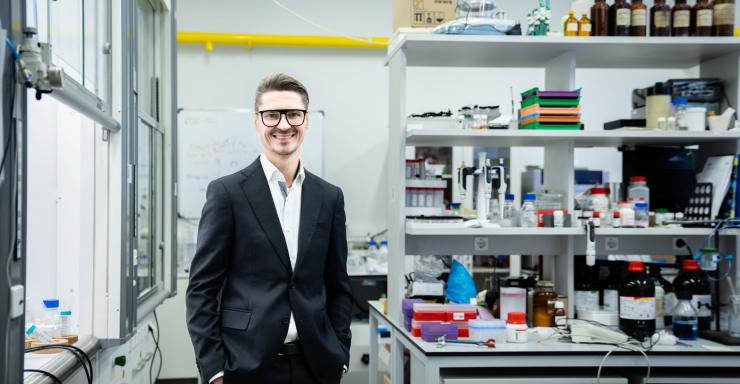
A key contributor to the project is Dr. Sandra Rozenštoka, a researcher at the RSU Institute of Public Health and head of the Sports Laboratory Clinic. Under her leadership, data on athletes' health and functional abilities is analyzed both before and during competitions, integrating real-time environmental information into practical recommendations for coaches and athletes.
"My daily work involves working with athletes—from detailed health assessments to treating injuries and overload. Real-time studies with high-precision sensors are crucial because an athlete never replicates competition intensity in a clinic. At the Olympics, they compete with maximum motivation and effort, and in these moments, it is essential to understand how the environment impacts their health and performance," says Dr. Dr. med. Sandra Rozenštoka.
The monitoring infrastructure established for Milan Cortina 2026 will serve as the foundation for a living laboratory over the next four years, allowing for the refinement of environmental intelligence solutions and predictive systems. This methodology can also be applied to other disciplines—both winter and summer sports—and will become important in preparation for the 2028 Los Angeles Games and other international sports events.
Professor Yannis Pitsiladis states, "Our mission is to build intelligent ecosystems where artificial intelligence integrates environmental data, athlete performance, and equipment parameters. To protect athlete health and ensure fair sport, decisions must be based on real-time scientific data. The Milan Cortina Games prove that this is possible."
The Milan Cortina 2026 project demonstrates that research and innovation can play a central role in the Olympic competitions. The involvement of RSU researchers in this initiative strengthens the international visibility of Latvian science and makes a practical contribution to the development of safer, fairer, and data-driven high-performance sports. RSU's involvement in the project is also linked to the EU-funded research initiative grant, "The Impact of Sports on Neck Functional Abilities, Movement Stereotypes, and Health Risks in Sport and Para-sport," which is being implemented as part of the RSU and RSU LSPA consolidation project.