Applications are now open for the European Space Agency (ESA) introductory course on big data use in Earth observation, which will take place from September 22 to 26 at the Academic Center of the University of Latvia in Riga. Organized by the Ministry of Education and Science of Latvia, the training will provide participants with fundamental knowledge and practical skills in working with satellite data, including its processing and applications in environmental research and innovation. Applications are open until July 15.
This is a unique opportunity for professionals from the Baltic space sector to strengthen their expertise and learn how to use Earth observation data in research and innovation through lectures led by ESA experts. The course is primarily intended for researchers, university faculty, and PhD students from the Baltic states, but industry representatives, including startups interested in enhancing their Earth observation data capabilities and commercial applications, are also welcome to apply.

“This training is a major opportunity for the Baltic countries. By bringing world-class Earth observation experts to Riga, we are strengthening regional capacity, supporting educators, and inspiring the next generation of researchers and innovators,” says Kaspars Karolis, Head of the Latvian Delegation to ESA and Space Sector Expert at the Ministry of Education and Science.
The five-day free course will include lectures, hands-on sessions, seminars, and discussions.
Main topics:
- Introduction to Earth observation and big data;
- Processing of Earth observation data;
- Artificial intelligence and machine learning for Earth observation;
- Business development and innovation in Earth observation;
- Emerging technologies.
Applications are open until July 15 via an online form. Participants will be confirmed by July 31. There are 30 places available for full-week participation, and an additional 30 spots for attending individual sessions. PhD students may also apply for a 550 EUR ESA Academy scholarship to cover course attendance. Priority will be given to applicants from the Baltic states. More information is available on the Latvia Space portal.
“With this course, ESA offers participants the chance to be at the forefront of European Earth observation science and technology,” emphasizes Anca Anghelea, ESA Open Science Platform Engineer and one of the main course organizers.
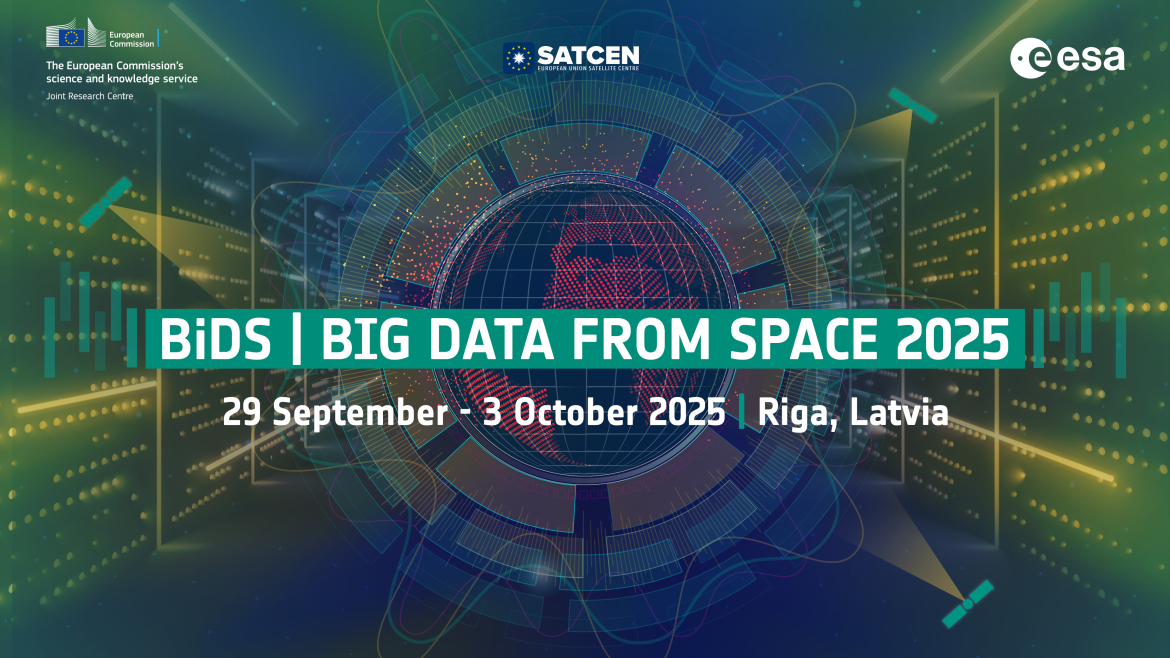
The ESA Earth Observation Data Training Course will also serve as a lead-in to the international “Big Data from Space 2025” conference, for which registration is already open. Taking place in the Baltic Sea region for the first time, the conference will be held the following week – from September 29 to October 3. The programme includes workshops and hackathons at the University of Latvia (September 29–30), followed by a wide range of activities at the National Library of Latvia (October 1–3): an industry exhibition, panel discussions, poster sessions, B2B meetings, and live demonstrations. Throughout all days of the conference, an intensive code sprint will also be running in parallel.
The Earth observation training course is organized by ESA and the Ministry of Education and Science, in cooperation with the Institute for Environmental Solutions, as part of the ERDF project No. 1.1.1.1/1/24/I/001 “More Efficient and Smarter Implementation and Governance of Latvia’s Science Policy”.
--
About the European Space Agency
The European Space Agency (ESA) is an international organization dedicated to the development of European space capabilities. Latvia joined ESA as an associated member in 2020. With 22 full members and four associated members, ESA gives Latvia access to the European and global space industry network, opening up opportunities to develop technologies used both in space and on Earth.