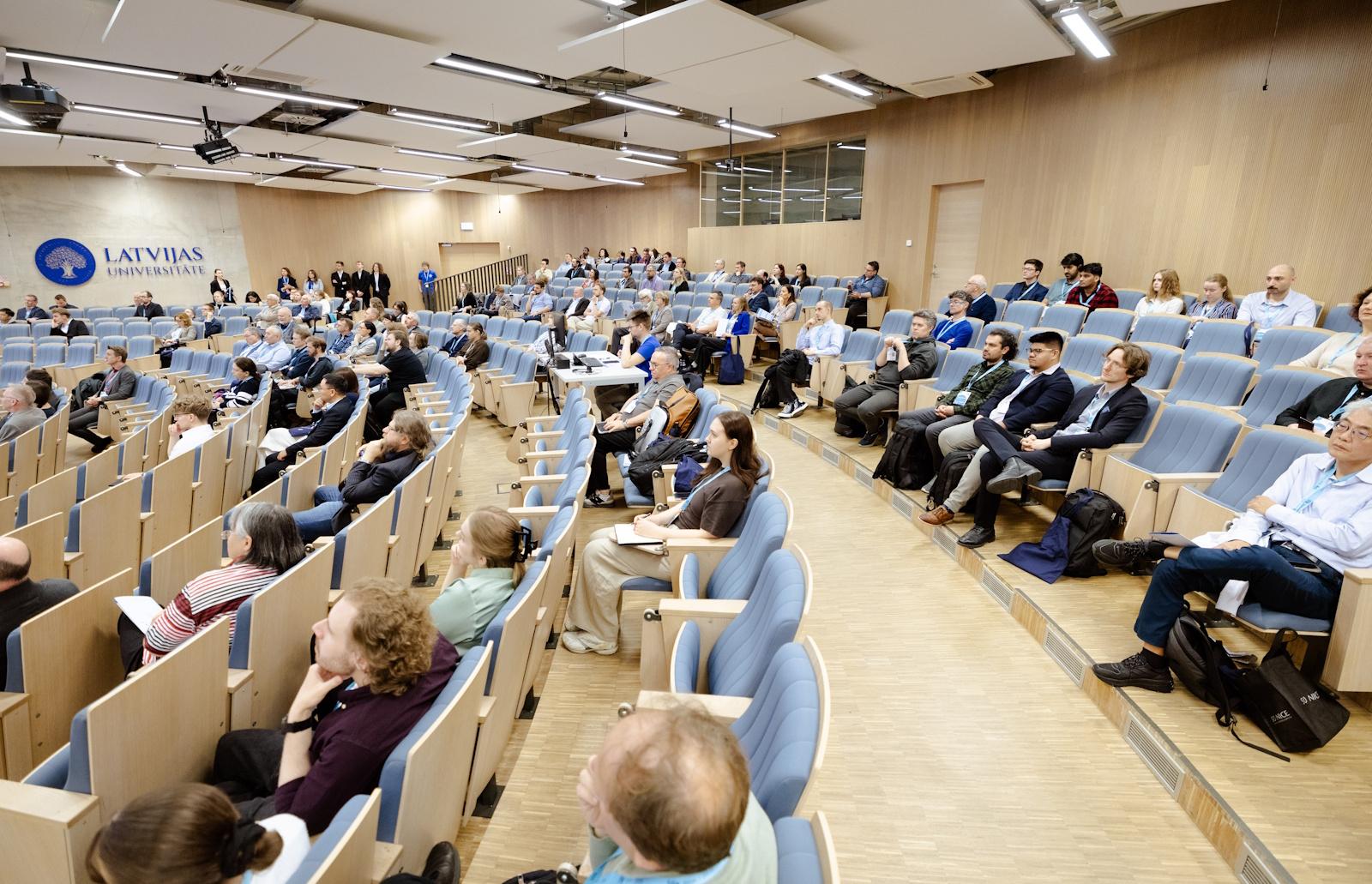
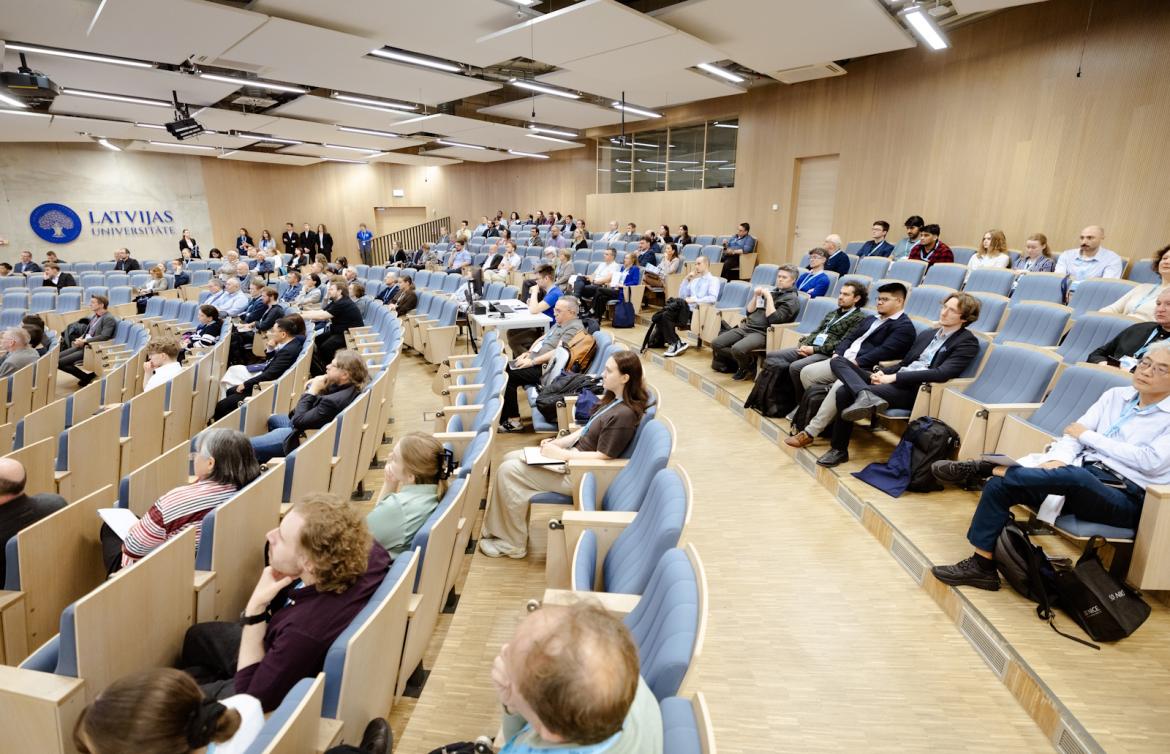
The 16th international conference “Functional Materials and Nanotechnologies” or FM&NT 2026 has begun in Riga. The event will take place over four days at the University of Latvia House of Science, bringing together more than 200 scientists, engineers, industry representatives and policymakers from Europe and around the world to share the latest discoveries, present current research results, and sow the seeds for collaboration and future innovations.
Since the Institute of Solid State Physics of the University of Latvia (LU CFI) began organizing the FM&NT conference in 2006, it has become one of the most significant scientific forums in the Baltic and Nordic region dedicated to functional materials, nanotechnologies and related devices. The main goal of the conference is to strengthen European research and innovation by promoting international cooperation and broad discussions on the latest scientific achievements and directions of technological development.
At the opening of the conference, Parliamentary Secretary of the Ministry of Education and Science Ieva Siliņa emphasised: “For Latvia, science and innovation are not abstract priorities – they are the foundation of the country’s development. Conferences such as FM&NT demonstrate how close cooperation between universities, research institutes and industry can create real impact. They also show how regional cooperation, particularly in the Baltic and Nordic region, can significantly contribute to the development of the broader European research ecosystem.”
The conference covers a diverse and interdisciplinary range of topics that are essential to the development of modern technology and science. Special sessions and expert discussions will be devoted to topics such as:
- Materials for Energy: The latest advances in batteries, supercapacitors, hydrogen energy and nuclear energy.
- Materials for Photonics: Discoveries in light emission, detection, transformation and quantum photonics.
- Ferroelectrics and Functional Materials: Research into inorganic, organic, hybrid and low-dimensional materials, as well as van der Waals and topological ferroelectrics.
- Microfluidics and Biomedical Technologies: Innovations in organ-on-chip and lab-on-chip systems, biosensors, micro/nano sensing, microrobotics and advanced biomaterials.
- Theoretical Modelling of Functional Materials and Devices: The application of artificial intelligence and predictive modelling to the development of next-generation materials.
- Technologies and Devices: Insights into nanotechnologies, sensors, thin films, functional coatings, fibre optics and lasers.
- Large-Scale Research Infrastructure, Science Policy and Cooperation: Strategic discussions on synchrotrons, neutron sources, FP10 (the next European framework programme for research and innovation), and the development of regional innovation ecosystems.
The extensive scientific programme includes plenary and invited lectures by world-renowned experts, oral and poster presentations, thematic workshops, and even a Demo Zone, providing broad opportunities for gaining new insights and networking.
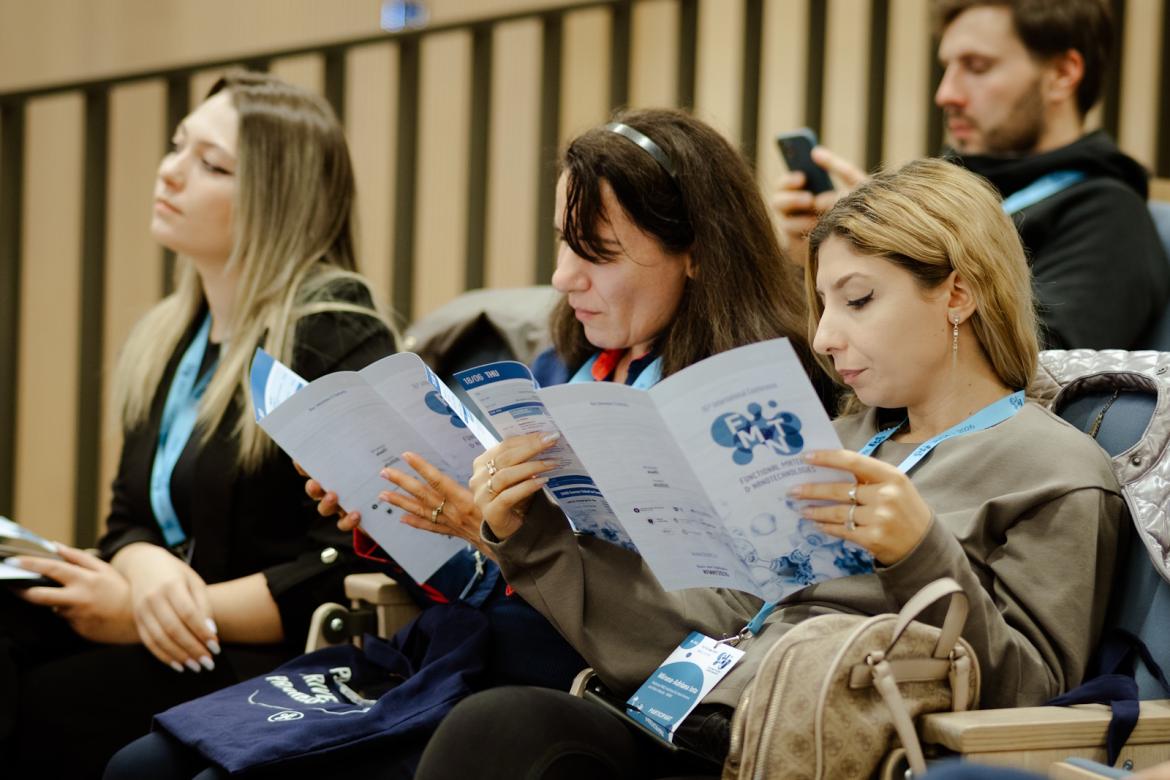
Reflecting the strong spirit of regional cooperation, the FM&NT 2026 conference is jointly organised by leading Baltic academic and research institutions:
- Institute of Solid State Physics, University of Latvia (ISSP UL)
- University of Latvia
- University of Tartu
- Vilnius University
About the Institute of Solid State Physics, University of Latvia (ISSP UL)
The Institute of Solid State Physics, University of Latvia, is an internationally recognised leading research centre in Latvia in the fields of materials science and interdisciplinary research. The Institute provides top-level scientific expertise, develops innovative and sustainable technologies for the benefit of society, and purposefully invests in public education and in attracting future generations of engineers and scientists.