An opportunity to receive remuneration and spend three months conducting research for a master’s thesis at the Swiss Federal Laboratories for Materials Science and Technology (Empa) – this is what the Faculty of Civil and Mechanical Engineering of Riga Technical University (RTU) is offering students in a newly announced competition. Master’s student positions have been announced within the LACHMAT project of the Swiss-Latvian Cooperation Programme “Applied Research”.
From September, the Institute of Civil Engineering of the RTU Faculty of Civil and Mechanical Engineering is offering a master’s thesis position under the supervision of Associate Professor Viktors Haritonovs and Mārtiņš Zaumanis, Head of the Bituminous Materials Group at Empa; the master’s thesis topic is “Interaction of Bitumen Emulsion and Rejuvenating Additives in BSM Layers with High RAP Content”. More information.
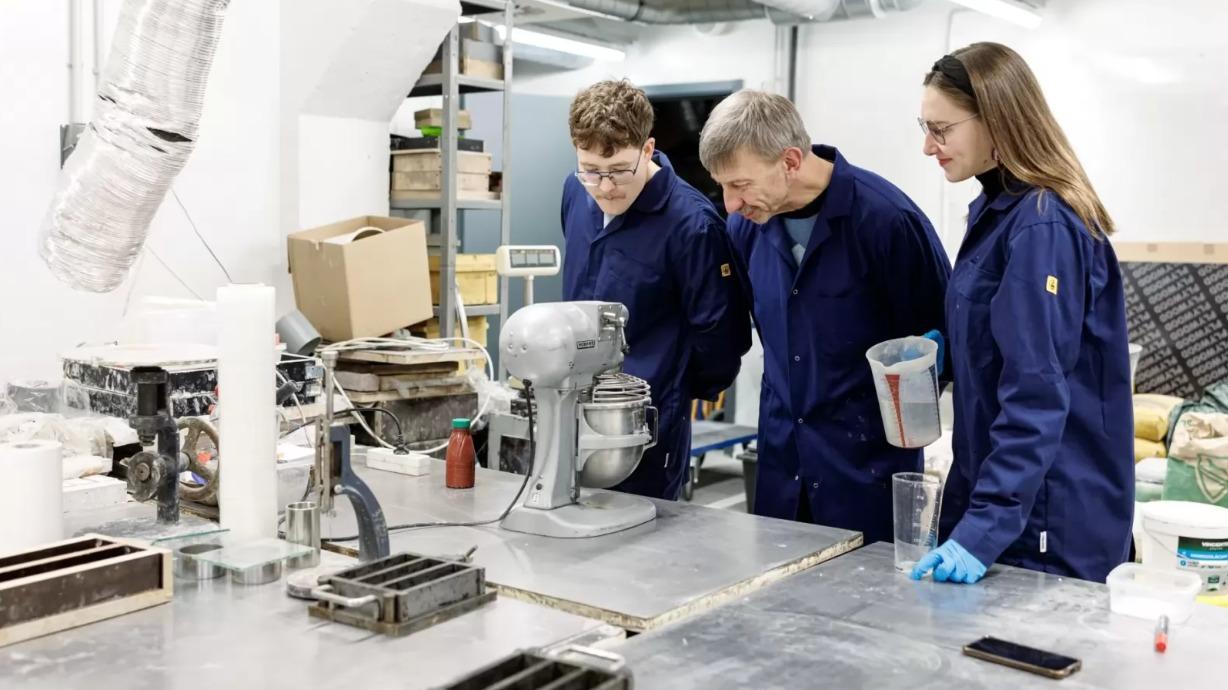
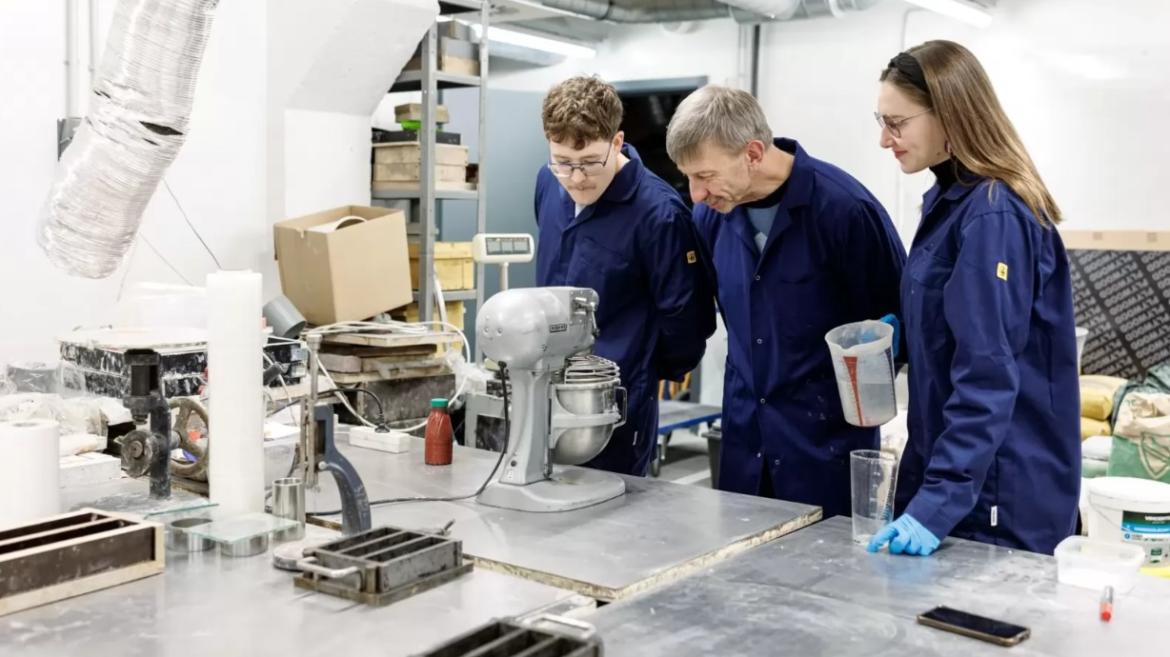
Meanwhile, the Faculty’s Institute of Sustainable Building Materials and Engineering Systems is offering two master’s student positions – starting in October and December. Under the supervision of RTU Leading Researcher Genādijs Šahmenko and Empa researcher Nikolai Toropov, students will have the opportunity to develop a master’s thesis titled “Spatial Changes in Ultra-High-Performance Fibre-Reinforced Concrete (UHPFRC) for Spraying Technology”. More information.
Under the supervision of N. Toropov and RTU Associate Professor Māris Šinka, students will also have the opportunity to develop a master’s thesis titled “Development of Optimized Columns Using 3D Concrete Printing Technology with Sustainable Local Raw Materials”. More information.
To apply for the positions, candidates must hold a bachelor’s degree in civil engineering, transport infrastructure engineering, materials science, or an equivalent qualification, and have an interest in engaging in research by working in a laboratory, compiling and analysing results, and writing scientific publications. Applicants are invited to send a motivation letter confirming their willingness and interest in researching the defined topic, together with a CV, to lachmat@rtu.lv
By participating in the LACHMAT project, master’s students will receive remuneration of 12 euros per hour/160 hours per month and will also spend three months in Switzerland, working in Empa laboratories and gaining new experience focused on research and innovation. Cooperation with Swiss colleagues will ensure knowledge exchange, access to the latest academic, scientific, and technological knowledge, broader insight into international scientific cooperation, opportunities to build professional contacts, improve the quality of scientific publications, etc.
The first two RTU students, Rūta Anna Kinta and Aivars Kļavinskis, who conducted research in Switzerland at the beginning of this year, have already defended their master’s theses, receiving very high evaluations. Both plan to continue their research at the doctoral level.
Scientists from the RTU Faculty of Civil and Mechanical Engineering and the Faculty of Natural Sciences and Technology, working closely both with one another and with Empa researchers, are implementing the LACHMAT project of the Swiss-Latvian Cooperation Programme “Applied Research”. Within the cooperation, technologies are being improved for reusing road pavement materials and adding bio-based additives in asphalt production, making the road construction industry more environmentally friendly, as well as for developing ultra-high-performance sprayed concrete, which will make it possible to extend the service life of buildings and structures while reducing the need for reconstruction. The development of sensor technologies to be embedded in road surfaces is also continuing, so that data can be used both to track changes in pavement condition and developments in road traffic, and to help roads adapt to climate change. Meanwhile, to promote the sustainability of 3D-printed concrete, scientists are developing concrete mixtures using locally sourced minerals. More information.
The “Applied Research” programme is part of Switzerland’s contribution to EU Member States aimed at promoting scientific excellence, innovation, and economic development. A total of EUR 12.3 million is available under the programme for the development of science and research in Latvia, providing opportunities to implement significant projects, create innovations, and strengthen international cooperation.