Today, in organic agriculture, food safety is ensured not only by certification but also through in-depth research and strict product control. Researchers at the Institute for Environmental Solutions (IES) have completed a significant stage of their study on the “Transfer of Pyrrolizidine Alkaloids (PA) from Weeds to Soil and Medicinal Plants.”
From laboratory and pot experiments to 33 hectares of organic farmland
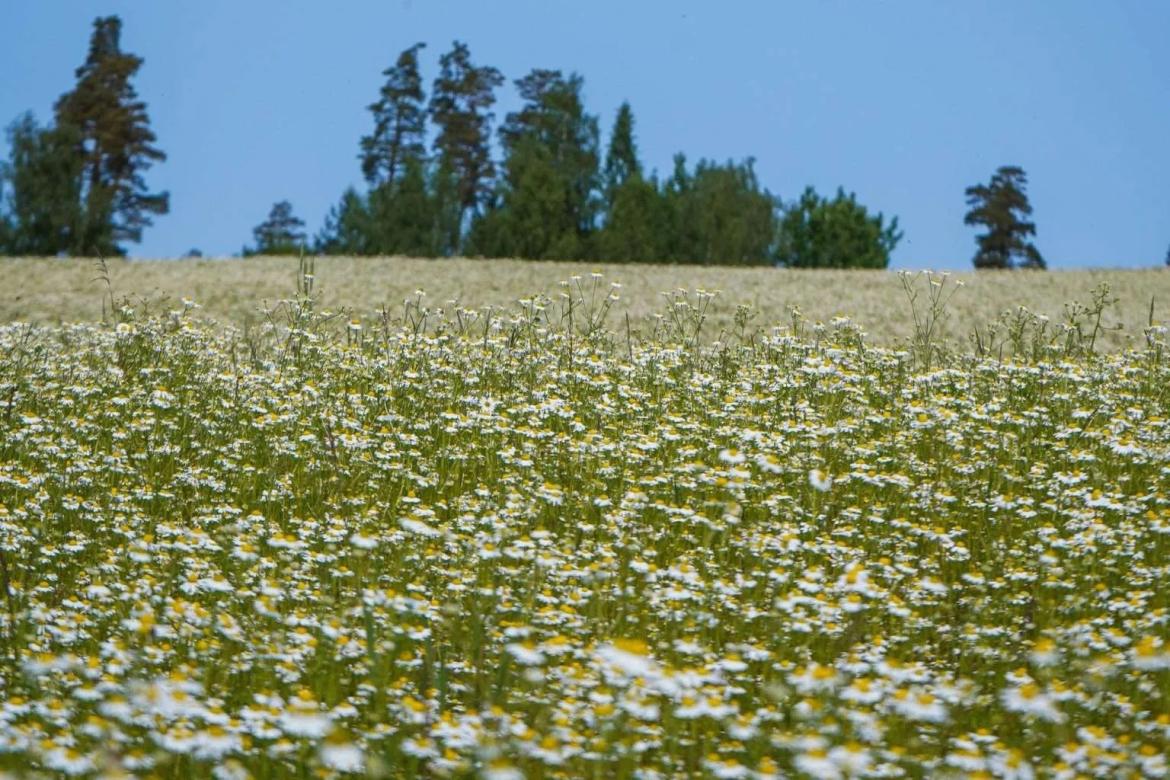
To test the hypothesis of PA “horizontal transfer” (the possibility that toxic compounds from weeds enter cultivated plants through the soil), extensive monitoring was carried out under real organic farming conditions during the flowering and harvesting period of chamomile:
- Location: Three organic farming fields in Northern Vidzeme
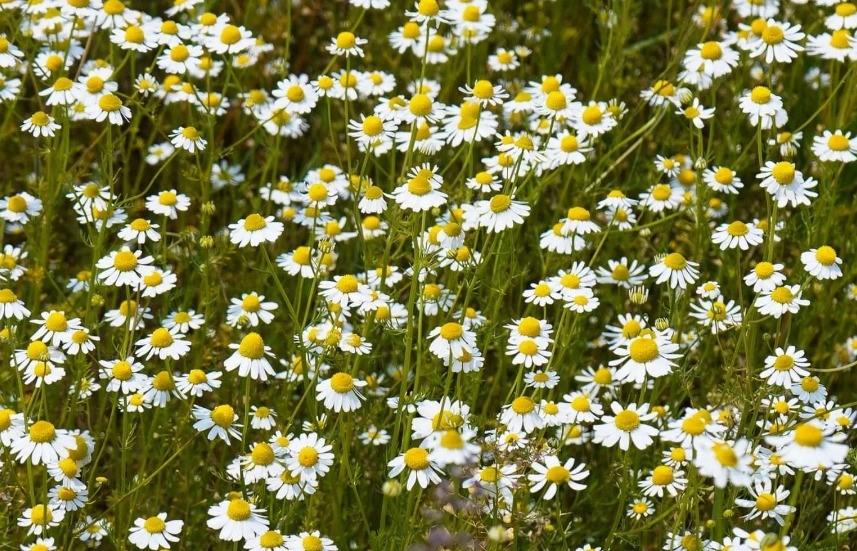
- Crop: German chamomile (Matricaria chamomilla L.)
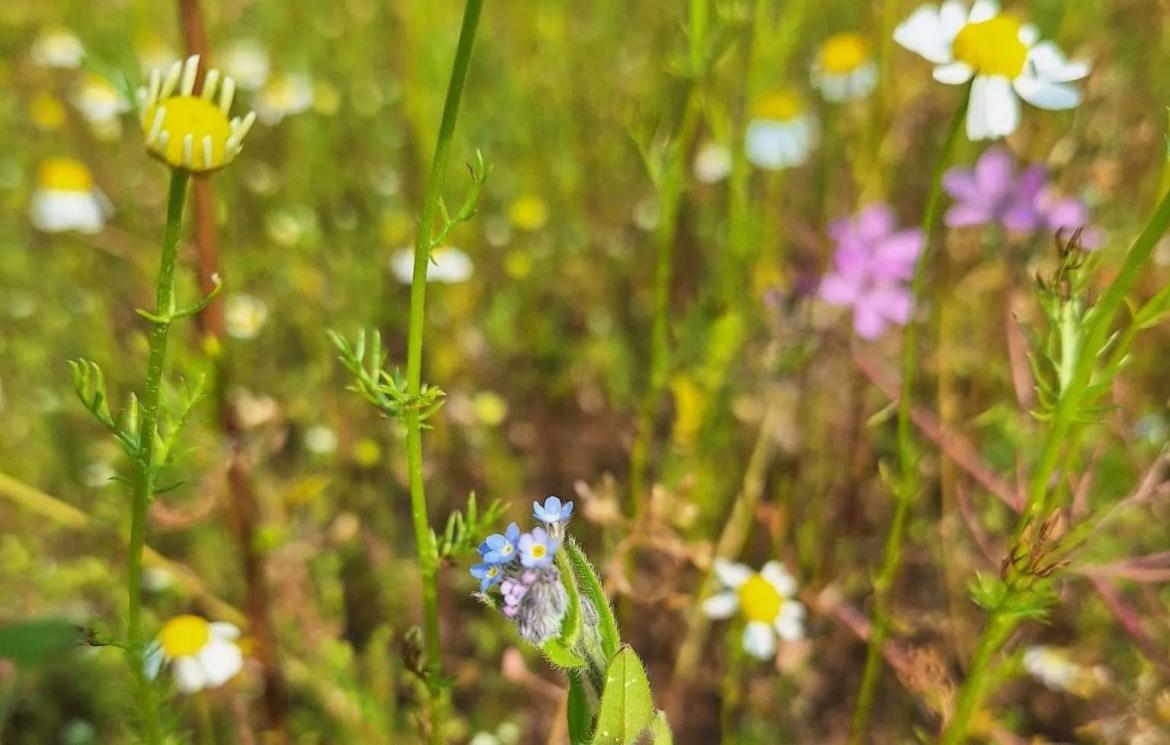
- Focus: The most common PA-containing weeds — field forget-me-not (Myosotis arvensis), small bugloss (Anchusa arvensis), and common alkanet (Anchusa officinalis)
Field Study Results Indicate That Chamomile Does Not Contain PAs
The study results are encouraging. Pyrrolizidine alkaloids (PAs) were not detected in any of the analyzed chamomile samples, even in plants growing in close proximity to PA-containing weeds. This indicates that under natural growing conditions, the transfer of these toxins through the soil — or by any other pathway — was not observed.
Where Does the Real Risk Lie?
Although the transfer of these toxins through the soil was not detected, researchers identified another risk factor for contamination — mechanical harvesting.
“A detailed analysis of weed biomass and height showed that PA concentrations are not evenly distributed within the plants. The highest toxin concentrations were found in the upper parts of the plants, which partially overlap with the harvesting height of medicinal chamomile,” explains the Institute’s lead researcher, Dr. Chem. Ilva Nakurte. “This means that the most significant contamination risk arises during mechanical harvesting, if PA-containing weeds are collected together with the crop.”
The results of this study show that, although scientific literature describes the possible transfer of PAs through soil (see IES study on PA presence in soil), under real field conditions the main risk in medicinal chamomile production is related to technical contamination during harvesting.
Why Is This Important for Consumers?
European Union legislation (EC Regulation 2023/915) sets strict maximum limits for PA concentrations in food, as these compounds may negatively affect human health. They are known to be hepatotoxic and potentially carcinogenic. Studies like this make an important contribution to ensuring safe and high-quality organic production, while confirming the importance of responsible, evidence-based agricultural practices. This research stage provides scientific confirmation that medicinal chamomile grown under organic conditions is safe and does not contain toxic PAs, indicating a very low risk of PA transfer under natural cultivation conditions.
Technological Efficiency and Future Solutions
The data obtained in this study open up new perspectives for optimizing the cultivation and harvesting processes of medicinal plants. Researchers conclude that harvest purity largely depends on the precision of technical processes. From a scientific standpoint, improving crop quality is possible by considering the distribution of PA-containing weed biomass and alkaloid concentrations across the vertical zones of the plant. In practice, this provides justification for adjusting the cutting height of medicinal plants and implementing systematic field monitoring before harvest. The risk of mechanical contamination can be reduced by introducing innovative selective solutions. This includes adapting new technologies and optical recognition systems (AI and sensors) into harvesting equipment, enabling real-time separation of the crop from unwanted weed biomass.
The study was conducted within the framework of the project “Transfer of Pyrrolizidine Alkaloids from Weeds to Soil and Medicinal Plants” (No. lzp-2022/1-0543) with support from the Latvian Council of Science.