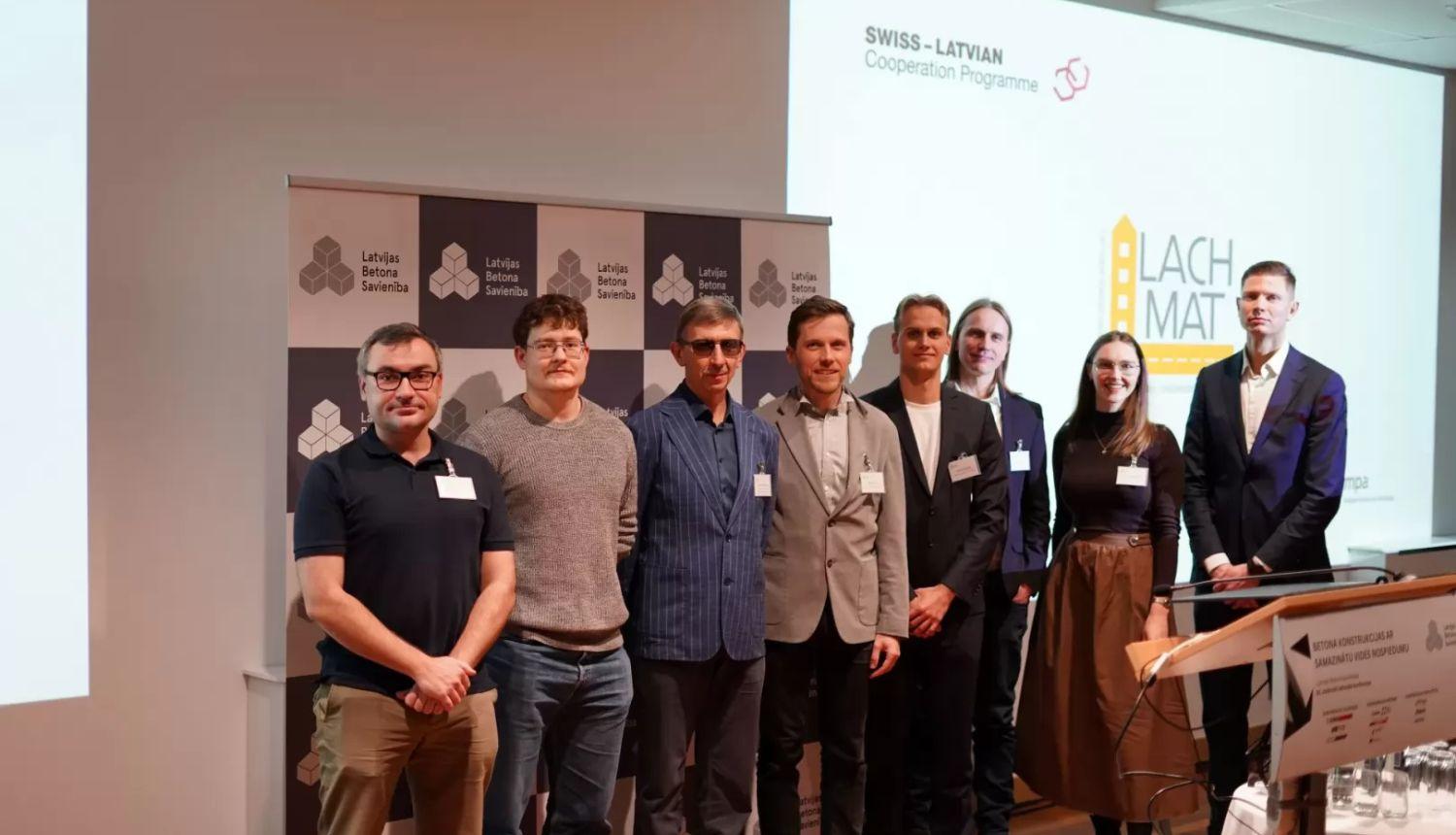
Scientists from the Faculty of Civil Engineering and Mechanical Engineering at Riga Technical University (RTU) are conducting several significant studies to advance the development of more climate-friendly construction materials and promote the implementation of circular-economy principles within the industry. At the Latvian Concrete Association's scientific and technical conference, the researchers present their findings and upcoming innovations to industry representatives.
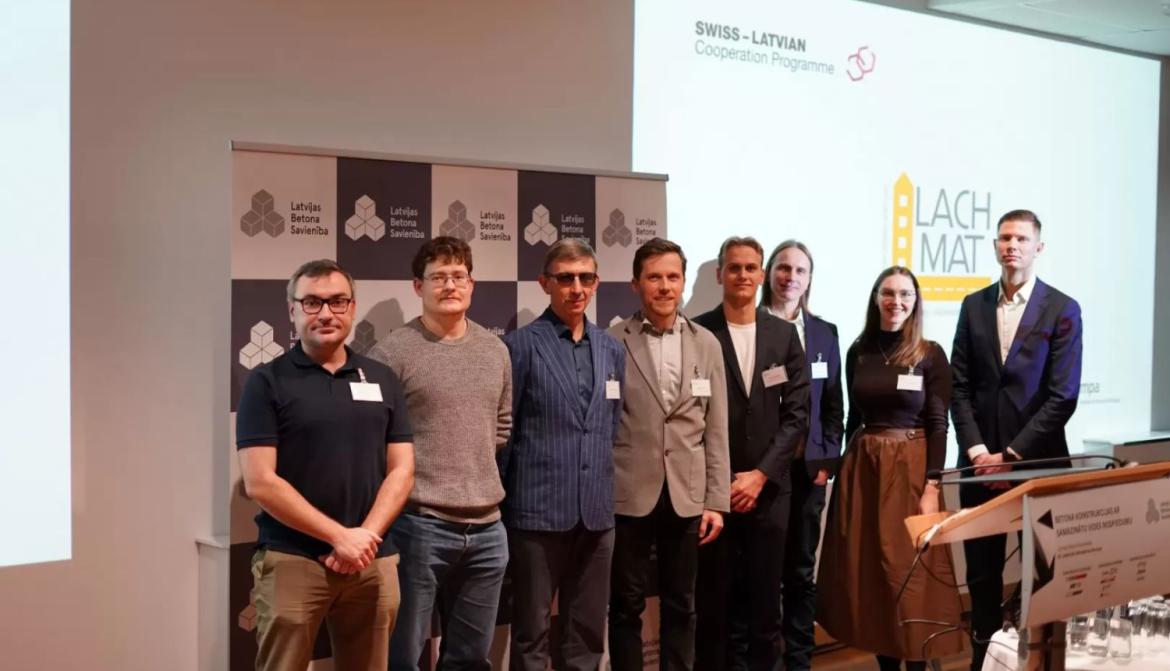
This year's conference focused on sustainable construction and solutions that help reduce the environmental footprint of concrete structures, taking into account the challenges posed by climate change and the requirements of the European Green Deal.
The construction materials sector is one of the world's primary sources of CO₂ emissions; cement production alone accounts for about 8% of global CO₂ emissions, RTU researchers remind. The extraction of high-demand raw materials threatens biodiversity and degrades the environment. At the same time, the sector generates considerable waste; construction waste accounts for around 30% of total waste in the EU.
Innovative Technologies Developed with Support from Switzerland
RTU researchers are currently implementing several projects directly aimed at resource-efficient production of innovative construction materials and reducing CO₂ emissions. Presenting their achievements, leading researchers Māris Šinka and Genādijs Šahmenko from the Institute of Sustainable Construction Materials and Engineering Systems showcase the Swiss–Latvian Applied Research programme LACHMAT to industry professionals. In this project, an interdisciplinary RTU research team collaborates with scientists from the Swiss Federal Laboratories for Materials Science and Technology (Empa) to develop and bring to market advanced construction and road-building materials and technologies. With the involvement of doctoral students and students, the team is developing an exceptionally high-performance sprayable concrete that could be used in the future to strengthen roads, bridges, tunnels, buildings, and even shelters. The researchers are also actively developing concrete mixes for sustainable 3D concrete printing, using locally sourced minerals, including hemp shives.
The Applied Research programme is part of Switzerland's contribution to EU member states to promote scientific excellence, innovation and economic development. A total of EUR 12.3 million is available to advance Latvian science and research, providing opportunities to implement impactful projects, develop innovations, and strengthen international cooperation.
Solutions to Two Challenges – CO₂ Emissions and Construction Waste
Alongside this large-scale initiative, RTU researchers are developing a 3D-printable concrete mix with a high proportion of oil shale ash. Sourced from Estonia, the ashes significantly reduce the amount of cement in the mix and thus lower CO₂ emissions. Using materials developed within the M-Era.Net project Waste-Derived High-Performance 3D Printable Cementitious Composite, a large-scale prototype has already been printed—the second 3D-printed concrete sculpture, the Innovation Cosmonaut LabLabs. It is planned to be unveiled on 10 December at the RTU student campus in Ķīpsala.
M. Šinka and his team are also studying how recycled concrete debris can be used for CO₂ capture. They are developing a market-oriented solution for the carbonisation and reuse of construction waste, essentially creating CO₂ filters from recycled construction materials. The transfer of research results toward commercialisation is supported by the national research programme Biomedical and Photonics Research Platform for the Creation of Innovative Products (BioPhoT). Meanwhile, with support from a consolidation grant (EU Recovery and Resilience Facility project No. 5.2.1.1.i.0/2/24/I/CFLA/003, grant No. RTU-ZG-2024/1-0008), researchers are exploring ways to use various construction waste streams in concrete manufacturing for low-strength structures, such as formwork or 3D-printed components.
At the same time, under G. Šahmenko's leadership, an innovative gypsum–cement–pozzolan mixture for low-impact 3D printing has been developed. This research is part of the Fundamental and Applied Research project Development and Characterisation of Environmentally Friendly Gypsum–Cement–Pozzolan Ternary Compositions for 3D printing, in which gypsum-containing waste is used as a raw material.
Several RTU postdoctoral researchers are also developing technologies to address key challenges faced by the construction industry.
Experts: A Unified Approach Needed to Reduce Concrete's CO₂ Footprint
Although Latvian companies already possess the necessary technologies to produce more sustainable materials, their widespread adoption has so far been hindered by the lack of a unified system, as noted by participants at the Latvian Concrete Association's Concrete Structures with a Reduced Environmental Footprint conference. They agree that the association's newly developed CO₂ footprint classification guidelines for concrete, presented at the conference, serve as an essential starting point for establishing a unified framework that will encourage broader adoption of environmentally friendly concrete solutions, including in public procurement. More information.
RTU scientists were actively involved in developing the CO₂ footprint classification guidelines for concrete. This is the first document of its kind in the Baltics, helping the construction sector clearly assess the carbon emissions generated during concrete production.
The conference is the region's most significant industry event. This year, it brought together more than 200 professionals, including leading experts from Latvia and abroad, who shared the latest solutions, innovations, and practical examples in the field of construction.
Participating in the conference were not only RTU's leading researchers but also master's students, doctoral candidates and postdoctoral researchers, who used the opportunity to build networks, explore industry needs and present their research activities.