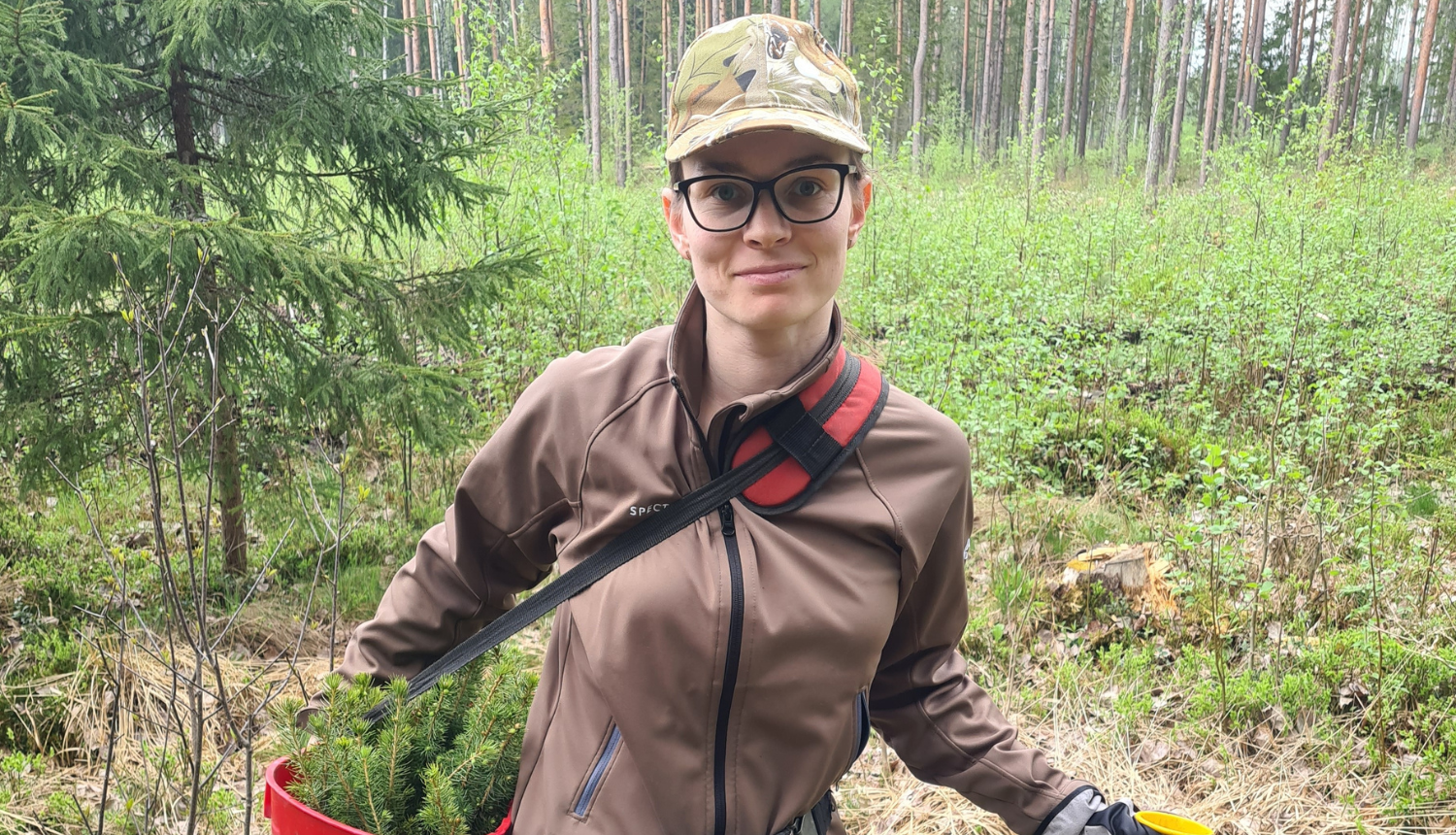
Old forest stands conceal many secrets—they preserve both traces of natural history and potential answers to the question of how to maintain biodiversity and ensure a sustainable future for forests. It is to uncovering these secrets that Laura Ķēniņa has devoted her professional path. A young scientist and postdoctoral researcher, her work in forest science combines scientific precision, a long-term perspective, and a genuine passion for the forest.
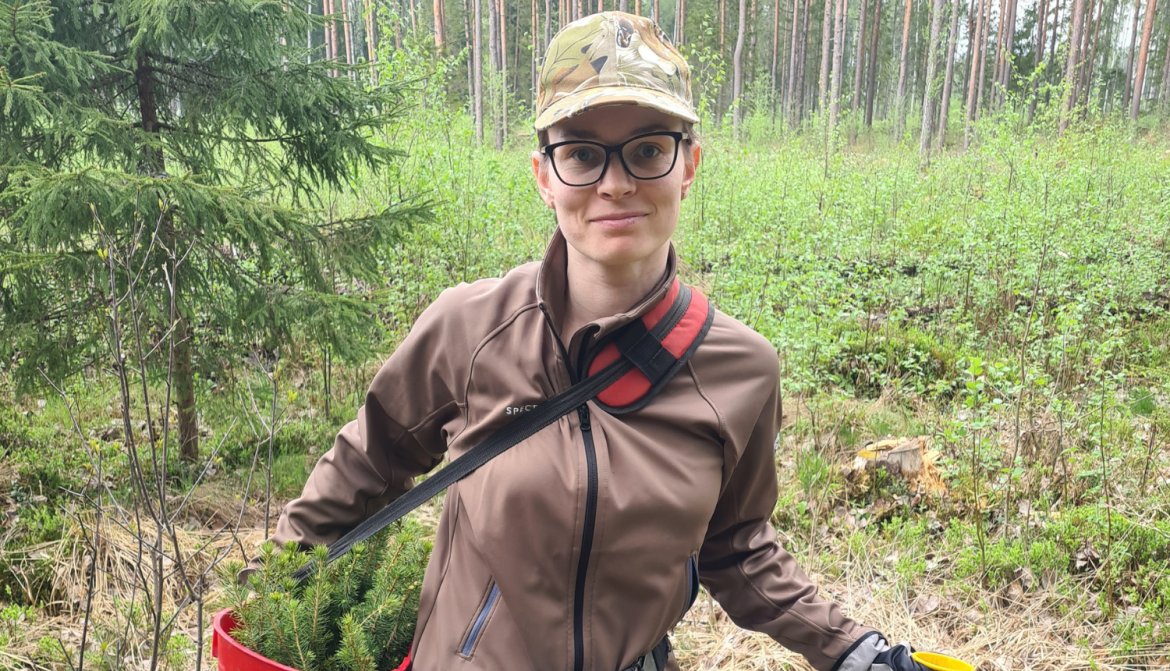
Laura’s path into science developed naturally, though without a clearly defined plan from the outset. Her interest in nature had accompanied her since childhood; however, when choosing her field of study, she hesitated between several options—biology, medicine, and forestry. In the end, forestry prevailed, and Laura enrolled in the Faculty of Forest and Environmental Sciences at the Latvia University of Life Sciences and Technologies, where she obtained both her bachelor’s and master’s degrees in forest science.
During her studies, she broadened her knowledge through participation in the Erasmus program in Finland and an internship in Brussels at the Confederation of European Forest Owners. After completing her master’s degree, Laura began working at the Latvian State Forest Research Institute “Silava.” As she admits, joining the institute was somewhat coincidental, yet decisive for her professional path.
“At that time, I didn’t fully know where I was heading, but I was approached—and I agreed. I ended up at the institute by chance, but it turned out that I truly enjoy this work! Contrary to what one might think, the work of a forest scientist is diverse and characterized by seasonality. During the vegetation period, there is fieldwork in the forest; in winter, it is time for working with data, analysis, and preparing scientific publications. It’s a dynamic job, and that’s exactly what attracts me,” she explains.
Science as Continuous Learning
Alongside her professional responsibilities, Laura began her doctoral studies, focusing on carbon stock research in old forest stands—a topic closely linked to climate change and Europe’s climate neutrality goals. “I like science because you are constantly learning something new. It is continuous learning and broadening of your horizons. My doctoral studies were a time that strengthened my conviction that science is the environment where I want to be,” Laura recalls.
After her second parental leave, Laura decided to take the next step in her professional journey and apply for a postdoctoral grant. The decision was not easy—it was her first experience preparing a project proposal, and initially she lacked confidence about the outcome.
“I wrote the proposal without high expectations that it would be approved, as it was my first time. When I received the approval, I realized that sometimes it is enough simply to believe in yourself, to dare, and to try,” Laura admits.
Old Forests – the Key to the Future
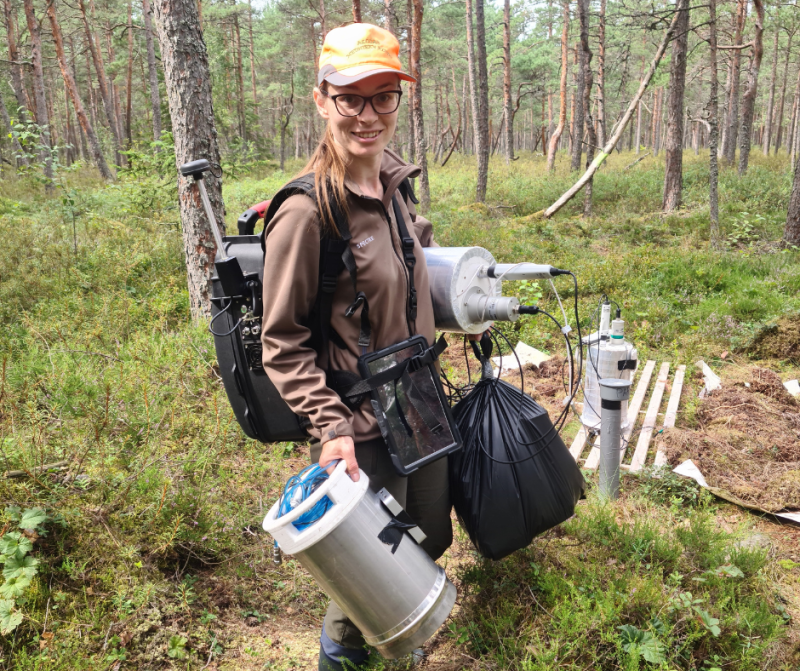
Laura’s postdoctoral research focuses on the structural dynamics and biodiversity of old coniferous forest stands in hemiboreal forests. In simpler terms, she studies how old forest stands develop over time and why they are so important for various plant and animal species. As part of her research, Laura also records bird calls, documents animal presence using camera traps, and collects pollinator samples. These data help reveal how old forest stands sustain biodiversity and what role they play in the long term.
“A forest is not just trees. Different forest structures—fallen logs, hollow trees, large old trees (both living and dead)—provide habitat for many species, each with its own role in the ecosystem. These elements form the forest’s ‘living space,’ which often remains invisible. With scientific data, we aim to demonstrate the true values hidden within these forests,” Laura explains.
Postdoctoral Research – A Gateway to the World
Laura considers participation in the postdoctoral program a valuable opportunity to experience the everyday reality and logic of “big science,” while also developing project management skills, taking responsibility, and independently planning her scientific path.
“It is a wonderful opportunity to take the first independent steps in large-scale science—from preparing a project proposal to implementing it. Of course, there is support throughout the process, but the main responsibility lies with us—the young researchers who plan, organize, and carry out the work,” Laura emphasizes.
The postdoctoral program has also opened broad opportunities for international collaboration, enabling her to engage in the European research landscape.
“The program adds an international dimension—the opportunity to go on research visits to other scientific institutions, learn about the experience of other countries, and gain insights from experienced scientists. During the project, I have already been to Switzerland, Romania, and the Netherlands. You meet people, become involved in scientific collaboration networks, and build relationships that can later form the foundation for future research,” she says.
Motivation – Doing Meaningful Work
Speaking about her main motivation, Laura highlights her desire to do work that has lasting value. “I am only at the beginning of my career and do not want to say that I have achieved something very great. But for me, it is an opportunity to contribute something positive to my country and to be useful to society. I think that is my greatest motivation to remain in science,” Laura says.
She is also inspired by the opportunity to work with scientifically grounded, verifiable information at a time when society faces widespread disinformation and conflicting opinions.
“I like that what I do is based on truth and facts. I work with numbers, real observations, and data-driven information. These are facts that anyone can later interpret as they wish, but you know the foundation is real. In today’s world, where information is often polarized, it is important for me to feel that I am working with something real and true,” Laura emphasizes.
The “Postdoctoral Research” program in Latvia is implemented with co-financing from EU funds. The aim of the program is to develop the skills of young scientists, strengthen their scientific capacity, and provide career-start opportunities in research institutions and enterprises, thereby reinforcing the renewal of research human resources and increasing the number of qualified researchers in Latvia. Measure 1.1.1.9 “Postdoctoral Research” (2024–2029) is administered by the Latvian Council of Science.
More information about the program:
https://www.lzp.gov.lv/lv/pecdoktoranturas-programma