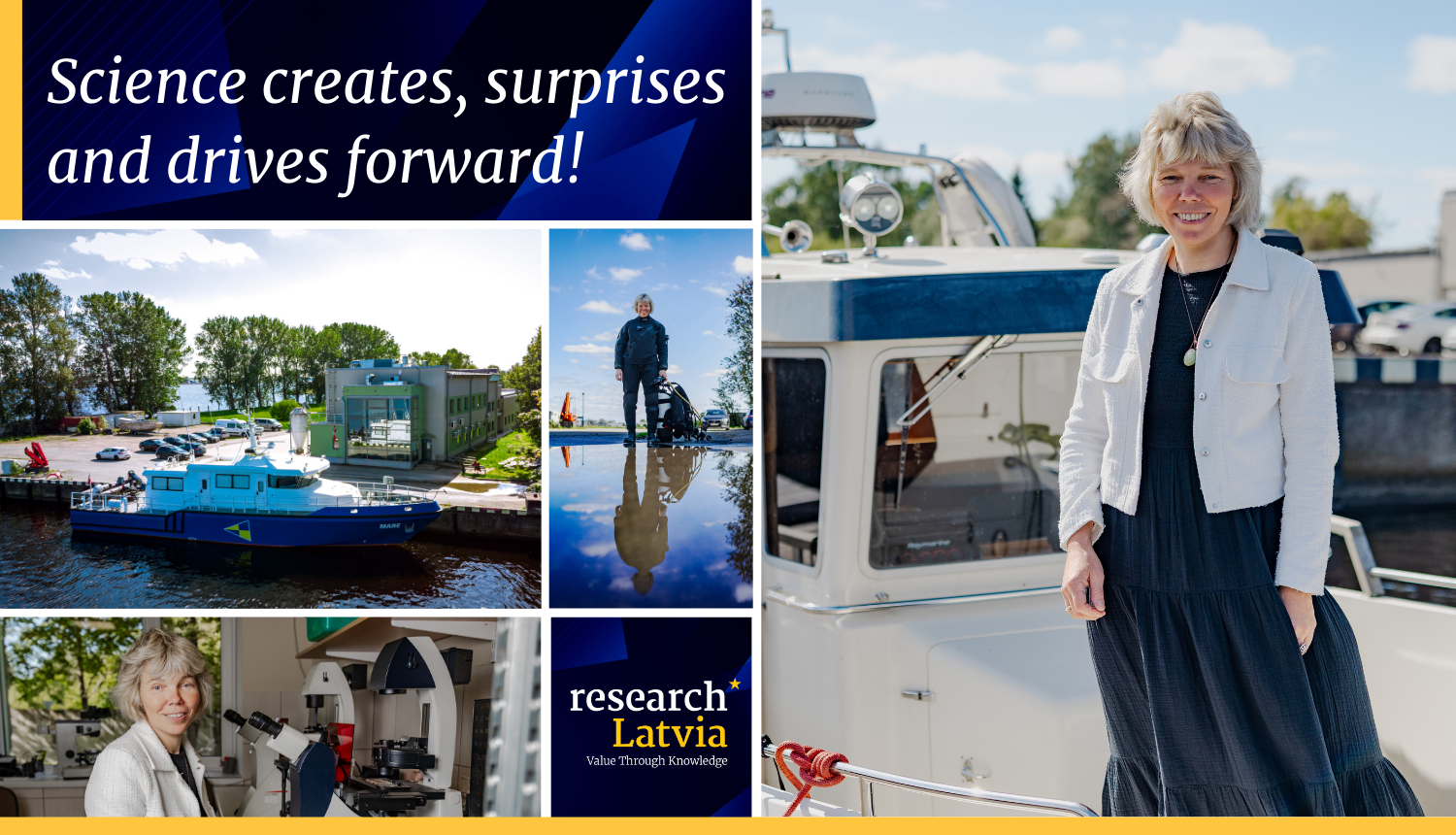
At the University of Daugavpils Agency “Latvian Institute of Hydroecology” (LIH), Dr. biol. Ingrīda Andersone, Head of the Experimental Hydrobiology Department, has worked at the Institute for 30 years, since its establishment. Most of this time has been devoted to studying underwater habitats and marine ecosystems. Her work involves analysing living resources, biodiversity and the human impact on the Baltic Sea, with particular attention to ecological processes beneath the water surface.
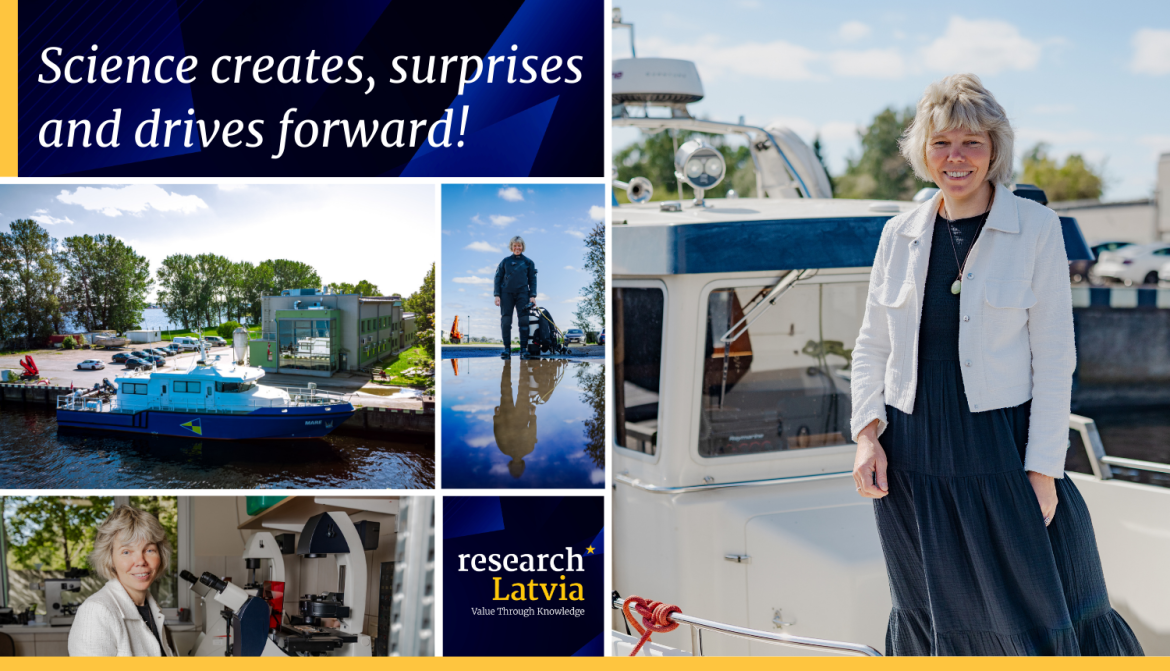
Dr. biol. I. Andersone holds a PhD in biology from the University of Latvia, and her professional career reflects a deep commitment to marine ecology and the sustainable management of Latvia’s marine environment.
"Most people see the sea as a mirrored surface of water. We, who are destined to look into the depths of the seas, must become maritime narrators, telling the public about the invisible ways in which we interact with the sea!"
The Daugavpils University Agency “Latvian Institute of Hydroecology” (LIH) is Latvia’s leading institution for marine ecosystem research. LIH is an internationally recognized scientific centre conducting both academic and applied research in aquatic ecology. Its key areas include the seasonal dynamics of planktonic and benthic organisms; the impact of invasive species on natural ecosystems; the distribution and effects of pollutants, including microplastics; and the development of spatial planning tools to support biodiversity conservation. The Institute also builds a knowledge base on ecosystem services and promotes the integration of this knowledge into planning and decision‑making for sustainable marine ecosystem management in the Baltic Sea.
Dr. biol. I. Andersone explains: "When you head out to sea, it is always a journey into the unknown that demands great enthusiasm and courage, because the sea is an environment where weather conditions and man‑made technology can force a change in any scientist’s plans."
Underwater habitats include untouched landscapes and geological heritage dating back to ancient times, as well as the direct and indirect effects of human activity. Prehistoric witnesses – such as coral reefs, enclosed nodules in dolomite deposits, glacial boulders, and moraine clay – form the foundation for modern algae and mollusc communities. Research results reveal how these varied underwater habitats relate to fish species that spawn, feed, and shelter there, and help us understand how much humans depend on the benefits – ecosystem services – provided by the sea, as well as how our activities influence them.
Under Dr. biol. Andersone’s leadership, extensive mapping and exploration of underwater habitats along the Latvian coast – including in the Gulf of Riga and in the open Baltic Sea – have been carried out in recent years. Research in Latvia’s Exclusive Economic Zone has also been undertaken within the LIFE REEF project over the past five years.
The findings of LIH researchers help determine how much of the marine area can be used for economic activities and how much must remain undisturbed to preserve marine biodiversity and ensure a healthy ecosystem for the future.
The science calendar “Research Latvia 2026” and the researcher descriptions were developed within the ERDF-funded project No. http://1.1.1.1/1/24/I/001 “More Efficient Implementation and Management of Latvia‘s Science Policy”, implemented by the Ministry of Education and Science. Developers: SIA "VFS Films" creative team, including Kristīne Pleša, video director Jānis Šēnbergs, photographer Ieva Romaško and the researchLatvia team.