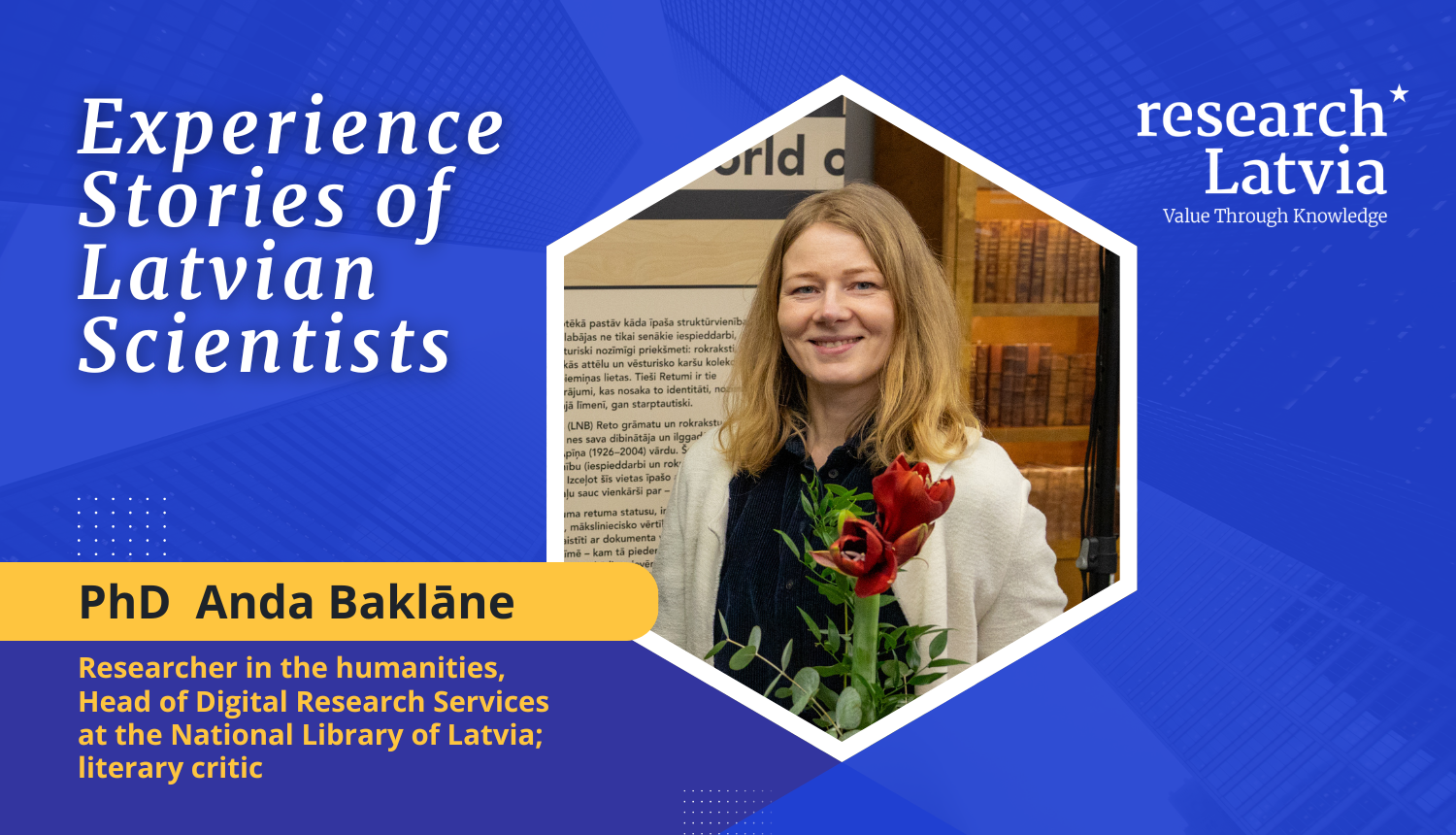
Anda Baklāne, PhD, is the Head of Digital Research Services at the National Library of Latvia (NLL), a literary critic and digital humanities practitioner. Through her work on digital research projects, she develops approaches that help systematize literary corpora, interpret textual data, and open new avenues for research in the humanities. Her current studies focus on analysing urbanisation and modernisation processes in Latvian novels. The science communication portal researchLatvia speaks with A. Baklāne about digital methods, her path in research, and the evolution of the humanities in today’s digital environment.
Anda recalls that her interest in research has been with her since childhood. After completing a Master’s degree in Philosophy at the University of Latvia (UL) in 2008, she was only beginning to discover the everyday reality of research: "At first I still had to get to know the daily routine of research – writing publications, participating in academic conferences, and the related processes gradually unfolded for me as I began integrating into the academic environment."

After her studies, she began working at the National Library of Latvia, where she developed an interest in digital collections, the field of digital humanities, and gained the opportunity to join national research programme projects. This period became pivotal for her professional development and strengthened her confidence in her research direction and the need to continue her studies at the doctoral level. "Real research began only when I joined the national research programme projects at the National Library. Working in a team was precisely the missing link."
At UL’s Faculty of Humanities, A. Baklāne teaches courses in digital humanities and social sciences, as well as computer-assisted text analysis and data visualisation, thus strengthening students’ digital competencies. In her dissertation (2025), she conducted a statistical analysis of references to natural phenomena in 20th-century Latvian poetry, while her current research focuses on urbanisation and modernisation processes in Latvian novels.
Digital Research: Data, Tools and New Perspectives on Literature
In the NLL Digital Research Group, Anda contributes to pilot studies, as well as the development and validation of datasets intended to create reproducible research practices and strengthen digital humanities in Latvia. This work involves both data aggregation and the testing of technological solutions and methodological improvements.
The Digital Research Group conducts literary and cultural analysis and develops datasets and methods for use by other researchers. In doing so, they create a platform that enables the digitisation, analysis, and interpretation of cultural heritage in contemporary ways. "We validate digital tools to provide examples for other researchers. We ensure that our datasets and programming code can be reused," explains A. Baklāne.
The Novel Corpus: A New Perspective on Literary History
One of the most ambitious initiatives is the corpus of the earliest Latvian novels – a collection of more than 450 novels published before 1940. It enables the study of literature both in detail and as part of broader cultural processes.
Data analysis reveals characteristics of societal change, material culture, and technological development: "It is fascinating to see the moment when modern means of transport appear in literature. They reveal technological progress as well as changes in people’s lifestyles and their perceptions of the world."
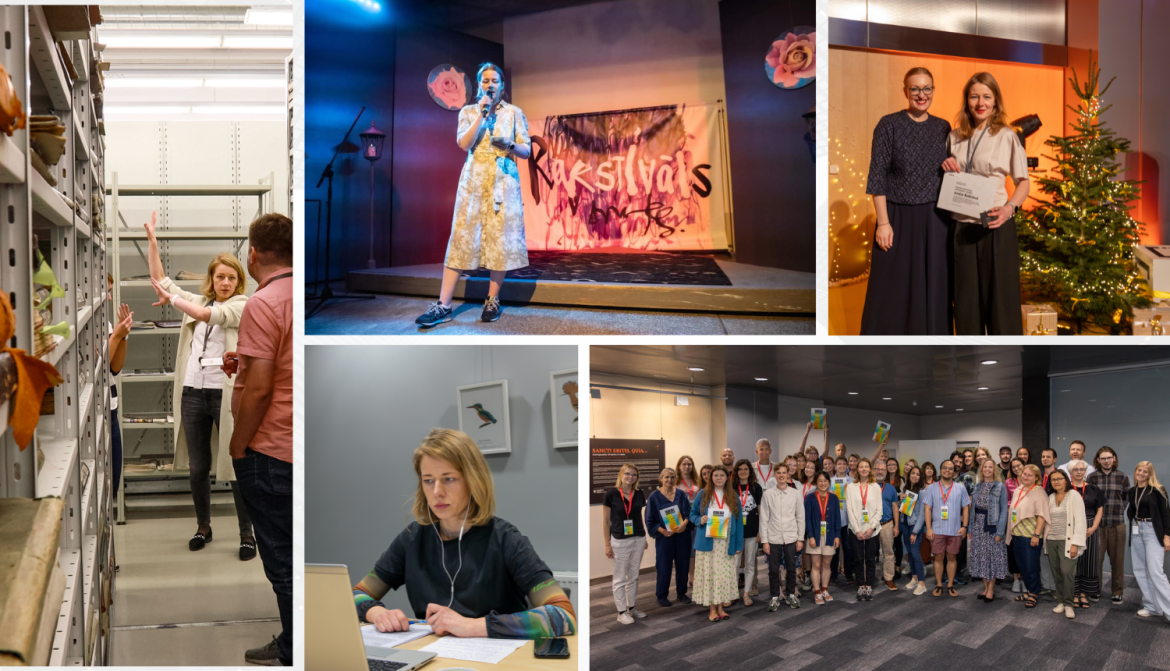
Digital methods help uncover stories that would otherwise remain hidden:
"Finding and counting words is not the end result. Digital methods help reveal stories that might otherwise go unnoticed and make it possible to interpret them further."
Artificial Intelligence in the Humanities: Opportunities and Caution
The NLL Research Group also works with AI tools, particularly large language models. They offer new possibilities but require careful validation. "Large models almost always find the requested concepts, but up to 80% of the cases are false results. This shows how important it is to use these tools correctly to ensure that the outcomes are reliable."
Data quality and copyright are also crucial considerations, especially for small languages with limited datasets: "Open-source models designed for the Latvian language are still in development, but they are improving rapidly. Commercial solutions currently offer higher accuracy, while running models locally requires greater computing power – something that will become more accessible for institutions in the future."
Citizen Science: Improving Old Print Recognition
In an NLL project dedicated to old print recognition, volunteers help create the training samples needed for AI algorithms. "To train an algorithm, you need 10,000 correct lines. We invited volunteers to help, and this work is still ongoing."
The project supports technological development while also bringing people closer to cultural heritage: "If everything is automated, we take away the opportunity for people to engage with culture. By correcting old texts, people themselves gain something valuable."
Digitised Collections and New Discoveries in Research
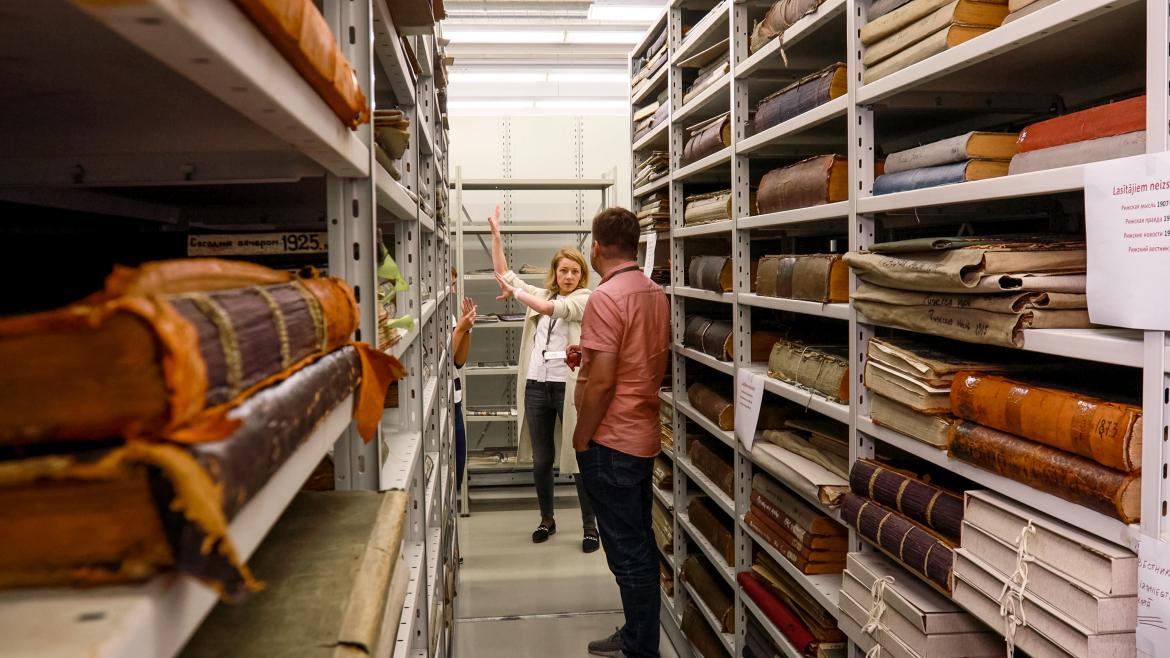
A. Baklāne points to the uneven state of digitisation in Latvia: "The volume of book digitisation in Latvia has not reached even 20%. Around 90% of periodicals are digitised, yet significant gaps remain in publications from the 1990s. Overall, the digitisation process in Latvia is not even halfway."
Digitisation directly affects future research, data availability, and the preservation of cultural heritage – the more open the materials, the broader the possibilities for using them. Work with historical texts often uncovers unexpected details that offer new perspectives on the worldview, aesthetics, and cultural imagination of past eras.
One line of research that A. Baklāne finds particularly interesting is early science fiction:
"There are many flying vehicles in those texts. It shows what visions of the future prevailed at the time."
As a lecturer, A. Baklāne sees many talented students but notes an imbalanced student composition: "Groups are small and mostly female. I find myself asking – why do boys no longer study the humanities and social sciences? This will affect the field and its perspectives."
In her view, the humanities and social sciences are essential for societal understanding and balanced development, especially at a time when preference is often given to STEM disciplines: "In a complex society, we also need specialists who can grasp cultural and social systems."
Critical thinking and data literacy are especially important: "If a society’s values are not grounded in critical thinking and data, it becomes vulnerable to manipulation."
A. Baklāne encourages young researchers to use digital methods: "Data analysis and visualisation are wonderful tools for the humanities."
Yet the core of research remains unchanged: "Science is a privilege – the opportunity to do what you love, to think deeply, and to work among people with similar ways of thinking. This process itself brings fulfilment."
The potential of the humanities in the digital age is becoming increasingly evident, and the professional achievements of Anda Baklāne, PhD, clearly highlight both the development directions of the field and the opportunities available to emerging researchers.

----
About the Article Series Stories of Latvian Scientists’ Experiences
This series, developed by the Ministry of Education and Science’s communication platform researchLatvia, provides insight into the work of Latvian researchers, fostering a deeper understanding of the role of science in society and creating a dialogue between scientists and the broader public.
These stories invite both current and future researchers, as well as society, to explore Latvia’s scientific achievements and draw inspiration and motivation from the experiences of those who have dedicated their careers to scientific work. The interviews are conducted within the framework of project No. 1.1.1.1/1/24/I/001, “More Efficient Implementation and Management of Latvia‘s Science Policy”.